Adipotide is not a metabolic peptide. It is a two-domain cytotoxic construct that finds fat-tissue blood vessels and kills the cells lining them. Where to buy Adipotide in 2026 is therefore a harder question than it looks, because the thing that makes the molecule interesting — a homing sequence welded to an apoptosis payload — is also the thing that makes it difficult to synthesize correctly and easy to sell incorrectly.
Get new research first
Research updatesOne short email when new peptide research drops or a new ISO 17025-verified batch lands — written from primary sources, no filler.
You’re on the list — check your inbox for a confirmation.
Could not save your email. Try again in a moment.
Adipotide, also called FTPP, is a 25-residue chimeric peptide: the cyclic nine-residue homing sequence CKGGRAKDC, a Gly-Gly linker, and the 14-residue D-amino acid killer domain D(KLAKLAK)2. Calculated mass is approximately 2611 g/mol. It is sold legally in the U.S. as a research reference compound, not as a drug — not FDA-approved, not EMA-approved, and with only a single registered Phase I trial in an oncology population. ISO 17025-verified material benchmarks around $85–$180 per 10 mg vial. Two checks matter more here than on any ordinary peptide: proof of the Cys2–Cys9 disulfide in the homing domain, and proof of D-amino acid composition in the killer domain. Without either one, the vial holds something that is not Adipotide.
- CoA. Certificate of Analysis. A one-page lab report showing the specific lot’s purity, identity, and water content.
- ISO/IEC 17025. The international quality standard for testing labs. A 17025-accredited lab has been audited by a third party for technical competence.
- Chimeric peptide / peptide-drug conjugate. A single synthetic molecule assembled from two functionally distinct sequences — here, a targeting domain and a cytotoxic payload joined by a short linker.
- Homing sequence. A short peptide selected to bind a receptor enriched on one tissue, used to steer a payload to that tissue. Adipotide’s was identified by in vivo phage display.
- D-amino acid. The mirror-image form of a natural amino acid. D-residues resist protease digestion, which is why the killer domain uses them — and why chirality has to be verified analytically.
- Lyophilized. Freeze-dried into a stable powder. Lyophilized peptides survive shipping at room temperature for short periods and store for years frozen.
Quick answer. ISO 17025-verified Adipotide benchmarks around $85–$180 per 10 mg vial. It should ship as lyophilized powder with a third-party CoA from an ISO 17025-accredited lab, and that CoA should carry three things an ordinary peptide report does not: disulfide-cyclization confirmation, chiral verification of the killer domain, and a mass consistent with the full chimeric construct rather than either fragment alone.
What you’re actually buying
Adipotide was built by Renata Pasqualini and Wadih Arap’s groups, originally at MD Anderson Cancer Center and now at the Rutgers Cancer Institute of New Jersey. The design is unusually legible for a peptide. One end is an address; the other end is a weapon.
The address is CKGGRAKDC, a nine-residue cyclic sequence identified by in vivo phage display because it binds prohibitin presented on the surface of white-adipose-tissue endothelial cells. Prohibitin is normally a mitochondrial protein; its surface presentation on adipose vasculature is the biological quirk the sequence exploits. The weapon is D(KLAKLAK)2, a 14-residue D-amino acid sequence developed to disrupt mitochondrial membranes and trigger intrinsic apoptosis once the peptide is internalized. A Gly-Gly linker joins them. Written out, the whole molecule is CKGGRAKDC-GG-D(KLAKLAK)2.
That architecture is the reason the compound sits in a different category from everything else in a weight-management catalog. Adipotide does not modulate satiety, does not act on incretin receptors, and does not slow gastric emptying. It ablates adipose-tissue blood supply by killing endothelial cells, and the overlying tissue regresses with the vasculature. The conceptual neighbor is anti-angiogenic oncology, not metabolic pharmacology.
The signature preclinical work is old. Kolonin and colleagues established targeted adipose ablation in rodents in Nature Medicine in 2004 (Kolonin et al., 2004), and Barnhart and colleagues extended it to obese rhesus macaques in Science Translational Medicine in 2011, reporting roughly 11% body-weight reduction over four weeks alongside improvements in insulin sensitivity (Barnhart et al., 2011). The same primate work flagged renal toxicity. Both papers predate the 2020–2026 literature window, and nothing in that window has advanced the original construct toward human use.
The recent literature does not extend Adipotide. It extracts the useful half. A 2022 Advanced Science study used the prohibitin-binding sequence to steer a heme oxygenase-1 inducer into obese adipose tissue and fatty liver — keeping the address, replacing the weapon.
— Paraphrased from Hong & Kim, Advanced Science, 2022
That pattern repeats. A 2020 imaging study coupled the same CKGGRAKDC sequence to iron-oxide nanoparticles to build a brown-adipose-tissue MRI probe — again using the homing sequence as a research tool rather than as the front end of a cytotoxic therapeutic (Hu et al., 2021). Across the whole 2020–2026 window, only three PubMed-indexed papers mention the homing sequence at all, and none of them is a clinical trial of Adipotide as a weight-loss therapy.
A research buyer should read that as a signal about what the material is defensibly for in 2026: prohibitin-binding work, apoptosis-pathway work, and comparator use against the newer delivery constructs. It is not a signal that a stalled therapeutic quietly succeeded somewhere off-index.
The places people buy Adipotide
Adipotide reaches buyers through fewer channels than an ordinary catalog peptide, and the reason is the clinical history rather than the chemistry.
1. Research-supply vendors (effectively the only channel)
This is where nearly all Adipotide moves. The vendor sells lyophilized powder labeled “for laboratory research use only.” That is legal under U.S. law. It is not legal for human use, and the vendor is not a pharmacy.
Documentation to verify before ordering: a third-party CoA from a named ISO 17025-accredited testing lab, HPLC purity with the chromatogram attached, mass-spec identity for the full construct, disulfide-cyclization confirmation, and chiral verification of the killer domain. Anything less is a purity number attached to an unproven identity.
2. Compounding pharmacies (not a realistic route)
A 503A pharmacy compounds prescription preparations for individual patients. Adipotide does not appear on FDA’s bulk-substance lists for compounding, has no approved indication anywhere, and carries a documented organ-toxicity signal. In practice no U.S. compounding pharmacy supplies it, and a vendor implying otherwise is describing a channel that does not exist.
3. Gray-channel resellers marketing on the 2011 media cycle
This is the channel that matters most for buyer awareness. The 2011 primate results generated a large consumer media wave and durable demand that outlived the science. Resellers still market Adipotide on that fifteen-year-old story — usually reproducing the weight-loss figure while omitting the renal signal reported in the same body of work. The tell is a product page that cites 2011 enthusiastically and says nothing about what happened after it.
The Adipotide-specific checks
The standard eight criteria for any peptide vendor apply. Four are materially sharper for a chimeric construct.
1. Identity is a triad, not a CAS lookup
Older single-domain research peptides are identified on a CoA by a CAS Registry Number. Adipotide is not reliably identified that way — it is a chimeric peptide-drug conjugate, referenced in the literature by sequence and by the name FTPP rather than by a single widely-published registry entry. The practical identity triad is sequence, mass, and chirality.
Mass-spec should be consistent with the calculated mass of the full construct, approximately 2611 g/mol. Two failure modes are worth naming: a mass near the homing fragment alone means the conjugation failed, and a mass near the killer fragment alone means the vial holds an untargeted cytotoxic peptide. Both can co-exist with a respectable-looking purity number, because purity and identity are different questions.
2. The disulfide is load-bearing
CKGGRAKDC binds prohibitin only in its cyclic form, closed by the Cys2–Cys9 disulfide. Break that bond and the targeting function is gone; what remains is an apoptosis payload with no address. This is the single most consequential attribute on an Adipotide CoA and the one most frequently absent from vendor paperwork.
A credible report shows cyclization explicitly — a free-thiol assay result, a mass difference of two daltons versus the reduced form, or both. It should also carry the handling consequence: the disulfide is reduction-sensitive, so reducing agents such as DTT, BME, TCEP, or glutathione will cleave it in solution and abolish the homing function. A vendor who publishes the storage window but never mentions reducing agents has not thought about the molecule they are selling.
3. Chirality in the killer domain
D(KLAKLAK)2 is built from D-amino acids specifically so the payload resists protease digestion. Substituting the natural L-form is cheaper, invisible on a standard reversed-phase HPLC purity trace, and produces material with a different stability profile from the compound in the published literature.
The check is a chiral HPLC report or an amino-acid analysis confirming D-composition across the 14-residue killer domain. Vendors who supply it will say so plainly; vendors who do not will describe purity in general terms and change the subject.
4. Synthesis complexity is a quality risk you are pricing
Twenty-five residues, a cyclization step, and fourteen D-residues stack three independent sources of batch variance into one molecule. Incomplete cyclization, partial epimerization, and deletion sequences at the linker are all realistic outcomes of a rushed run, and none of them announces itself on a headline purity figure. This is why the Adipotide market has a floor that a simpler peptide does not, and why the cheap end of the range is worth treating as diagnostic rather than as a bargain.
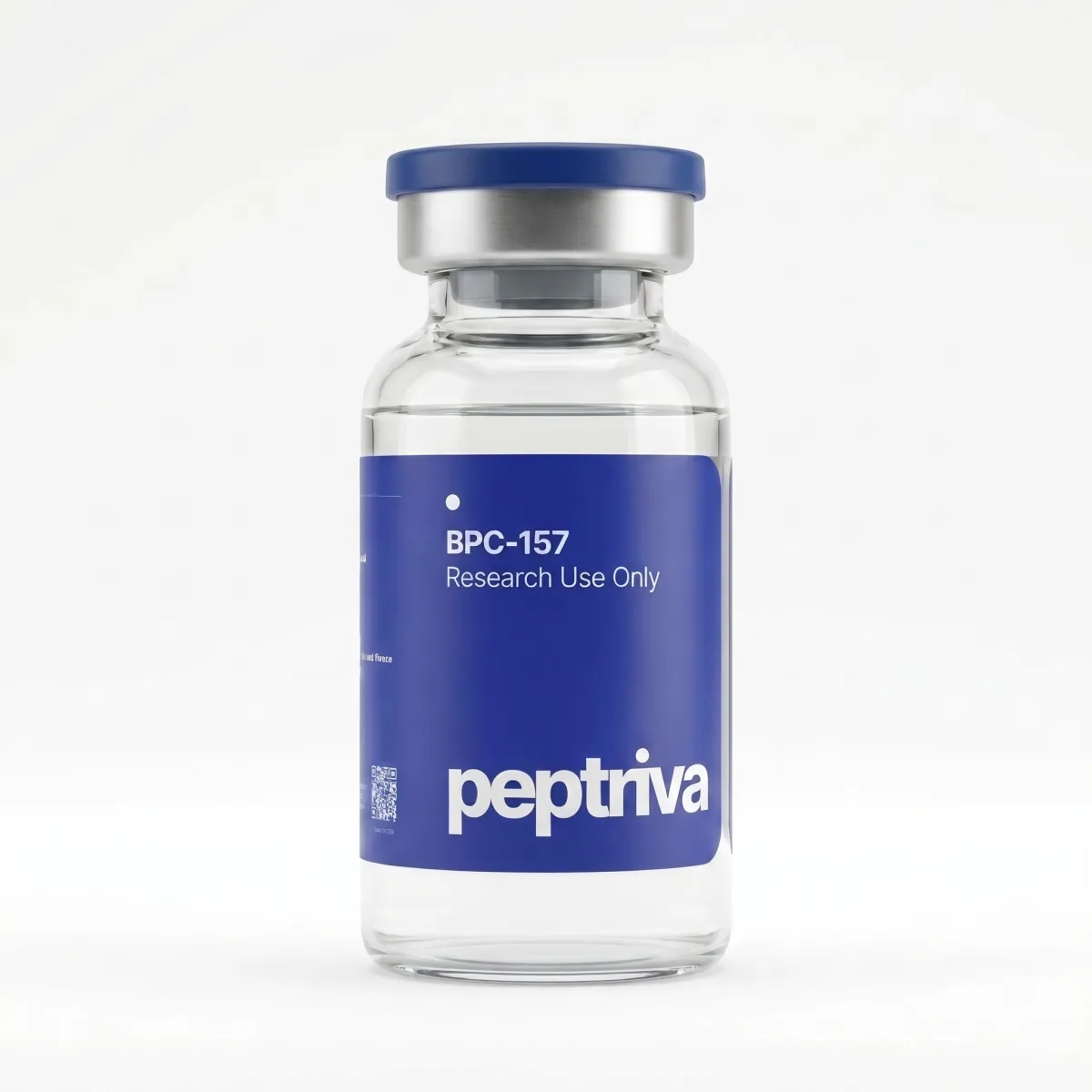
Adipotide
Investigational cytotoxic peptideThe same CKGGRAKDC-GG-D(KLAKLAK)2 construct behind the Kolonin 2004 rodent ablation work and the Barnhart 2011 nonhuman primate study, and the parent molecule for the prohibitin-targeting delivery constructs published in 2020–2026. Calculated mass ~2611 g/mol, disulfide-cyclized homing domain, ISO 17025 third-party CoA on every lot. Research use only.
2026 pricing benchmarks
Adipotide is expensive to make, and unlike most catalog peptides the cost is defensible rather than a markup story. Here is what the ISO 17025-verified research-supply market looks like in 2026:
- 5 mg vial: $55–$110 ($11–$22/mg). Uncommon entry size; per-mg cost is worst here.
- 10 mg vial: $85–$180 ($8.50–$18/mg). The standard retail size and the best per-mg value at most vendors.
- Multi-vial discounts: 10–20% off on 3-packs, narrower than the discounts offered on simpler peptides because the underlying synthesis cost does not compress much with volume.
Compare that to a short linear peptide, which routinely clears at $3–$8/mg. The Adipotide premium is not vendor positioning — it is the cyclization step, the D-amino acid raw materials, and the extra analytical work needed to prove both. Material offered below roughly $45 per 10 mg vial deserves a direct question about which of those steps was skipped.
Above $25/mg, the pricing has left synthesis cost behind and is carrying retail markup. In between, price is a weak quality signal on its own; the CoA contents are the real discriminator.
Where this falls short. The honest summary of the Adipotide evidence base is that it is the thinnest of any compound in our catalog literature. Two landmark preclinical papers, both older than the 2020–2026 window. Three papers in that window mentioning the homing sequence, two of which repurpose it for other payloads. One registered Phase I trial in an oncology population with no peer-reviewed efficacy publication indexed. Zero completed Phase II or Phase III obesity trials. A buyer who wants a compound with a deep published record should be looking at a different molecule entirely.
Legal status: FDA, WADA, and research-use framing
- United States (FDA): Not approved for any indication. Phase I work exists in an oncology population only. Not a controlled substance. Legal to buy and sell as a research reference compound labeled for laboratory use only; selling for human consumption is illegal.
- European Union (EMA): Not approved.
- WADA: Not explicitly listed on the Prohibited List. (WADA Prohibited List for current categorizations.)
- Major sports leagues: Not explicitly prohibited.
The research-use-only designation is doing real work here and is worth understanding rather than treating as boilerplate — see what “research use only” actually means. For a compound with a documented organ-toxicity signal and no approved indication in any jurisdiction, RUO labeling is not a technicality a vendor works around. It is the entire legal basis on which the material can be sold at all.
Handling framing follows from the mechanism. Adipotide’s payload is designed to kill cells, with theoretical off-target apoptotic potential on cardiac, hepatic, and renal endothelium. Credible suppliers indicate cytotoxic handling on the vial and in the documentation. A vendor whose Adipotide listing reads exactly like their listing for a recovery peptide has not adjusted for what is in the vial.
Red flags specific to Adipotide
- No disulfide-cyclization data on the CoA. The reduced form does not bind prohibitin. A purity number without cyclization confirmation does not establish that the material is Adipotide.
- No chiral verification of D(KLAKLAK)2. L-substitution is cheaper and invisible on a standard reversed-phase purity trace. Ask for chiral HPLC or amino-acid analysis by name.
- Mass-spec matching a fragment rather than the construct. A mass near either domain alone means conjugation failed. The report should be consistent with the full ~2611 g/mol chimeric molecule.
- Weight-loss marketing built on 2011 while omitting the renal signal. The primate study that produced the weight-loss figure reported the kidney toxicity too. Quoting one without the other is selective, not informative.
- “Fat-loss peptide” positioning alongside GLP-1 products. Shelving a cytotoxic anti-vasculature agent next to incretin agonists as if they were interchangeable is a category error a serious supplier does not make.
- Pricing far under the market band. On a molecule with three stacked synthesis risks, a steep discount usually reflects a skipped QC step rather than an efficiency.
- No cytotoxic-handling indication. Documentation that never distinguishes this material from an ordinary research peptide suggests the supplier has not characterized what they are shipping.
- Silence on reducing agents. Storage guidance that omits DTT, BME, TCEP, and glutathione is guidance written for a generic peptide, not this one.
The 2011 nonhuman primate work is cited constantly for the weight-loss figure and almost never for the other half of its own findings — that renal toxicity was the limiting observation. Both results came from the same study.
— Paraphrased from Barnhart et al., Science Translational Medicine, 2011
Adipotide
10 mg lyophilized powder in a 3 mL glass vial, ≥99% HPLC. Lyophilized stability −20 °C for 24 months or 2–8 °C for 6 months; reconstituted in bacteriostatic water the in-use window is 14 days at 2–8 °C, and reducing agents must be avoided so the homing-domain disulfide stays intact. Batch-matched third-party COA by QR code on every vial. Research use only.
Frequently asked questions
Is Adipotide legal to buy in the USA?
Yes, as a research reference compound labeled for laboratory use only. It is not FDA-approved and it is not a controlled substance. Selling Adipotide for human consumption is illegal; acquiring it as research material is not. The distinction is the entire legal basis for the compound’s availability, which is why RUO labeling on this molecule is not decorative.
What should an Adipotide Certificate of Analysis show?
Purity by HPLC with the chromatogram attached, mass-spec consistent with the ~2611 g/mol chimeric construct, explicit disulfide-cyclization confirmation for the CKGGRAKDC domain, chiral verification of D-composition in the killer domain, Karl Fischer water content, and counterion content. The testing lab must be ISO 17025-accredited and named on the report. If you have not read a CoA closely before, our guide to reading a Certificate of Analysis covers the general fields; the three chimeric-specific ones above are what you add for this compound.
Why did Adipotide’s development stall?
Renal toxicity. The nonhuman primate work that produced the weight-loss headline also reported a kidney signal, the compound clears renally, and the D(KLAKLAK)2 payload carries non-target apoptotic potential on renal tissue. A Phase I trial in obese prostate-cancer patients was registered (NCT01477580) but produced no peer-reviewed efficacy publication indexed in the 2020–2026 window. Development for obesity has not advanced in the fifteen years since, and the clinical success of the incretin class removed most of the remaining incentive to revisit a cytotoxic approach. The full accounting is in our complete Adipotide research guide.
Does Adipotide have a CAS number?
Not one that functions as a practical buyer check the way CAS numbers do for older single-domain peptides. Adipotide is a chimeric construct referenced in the literature by sequence and by the FTPP name. Sequence, mass, and chirality are the identity triad on a CoA. A report that leads with a CAS field but omits disulfide and chirality data is verifying the least informative attribute available.
Why is the disulfide bond such a big deal?
Because the homing function depends on it. CKGGRAKDC binds prohibitin in its cyclic form; without the Cys2–Cys9 disulfide the address is gone and only the payload remains. Reduced or scrambled material can still return a respectable HPLC purity figure while being functionally a different molecule. It is also the reason reducing agents are excluded from the reconstitution and handling guidance.
How does Adipotide compare to the GLP-1 class?
They are different classes of molecule with non-comparable evidence bases. Incretin receptor agonists are metabolic modulators with completed, published Phase III programs and FDA approvals in obesity. Adipotide is a cytotoxic anti-vasculature agent with zero completed Phase II or Phase III trials and a documented renal signal. For context on what the incretin literature actually contains, see the GLP-1 class comparison. The two are not substitutable in a research design, and Adipotide is not an alternative to an approved agent in any supervised context.
Is Adipotide banned by WADA?
It is not explicitly listed on the Prohibited List and not explicitly prohibited by the major leagues. That is not the same as being cleared — WADA maintains catch-all provisions covering substances without current regulatory approval for human therapeutic use, and Adipotide has no approval anywhere. Anyone subject to testing should read the current list directly rather than infer clearance from absence.
Why is Adipotide so much more expensive than a comparable-length peptide?
Three stacked cost drivers. Twenty-five residues is a longer chain than most catalog peptides; the homing domain requires a disulfide cyclization step; and fourteen of the residues are D-amino acids, which cost more as raw materials and require chiral analytics to verify. Each one also adds a way for a batch to fail QC. A guide to the underlying chemistry is in how peptides are made.
What to know now
- CKGGRAKDC-GG-D(KLAKLAK)2, 25 residues, ~2611 g/mol. Sequence, mass, and chirality are the identity triad — there is no useful CAS shortcut for a chimeric construct.
- Disulfide cyclization is the make-or-break attribute. Without the Cys2–Cys9 bond the homing domain does not bind prohibitin, and purity data alone will not reveal it.
- Chiral verification is non-optional. L-substitution in the killer domain is cheaper and invisible on a standard reversed-phase trace.
- $85–$180 per 10 mg vial. The premium over simpler peptides reflects real synthesis and analytical cost, not positioning. Far below the band is diagnostic.
- The evidence base is genuinely thin. Two pre-window landmark papers, three in-window mentions of the homing sequence, one registered Phase I trial, zero completed Phase II or III obesity trials.
- The renal signal is the central fact. Any vendor page quoting the 2011 weight-loss figure without it is presenting half of one study.
- Handle as a cytotoxic agent. Documentation that treats Adipotide like an ordinary research peptide is a signal about the supplier, not about the molecule.
What we’re watching
The most informative Adipotide development to track is not a new trial — it is whether the split we already see in the literature widens. Since 2020 the prohibitin-targeting sequence has appeared almost exclusively as a delivery vehicle: steering a heme oxygenase-1 inducer into obese adipose tissue and fatty liver in a NASH model, and coupling to iron-oxide nanoparticles as a brown-adipose-tissue imaging probe. Both keep the address and discard the weapon. If that continues, the honest description of CKGGRAKDC in 2030 will be “a validated adipose-homing motif” rather than “half of a stalled weight-loss drug,” and the defensible research use of Adipotide itself will be as the parent-construct comparator in that delivery work. The second thing worth watching is whether any peer-reviewed readout from the registered Phase I trial ever publishes. Fifteen years of silence on a trial that was registered is itself information, and a buyer should weigh it as such.
References
- Hong, J., & Kim, Y. H. (2022). Fatty liver/adipose tissue dual-targeting nanoparticles with heme oxygenase-1 inducer for amelioration of obesity, obesity-induced type 2 diabetes, and steatohepatitis. Advanced Science, 9(33), e2203286. https://doi.org/10.1002/advs.202203286
- Hu, Q., Cao, H., Zhou, L., et al. (2021). Measurement of BAT activity by targeted molecular magnetic resonance imaging. Magnetic Resonance Imaging, 77, 1–6. https://doi.org/10.1016/j.mri.2020.12.006
- Barnhart, K. F., Christianson, D. R., Hanley, P. W., Driessen, W. H. P., Bernacky, B. J., Baze, W. B., Wen, S., Tian, M., Ma, J., Kolonin, M. G., Saha, P. K., Do, K.-A., Hulvat, J. F., Gelovani, J. G., Chan, L., Arap, W., & Pasqualini, R. (2011). A peptidomimetic targeting white fat causes weight loss and improved insulin resistance in obese monkeys. Science Translational Medicine, 3(108), 108ra112. https://doi.org/10.1126/scitranslmed.3002621
- Kolonin, M. G., Saha, P. K., Chan, L., Pasqualini, R., & Arap, W. (2004). Reversal of obesity by targeted ablation of adipose tissue. Nature Medicine, 10(6), 625–632. https://doi.org/10.1038/nm1048
- ClinicalTrials.gov. Adipotide Phase I trial in obese prostate cancer patients (NCT01477580). https://clinicaltrials.gov/study/NCT01477580
- U.S. Food and Drug Administration. (2024). Research Use Only (RUO) and Investigational Use Only (IUO) labeling under 21 CFR § 809.10(b)(9). https://www.fda.gov/medical-devices/ivd-regulatory-assistance/research-use-only-and-investigational-use-only-ruoiuo-labels
- World Anti-Doping Agency. (2026). The Prohibited List. https://www.wada-ama.org/en/prohibited-list
- International Organization for Standardization. (2017). ISO/IEC 17025:2017 — General requirements for the competence of testing and calibration laboratories. https://www.iso.org/standard/66912.html