Tirzepatide has more human clinical evidence than any other incretin drug on the market. Three trial programs anchor it. SURMOUNT covers obesity. SURPASS covers type 2 diabetes. SURPASS-2 ran the head-to-head against semaglutide and settled the dual-agonist question for the field.
Tirzepatide is the first FDA-approved dual agonist of GIP (a gut hormone that boosts insulin) and GLP-1 (a gut hormone that signals fullness). It's sold as Mounjaro for type 2 diabetes (2022) and Zepbound for obesity (2023). In the SURMOUNT-1 trial (n=2,539), the top dose produced 22.5% mean weight loss at 72 weeks. In SURMOUNT-4 with continued treatment, mean weight reduction reached 25.3%. In SURPASS-2, tirzepatide beat semaglutide at every dose. The gastrointestinal (GI) side-effect rate runs roughly 60–80%. The cardiovascular outcomes trial, SURMOUNT-MMO, is the remaining open question.
Tirzepatide's approval is one of the cleanest case studies in modern obesity pharmacology. Semaglutide (Wegovy) hit roughly 15% mean weight loss in the STEP-1 trial by activating GLP-1 receptors. Tirzepatide added GIP receptor activity on top of GLP-1 and gained another 7 percentage points.
The dual-agonist idea was simple. GIP might add weight loss beyond what GLP-1 alone can deliver. SURPASS-2 tested that head-to-head and confirmed it. The result made Eli Lilly the dominant company in obesity drugs. It also put dual agonism on the path that retatrutide now extends with a third receptor (glucagon).
This is the comprehensive research guide. We'll cover what tirzepatide is, why combining GIP and GLP-1 produces more weight loss than either alone, what the SURMOUNT obesity trials showed at Phase III scale, what SURPASS showed in type 2 diabetes (T2D), the head-to-head against semaglutide, the GI tolerability profile, the maintenance data, and where the cardiovascular outcomes question sits.
What is tirzepatide?
Tirzepatide is a 39-amino-acid peptide. Its development code is LY3298176. The brand names are Mounjaro and Zepbound. It carries a C20 fatty-diacid chain that confers an extended half-life, enabling once-weekly subcutaneous dosing in clinical trials.
The molecule activates two receptors at clinical doses. One is the GIP receptor. The other is the GLP-1 receptor. That dual activity is what separates tirzepatide from semaglutide. Semaglutide only hits one of the two.
Researchers have characterised the combination as follows. GLP-1 receptor activity has been shown to reduce gastric emptying rate, stimulate glucose-dependent insulin secretion, and engage central satiety circuits. GIP receptor activity contributes additional postprandial insulin release, modulates adipose lipid handling, and may engage hypothalamic appetite pathways via distinct receptor populations.
The two pathways overlap but are not identical. Co-activation recruits both. Published data show greater metabolic effects than activating either receptor alone — a finding confirmed directly in the SURPASS-2 head-to-head.
The success of tirzepatide validates the dual-incretin hypothesis: simultaneous engagement of GIP and GLP-1 receptors produces consistently larger weight-loss magnitudes than GLP-1 alone, with a tolerability profile that remains broadly similar to the established GLP-1 class.
— Melson et al., International Journal of Obesity, 2024 (paraphrased summary)
Tirzepatide had the fastest commercial ramp in metabolic medicine. The FDA approved Mounjaro for T2D in 2022. Zepbound followed for obesity in 2023. Global sales surpassed every prior incretin drug within 18 months of launch. The compound effectively defined what successful dual agonism looks like.
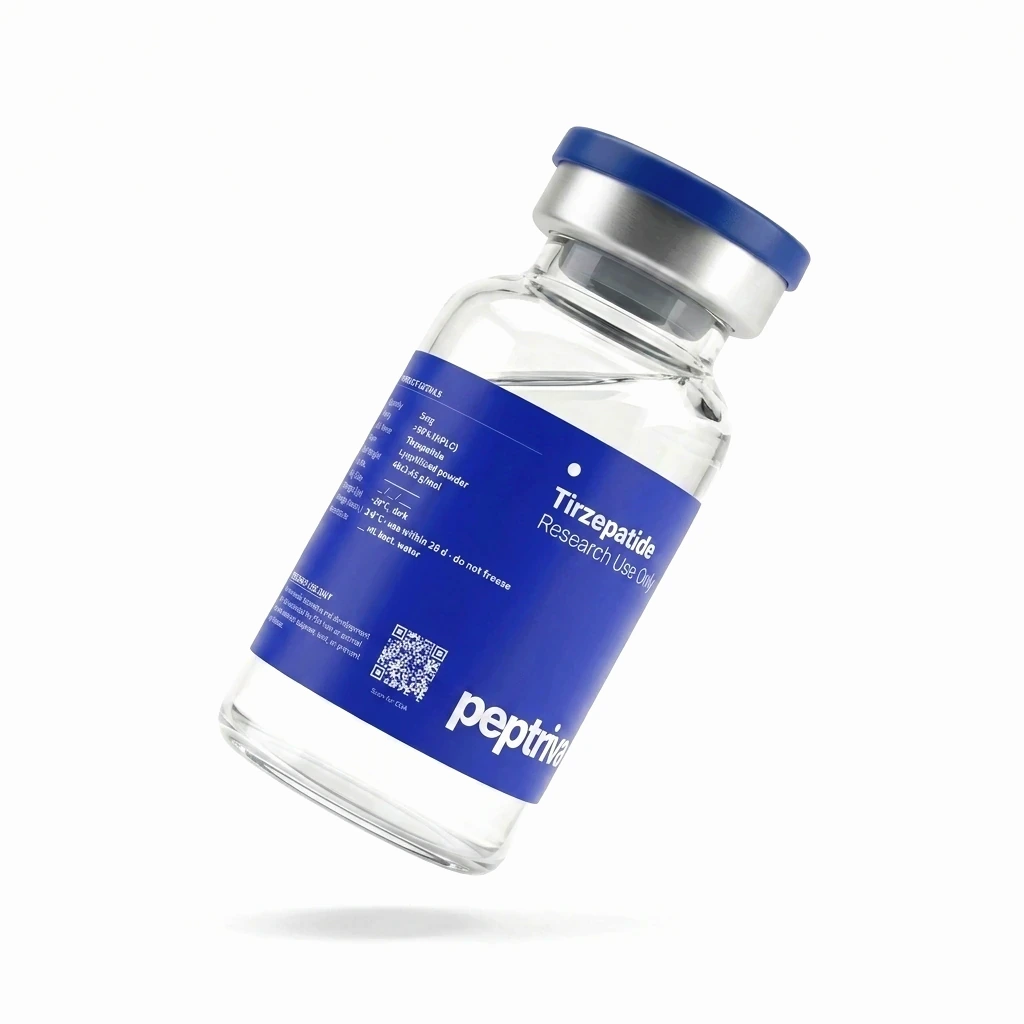
Tirzepatide
The same compound cited across the SURMOUNT and SURPASS Phase III trials in this review. Lab-verified identity and purity.
What did the SURMOUNT obesity trials show?
SURMOUNT-1 was the pivotal trial that secured Zepbound's FDA approval. It ran in NEJM in 2022. Jastreboff and colleagues randomized 2,539 adults with obesity into four arms: tirzepatide 5 mg, 10 mg, 15 mg, or placebo. Adults qualified if their body mass index (BMI, a weight-to-height ratio) sat at 30 or higher, or 27 or higher with at least one weight-related condition. None had T2D. Dosing was once-weekly subcutaneous for 72 weeks.
Here are the headline results.
- 15 mg dose: mean body weight change of −22.5% at 72 weeks
- 10 mg dose: mean body weight change of −21.4% at 72 weeks
- 5 mg dose: mean body weight change of −16.0% at 72 weeks
- Placebo: mean body weight change of −2.4% at 72 weeks
The 22.5% figure was the largest documented for any FDA-approvable obesity therapy at the time. It still sets the Phase III benchmark for dual-agonist compounds.
The threshold-response data went even further. On the 15 mg dose, 91% of participants reached 5% weight loss. 57% reached 20%. 36% reached 25%. On placebo, those numbers were 35%, 3%, and 1.5%.
SURMOUNT-4 tackled the follow-up question: what happens when study participants discontinue tirzepatide? Aronne and colleagues ran a 36-week open-label tirzepatide lead-in. Mean weight loss in that phase: 20.9%. They then randomized 670 participants to continued tirzepatide or placebo for 52 more weeks.
Continued tirzepatide added another 5.5% weight loss. Placebo participants regained 14.0%. The total mean weight change from baseline to week 88 was 25.3% on continued treatment versus 9.9% on placebo.
How SURMOUNT-4 shaped the treatment paradigm
The trial established the chronic-treatment paradigm for the GLP-1 class. Published analyses describe incretin pharmacotherapy as a long-term maintenance intervention rather than a finite course. Discontinuation data from SURMOUNT-4 demonstrated that weight regain is substantial following cessation, prompting investigators and prescribers to frame the drug class comparably to antihypertensive or statin therapy — ongoing rather than time-limited.
Other trials in the SURMOUNT program extended these findings to specific groups. SURMOUNT-2 covered T2D with obesity. SURMOUNT-3 layered intensive lifestyle support. SURMOUNT-MMO is the ongoing cardiovascular morbidity and mortality outcomes trial.
How does tirzepatide compare against semaglutide?
SURPASS-2 settled this question. It established dual agonism as the dominant paradigm in the class.
Frías and colleagues randomized 1,879 adults with T2D inadequately controlled on metformin. Arms: tirzepatide 5 mg, 10 mg, or 15 mg; or semaglutide 1 mg. All once-weekly for 40 weeks. The primary endpoint was change in HbA1c (a 3-month average of blood sugar) at week 40. Key secondary endpoint: weight loss.
HbA1c reductions came out as follows: −2.01% on tirzepatide 5 mg, −2.24% on 10 mg, −2.30% on 15 mg, versus −1.86% on semaglutide 1 mg. Every tirzepatide dose outperformed semaglutide. The 15 mg dose delivered nearly half a percentage point more HbA1c reduction.
Weight loss showed an even larger gap. Tirzepatide 15 mg produced 11.2 kg mean weight loss. Semaglutide 1 mg produced 5.7 kg. That's nearly double. SURPASS-2 ended any serious debate about whether dual agonism produces incrementally larger metabolic effects than single GLP-1 agonism.
Where this falls short
SURPASS-2 used semaglutide at 1 mg (the highest T2D dose), not 2.4 mg (the obesity dose used in Wegovy and STEP-1). A direct head-to-head between tirzepatide 15 mg and semaglutide 2.4 mg for obesity hasn't been published. The cross-trial comparison (SURMOUNT-1 at 22.5% versus STEP-1 at 14.9%) is consistent with SURPASS-2. But cross-trial is not head-to-head. The strongest claim we can make: at matched clinical doses, dual agonism reliably beats single GLP-1.
What about GI tolerability?
Tirzepatide's side-effect profile sets the standard for the dual-agonist class. In SURMOUNT-1, common GI events on the 15 mg dose included nausea in roughly 33% of participants, diarrhea in 22%, constipation in 17%, and vomiting in 12%. Most events were mild-to-moderate, transient, and clustered during the dose-titration phase.
Placebo-arm rates were lower but not negligible: nausea 10%, diarrhea 9%, constipation 6%. That's the background rate of GI symptoms in any large adult population.
Treatment discontinuation rates ran 4–7% across the active arms in SURMOUNT-1. The placebo rate was 3%. That's a small but real tolerability cost. The vast majority of participants who started tirzepatide finished the 72-week trial.
Tirzepatide's gastrointestinal adverse event profile is consistent with the established GLP-1 class — mostly mild-to-moderate nausea, diarrhoea, and constipation during dose escalation, largely resolving with continued treatment. Dose-titration protocols are the clinical answer to most early-phase tolerability problems.
— Jastreboff et al., NEJM, 2022 (paraphrased summary)
Published clinical protocols and the approved prescribing information describe a graduated dose-escalation approach. Trial arms typically employed four-week titration intervals. Analyses of discontinuation data identify the first 12 to 16 weeks of treatment as the highest-risk window for adverse-event-related withdrawal, consistent with the transient nature of GI events observed during up-titration phases.
What about cardiovascular outcomes?
This is the open question for tirzepatide. SURMOUNT-MMO is the dedicated cardiovascular morbidity and mortality outcomes trial. It enrolls roughly 15,000 participants with obesity and established cardiovascular disease. It's the closest analogue to semaglutide's SELECT trial. The primary readout is expected over the next several years.
Strong implication from SURMOUNT-1 and SURMOUNT-4: tirzepatide should produce cardiovascular benefits roughly matched to the weight loss it produces. Blood pressure, lipid panels, waist circumference, and liver-fat markers all improve. But until SURMOUNT-MMO reads out, the cardiovascular claim sits at "highly plausible" rather than "demonstrated." That's the same framing semaglutide carried before SELECT.
SURPASS-CVOT is the parallel trial on the diabetes side. The T2D cardiovascular question is a bit different. T2D pharmacotherapy carries a regulatory expectation of cardiovascular safety demonstrated in dedicated outcomes trials. That expectation comes from the FDA's 2008 guidance after the rosiglitazone controversy.
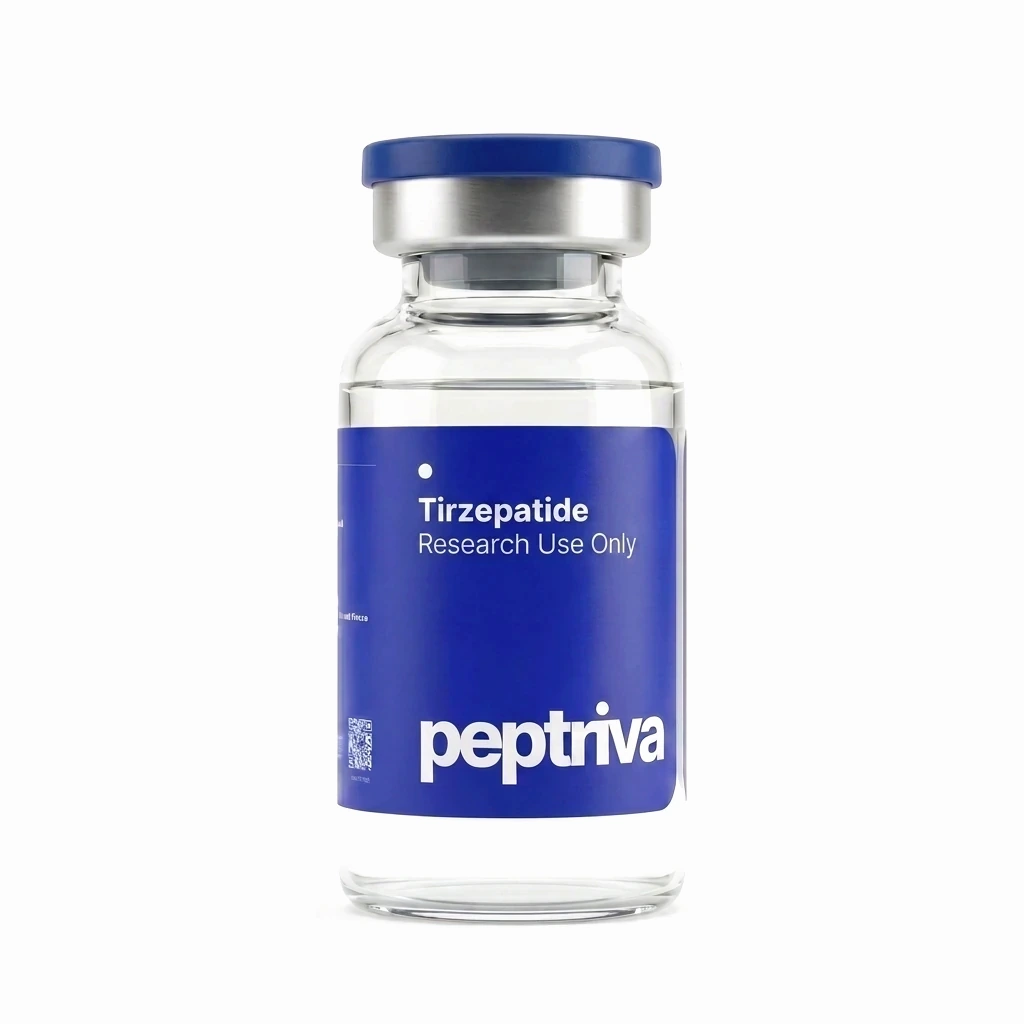
Tirzepatide
39-aa dual GIP/GLP-1 agonist with C20 fatty-diacid acyl chain. The same reference compound used across the cited SURMOUNT and SURPASS trials. COA available with each lot.
Regulatory status and clinical positioning
Tirzepatide has received regulatory approval as Mounjaro (T2D, FDA 2022) and Zepbound (obesity, FDA 2023). The approved obesity indication in SURMOUNT-1 enrolled study participants with BMI of 30 or higher, or BMI of 27 or higher with at least one weight-related comorbidity. Unlike retatrutide, which remains investigational, tirzepatide is commercially available in the US, EU, Canada, and most other major jurisdictions. Global supply constraints reported in 2023–2024 have substantially eased.
SURMOUNT-4 data established that discontinuation produces substantial weight regain, leading investigators to frame tirzepatide as a long-term maintenance therapy rather than a finite-course intervention — a model analogous to antihypertensive or lipid-lowering pharmacotherapy. Week 16 response data (defined as ≥5% body weight reduction) have been identified in analyses as an early predictor of long-term treatment success.
The SURMOUNT and SURPASS trial programs also documented the following secondary endpoints across research cohorts: reductions in systolic blood pressure, improvement in lipid parameters, and decreases in waist circumference. These findings are consistent with expected metabolic improvements associated with the magnitude of body weight change observed.
What to know now
- Mechanism: Dual agonist at GIP and GLP-1 receptors. The first approved drug to engage both incretin pathways.
- SURMOUNT-1 headline: 22.5% mean weight loss at 72 weeks on the 15 mg dose. 91% of participants reached 5% weight loss.
- SURMOUNT-4 maintenance: 25.3% overall mean weight loss at week 88 with continued treatment. 14% regain on placebo discontinuation.
- SURPASS-2 head-to-head: Tirzepatide beat semaglutide 1 mg at every dose on HbA1c and weight loss in T2D.
- Tolerability: ~33% nausea, ~22% diarrhea, ~12% vomiting at 15 mg dose. Mostly mild-to-moderate. 4 to 7% discontinue for adverse events.
- Regulatory status: FDA-approved for T2D (Mounjaro, 2022) and obesity (Zepbound, 2023). Globally available.
- Cardiovascular outcomes: SURMOUNT-MMO ongoing. A SELECT-equivalent CV benefit demonstration is still pending.
What we’re watching
Four things over the next 18 to 24 months. First, the SURMOUNT-MMO cardiovascular outcomes readout. The question is whether tirzepatide matches semaglutide's SELECT reduction in major adverse cardiovascular events. Second, the retatrutide Phase III TRIUMPH readouts and the eventual head-to-head data. Tirzepatide's positioning shifts depending on whether it's the current best-in-class or the previous best-in-class. Third, oral incretin formulations. Orforglipron and similar oral candidates are working through Phase III and could shift tirzepatide's place in the prescribing algorithm. Fourth, the durability question past two years. Tirzepatide's longest published data is 88 weeks. Multi-year sustainability is the next frontier.
References
- Jastreboff, A. M., Aronne, L. J., Ahmad, N. N., et al. (2022). Tirzepatide once weekly for the treatment of obesity. New England Journal of Medicine, 387(3), 205–216. https://doi.org/10.1056/NEJMoa2206038
- Frías, J. P., Davies, M. J., Rosenstock, J., et al. (2021). Tirzepatide versus semaglutide once weekly in patients with type 2 diabetes. New England Journal of Medicine, 385(6), 503–515. https://doi.org/10.1056/NEJMoa2107519
- Aronne, L. J., Sattar, N., Horn, D. B., et al. (2024). Continued treatment with tirzepatide for maintenance of weight reduction in adults with obesity: The SURMOUNT-4 randomized clinical trial. JAMA, 331(1), 38–48. https://doi.org/10.1001/jama.2023.24945
- Jastreboff, A. M., Kaplan, L. M., Frías, J. P., et al. (2023). Triple-hormone-receptor agonist retatrutide for obesity — A Phase 2 trial. New England Journal of Medicine, 389(6), 514–526. https://doi.org/10.1056/NEJMoa2301972
- Melson, E., Ashraf, U., Papamargaritis, D., & Davies, M. J. (2024). What is the pipeline for future medications for obesity? International Journal of Obesity, 49(3), 433–451. https://doi.org/10.1038/s41366-024-01473-y