The 2026 landscape of GLP-1 agonists spans six compounds and three mechanism generations. Two are FDA-approved. Four remain investigational. Research into this class has expanded rapidly, covering weight-reduction magnitude, cardiovascular outcomes, and metabolic endpoints across diverse trial populations.
The 2026 GLP-1 / multi-agonist class breaks into three tiers. Two are FDA-approved (semaglutide / Wegovy, tirzepatide / Zepbound). Two completed Phase III in 2025 (CagriSema, mazdutide). Two are mid-Phase III (retatrutide, survodutide). Mean weight reduction in pivotal trials ranges from approximately 15% (semaglutide) to 24% (retatrutide Phase II) — Phase II figures have historically regressed at Phase III scale. Broader receptor engagement has generally tracked with greater weight-reduction magnitude, accompanied by greater side-effect complexity. For cardiovascular endpoints, semaglutide's SELECT trial remains the only published proof of CV event reduction in this class; tirzepatide's CV outcome trials are pending.
Five years ago, this article would've been one paragraph on semaglutide. Today it's a class snapshot of the fastest-moving field in modern medicine.
The 2024 Melson review in International Journal of Obesity captured the pipeline immediately before the 2025 readouts. The REDEFINE and GLORY-1 trials subsequently filled in the class picture. This review summarises where each compound stands as of May 2026, how they differ mechanistically, and what the published trial data shows for each regulatory tier.
Class comparison table (May 2026)
| Compound | Receptors | Peak weight loss | FDA approval | Brand / sponsor |
|---|---|---|---|---|
| Semaglutide | GLP-1 (single) | 14.9% / 68 wk (STEP-1, 2.4 mg) | Approved (Wegovy 2021, Ozempic 2017) | Wegovy / Ozempic · Novo Nordisk |
| Tirzepatide | GIP + GLP-1 (dual) | 22.5% / 72 wk (SURMOUNT-1, 15 mg) | Approved (Zepbound 2023, Mounjaro 2022) | Zepbound / Mounjaro · Eli Lilly |
| CagriSema | Amylin + GLP-1 (dual) | 20.4% / 68 wk (REDEFINE 1, 2.4+2.4 mg) | Submission expected | (no brand yet) · Novo Nordisk |
| Mazdutide | GLP-1 + glucagon (dual) | 14.0% / 48 wk (GLORY-1, 6 mg) | Not approved (China-first; expected 2026) | IBI362 · Innovent / Eli Lilly |
| Survodutide | GLP-1 + glucagon (dual) | ~14–18% Phase II (obesity) | Not approved; Phase III ongoing | BI 456906 · Boehringer Ingelheim |
| Retatrutide | GIP + GLP-1 + glucagon (triple) | 24.2% / 48 wk Phase II (NEJM 2023, 12 mg) | Not approved; Phase III TRIUMPH ongoing | LY3437943 · Eli Lilly |
Single, dual, triple: the mechanism ladder
The class evolved from single-receptor to multi-receptor agonism. Each receptor contributes distinct pharmacology. Combining them has generally produced greater weight-reduction in trial populations:
- GLP-1 (the foundation). A gut-derived incretin that promotes insulin secretion, slows gastric emptying, and modulates hypothalamic appetite circuits. Semaglutide is a selective GLP-1 receptor agonist.
- GIP (the second incretin). Augments insulin secretion and has been reported to influence adipose energy metabolism. Tirzepatide co-activates GIP and GLP-1 receptors.
- Glucagon (the energy-expenditure axis). Promotes hepatic fat oxidation and raises energy expenditure. Glucagon co-agonism is the mechanistic rationale for MASH indications studied with mazdutide, survodutide, and retatrutide.
- Amylin (a non-incretin satiety pathway). Acts via calcitonin-receptor–based heterodimers. CagriSema co-activates amylin and GLP-1 pathways, reaching 20%+ mean weight reduction in the REDEFINE-1 trial without a glucagon component.
More receptors usually means more weight loss. But it also means more mechanism to manage. Retatrutide's glucagon arm drives the 24.2% Phase II headline — and the dose-dependent heart-rate bump Jastreboff's team saw in NEJM 2023. Survodutide's glucagon arm makes it useful for liver disease but adds liver-enzyme checks to the monitoring list.
The FDA-approved pair: semaglutide vs tirzepatide
Two compounds in the class hold FDA approval. Both have accumulated multi-year Phase III data. The published evidence distinguishes them on two axes: magnitude of weight reduction in pivotal trials, and strength of cardiovascular outcomes data.
Semaglutide (Wegovy / Ozempic / Rybelsus)
The original Phase III obesity trial was STEP-1, published by Wilding's team in NEJM 2021. Result: 14.9% weight loss over 68 weeks on 2.4 mg weekly. The cardiovascular outcomes trial was SELECT (Lincoff et al., NEJM 2023), which followed 17,604 adults with heart disease plus overweight or obesity. Headline: 20% fewer major heart events.
SELECT is the gold-standard CV outcomes trial in the class. Semaglutide's established cardiovascular data has supported its use in study populations with pre-existing cardiovascular disease even where other compounds show larger weight-reduction magnitudes.
Tirzepatide (Zepbound / Mounjaro)
SURMOUNT-1 (Jastreboff et al., NEJM 2022) ran the obesity trial: 22.5% weight loss at 72 weeks on 15 mg weekly. SURPASS-2 (Frías et al., NEJM 2021) put tirzepatide head-to-head against semaglutide in type 2 diabetes. Tirzepatide won every endpoint.
The catch: tirzepatide's heart-outcomes trials (SURPASS-CVOT, SURMOUNT-MMO) are still running. The mechanism predicts a SELECT-like benefit. But predicted isn't proven — we'll know in 2026 or 2027.
Comparing the two. Tirzepatide demonstrated greater mean weight reduction in pivotal trials. Semaglutide is the only compound in the class with a published cardiovascular outcomes trial (SELECT). GI side-effect profiles are broadly similar. The trial evidence for each compound is summarised in the referenced studies.
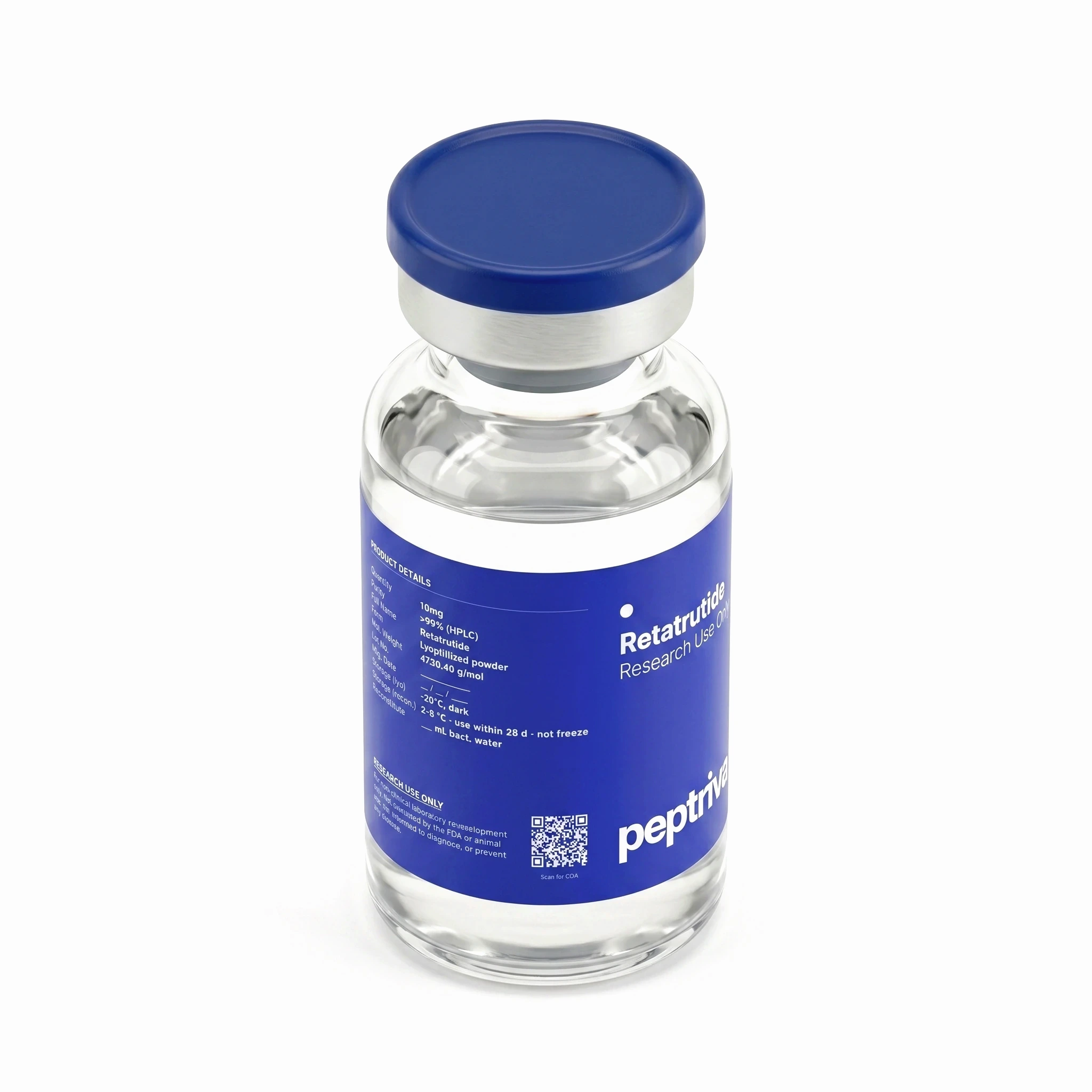
Retatrutide
The triple-agonist compound cited across the Phase 2 retatrutide readout in this class snapshot. Lab-verified identity and purity.
Submission-stage: CagriSema and mazdutide
Two compounds finished Phase III in 2025 and are queuing for approval. Both should land within 12 to 24 months.
CagriSema (amylin + GLP-1)
REDEFINE 1 (Garvey et al., NEJM 2025) enrolled 3,417 adults with obesity but no diabetes. Result: 20.4% weight loss at 68 weeks vs −3.0% on placebo. The combo is cagrilintide 2.4 mg plus semaglutide 2.4 mg.
REDEFINE 2 (Davies et al., NEJM 2025) tested the same compound in 1,206 study participants with obesity and type 2 diabetes: 13.7% mean weight loss vs −3.4% placebo. 73.5% of CagriSema-treated participants reached an HbA1c below 6.5%, consistent with normoglycaemic targets used in the trial's secondary endpoints. Novo Nordisk is preparing its FDA submission.
CagriSema's mechanistic feature: amylin is a non-incretin satiety hormone working through calcitonin-receptor–based heterodimers. Co-activation of amylin and GLP-1 pathways produced 20%+ mean weight reduction in the REDEFINE-1 trial without the glucagon co-agonism present in mazdutide, survodutide, and retatrutide.
Mazdutide (GLP-1 + glucagon)
GLORY-1 (Ji et al., NEJM 2025) tested 610 Chinese adults with obesity. Result: 14.0% weight loss at 48 weeks on 6 mg weekly, vs +0.3% on placebo. The standout number: 0.5% discontinuation due to side effects — lower than any other compound in the class.
Regulatory context: mazdutide is China-first. GLORY-1 enrolled Chinese adults and Innovent Biologics' primary regulatory pathway targets NMPA approval before any Western submission. Western regulatory engagement remains an open question as of May 2026.
Investigational: retatrutide and survodutide
Retatrutide (triple agonist)
The triple agonist (GIP + GLP-1 + glucagon) from Eli Lilly. Phase II data (Jastreboff et al., NEJM 2023) in 338 adults: 24.2% weight loss at 48 weeks on 12 mg. Largest weight-loss magnitude ever published for any obesity drug.
The Phase III TRIUMPH program is ongoing. Realistic FDA approval is 2028 to 2029 if Phase III holds up. The signal Phase III needs to watch: a dose-related heart-rate bump that peaked at week 24 then drifted back down. Whether that signal stays benign at scale is the open question.
Survodutide (GLP-1 + glucagon)
Boehringer Ingelheim's dual GLP-1 / glucagon agonist. Phase II mean weight reduction was in the 14–18% range. Phase III programmes are running for both obesity and MASH (metabolic dysfunction-associated steatohepatitis). The 2024 Lawitz paper in Journal of Hepatology reported comparable pharmacokinetics in study participants with advanced cirrhosis versus those without hepatic impairment — a finding relevant to the MASH Phase III programme design.
Both retatrutide and survodutide remain pre-approval investigational compounds. Research outside a registered clinical trial relies on research-grade reference material; neither compound has an approved prescribing indication in any jurisdiction as of May 2026.
Heart outcomes: SELECT is still the only proof
Cardiovascular outcomes have become the second primary comparative axis for this class, alongside weight-reduction magnitude. Semaglutide is the only compound in the class with published positive CV outcomes data. SELECT demonstrated 20% fewer major adverse cardiovascular events in 17,604 adults with pre-existing cardiovascular disease.
Tirzepatide's CV trials (SURPASS-CVOT for diabetes, SURMOUNT-MMO for obesity) read out in 2026 or 2027. The mechanism predicts benefit, but predicted isn't proven.
For the investigational tier (retatrutide, survodutide), dedicated CV outcomes trials are 5 to 7 years out. Each one needs Phase III, then approval, then a separate huge outcomes trial. Retatrutide's Phase II heart-rate signal adds another monitoring expectation when those trials run.
Adding glucagon to the mechanism gives retatrutide the extra weight loss and the heart-rate signal. Phase III will tell us whether both effects hold up at scale.
— Melson et al., International Journal of Obesity, 2024 (paraphrased)
On published cardiovascular evidence as of May 2026, semaglutide's SELECT data stands alone in the class. CV outcome data for every other compound in this review is pending.
Adverse events: mostly GI, mostly transient
All six compounds produced broadly similar GI adverse-event profiles in pivotal trials — nausea, vomiting, diarrhoea, constipation, and abdominal discomfort. Events were most frequent during titration phases and generally diminished at maintenance doses. Published "any GI adverse event" rates at top dose:
- Semaglutide: 60 to 80% (STEP-1)
- Tirzepatide: 60 to 80% (SURMOUNT-1)
- CagriSema: ~80% (REDEFINE 1/2)
- Mazdutide: typical rates, but standout-low 0.5 to 1.5% discontinuation (GLORY-1)
- Survodutide: typical rates, holds up in cirrhosis without dose changes
- Retatrutide: 80 to 85% Phase II, plus the dose-related heart-rate increase
Discontinuation due to adverse events in published trials was approximately 4 to 7% for the approved compounds. Retatrutide discontinuation rates were higher at top Phase II doses. Phase III titration refinements typically reduce these rates relative to Phase II data.
Regulatory and access status
The two FDA-approved compounds (semaglutide / Wegovy, tirzepatide / Zepbound) are available in the United States through licensed prescribers. CagriSema and mazdutide have no approved Western indication as of May 2026; regulatory submissions are anticipated. Retatrutide and survodutide remain in Phase III clinical development.
CagriSema and mazdutide have no listed Western retail prices pending approval. Retatrutide and survodutide have no approved prescribing indication in any jurisdiction.
Research-use context. All six compounds represent characterised pharmacology with published clinical trial data. Reference-standard material from qualified suppliers supports in-vitro receptor-binding and mechanistic research. Manufacturing provenance, purity documentation (COA per lot), and analytical characterisation are the key selection criteria for research-grade sourcing.
What's coming in 2026 to 2028
The next 24 months will redraw this comparison. Eight milestones to watch:
- Tirzepatide CV outcomes (SURPASS-CVOT, SURMOUNT-MMO). Likely 2026 to 2027. Closes the main gap vs semaglutide.
- CagriSema FDA submission. Approval window 2026 to 2027.
- Mazdutide China approval. Western regulatory engagement is the open question.
- Retatrutide TRIUMPH-1 obesity readout. Likely 2026 to 2027.
- Retatrutide TRIUMPH MASH and T2D readouts. Likely 2027 to 2028.
- Retatrutide FDA approval. Realistic window 2028 to 2029 if Phase III readouts hold up.
- Survodutide Phase III for obesity and liver disease (MASH). Through 2027.
- Oral incretins. Orforglipron (Eli Lilly) is in Phase III. The first pill versions of this drug class.
The 2028 class picture is likely to include: tirzepatide and semaglutide with mature CV outcome data; CagriSema approved; mazdutide approved in China with possible Western regulatory engagement initiated; retatrutide approved or near submission; survodutide in the approval queue; and oral incretin options entering the approved tier — which would alter the route-of-administration landscape for the class.
Matching compound to indication: what the trial data shows
Published trial evidence maps compounds to specific research contexts:
- Greatest mean weight reduction in Phase III: Tirzepatide (Zepbound) — 22.5% at 72 weeks in SURMOUNT-1, the largest Phase III magnitude in an approved compound.
- Established cardiovascular outcomes data: Semaglutide — the only compound in the class with a published, positive CV outcomes trial (SELECT, NEJM 2023).
- Type 2 diabetes population: SURPASS-2 reported tirzepatide superiority over semaglutide on all glycaemic endpoints; semaglutide remains the comparator with published CV outcome data.
- Liver disease (MASH) indication: Glucagon co-agonists (survodutide, mazdutide, retatrutide) are mechanistically active on hepatic fat; dedicated MASH Phase III programmes are underway. No compound in this class held an approved MASH indication as of May 2026.
- Investigational compounds (retatrutide, survodutide): Phase III data are pending. Research use relies on reference-standard material; these compounds have no approved prescribing indication.
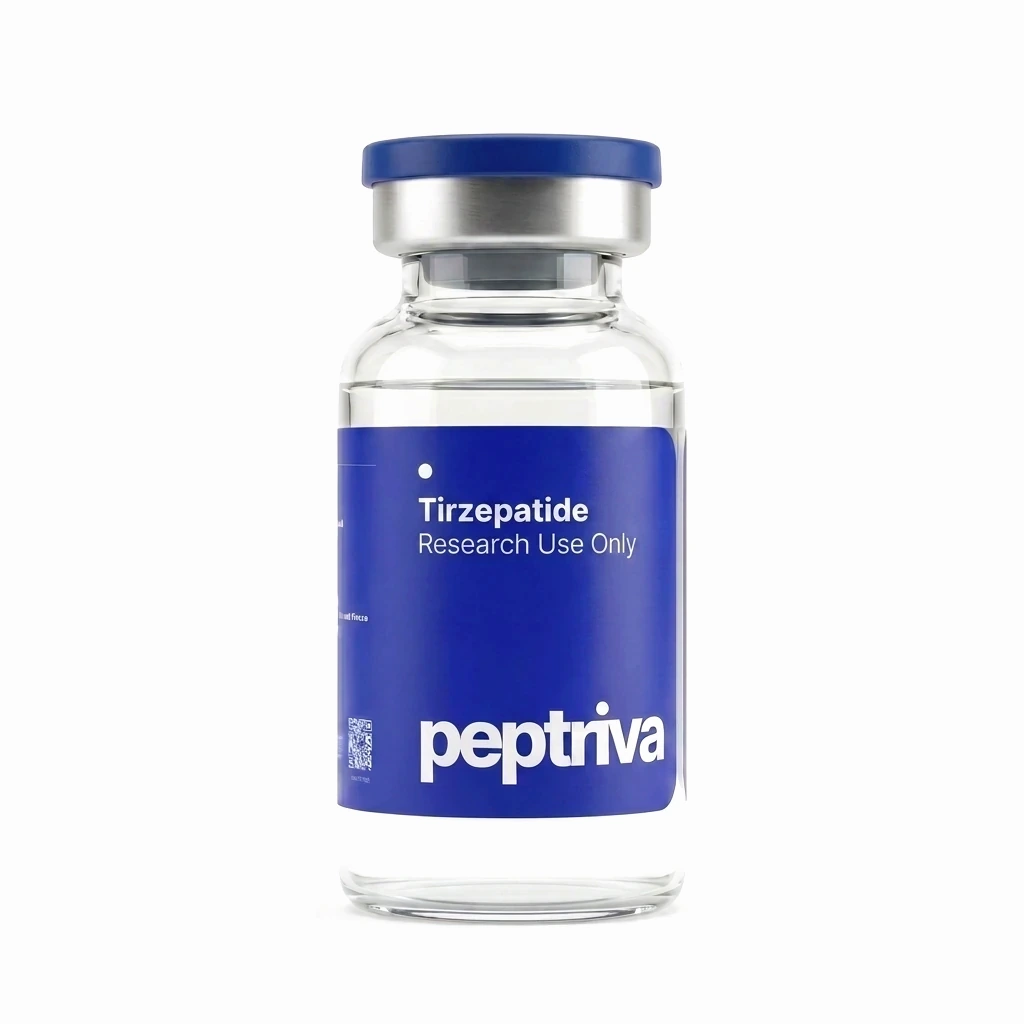
Tirzepatide
39-aa dual GIP/GLP-1 agonist with C20 fatty-diacid acyl chain. The same reference compound used across the cited SURMOUNT trials and class-comparison literature. COA available with each lot.
What to know now
- Two approved. Semaglutide (Wegovy / Ozempic) and tirzepatide (Zepbound / Mounjaro) hold FDA approval for obesity indications as of May 2026.
- Two completing Phase III. CagriSema (REDEFINE 1/2) and mazdutide (GLORY-1) reported positive Phase III results in 2025; regulatory submissions are anticipated.
- Two in mid-Phase III. Retatrutide (TRIUMPH programme) and survodutide are ongoing. Realistic approval window: 2028–2029.
- Mechanism ladder. Published trial data broadly correlate broader receptor-agonist profiles (single → dual → triple) with greater mean weight-reduction magnitude.
- Cardiovascular outcomes. Semaglutide's SELECT trial (20% reduction in MACE) is the only published positive CV outcomes trial in the class. Tirzepatide's CV trials are expected to read out in 2026–2027.
- Liver disease (MASH). Glucagon co-agonists (survodutide, mazdutide, retatrutide) are under active investigation for MASH indications; none hold an approved MASH label as of May 2026.
- Weight regain after discontinuation. Studies report substantial weight regain following cessation of GLP-1 agonist treatment, consistent with the pharmacological mechanism (STEP 4 extension data).
- Reference-standard sourcing. Research-use material requires COA per lot, verified identity, and documented purity — the same quality criteria apply regardless of regulatory tier.
What we’re watching
Four milestones over the next 24 months. First, tirzepatide's CV outcomes trials (SURPASS-CVOT, SURMOUNT-MMO) — the SELECT-equivalent data that would complete the cardiovascular evidence picture for the class. Second, CagriSema FDA submission — the first novel mechanism (amylin co-agonism) to reach the approved tier since tirzepatide in 2023. Third, retatrutide TRIUMPH-1 — whether the 24.2% Phase II mean weight reduction holds at Phase III scale or regresses as Phase II figures frequently do. Fourth, oral incretins: orforglipron (Eli Lilly) is in Phase III, which would introduce a non-injectable route for this compound class.
References
- Wilding, J. P. H., Batterham, R. L., Calanna, S., et al. (2021). Once-weekly semaglutide in adults with overweight or obesity. New England Journal of Medicine, 384(11), 989–1002. https://doi.org/10.1056/NEJMoa2032183
- Jastreboff, A. M., Aronne, L. J., Ahmad, N. N., et al. (2022). Tirzepatide once weekly for the treatment of obesity. New England Journal of Medicine, 387(3), 205–216. https://doi.org/10.1056/NEJMoa2206038
- Lincoff, A. M., Brown-Frandsen, K., Colhoun, H. M., et al. (2023). Semaglutide and cardiovascular outcomes in obesity without diabetes. New England Journal of Medicine, 389(24), 2221–2232. https://doi.org/10.1056/NEJMoa2307563
- Jastreboff, A. M., Kaplan, L. M., Frías, J. P., et al. (2023). Triple-hormone-receptor agonist retatrutide for obesity — A Phase 2 trial. New England Journal of Medicine, 389(6), 514–526. https://doi.org/10.1056/NEJMoa2301972
- Garvey, W. T., Blüher, M., Osorto Contreras, C. K., et al. (2025). Coadministered cagrilintide and semaglutide in adults with overweight or obesity. New England Journal of Medicine, 393(7), 635–647. https://doi.org/10.1056/NEJMoa2502081
- Davies, M. J., Bajaj, H. S., Broholm, C., et al. (2025). Cagrilintide-semaglutide in adults with overweight or obesity and type 2 diabetes. New England Journal of Medicine, 393(7), 648–659. https://doi.org/10.1056/NEJMoa2502082
- Ji, L., Jiang, H., Bi, Y., et al. (2025). Once-weekly mazdutide in Chinese adults with obesity or overweight. New England Journal of Medicine, 392(22), 2215–2225. https://doi.org/10.1056/NEJMoa2411528
- Melson, E., Ashraf, U., Papamargaritis, D., & Davies, M. J. (2024). What is the pipeline for future medications for obesity? International Journal of Obesity, 49(3), 433–451. https://doi.org/10.1038/s41366-024-01473-y