Every research-peptide vial carries the phrase: “For laboratory research use only. Not for human or veterinary use.” The RUO label isn’t marketing fluff. It’s a specific regulatory category. Knowing what it covers (and doesn’t) is the difference between buying a research tool and buying a drug.
“Research use only” (RUO) is the labeling category that separates lab reagents from human or veterinary medicines. RUO products are made under chemistry standards appropriate for lab work, not under the strict pharmaceutical (cGMP) rules drugs require. Under FDA policy, anything marketed for human use must be an approved drug. Anything marketed for research use is a reagent. The category covers most peptides discussed in fitness and longevity communities. BPC-157, TB-500, MOTS-c, GHK-Cu, the GHRP family, the Russian-origin nootropic peptides. None of them have passed full FDA human-drug review.
RUO exists because the modern life-sciences economy depends on a huge market of reagents that are useful for lab research but never meant for human use. Restriction enzymes, antibodies, fluorescent dyes, diagnostic precursors, custom peptide tools for receptor-binding studies. All of these need to be commercially available. All of them need to be clearly separated from products held to drug-approval standards. RUO is the label that does the separating.
Where the framing comes from
The Federal Food, Drug, and Cosmetic Act defines a “drug” partly by intended use. An article is a drug if it’s “intended for use in the diagnosis, cure, mitigation, treatment, or prevention of disease,” or if it’s “intended to affect the structure or any function of the body of man or other animals” (21 U.S.C. §321(g)(1)). Anything marketed for those uses falls under FDA new-drug approval rules. Anything marketed exclusively for lab research doesn’t.
The FDA spelled this out more clearly in the 2013 guidance “Distribution of In Vitro Diagnostic Products Labeled for Research Use Only or Investigational Use Only.” The guidance focuses on diagnostic reagents but lays out the broader principle. A product can be legally sold as a research reagent if it’s labeled that way, sold only to qualified research customers, and not promoted for clinical use. The same logic governs research-grade chemicals and peptides by extension.
The practical implication: a peptide labeled “research use only” can be legally made and sold for lab use without going through the full Investigational New Drug (IND) and New Drug Application (NDA) processes that pharmaceutical drugs require. The seller is not making any therapeutic claim about it.
What RUO permits
RUO is a permission, not a restriction in the way most people assume. Within its limits, it allows a lot:
- Manufacture and sale of synthetic peptides to lab researchers for in-vitro work. Receptor-binding assays, cell-culture experiments, molecular biology research.
- Description of the molecule’s biochemistry. CAS number, molecular formula, mechanism of action in preclinical models, citation of peer-reviewed literature.
- Sale of multiple research grades at varying purity levels appropriate for different research uses.
- Educational discussion of peer-reviewed studies involving the molecule, including human studies where they exist (most RUO peptides have very few).
What RUO excludes
The other side of the framing is what RUO explicitly does not allow:
- Marketing for human use, veterinary use, or therapeutic application. The label is binding both legally and commercially. Sellers can’t claim therapeutic benefit without crossing into drug-marketing territory.
- Dosing recommendations for humans. The product is for in-vitro research. No validated human dosing protocol exists because no human trials have been done under IND review.
- Claims of FDA approval, safety, or efficacy in humans. By definition, RUO products have not gone through human-drug review.
- Manufacture under cGMP standards. RUO production runs under analytical-chemistry-grade standards, not cGMP. Identity and purity get verified by HPLC and mass spec. cGMP adds extensive process validation, environmental monitoring, and batch documentation on top of that.
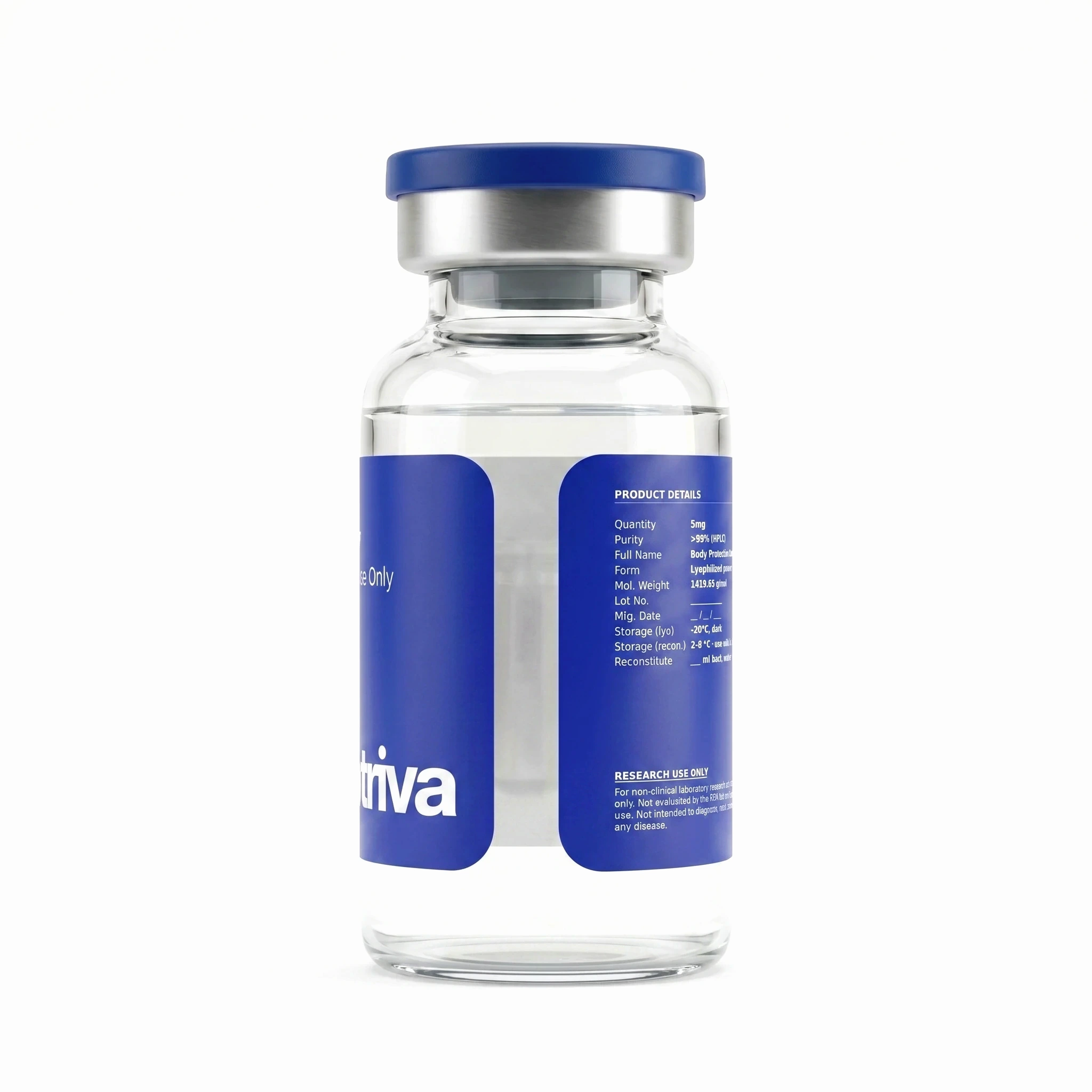
BPC-157
A representative research-use-only peptide — widely used in preclinical literature, supplied for laboratory work only. Identity and purity verified by third-party lab.
RUO vs cGMP: the real quality gap
The most common misunderstanding about RUO is that it means low quality. It doesn’t. RUO and cGMP are different standards. The gap between them isn’t purity. Serious RUO suppliers test to 98% or 99% HPLC purity, the same number you’ll see on many pharmaceutical-grade peptides. The gap is in process documentation and validation.
Pharmaceutical cGMP (current Good Manufacturing Practices, written into 21 CFR Parts 210, 211, and the 600 series for drugs) requires extensive documentation of every step in the synthesis. Plus environmental monitoring of the facility, validated cleaning procedures, batch genealogy records, change-control rules, and periodic regulatory inspections. The intent: reproducibility and traceability for a product going into humans.
RUO production doesn’t require any of that. The endpoint is the same. Identity and purity verified by lab tests. But the process around that endpoint is much lighter. That’s appropriate for lab reagents. It’s not appropriate for therapeutic use. Which is why RUO products carry the label they do.
The regulatory distinction between research reagents and approved drugs isn’t primarily about the chemistry of the molecule. It’s about the system of evidence that supports the claim that the molecule is safe and effective for human use. Without that system — preclinical safety, Phase I tolerability, Phase II efficacy, Phase III confirmation — the molecule cannot legally be marketed as a drug.
— U.S. FDA, Office of Combination Products guidance
Why this matters for buyers
Three practical things fall out of the framing.
First. RUO peptides are sold for in-vitro research. The supplier’s quality controls are calibrated to that purpose. Identity and purity get verified. Drug-product standards like sterility, pyrogenicity, container compatibility, and patient-use shelf life usually don’t.
Second. The lack of FDA approval doesn’t mean the molecule is unsafe. It means nobody’s studied it at the depth approval requires. There’s often plausible preclinical evidence, sometimes substantial. But absence of approval is absence of approval, not refutation.
Third. Legal responsibility for anything done with an RUO product rests with the buyer. Suppliers operate inside the RUO regulatory framing. That framing exists precisely because the supplier hasn’t taken on the evidentiary burden of a drug approval.
The shifting edges of the category
RUO is the stable core of the framing. Its edges keep moving. Three trends in particular.
The FDA bulk substances list for compounding pharmacies under Section 503A has reclassified several peptides since 2020. BPC-157 moved to Category 2 in late 2023. That category means “serious safety concerns identified or insufficient history of use.” It effectively blocks licensed compounding pharmacies from preparing BPC-157 for clinical use. The change doesn’t touch the RUO category directly. Research-use sales aren’t compounding. But it signals tightening at the compounding-pharmacy layer.
State-level regulation of peptide sales has popped up in several U.S. states, sometimes adding restrictions on top of federal rules. The patchwork is uneven right now and likely to stay that way for a while.
The World Anti-Doping Agency (WADA) Prohibited List includes many research peptides under the “S0 Non-Approved Substances” category. The S0 category captures “any pharmacological substance which is not addressed by any of the subsequent sections of the List and with no current approval by any governmental regulatory health authority for human therapeutic use.” BPC-157 was added in January 2022. Many others have been on the list for longer. WADA testing reaches competitive athletes regardless of the underlying compound’s RUO framing. This matters if you compete in WADA-tested sport.
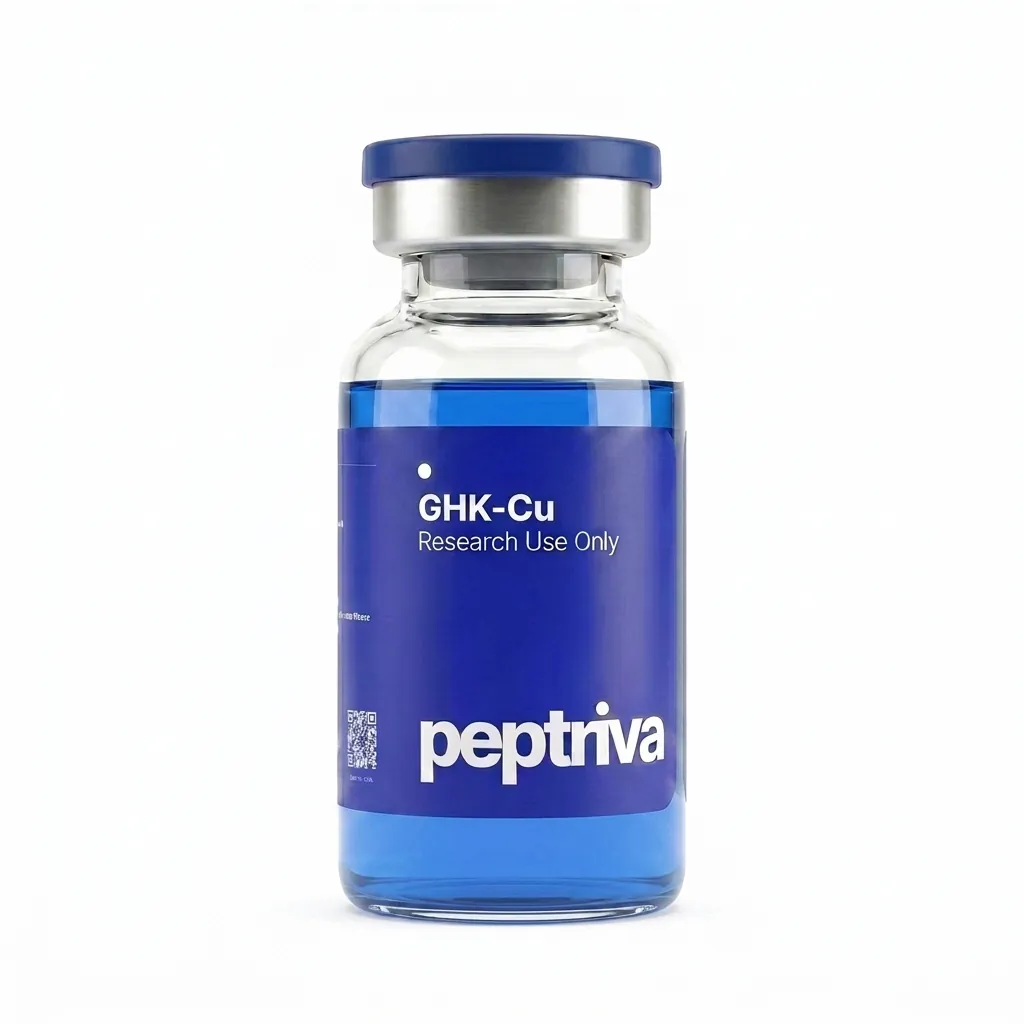
GHK-Cu
Copper-binding tripeptide · Gly-His-Lys, blue lyophilized powder. A research-use-only peptide. Lab-verified identity and purity; COA available with each lot.
Reading the label, accurately
The phrase “For laboratory research use only. Not for human or veterinary use.” is doing three jobs at once. It defines the supplier’s commercial intent (we sell research reagents). It tells regulators the product isn’t in the drug category (we haven’t made therapeutic claims and aren’t subject to drug-approval rules). And it frames the customer relationship (you’re a research buyer; what you do with the material is your responsibility).
That third part is the one most often skipped. The RUO label isn’t a clever workaround. It’s a definition that hands evidentiary and legal responsibility to the buyer for any non-research use. That’s why every page on this site (including this one) carries the same RUO banner. It’s the category definition that lets the entire research-peptide market exist.
Where this falls short: the shortest version. “Research use only” means the molecule is sold as a lab reagent, not a drug. It isn’t regulated like a drug, hasn’t been approved as a drug, and the supplier makes no therapeutic claims about it. Whether it could eventually become a drug depends on whether anyone funds the trials. For most peptides in the category, nobody has.
What to know now
- RUO is a regulatory category, not a disclaimer. It defines the product as a laboratory reagent rather than a drug.
- Origin: the FFDCA’s definition of “drug” turns on intended use. Products marketed exclusively for research aren’t drugs.
- What it permits: manufacture, sale, and biochemistry discussion of research reagents for laboratory work.
- What it excludes: marketing for human use, therapeutic claims, human dosing recommendations, claims of FDA approval.
- RUO vs cGMP: both can achieve ≥99% purity. The difference is process documentation and validation, not the analytical endpoint.
- Adjacent regulations: 503A compounding rules, state-level peptide statutes, and WADA prohibited lists all interact with the RUO framing differently and shift over time.
What we’re watching
Two regulatory trends to track. First, the FDA’s continued reclassification activity on the Section 503A bulk substances list — several peptides have moved between categories in the past three years, and those moves change which compounded peptides are legally accessible to clinical patients. Second, state-level peptide statutes — the patchwork emerging in 2024–2026 is likely to expand before it consolidates. None of this changes the RUO framing for research use, but the wider regulatory landscape around peptides is in unusual motion right now.
References
- U.S. Food and Drug Administration. (2013). Distribution of in vitro diagnostic products labeled for research use only or investigational use only: Guidance for industry and FDA staff. FDA RUO/IUO guidance
- 21 U.S.C. §321(g)(1). Federal Food, Drug, and Cosmetic Act: Definitions — Drug. FFDCA full text
- U.S. Food and Drug Administration. (2023). Bulk drug substances nominated for use in compounding under section 503A. FDA.gov. FDA bulk substances list
- World Anti-Doping Agency. (2024). The 2024 Prohibited List. WADA Prohibited List