Most research peptides can’t prove what’s in the vial. Ours prove it twice.
Peptriva rebuilt the supply chain around one rule: no lot ships until an independent U.S. lab verifies it a second time. Because you can forge a COA. You cannot forge two labs. Here is the whole system, and how to check it yourself before you spend a dollar.
By the Peptriva quality team·Updated August 18, 2026·7 min read
Before What most listings give you
“99% pure”
A number typed on a product page. No lot. No lab. No method. And a forged certificate looks exactly like a real one on your screen.
After What every Peptriva lot ships with
IdentityLC-MS · spec match
PurityHPLC · ≥99% area
EndotoxinLAL · pass
Net contentmg · measured
Heavy metalsPb · Cd · Hg · As · not detected
Lot numberprinted on your vial
Tested underISO/IEC 17025USP-NFILAC MRA
Left: the industry standard. Right: what ships with every Peptriva lot. Research use only.
The problem
Three fears run this market. All of them are rational.
Talk to anyone who buys research peptides and the same three worries come up. Is the material actually what the label says? Is the paperwork real? And will the box even show up? None of that is paranoia. It is the predictable result of how this supply chain is built.
Most peptides sold in the U.S. are synthesized overseas, by manufacturers you cannot look up, audit, or call. The certificate that travels with the material is usually commissioned by the same people selling it. That is not a check. That is a seller grading its own homework.
And here is the part the industry does not put on its product pages. A COA is a PDF. A PDF can be edited, reused across batches, or written from scratch for material that was never tested at all. Vials have shipped carrying the wrong molecule entirely, under paperwork that looked perfect. A forged certificate and a real one are pixel for pixel identical on your screen. The only way to tell them apart is to test the material itself, again, somewhere the seller does not control.
We learned this while building our own catalog. Every supplier we screened arrived with confident paperwork. So we put three questions to every certificate:
Which lot does this describe?No lot number means the paper describes nothing you can actually hold.
Who paid the lab?The party selling the material should never control the only document verifying it.
Can the numbers be reproduced?If nobody retests, a forged report and a real one are indistinguishable.
Most of the paperwork could not survive all three. Read that again. The documents this entire market runs on could not answer who tested it, which lot, or how to check.
What buyers usually try first
The marketplace listing with a COA badgeStated, rarely verified
The purity number is the seller’s own claim. The PDF is often one stock file reused across every lot, with no lot number that matches the vial in your box.
The supplier’s own certificateSupplier-commissioned
Better. A real lab and real methods. But the seller paid for it, on the seller’s terms, before the material ever traveled. Nobody downstream checks it again.
The forum group buyUnverifiable
No source. No documents. No trail. No recourse. Whatever shows up is whatever shows up.
Ordering direct from an overseas sourceNo recourse
Weeks of transit, customs risk, and no policy standing behind the package. If it arrives wrong, or never arrives at all, there is nobody you can hold to anything.
The problem in one picture: every sealed vial looks the same. The paperwork is the only thing that tells them apart.
Here is what ignoring this actually costs. One unverified vial does not just risk that vial. It risks every result built on top of it. An identity you cannot confirm. A purity you cannot cite. An endotoxin level you cannot rule out. That is not a supply problem. That is a variable sitting inside your work, and it stays there until the material is verified.
The discovery
So we made the second test the product.
The fix was not better marketing. It was a second, independent measurement, run by a lab with no stake in the answer.
Here is the standard every Peptriva lot runs on now. First, the production lab tests and releases the batch, and we keep that certificate on file. Then the lot lands with us, and an independent, U.S. based, ISO 17025 accredited lab measures it again. Same lot. Different instruments. A lab the manufacturer has never spoken to and cannot influence.
This is why the model beats forgery, not just error. You can fake a document. You cannot fake a mass spectrum that a second lab is about to re-measure. LC-MS reads the actual molecule in the actual vial, to within 5 parts per million of its theoretical mass. Wrong peptide, truncated chain, or no peptide at all: the instrument says so, no matter how clean the paperwork looked.
It also answers the sourcing question directly. Wherever a batch is synthesized, it does not clear for sale on the manufacturer’s paperwork alone. Release happens on U.S. test data, and fulfillment happens from our facility in California. Both certificates are tied to the lot number printed on your vial, and the QR code on that vial opens its batch results.
Two certificates. Two labs. Zero shared interests. If they disagree, the lot is dead. It never reaches the catalog. We call it the second test, and it is the keystone of the model. But a test can only confirm quality. It cannot create it. So the test sits inside a chain built link by link:
What a Peptriva vial actually includes
A vetted manufacturing partner
Synthesis under documented protocols, lyophilized and sealed in ISO-class cleanrooms, from high-purity raw materials.
A reputable, independent U.S. lab
ISO 17025 accredited under the ILAC MRA. Named methods and a QC signature on every report.
A release bar most vendors never clear
≥99% HPLC purity, plus identity, endotoxin and heavy-metal screens: 11 tests on every lot, not a sample.
Two-certificate release
The manufacturer’s COA on file, the independent re-test on record. A lot ships only when both agree.
Cold-chain custody until dispatch
Lots are stored cold at our California facility, so the vial that ships matches the certificate that cleared it. Lot after lot.
U.S. fulfillment with recourse
Same-day dispatch before 5pm ET, FedEx 2-day tracked, and the Out-of-Spec Guarantee behind every order.
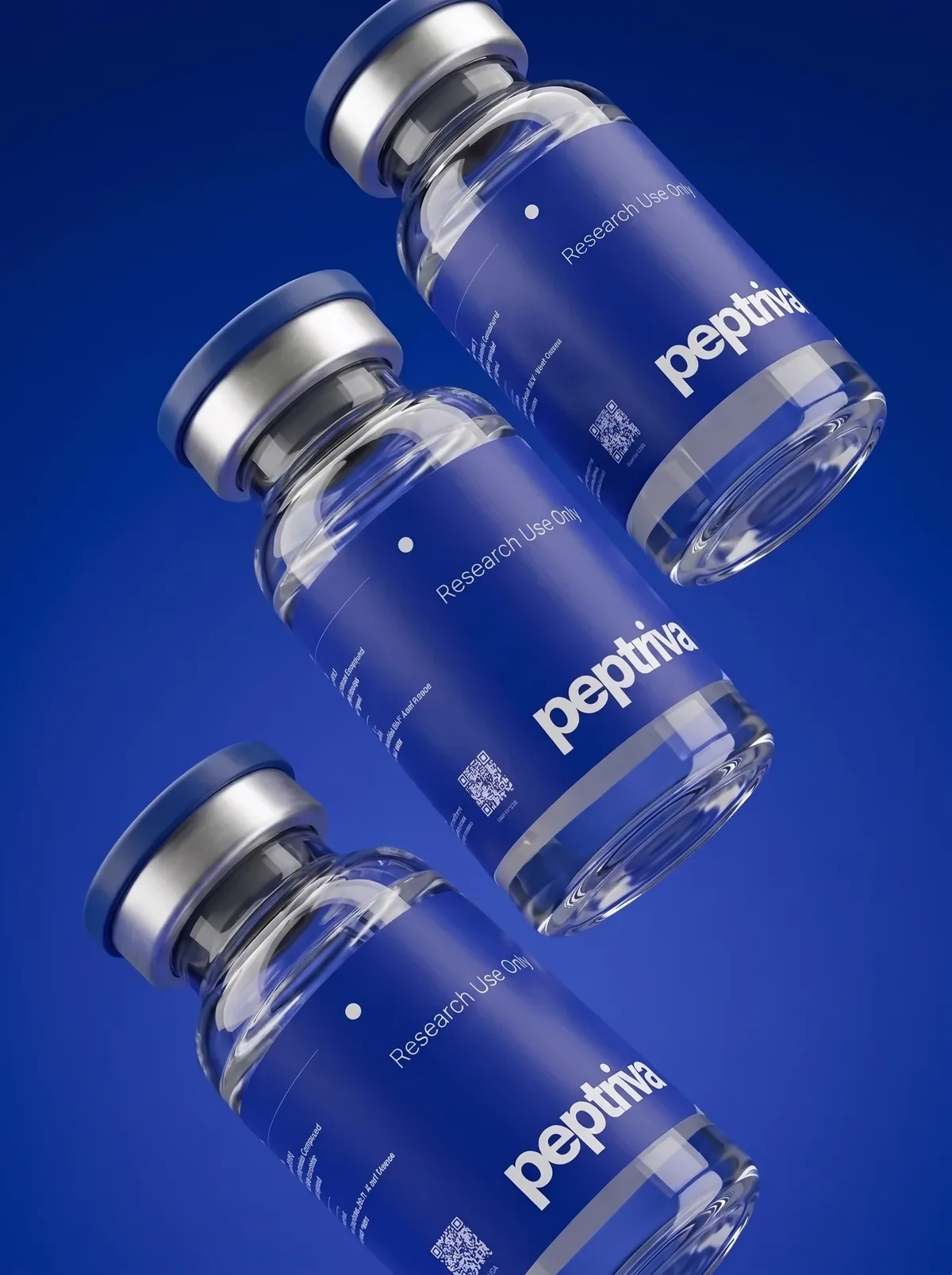
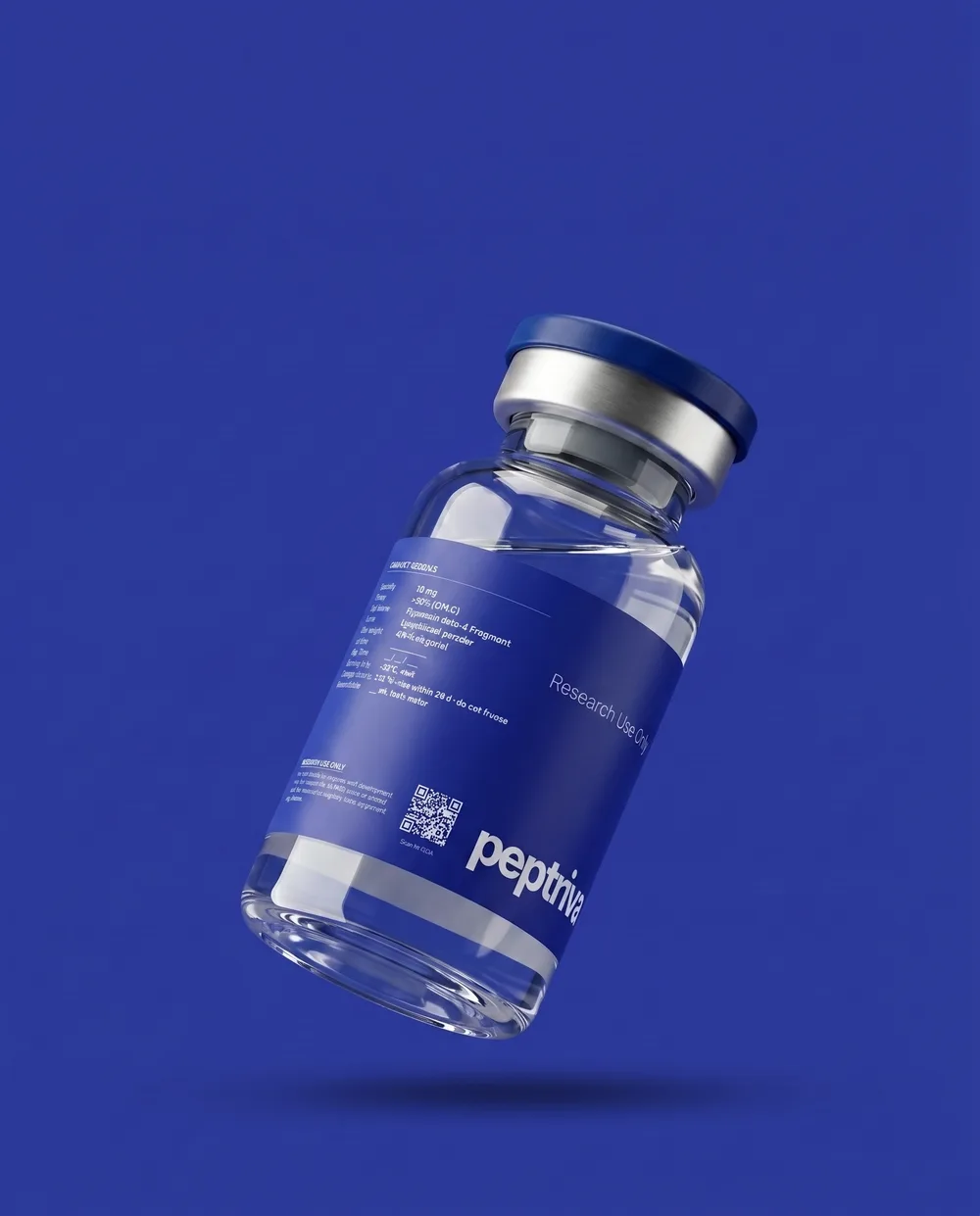
Every vial: lot coded, QR linked, sealed. Research use only.
How it works
11 tests. Every lot. No sampling.
Not a representative sample from last quarter. The exact lot you receive, run to named compendial standards and reported on the certificate.
Compendial · per lot
LC-MS
Is it the right molecule?
Identity · LC-MS · plus appearance, pH and solubility
Every peptide sequence has one exact mass. Our independent US lab measures it by LC-MS and matches it against theory, reported as Confirmed. A mislabeled vial, a truncated chain, or a substituted analogue all fail here, and no certificate can argue with the instrument. This is the step a forged COA cannot survive. The production lab also checks appearance, pH and solubility.
HPLC
How much of it is actually there?
Purity & impurities · HPLC · ≥99% area-percent · net content in mg
HPLC separates everything in the vial and reports the active peptide as a share of the whole. We release at 99% or higher, per lot. The remaining fraction, the truncations and synthesis byproducts, is exactly what a one-line label claim hides; the production lab reports it as impurities. Net content is weighed in mg, not copied from the label.
Four screens on the powder itself. The LAL endotoxin assay runs in duplicate under USP <85>, because endotoxin quietly skews sensitive in-vitro work. The production lab screens lead, cadmium, mercury and arsenic, and checks residual solvents and moisture against their limits. Measured on every lot, never assumed from a facility certificate.
Every product page links its current lot’s report. Check before you spend a dollar.
What changed
From order to bench, documented the whole way.
No transformation story here. These products are for laboratory research only. What changes is the part we control: what arrives, how fast, and what paperwork comes with it.
US-only · tracked
Day 0
You order. It ships the same day.
Packed, sealed, and out the door the same business day.
Place your order before 5pm ET on a business day and it leaves cold-chain storage at our California facility that same day. It ships from a lot whose certificates are already on file. Not pending. On file.
Days 1 to 2
It travels tracked, the whole way.
FedEx 2-day, tracked, U.S. only. Lyophilized peptide is stable at ambient temperature for the length of transit, so it travels sealed in standard parcel packaging, and the tracking link hits your inbox the moment it leaves. No weeks-long overseas transit. No customs roulette. And if a package is ever lost, or marked delivered but never shows, report it within 7 days: we run the carrier trace, then reship or refund.
On arrival
The vial lands. The proof is already there.
One vial. One lot number. One signed report. Matched.
A sealed, lot coded vial arrives, and that lot’s independent COA is already in your order confirmation and your account. Scan the QR on the vial and the batch results open. You can read exactly what is inside before the vial is ever opened.
What that changes in practice
The material stops being a variable. Identity, purity, and endotoxin become numbers you can cite.
Your records hold up. Every vial traces to a lot, a lab, and a signed report.
Reorders reference the same standard. Lot to lot drift gets measured, not guessed.
Nothing depends on trusting us. Read the certificate first. Then decide.
That is what ordering feels like when proof comes standard.
Not just our word
You don’t have to trust us. That is the point.
Below is the format every lot ships with, section for section. Every product page links its current lot’s report, and the COA library holds the rest.
Sample lot · format example
Notice what this page does not have. No star ratings. No testimonials. No before and after photos. On a research use catalog, outcomes are not ours to claim. So the proof we publish is the kind you can check yourself: the certificate, the accreditation behind it, and the policy we are held to if a lot ever misses its spec.
ElsewhereA purity number typed on a listing.
Every Peptriva lot≥99% by HPLC, measured and reported per lot by an independent lab.
Purity · HPLC-UV
Elsewhere“Third party tested,” with no lab named and no report shown.
Every Peptriva lotA U.S. based ISO 17025 accredited lab, named methods, and a signed report.
Identity · LC-MS
ElsewhereNo lot number anywhere. The PDF and the vial cannot be matched.
Every Peptriva lotThe lot number is printed on the vial, and the QR opens that lot’s results.
Traceability · lot coded · QR linked
7tests per lot100%of lots ship with a COAISO 17025independent U.S. lab2certificates per lot
Read a real certificate before you spend anything. That is how this store expects to be judged.
Why now
Run the math before you decide.
A vial is the cheapest thing in your workflow. The work it feeds is the most expensive. If the material is wrong, you do not lose a vial. You lose every result built on it. Verified material is the cheapest insurance you can buy.
Live policy · not promo copy
Why this beats the alternatives
One standard, checked twice
Marketplaces: claims without lot proof.
Group buys: no paper at all.
Here: a vetted manufacturer, two certificates per lot, cold-chain custody, U.S. fulfillment.
If a shipped lot misses any published COA spec, you get replacement units and a refund of what you paid. Both. Automatically. No claim form. And if your own accredited lab ever finds a miss, the same guarantee applies. We can offer this because lots that would fail never ship.
Create a free research account and take 10% off your first order, any product. Plus free shipping on every order, and your COAs and order history kept in one place.
Every product is an ISO 17025 verified reference compound for in-vitro and laboratory research only. Not for human or veterinary use. Handle with standard lab PPE. They are not drugs, supplements, or cosmetics.
Yes. We document research-use sales, so you will create a free account and confirm you are a qualified researcher (21+) before checkout. It takes about a minute.
Every lot is third-party tested by an independent, U.S. based, ISO 17025 accredited lab for identity (LC-MS) and purity (HPLC, 99% or higher). The full COA travels with every order. Deeper method detail is on our Quality page.
Because it does not come from the party selling the material. The independent U.S. lab issues it, the lot number ties it to your vial, and the QR on the vial opens the same batch results. And if your own accredited third-party test ever contradicts a published spec, the Out-of-Spec Guarantee applies: replacement and refund.
Every order ships FedEx 2-day with tracking. If a package is lost in transit, or marked delivered but not received, tell us within 7 days of the scheduled delivery date. We open a carrier trace, then reship or refund. Full details are on the Returns page.
Orders ship from our U.S. warehouse with tracked FedEx 2-day delivery. Order before 5pm ET and it dispatches the same business day. We ship within the U.S. only.
Standard tracked shipping is free on every order to the continental US. You get a tracking link by email the moment your order leaves our facility.
We replace the affected units and refund what you paid for them. Both, automatically, under the Out-of-Spec Guarantee. Keep the vials for documentation. Nothing ever ships back. Full details are on the Returns page.
2×Tested before it ships
7Tests per lot
≥99%HPLC purity, per lot
100%Of lots ship with a COA
Research use only · 21+
The revival of quality peptides.
This is what the category should have been all along: verified twice, stored cold, shipped tracked from California, and guaranteed. Every product page links its lot’s independent certificate. Start with the paperwork. The catalog is right behind it.
ISO 17025 verifiedUS testing & fulfillmentOut-of-Spec Guarantee

 ISO 17025 verified