The tissue-repair peptides are the most-asked-about category in modern peptide research. They're also the most lopsided. We've got four decades of consistent preclinical signal across muscle, tendon, ligament, gut, and cardiac models. We've got fewer than 50 published human exposures across the whole category.
We carry three SKUs here: BPC-157, TB-500, and the BPC-157/TB-500 blend. The 2025 HSS Journal systematic review found 35 preclinical studies and one human case series for BPC-157 alone. TB-500's parent protein has run through a handful of Phase II trials, but the short fragment in most vials hasn't. The biology is interesting. The human data is missing.
Connective tissue is stubborn for a reason. Cartilage, tendon, and ligament are poorly vascularized, which means they heal slowly. An Achilles strain that would resolve in six weeks in muscle takes six months in tendon.
The size of the problem is large. Roughly 30 million Americans deal with tendon-related complaints annually. Achilles tendinopathy alone hits up to 9% of recreational runners. The gap between standard-of-care recovery timelines and what the research community has investigated with injectable peptides reflects the broader unmet need documented in the orthopaedic literature.
This overview does two things. First, we frame the biology — what these peptides do, where the mechanisms overlap, and where they diverge. Second, we frame the evidence honestly. Which findings have replicated. Which depend on a single research group. Where the literature simply hasn't done the work yet.
The category biology: blood vessels and cell migration.
BPC-157 and TB-500 don't share a receptor. They probably don't share an immediate target. What they share is a therapeutic concept: push damaged tissue toward forming new blood vessels and recruit cells to lay down repair scaffolding.
BPC-157's proposed mechanism. Two replicated features: it activates VEGFR2 (a blood-vessel-growth receptor) paired with nitric-oxide synthesis through the Akt-eNOS pathway, and it triggers ERK1/2 signaling that pulls fibroblasts (collagen-making connective-tissue cells) to injury sites. In plain terms: new blood vessels plus repair-cell recruitment.
TB-500's proposed mechanism. Different entry point. The parent thymosin-β4 protein is the main G-actin sequestering peptide in mammals — actin is the cytoskeleton that lets cells crawl. The short Ac-LKKTETQ fragment retains that actin-modulating activity. Downstream you get cell migration and angiogenesis (the same downstream output), but via a different molecular front door.
That's why the two are so often paired. The intellectual case: different upstream targets, overlapping downstream output. The empirical case is much weaker. No head-to-head human RCT has compared the two molecules, the blend, or either monotherapy. The pairing rests on preclinical synergy and clinical convention, not controlled comparison.
The mechanistic story is biologically plausible — growth-factor modulation, angiogenesis, ERK1/2 signalling, and fibroblast recruitment all map onto the kind of repair pathway that should help tendon. What's missing is the validated human receptor target.
— McGuire et al., Current Reviews in Musculoskeletal Medicine, 2025
BPC-157: the most-studied, the most-thinly-supported.
BPC-157 is a synthetic 15-residue peptide isolated as a partial sequence from a protein in human gastric juice. The 2025 HSS Journal systematic review by Vasireddi and colleagues at Case Western aggregated 36 BPC-157 studies in orthopaedic indications. The breakdown: 35 preclinical and one human retrospective case series. That 35:1 ratio is the most important number in the category.
The preclinical signal is consistent. Across the literature:
- Rodent models of surgically detached quadriceps tendons showed reattachment and strength recovery at 90 days with oral BPC-157 administration.
- Rodent models of NSAID-induced gut damage reported normalization of intestinal permeability.
- Rodent stroke and spinal-cord-injury models reported reduced lesion volume.
Here's the catch you need to know about. Roughly 80% of the published BPC-157 preclinical work comes from a single Zagreb research group led by Predrag Sikiric. That's an unusually concentrated body of literature for any therapeutic candidate. Independent replication is the missing piece.
The human data, as of mid-2026: three pilot studies plus one retrospective case series, fewer than 50 total exposures, none randomized, none placebo-controlled. The only orthopaedic data point is Lee & Padgett's 2021 Florida-clinic chart review of 17 study participants who received intra-articular BPC-157 for knee pain. That represents a useful first signal, not evidence of efficacy. A 2026 American Journal of Sports Medicine primer by Mayfield and colleagues concluded the methodological flaws in the single human study significantly limit its applicability for clinical recommendations.
The cornerstone guide covers identity, mechanism, regulatory status (FDA Cat 2 compounding flag, WADA S0 prohibition), and the four published human studies in detail. Read the full BPC-157 guide →
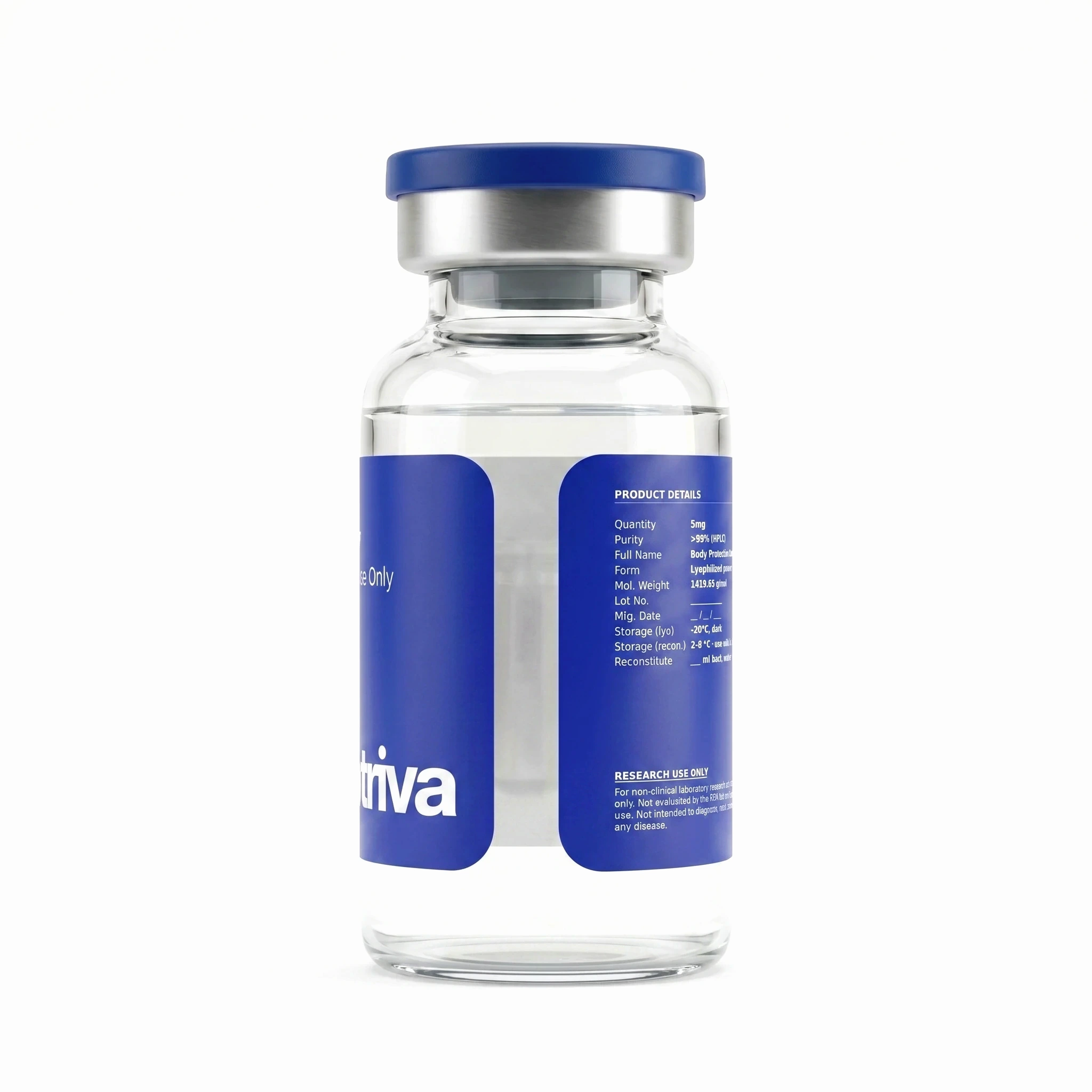
BPC-157
The same compound cited across the 35 preclinical studies in this category review. Lab-verified identity and purity.
TB-500: an actin-binding fragment of a real protein.
TB-500 isn't, strictly speaking, thymosin-β4. The intact endogenous protein has 43 residues. TB-500 as supplied in most research vials is the synthetic Ac-LKKTETQ heptapeptide — the short, active actin-binding region. Our SKU is the heptapeptide form.
That's a distinction marketing language blurs. We want to surface it honestly. The human clinical trials used full-length thymosin-β4 (drug code RGN-259), not the short TB-500 fragment.
The preclinical signal in the full-length protein is real. Animal models of cardiac infarct, corneal injury, diabetic wound healing, and stroke have shown reduced lesion volume, faster re-epithelialization, and improved functional recovery. RegeneRx Biopharmaceuticals advanced full-length thymosin-β4 through Phase II trials for dry-eye disease and neurotrophic keratitis. Results were mixed. Several missed primary endpoints. The drug wasn't approved as of 2026.
The upstream actin biology is plausible. But no study has built the bridge from rodent wound model to human therapy for the heptapeptide specifically. Studies using the short fragment for muscle or tendon recovery involve a double extrapolation: across the molecule (intact protein to fragment) and across the indication (preclinical wound healing to clinical athletic recovery).
The cornerstone guide covers the chemistry distinction, the RegeneRx Phase II program, the cardiac-injury preclinical literature, and the WADA status. Read the full TB-500 guide →
The BPC-157/TB-500 blend: convention or compound?
The blend is two molecules in one vial: 7 mg BPC-157 plus 3 mg TB-500 per 10 mg total. It is among the most commonly co-investigated combinations in the grey-market literature. The mechanistic rationale: BPC-157's angiogenic mechanism and TB-500's cell-migration mechanism are biologically complementary.
The empirical evidence for the blend as a distinct compound: there isn't any. No head-to-head trial has compared BPC-157 alone, TB-500 alone, and the blend on a clinical endpoint. The pre-mixed convention came out of pragmatism. Two molecules, one reconstitution step. Not a synergy study.
The vial exists because the workflow is easier, not because there's a controlled trial showing the combination beats either monotherapy. Researcher convenience is a real value, so the SKU has a defensible reason to exist. The blend is not evidence-graded above the two standalones. Read the full blend guide →
Where each compound sits on evidence.
Where this falls short. The biggest gap in the category isn't the molecule. It's the human data. None of the three is FDA-approved. None has a completed Phase III trial. The strongest finding (BPC-157 preclinical consistency across tendon, gut, and ischemia-reperfusion) is shadowed by the Zagreb authorship concentration problem. The weakest framing in the literature is treating “15-of-16 study participants reporting relief on a phone follow-up” as evidence comparable to a randomized controlled trial.
Here's how the three rank, May 2026.
- BPC-157: 35 preclinical studies, one human case series. About 80% from one research group. FDA Cat 2 compounding flag (2023). WADA S0 prohibition (2022).
- TB-500 (full-length thymosin-β4): mature preclinical base plus multiple Phase II RCTs. Mixed results, no approval. The short fragment form has no Phase II data.
- BPC-157/TB-500 blend: inherits the evidence of its components. No controlled trial of the combination itself.
Several methodological considerations are relevant to interpreting clinical use of tissue-repair peptides in the context of existing evidence:
- Standard-of-care comparators. For tendon indications, eccentric loading, shockwave therapy, ultrasound-guided needling, and PRP all carry stronger 2026 evidence than injectable peptides.
- Current literature. The 2025 HSS Journal systematic review (Vasireddi et al.) is the most comprehensive evidence aggregation in the orthopaedic context as of mid-2026.
- Pre-specified outcomes. The absence of a pre-specified primary outcome is one of the structural problems with the published case series; future trials would need to address this.
- Manufacturing provenance. The 2025 systematic review explicitly flags unregulated manufacturing as a meaningful concern, separate from the molecule's pharmacology.
- Regulatory status. Both BPC-157 and TB-500 are on the WADA Prohibited List. Status may change over time; consult the current WADA list for up-to-date categorization.
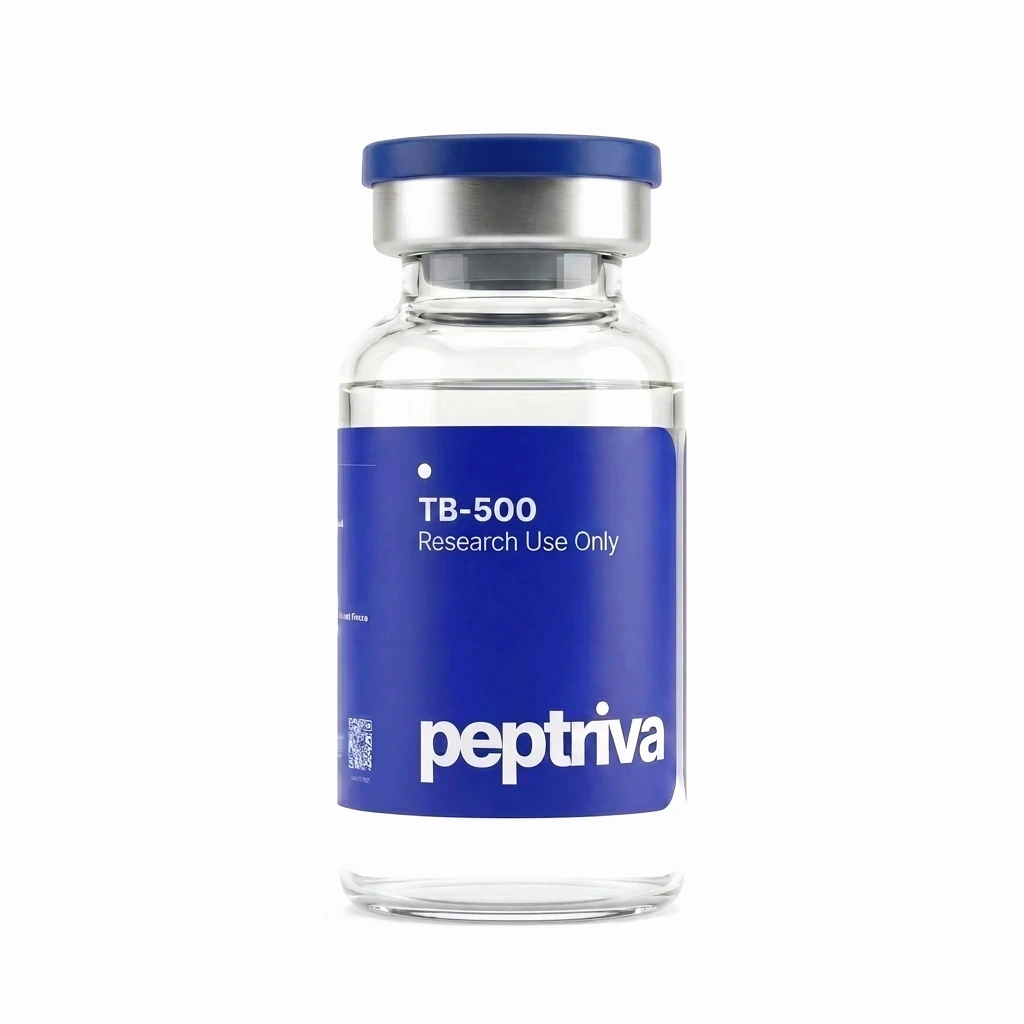
TB-500
The Ac-LKKTETQ active fragment of thymosin-β4. The same reference compound used across the cited preclinical studies. COA available with each lot.
Why this category has such a wide preclinical-to-human gap.
The 35:1 ratio isn't unusual for an under-funded therapeutic candidate. It's what you'd expect of any compound where no large pharmaceutical company is running a Phase III program.
BPC-157 has no patent-protected developer with an incentive to fund a several-hundred-patient RCT. TB-500's furthest-along human program (RegeneRx's full-length thymosin-β4 for dry eye) missed primary endpoints in Phase II and stalled. The blend has no developer at all.
What would move the category up the evidence tier: a registered, properly-powered Phase II trial in a specific orthopaedic indication. Most plausibly Achilles tendinopathy or knee osteoarthritis. Conducted by a group independent of the original Zagreb laboratory. With a pre-specified primary functional outcome.
That trial doesn't currently exist on ClinicalTrials.gov for either molecule. We see the 2025 HSS Journal review's most useful contribution as making the gap visible enough that funding bodies and IRBs stop treating the molecule as too obscure to study properly.
Our honest read in 2026.
The most accurate framing we can give the category is the one the HSS Journal authors give BPC-157 specifically: investigational pending well-designed clinical trials. The biology is interesting. The preclinical signal is consistent. The human evidence is missing. The gap between what people are doing and what the literature supports is real.
Where the category does deserve attention: as research-grade compounds for laboratory and in-vitro investigations into wound healing, tendon repair, and gut-barrier integrity. That's the framing we use in our catalog. It's the framing peer-reviewed researchers use. It's the framing the regulatory landscape supports.
What to know now
- Three SKUs: BPC-157, TB-500 (Ac-LKKTETQ fragment), and the BPC-157/TB-500 blend (7+3 mg per vial).
- Evidence ratio: 35 preclinical studies for every 1 human study (BPC-157, per 2025 HSS Journal review). The TB-500 short fragment has no Phase II data. Full-length parent protein has missed Phase II endpoints.
- Authorship concentration: ~80% of BPC-157 preclinical work comes from one Zagreb research group. Independent replication is the field's most-pressing methodological gap.
- None FDA-approved. None has a completed Phase III trial. BPC-157 carries an FDA Cat 2 compounding flag (2023). Both molecules are on the WADA Prohibited List.
- Evidence context: for tendon indications, eccentric loading, shockwave, and PRP carry stronger 2026 evidence than injectable peptides in the published literature.
- The blend is workflow convenience, not a synergy compound. No head-to-head trial supports the combination above either monotherapy.
What we’re watching
Three things to track over the next 18 months. First, whether independent labs outside the Zagreb group reproduce the core BPC-157 preclinical findings. That's the most important methodological gap. Second, whether any early-stage BPC-157 RCT planning converts into registered ClinicalTrials.gov trials. An Achilles-tendinopathy or knee-osteoarthritis Phase II would be the natural first formal human test. Third, whether RegeneRx or another developer revisits full-length thymosin-β4 in a wound-healing or cardiac-recovery indication. That's the most plausible path to legitimate human data on the TB-500 side.
References
- Vasireddi, N., Hahamyan, H., Salata, M. J., et al. (2025). Emerging use of BPC-157 in orthopaedic sports medicine: A systematic review. HSS Journal, 21(4). https://doi.org/10.1177/15563316251355551
- McGuire, F. P., Martinez, R., Lenz, A., Skinner, L., & Cushman, D. M. (2025). Regeneration or risk? A narrative review of BPC-157 for musculoskeletal healing. Current Reviews in Musculoskeletal Medicine, 18(12), 611–619. https://doi.org/10.1007/s12178-025-09990-7
- Mayfield, C. K., Bolia, I. K., Feingold, C. L., et al. (2026). Injectable peptide therapy: A primer for orthopaedic and sports medicine physicians. American Journal of Sports Medicine, 54(1), 223–229. https://doi.org/10.1177/03635465251357593
- Józwiak, M., Bauer, M., Kamysz, W., & Kleczkowska, P. (2025). Multifunctionality and possible medical application of the BPC 157 peptide—Literature and patent review. Pharmaceuticals (Basel), 18(2), 185. https://doi.org/10.3390/ph18020185
- Sikiric, P., Skrtic, A., Gojkovic, S., et al. (2022). Cytoprotective gastric pentadecapeptide BPC 157 resolves major vessel occlusion disturbances. World Journal of Gastroenterology, 28(1), 23–46. https://doi.org/10.3748/wjg.v28.i1.23
- Lee, E., & Padgett, B. (2021). Intra-articular injection of BPC 157 for multiple types of knee pain. Alternative Therapies in Health and Medicine, 27(4), 8–13. PMID 34324435
- Lee, E., Walker, C., & Ayadi, B. (2024). Effect of BPC-157 on symptoms in patients with interstitial cystitis: A pilot study. Alternative Therapies in Health and Medicine, 30(10), 12–17. PMID 39325560
- Goldstein, A. L., Hannappel, E., & Kleinman, H. K. (2005). Thymosin β4: actin-sequestering protein moonlights to repair injured tissues. Trends in Molecular Medicine, 11(9), 421–429. https://doi.org/10.1016/j.molmed.2005.07.004
- Sosne, G., Qiu, P., Goldstein, A. L., & Wheater, M. (2010). Biological activities of thymosin β4 defined by active sites in short peptide sequences. FASEB Journal, 24(7), 2144–2151. https://doi.org/10.1096/fj.09-142307
- Lee, E., & Burgess, K. (2025). Safety of intravenous infusion of BPC-157 in humans: A pilot study. Alternative Therapies in Health and Medicine, 31(5), 20–24. PMID 40131143