BPC-157 is one of the most-studied peptides in animals. It's also one of the least-studied in humans. Forty years of rat trials, one retrospective human case series, an FDA compounding flag, and a WADA prohibition. Here's the honest picture you won't get from a supplier's website.
BPC-157 is a synthetic 15-amino-acid peptide pulled from human gastric juice. A 2025 HSS Journal review counted 36 studies: 35 in animals, 1 in humans. Fewer than 50 people have ever been studied. The molecule is well-characterized in rodents. The human evidence is still extremely thin.
The name "Body Protection Compound" came from the Sikiric group at the University of Zagreb in the 1990s. They picked it to reflect the peptide's role in protecting the gut lining. The label has aged in interesting ways.
It captures the breadth of effects researchers report in animal models. Muscle. Tendon. Gut. Brain. Vasculature. Eye. But it also signals what's missing: a single validated human target the drug binds to. BPC-157 doesn't behave like a normal drug. That's why it's interesting, and why human development has been slow.
This guide is our cornerstone for Tissue & Connective Repair. We've pulled together the identity chemistry, the mechanism, the preclinical signal, the four published human studies, the regulatory status, and the gaps. The evidence base and its methodological limits are presented as reported in the cited literature.
What is BPC-157, exactly?
BPC-157 is a synthetic 15-amino-acid peptide. The sequence is Gly-Glu-Pro-Pro-Pro-Gly-Lys-Pro-Ala-Asp-Asp-Ala-Gly-Leu-Val. You'll also see it written as PL-14736 or "stable gastric pentadecapeptide BPC 157" in the literature.
A 2025 Pharmaceuticals review by Józwiak and colleagues describes it as a partial sequence pulled from a larger protein in human gastric juice. The review reports broad biological effects in animal models of tissue injury, inflammatory bowel disease, and CNS disorders.
Here's the biochemical feature that makes BPC-157 unusual. It stays stable in human gastric juice for more than 24 hours. The Sikiric group has flagged this across multiple reviews. Most peptides break down in stomach acid within minutes. That stability is what drove interest in oral delivery for BPC-157, which is rare for a peptide.
It's also worth being clear about what BPC-157 isn't. It's not an FDA-approved drug. It's not an EMA-approved drug. No completed large-scale randomized human trial exists. It's a research compound with a broad preclinical footprint and a thin human evidence base.
How does the mechanism actually work?
Here's where the literature gets interesting and simple summaries fail. BPC-157's mechanism is multifactorial. It hits several pathways instead of one specific receptor. In a peptide, that's unusual.
The most-replicated mechanistic features come from the McGuire 2025 narrative review and the Józwiak 2025 patent-and-literature landscape:
- New blood-vessel growth (angiogenesis) via VEGFR2. The peptide activates VEGFR2, a receptor that triggers new capillary growth. That cascade signals through Akt and eNOS, which produce nitric oxide. McGuire proposes this pathway explains repair in poorly vascularized tissue like tendon.
- Growth-factor and cytokine modulation. The 2025 HSS Journal systematic review reports more growth-hormone-receptor expression and lower inflammatory cytokines (small immune-signaling proteins).
- ERK1/2 signalling and fibroblast recruitment. Reviews describe this as the pathway BPC-157 uses to pull fibroblasts (the cells that lay down collagen) into injury sites.
- Nitric-oxide and neurotransmitter interactions. A 2024 Zagreb-group review proposes effects on dopamine, serotonin, glutamate, GABA, and adrenergic signalling. The proposal is that BPC-157 counters receptor blockade and depletion.
- Collateral vascular activation. A 2024 Inflammopharmacology review proposes that BPC-157 quickly opens collateral circulation (back-up blood vessels). The Sikiric group uses that framework to explain effects in ischemia-reperfusion (blocked-then-restored blood flow) studies.
The mechanistic story is biologically plausible and pleiotropic. Growth-factor modulation, angiogenesis, ERK1/2 signalling, and fibroblast recruitment all map onto the kind of repair pathway that should help tendon. What's missing is the validated human receptor target.
— McGuire et al., Current Reviews in Musculoskeletal Medicine, 2025
Our honest reading: BPC-157 has several plausible mechanisms. None has been pinned to a single human receptor. That's consistent with how an endogenous gastric peptide might act, broad-spectrum and opportunistic. But it makes drug development harder than for a typical agonist.
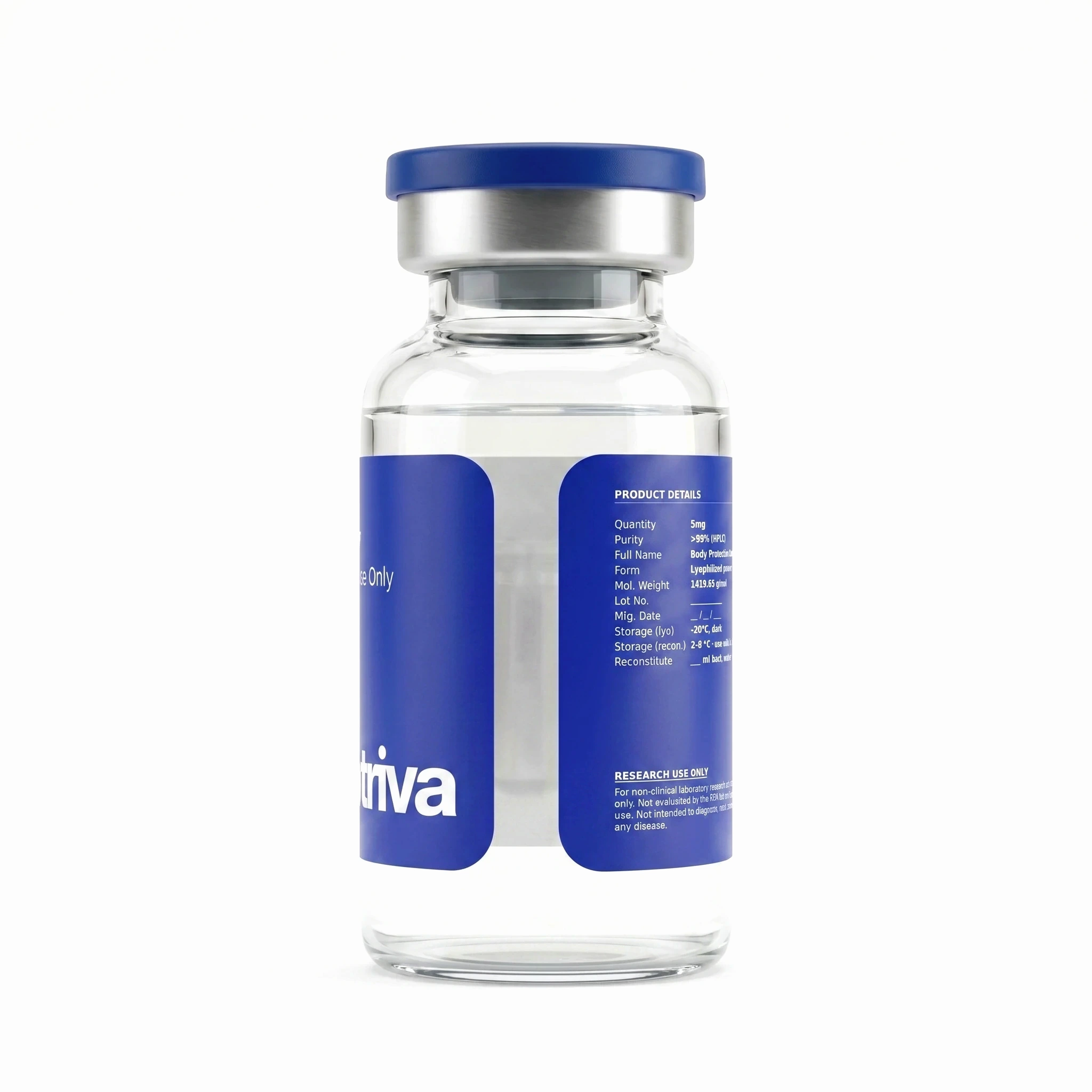
BPC-157
The same compound cited across the 9 preclinical reviews in this article. Lab-verified identity and purity.
What does the preclinical evidence actually show?
The preclinical evidence is unusually broad. It's also unusually concentrated in one research group. Both facts matter.
Musculoskeletal healing. The 2025 HSS Journal systematic review counted 36 studies that met PRISMA review-quality criteria. The signal across muscle, tendon, ligament, and bone injury models is consistent. Functional, structural, and biomechanical outcomes all improved. A 2025 rat study by Matek and colleagues reported that oral BPC-157 at 10 ng/kg/day restored muscle-to-bone reattachment after surgical detachment of the quadriceps, with recovery sustained at 90 days.
Wound healing. A 2021 Frontiers in Pharmacology review by Seiwerth summarizes effects across skin, gut, tendon, ligament, muscle, bone, nerve, spinal-cord, corneal, and vascular wound healing in rats. The list includes diabetic ulcers, deep burns, and alkali burns.
Gastrointestinal protection. A 2020 review by Park describes stabilization of intestinal permeability and reversal of NSAID-induced "leaky gut." A 2024 Bajramagic review summarizes anastomosis-healing data (surgical joins between gut segments) across multiple models.
Central nervous system and vascular. A 2022 review describes effects in rat models of stroke, spinal cord compression, and schizophrenia-like states. A 2025 controlled rat study (n=24) reported BPC-157 reduced tissue damage in liver, kidney, and lung after lower-extremity blood-flow blockage.
That breadth is the appeal and the problem. The HSS Journal team flags an authorship issue any honest reader of the BPC-157 literature reaches eventually. About 80% of the preclinical work comes from one research group at the University of Zagreb, led by Predrag Sikiric. The Zagreb work is methodologically careful and reporting is consistent. But independent replication is limited. That's the bar a therapeutic candidate has to clear before moving into clinical trials.
Where this falls short. Of 36 studies in the 2025 HSS Journal review, 35 are animal models. About 80% originate from a single Zagreb research group. The signal across organ systems looks consistent, but independent replication is the missing piece. You should read that authorship concentration as a confidence-interval problem, not a fatal flaw.
What is the actual human evidence base?
Four publications. Fewer than 50 total exposures. No randomized controlled trial. That's the entire human evidence base for BPC-157 as of mid-2026.
The 2021 knee-pain case series. Lee and Padgett retrospectively reviewed 17 study participants who received intra-articular BPC-157 (alone or with TB-500) at a Florida private clinic. Of 16 reachable by phone at 6–12 months, 14 (87.5%) reported subjective relief. No controls. No validated outcome measures. Phone-survey recall bias is substantial. The authors treat it as a first signal, not evidence of efficacy.
The 2024 interstitial cystitis pilot. Twelve women with treatment-resistant bladder inflammation got a single 10 mg dose of BPC-157 injected around the inflamed area during cystoscopy. The authors reported that 10 of 12 had complete symptom resolution and the other 2 had about 80% improvement. No control group. No placebo. Striking result, uncontrolled design.
The 2025 intravenous safety pilot. Two adults received consecutive 10 mg and 20 mg IV infusions over one hour each. Heart, liver, kidney, thyroid, and glucose biomarkers were unchanged. The authors explicitly note that an n=2 sample is far too small to establish safety.
The 2026 critical review. Mayfield and colleagues' American Journal of Sports Medicine review concludes the methodological flaws in the knee study (small n, no control arm, no validated outcomes) significantly limit its use for clinical recommendations.
Despite the robust preclinical findings, human data are extremely limited, no large-scale randomized trials exist, and BPC-157 should be considered investigational pending well-designed clinical trials.
— McGuire et al., Current Reviews in Musculoskeletal Medicine, 2025
What is the regulatory and WADA status?
The regulatory picture is the part of the BPC-157 story that's hardest to read from inside the peptide community. Compounding-pharmacy access and grey-market suppliers create an impression of legitimacy regulators don't actually grant.
- FDA (US). Not approved for any use. In 2023, the FDA placed BPC-157 on the Category 2 list for 503A compounding. Cat 2 is the category for substances with "significant safety risks." That restricts compounding-pharmacy access and is the most important regulatory event for BPC-157 in five years.
- EMA (EU). Not approved.
- WADA. Prohibited under S0 (Non-Approved Substances) since January 2022. Status can change. Verify with WADA before any sport-context use.
- Major sports leagues. Generally prohibited in NFL, MLB, UFC, NCAA, and equivalent international panels.
The 2023 Cat 2 compounding designation is the single most important regulatory signal in the BPC-157 literature. It doesn't make the molecule illegal. It restricts a specific dispensing pathway. And it signals the FDA's safety review found BPC-157 doesn't yet meet the threshold for routine compounding. Whether that flag moves in either direction over the next 18 months is worth watching.
What are the actual risks?
Here's the honest list, drawn from the Józwiak 2025 review and the HSS Journal 2025 systematic review:
- Limited human safety data. Fewer than 50 published human exposures. Long-term safety data don't exist.
- Theoretical angiogenesis concern. Because the proposed mechanism includes new blood-vessel growth, there's a theoretical concern that BPC-157 could feed vascularized tumors. Direct human data on this question are absent.
- Manufacturing and contamination risks. The HSS Journal review explicitly flags unregulated manufacturing as a plausible source of harm, separate from the molecule itself.
- Drug-handling uncertainty. Plasma half-life (how long the drug stays active in blood) is reported at under 30 minutes in animals, with liver metabolism and kidney clearance. Human data are minimal.
- Authorship-concentration risk. One-group dominance of the literature makes the field's confidence interval wider than the publication count suggests.
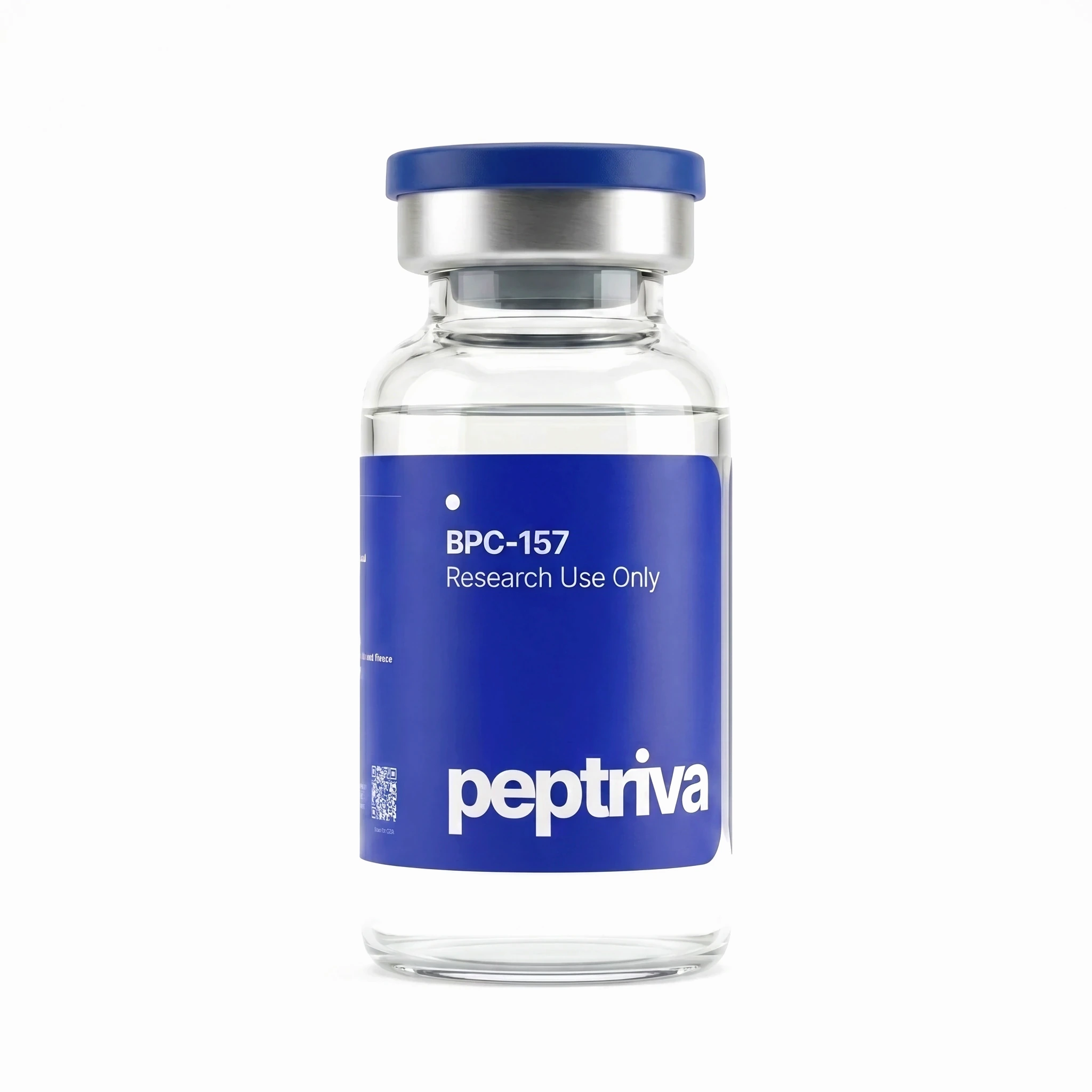
BPC-157
Pentadecapeptide · 15 aa, gastric origin. The same reference compound used across the cited preclinical studies. COA available with each lot.
How should you think about BPC-157 in 2026?
The framing is consistent across the 2025 McGuire, 2025 HSS Journal, and 2026 Mayfield reviews: BPC-157 is an interesting preclinical compound with a recognizable but unproven mechanism. The human evidence base is extremely thin. The cited reviews collectively characterize it as investigational.
No validated human dosing protocol has been established in the published literature. Doses cited in informal sources are generally extrapolated from animal study data and lack clinical validation.
The molecule may eventually move into formal clinical development. The 2025 HSS Journal review's most useful contribution may be that it makes the methodological gap obvious. Funding bodies and IRBs can no longer treat BPC-157 as too obscure to study properly. Whether that translates into registered trials over the next 18 months is the question we're tracking.
What to know now
- Identity: synthetic 15-amino-acid peptide. Sequence Gly-Glu-Pro-Pro-Pro-Gly-Lys-Pro-Ala-Asp-Asp-Ala-Gly-Leu-Val. Derived from a partial sequence of a gastric-juice protein.
- Mechanism: multifactorial. New blood-vessel growth via VEGFR2/Akt-eNOS. ERK1/2 fibroblast recruitment. Growth-factor modulation. No validated human receptor target.
- Preclinical signal: consistent across muscle, tendon, ligament, bone, gut, CNS, and vascular models. About 80% of publications come from one Zagreb research group.
- Human evidence: 4 publications. Under 50 total exposures. No randomized trial. One knee case series (n=17), one bladder pilot (n=12), one IV safety pilot (n=2).
- Regulatory: FDA Cat 2 compounding flag (2023). WADA S0 since January 2022. Prohibited in major sports leagues.
- Half-life: under 30 minutes in plasma (rats). Stable in gastric juice for over 24 hours, which is what drove interest in oral delivery.
What we're watching
Three things over the next 18 months. First, whether labs outside the Zagreb group reproduce the core preclinical findings. That's the biggest methodological gap in the field. Second, whether a registered RCT appears on ClinicalTrials.gov. An Achilles-tendinopathy or knee-osteoarthritis Phase II would be the natural first formal test. Third, whether the FDA's 2023 Cat 2 compounding flag moves in either direction. Either signal would be meaningful.
References
- Józwiak, M., Bauer, M., Kamysz, W., & Kleczkowska, P. (2025). Multifunctionality and possible medical application of the BPC 157 peptide—Literature and patent review. Pharmaceuticals (Basel), 18(2), 185. https://doi.org/10.3390/ph18020185
- Vasireddi, N., Hahamyan, H., Salata, M. J., et al. (2025). Emerging use of BPC-157 in orthopaedic sports medicine: A systematic review. HSS Journal, 21(4). https://doi.org/10.1177/15563316251355551
- McGuire, F. P., Martinez, R., Lenz, A., Skinner, L., & Cushman, D. M. (2025). Regeneration or risk? A narrative review of BPC-157 for musculoskeletal healing. Current Reviews in Musculoskeletal Medicine, 18(12), 611–619. https://doi.org/10.1007/s12178-025-09990-7
- Mayfield, C. K., Bolia, I. K., Feingold, C. L., et al. (2026). Injectable peptide therapy: A primer for orthopaedic and sports medicine physicians. American Journal of Sports Medicine, 54(1), 223–229. https://doi.org/10.1177/03635465251357593
- Seiwerth, S., Milavic, M., Vukojevic, J., et al. (2021). Stable gastric pentadecapeptide BPC 157 and wound healing. Frontiers in Pharmacology, 12, 627533. https://doi.org/10.3389/fphar.2021.627533
- Lee, E., & Padgett, B. (2021). Intra-articular injection of BPC 157 for multiple types of knee pain. Alternative Therapies in Health and Medicine, 27(4), 8–13. PMID 34324435
- Lee, E., Walker, C., & Ayadi, B. (2024). Effect of BPC-157 on symptoms in patients with interstitial cystitis: A pilot study. Alternative Therapies in Health and Medicine, 30(10), 12–17. PMID 39325560
- Lee, E., & Burgess, K. (2025). Safety of intravenous infusion of BPC-157 in humans: A pilot study. Alternative Therapies in Health and Medicine, 31(5), 20–24. PMID 40131143
- Sikiric, P., Boban Blagaic, A., Strbe, S., et al. (2024). The stable gastric pentadecapeptide BPC 157 pleiotropic beneficial activity and its possible relations with neurotransmitter activity. Pharmaceuticals (Basel), 17(4), 461. https://doi.org/10.3390/ph17040461
- Sikiric, P., Skrtic, A., Gojkovic, S., et al. (2022). Cytoprotective gastric pentadecapeptide BPC 157 resolves major vessel occlusion disturbances. World Journal of Gastroenterology, 28(1), 23–46. https://doi.org/10.3748/wjg.v28.i1.23
- Matek, D., Matek, I., Staresinic, E., et al. (2025). Stable gastric pentadecapeptide BPC 157 as therapy after surgical detachment of the quadriceps muscle for muscle-to-bone reattachment in rats. Pharmaceutics, 17(1), 119. https://doi.org/10.3390/pharmaceutics17010119