The headline number on BPC-157 for knee pain: 17 patients, one Florida private clinic, phone survey at 6–12 months. That’s the entire published human evidence base. The gap between what this study actually is and what it gets cited as is one of the biggest interpretive problems in the BPC-157 literature.
The 2021 Lee & Padgett retrospective chart review (PMID 34324435) found 17 patients who received intra-articular BPC-157 for knee pain over one year at a Florida clinic. Of 16 patients reachable by phone at 6–12 months, 14 (87.5%) reported subjective relief. No controls. No validated outcome measures. Phone survey as the primary outcome. A 2026 review in the American Journal of Sports Medicine concludes the methodological flaws — small n, no control arm, no validated functional outcomes — significantly limit clinical applicability.
Clinicians fielding questions about BPC-157 for knee osteoarthritis, meniscal pain, or post-surgical recovery will encounter Lee & Padgett in the literature. It is the study most frequently cited in this context.
The honest read: it’s a small chart review with serious design limitations. Useful as a first signal. Indefensible as a basis for clinical recommendations. Both halves of that sentence matter.
What did Lee & Padgett actually do?
Lee and Padgett conducted a retrospective chart review at a Florida private clinic. They identified research subjects who had received intra-articular BPC-157 (alone or combined with TB-500) for knee pain over one year.
Seventeen study participants met inclusion criteria. Thirteen received BPC-157 alone. Four received the BPC-157 + TB-500 combination. We’re working from the published chart-review data only.
The primary outcome was telephone follow-up at 6–12 months post-injection, asking study participants to report subjective relief. Of the 17, 16 were reachable by phone. Of those 16, 14 reported subjective relief — an 87.5% response rate.
That’s the study. A single-clinic retrospective chart review of 17 patients with a phone-survey primary outcome measured at variable follow-up times.
No controls. No validated functional outcome measures — no KOOS, WOMAC, IKDC, or objective imaging assessment. Recall bias in phone-survey designs is well-characterized. Patients tend to report better outcomes when surveyed by the clinic that treated them than they do when surveyed by independent investigators.
What does the study get cited for?
Here’s where the interpretive gap opens. Lee & Padgett gets cited routinely as “the human evidence” for BPC-157 in joint pain. The 87.5% response rate shows up in marketing as a kind of efficacy figure. That citation pattern overstates what we can actually conclude by a substantial margin.
What 14 of 16 phone-reported responders tells us: clinicians administering BPC-157 to knee patients at one practice didn’t see overwhelming rejection at follow-up. It doesn’t tell us BPC-157 beat placebo. It doesn’t tell us it beat intra-articular corticosteroid, hyaluronic acid, or PRP. It doesn’t tell us the response generalizes beyond this clinic’s patients.
None of those questions can be answered without a controlled trial. If you’re looking at this data to make a clinical decision, we’d push back on calling it efficacy data at all.
The methodological flaws in the single human knee study — small n, no control arm, no validated functional outcomes — significantly limit its applicability for clinical recommendations.
— Mayfield et al., American Journal of Sports Medicine, 2026
The 2026 Mayfield review in the American Journal of Sports Medicine is the sharpest peer-reviewed critique of Lee & Padgett published to date. The framing — that the flaws “significantly limit applicability” — is the consensus position across recent BPC-157 evidence syntheses.
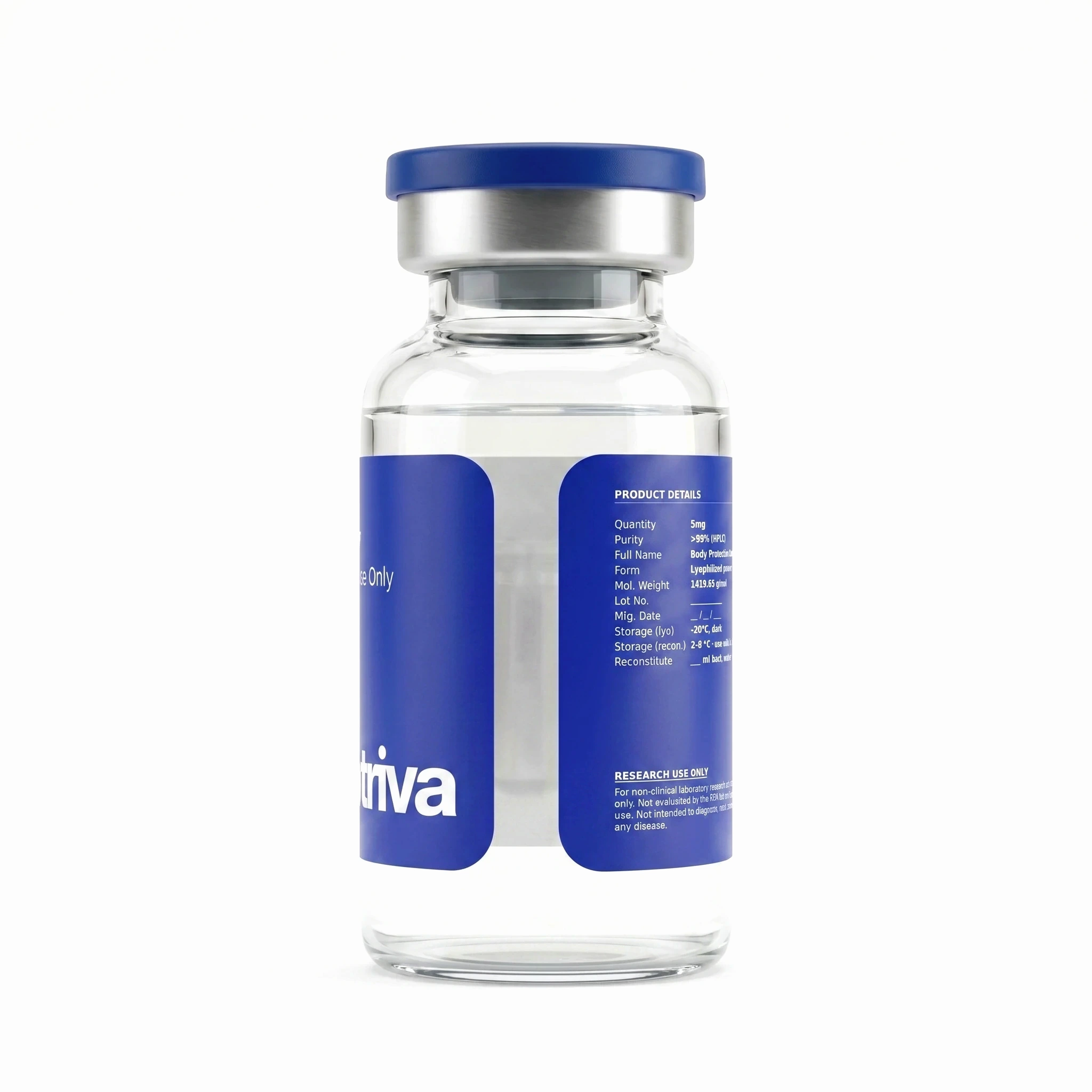
BPC-157
The same compound cited across the 7 sources in this article. Lab-verified identity and purity.
What are the specific methodological gaps?
Drawing on the 2026 Mayfield review and the 2025 HSS Journal systematic review, the specific gaps that limit the paper’s evidentiary weight:
- No control group. Knee pain has a substantial placebo response. Meta-analyses of intra-articular interventions consistently show 30–60% placebo response rates depending on outcome measure. Without a placebo arm, an 87.5% response is uninterpretable.
- No randomization. Patients self-selected into BPC-157 treatment. Selection effects (motivation, prior treatment history, baseline severity) aren’t controlled.
- No validated functional outcome measures. Knee studies typically report KOOS, WOMAC, IKDC, or VAS scores at defined intervals. The Lee & Padgett primary outcome is “subjective relief” by phone — binary, non-validated, recall-dependent.
- Variable follow-up window. 6–12 months is wide enough that early and late responses get aggregated together, obscuring durability.
- Combination subgroup confound. Four of the 17 patients received BPC-157 + TB-500. The paper doesn’t break out efficacy by subgroup.
- Single-clinic recall bias. The phone survey was conducted by the treating clinic — the design with the highest known recall bias for positive responses.
- No imaging or biomechanical follow-up. Subjective symptom relief and structural joint outcomes can diverge substantially. The paper measures only symptoms.
None of this is an indictment of the clinicians who did the work or a claim that BPC-157 has no effect on knee pain. It’s a description of what the study can and can’t tell us. The honest read: a small clinic’s cohort of study participants reported being satisfied. That’s a useful first signal for a research candidate. It’s not evidence of clinical efficacy.
What’s the rodent context for intra-articular BPC-157?
The preclinical case is broader than the clinical case. The 2025 HSS Journal systematic review aggregated 35 preclinical studies showing improved functional, structural, and biomechanical outcomes in muscle, tendon, ligament, and bone injury models. A 2025 Matek rat study reported oral BPC-157 (10 ng/kg/day) restored muscle-to-bone reattachment after surgical detachment of the quadriceps, with imaging and biomechanical recovery sustained at 90 days.
The rodent evidence reviewed in the literature makes the case that BPC-157 plausibly does something biologically relevant in joint and connective tissue. It doesn’t establish that intra-articular administration in humans translates the rodent signal. The pathway from “10 ng/kg/day oral in rats with surgical detachment” to intra-articular human clinical administration requires a leap no controlled study has made.
How should clinicians frame Lee & Padgett when patients raise it?
The framing the McGuire 2025 review and the Mayfield 2026 review converge on: BPC-157 should be considered investigational pending well-designed clinical trials. The single human knee study is a starting-point case series, not a basis for clinical recommendation.
The clinical context is one where marketing-aligned sources routinely overstate Lee & Padgett. Walking through the actual design — 17 study participants, no controls, phone survey, the 87.5% number real but uninterpretable without comparison — is the basis for calibrated assessment.
The point isn’t to dismiss the molecule. It’s to calibrate the expectation of evidence quality.
Where this falls short. The Lee & Padgett study is a 17-patient single-clinic retrospective chart review with phone-survey primary outcome at 6–12 months. No controls. No validated functional measures. It’s the only published human study, useful as a starting-point signal, indefensible as a basis for clinical recommendation. The placebo response in knee studies runs 30–60%. Without a placebo arm, you can’t tell what BPC-157 is doing.
What’s the standard-of-care comparison in 2026?
The Mayfield review’s broader point: orthopaedic and sports-medicine clinicians have well-evidenced standard-of-care options for most knee-pain etiologies that BPC-157’s evidence base can’t match.
For osteoarthritis: intra-articular corticosteroids, hyaluronic acid, and PRP all have larger trial bases. For meniscal pathology: eccentric loading and physical therapy have stronger evidence than any peptide. For chronic anterior knee pain: supervised rehab programs have decades of trial support.
Those comparisons are why we land where the recent peer-reviewed reviews land. BPC-157 isn’t failing a comparison to nothing. It’s failing the comparison to interventions with actual RCT evidence behind them. The 2026 critical reviews exist to make that gap explicit. If you’re weighing it, that’s the comparison that matters.
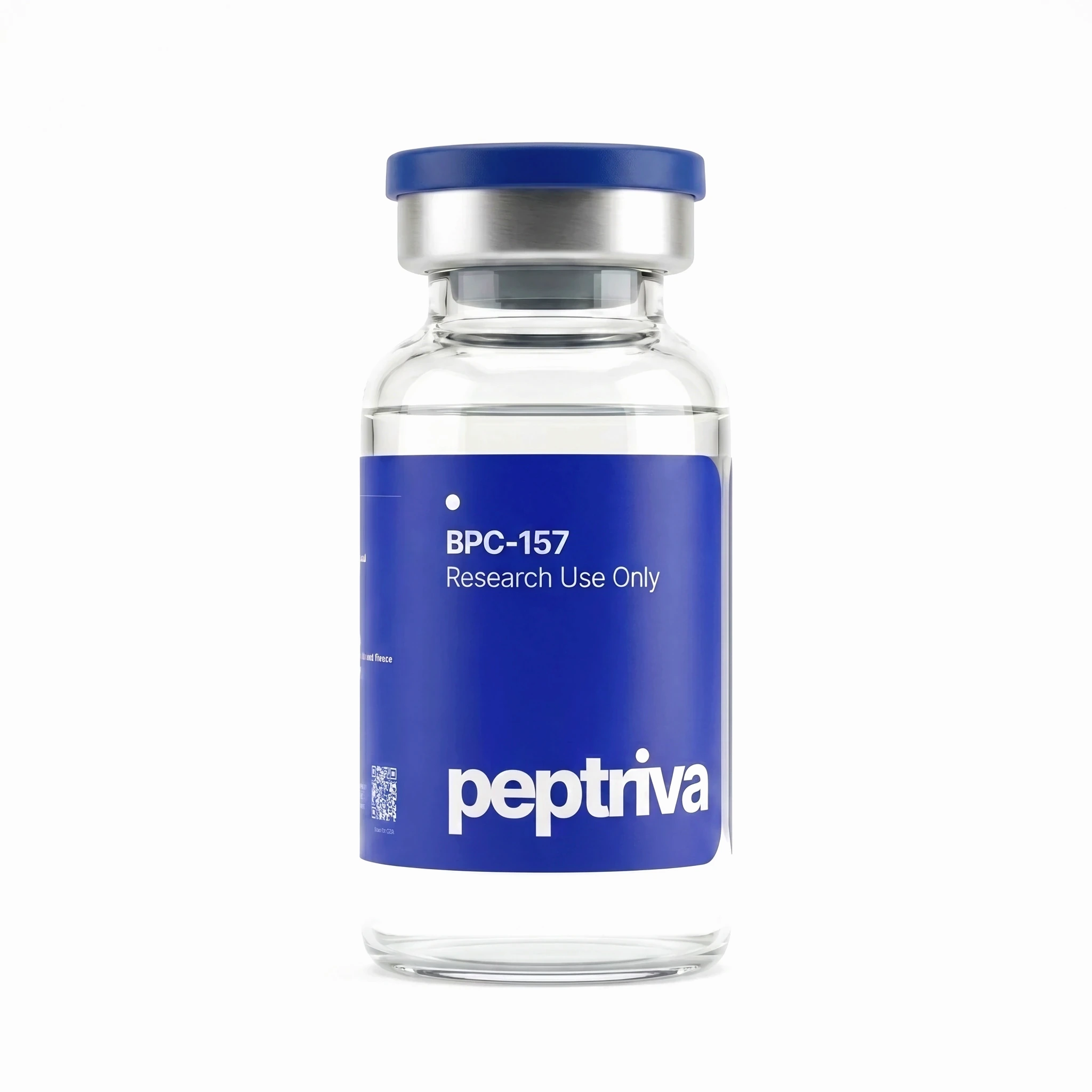
BPC-157
Pentadecapeptide · 15 aa, gastric origin. The same reference compound used in the cited case series and in the broader preclinical orthopaedic literature. COA available with each lot.
What to know now
- The Lee & Padgett study: 17-patient retrospective chart review at a Florida private clinic. 16 reachable by phone; 14 reported subjective relief at 6–12 months.
- Limits: no controls, no randomization, no validated functional outcomes, phone-survey recall, single-clinic, combination subgroup confound, no imaging follow-up.
- 2026 critical view: Mayfield et al. AJSM review concludes the flaws significantly limit applicability for clinical recommendations.
- Preclinical context: 35 rodent studies aggregated in the 2025 HSS Journal review across muscle, tendon, ligament, bone — consistent signal, no human RCT.
- Standard of care: intra-articular corticosteroids, hyaluronic acid, PRP, and supervised PT all have stronger 2026 evidence for knee pain than injectable BPC-157.
- Regulatory: FDA Cat 2 compounding flag (2023). WADA S0 since January 2022.
What we’re watching
Two things in the knee-pain literature. First, whether any registered Phase II trial of intra-articular BPC-157 in knee osteoarthritis or meniscal pathology appears on ClinicalTrials.gov — the natural first formal test in humans, and the trial that would either replace or contextualize Lee & Padgett. Second, whether the next 18 months produce any independent replication. Even another retrospective with a different patient population would be a useful second signal.
References
- Lee, E., & Padgett, B. (2021). Intra-articular injection of BPC 157 for multiple types of knee pain. Alternative Therapies in Health and Medicine, 27(4), 8–13. PMID 34324435
- Mayfield, C. K., Bolia, I. K., Feingold, C. L., et al. (2026). Injectable peptide therapy: A primer for orthopaedic and sports medicine physicians. American Journal of Sports Medicine, 54(1), 223–229. https://doi.org/10.1177/03635465251357593
- McGuire, F. P., Martinez, R., Lenz, A., Skinner, L., & Cushman, D. M. (2025). Regeneration or risk? A narrative review of BPC-157 for musculoskeletal healing. Current Reviews in Musculoskeletal Medicine, 18(12), 611–619. https://doi.org/10.1007/s12178-025-09990-7
- Vasireddi, N., Hahamyan, H., Salata, M. J., et al. (2025). Emerging use of BPC-157 in orthopaedic sports medicine: A systematic review. HSS Journal, 21(4). https://doi.org/10.1177/15563316251355551
- Matek, D., Matek, I., Staresinic, E., et al. (2025). Stable gastric pentadecapeptide BPC 157 as therapy after surgical detachment of the quadriceps muscle for muscle-to-bone reattachment in rats. Pharmaceutics, 17(1), 119. https://doi.org/10.3390/pharmaceutics17010119
- Mendias, C. L., & Awan, T. M. (2026). Safety and efficacy of approved and unapproved peptide therapies for musculoskeletal injuries and athletic performance. Sports Medicine. https://doi.org/10.1007/s40279-026-02437-0
- Józwiak, M., Bauer, M., Kamysz, W., & Kleczkowska, P. (2025). Multifunctionality and possible medical application of the BPC 157 peptide—Literature and patent review. Pharmaceuticals (Basel), 18(2), 185. https://doi.org/10.3390/ph18020185