The case for BPC-157 for gut healing is the strongest preclinical case in the entire BPC-157 literature. It was named “Body Protection Compound” for a reason: the gut was the original target organ. The key limitation: every published gut-healing study to date is in rodents.
BPC-157 has been tested in rats for NSAID-induced gut damage, ulcerative colitis, surgical bowel reconnection (anastomosis), and stubborn fistulas. A 2020 review proposed it stabilizes intestinal permeability and counteracts “leaky gut” from NSAIDs. A 2024 review summarized ~14 anastomosis-healing studies across multiple bowel segments. Across all of this work, published human gut evidence remains zero.
The rodent data is broad and consistent. The proposed mechanisms make biological sense. The absence of any human gut trial is the gap that determines clinical usefulness.
The rodent data we’ve found is broad and consistent. The proposed mechanisms make biological sense. The absence of any human gut trial is the gap that determines clinical usefulness. Review articles reference earlier ulcerative colitis Phase II trials, but we can’t locate the primary publications in PubMed.
Why was “Body Protection Compound” a gut-first name?
BPC-157 was identified in the 1990s as a partial sequence of a larger protein found in human gastric juice. The 2025 Józwiak review describes it as a 15-amino-acid peptide isolated from human stomach acid, with broad effects across animal models of tissue injury, IBD, and CNS disorders.
The naming was an explicit nod to its proposed cytoprotective role — protection of the gastric and intestinal mucosa. The gut was the original target, before orthopaedic research took over the conversation.
One biochemical property we keep seeing across reviews: BPC-157 reportedly stays stable in human stomach acid for more than 24 hours, per the Sikiric 2022 review. Most peptides degrade in the stomach within minutes. That acid stability is one of the most replicated findings about the molecule, and it’s the reason oral dosing has been used in some animal studies.
What does the NSAID gut-injury data show?
NSAID damage is the most-studied gut model for BPC-157. NSAIDs (ibuprofen, naproxen, aspirin) wreck the stomach and small-intestine lining by suppressing prostaglandins, which normally protect the mucosa.
A 2020 review by Park in Current Pharmaceutical Design proposed that BPC-157 stabilizes intestinal permeability and counteracts the “leaky gut” NSAIDs produce. The review describes protective effects on both the stomach and small-intestinal lining across multiple rat models.
The mechanism story: BPC-157 supports blood flow to the mucosa through angiogenesis (new blood vessel growth via the VEGFR2/Akt/eNOS pathway). The reported nitric-oxide interactions counteract the prostaglandin shutdown that NSAIDs cause. In rats, that translates to fewer ulcers, normalized permeability, and shorter injury scores after NSAID exposure.
Translating to humans is straightforward to imagine and entirely speculative. No published human trial has tested BPC-157 for NSAID protection. The established standard of care for NSAID gastroprotection remains PPIs and H2 blockers — both with decades of human RCT data.
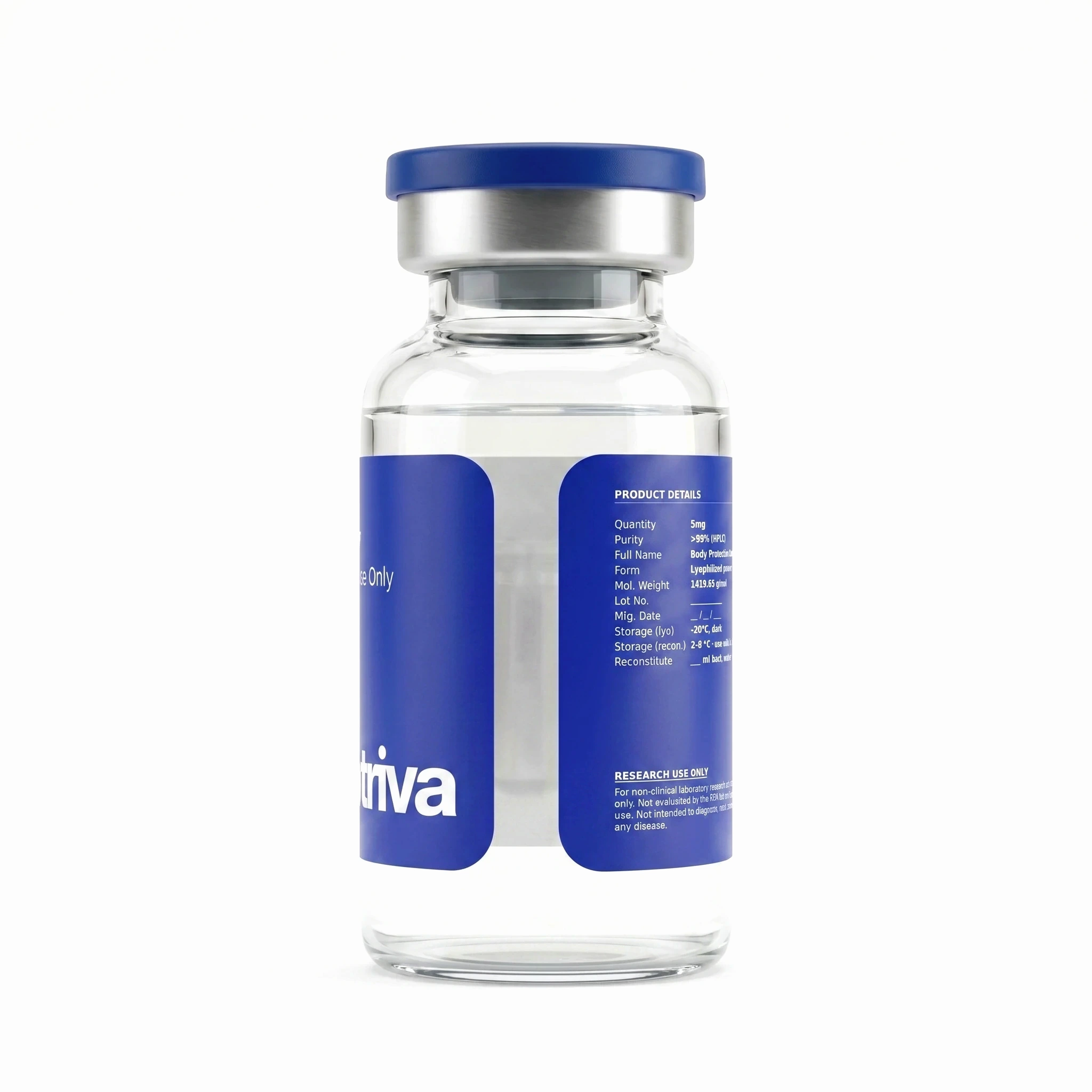
BPC-157
The same compound cited across the 8 preclinical reviews in this article. Lab-verified identity and purity.
What about IBD and ulcerative colitis models?
BPC-157 has been tested in rat models of ulcerative colitis using both DSS (dextran sodium sulfate) and TNBS (trinitrobenzenesulfonic acid) induction. We treat these as the two standard chemical-induction models in preclinical IBD work. Reviews from the Sikiric group describe reduced inflammation, normalized cytokine profiles, and protected gut lining at typical microgram-per-kilogram doses.
The 2025 Józwiak review references earlier Phase II trials of BPC-157 in ulcerative colitis. We can’t find the primary publications in PubMed in 2026. Whether trials were completed, terminated, or never fully reported is unclear from the public literature.
That’s one of the oddities of the BPC-157 record we keep noting. Review articles routinely mention earlier human trials in IBD and multiple sclerosis, but the actual trial publications are surprisingly hard to track down.
BPC 157 rescued NSAID cytotoxicity via stabilizing intestinal permeability and enhancing cytoprotection.
— Park et al., Current Pharmaceutical Design, 2020 (rodent models)
Anastomosis healing — the surgical literature
The most surgically relevant preclinical BPC-157 work is in intestinal anastomosis healing — the surgical reconnection of bowel after a section is removed. A 2024 review by Bajramagic in Pharmaceuticals summarizes healing data across ~14 rat studies spanning esophagogastric, colocolonic, jejunoileal, and ileoileal models.
The reported effects we’re seeing: improved healing rates, fewer leaks, and stronger burst pressure at the surgical join.
Anastomotic leak is the dreaded complication of bowel surgery. It drives most of the morbidity and mortality after colon, ileal, and esophageal resections. If the preclinical signal translates to humans, the clinical case is substantial. It’s also testable. Leak rates are recorded routinely, the outcome is binary, and surgical RCTs of perioperative drugs are a well-established design. No published human trial of BPC-157 for anastomosis healing exists.
Fistula closure — the most striking preclinical claims
Some of the most attention-grabbing rodent results involve fistula closure. A fistula is an abnormal connection between two organs or between an organ and the skin. They’re famously hard to close.
The Sikiric group has published on BPC-157 in external and internal fistulas (esophagocutaneous, gastrocutaneous, colocutaneous, vesicovaginal, rectovaginal). They report closure rates exceeding conventional treatment in the rat models we’ve reviewed. The 2022 World Journal of Gastroenterology review describes these results across multiple anatomical sites.
Crohn’s-associated perianal fistulas are a known surgical problem with significant morbidity. Our honest read of the rodent fistula data: this is one of the most interesting human-trial targets if a formal study ever gets run. The outcome is measurable, the patient population is well-defined, and the comparison to standard surgical and biologic therapy is straightforward. Whether anyone outside the Zagreb group has reproduced the fistula-closure findings is the open methodological question.
What is the gut-specific cytoprotection mechanism?
BPC-157’s proposed gut protection layers several pathways — consistent with the general mechanism story but with gut-specific features:
- Mucosal blood-flow support via VEGFR2/Akt/eNOS angiogenesis. The same blood-vessel-growth pathway active in tendon repair also supports gastric and intestinal blood flow.
- Nitric-oxide modulation. The Sikiric 2024 review proposes NO-signalling effects that counteract receptor blockade and depletion-related disturbances.
- Permeability stabilization. The Park 2020 review proposes this as the primary “leaky gut” mechanism — tight-junction protein expression normalizes after NSAID or inflammatory insult.
- Cytokine shifts. Reduced TNF-α, IL-6, and inflammatory cell infiltrate across IBD models.
- Growth-factor modulation. Enhanced growth-hormone receptor expression and engagement of pathways that support gut lining regeneration.
Where this falls short. The rodent evidence for BPC-157 in NSAID injury, IBD, anastomosis, and fistula closure is the most thematically coherent preclinical body in the BPC-157 record. The human-trial gap is comprehensive. Roughly 80% of the rodent work originates from one Zagreb research group. Independent replication is still the missing piece.
What’s the closest-to-human gut data?
The only published human BPC-157 study with any gastrointestinal proximity is the 2024 interstitial cystitis pilot. 12 women with treatment-refractory IC received a single intravesical 10 mg dose during cystoscopy. Ten of twelve reported complete symptom resolution.
IC is a bladder disease, not a gut disease. But the bladder lining shares some features with the gut lining, and we treat this as the closest mucosal-protection signal that exists in human BPC-157 work. It’s a 12-patient uncontrolled pilot. Striking, not definitive.
For actual gut disease, the McGuire 2025 review reaches the same conclusion as for orthopaedic indications. Despite robust preclinical findings, human data are extremely limited. BPC-157 should be considered investigational pending well-designed clinical trials.
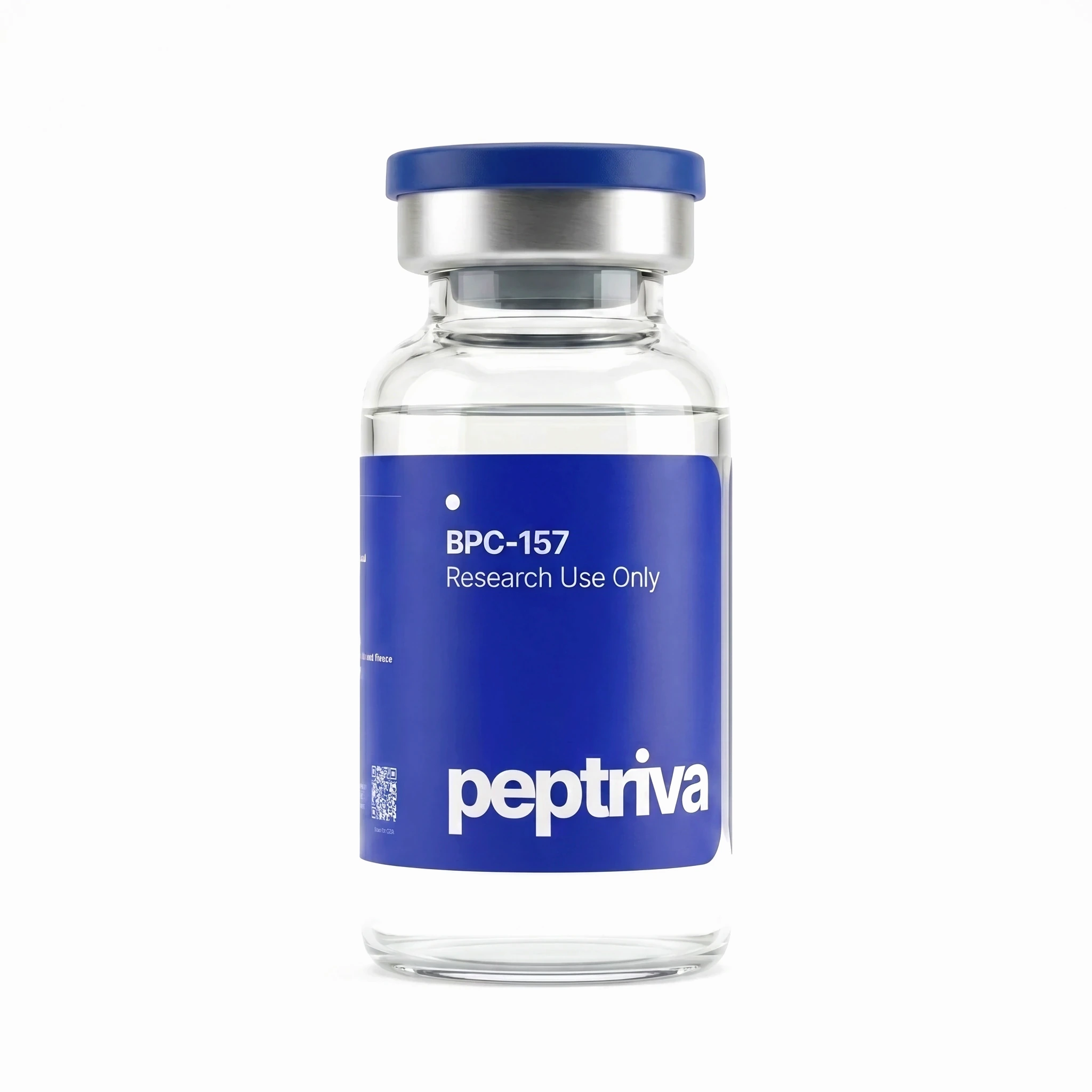
BPC-157
Pentadecapeptide · 15 aa, gastric origin. The same reference compound used across the cited preclinical gut-injury and anastomosis studies. COA available with each lot.
What to know now
- Preclinical breadth: NSAID gastroenteropathy, ulcerative colitis (DSS, TNBS models), intestinal anastomoses (esophagogastric, colocolonic, jejunoileal, ileoileal), external and internal fistulas.
- Proposed mechanism in gut: mucosal blood-flow support, NO system modulation, permeability stabilization, anti-inflammatory cytokine shifts.
- Acid stability: reported >24h stability in human gastric juice — the basis for oral dosing in some preclinical work.
- Human gut trials: none published in 2026. Earlier-reported phase II trials in ulcerative colitis are referenced in reviews but primary publications are difficult to locate.
- Closest-to-gut human data: the 2024 interstitial cystitis pilot — 12 women, intravesical dose, 10/12 complete symptom resolution. Uncontrolled.
- Standard of care: for NSAID gastroprotection, PPIs and H2 blockers have decades of RCT data. For IBD, mesalamine, immunomodulators, and biologics are first-line.
What we’re watching
Two things in the gut-specific literature. First, whether any of the earlier-referenced ulcerative colitis Phase II work surfaces as a formal trial publication, or appears on ClinicalTrials.gov as a renewed program. That would be the highest-value first human gut trial. Second, whether the rodent fistula-closure findings get reproduced by an independent group. Perianal Crohn’s fistula is a natural human-trial target if so.
References
- Park, J. M., Lee, H. J., Sikiric, P., & Hahm, K. B. (2020). BPC 157 rescued NSAID-cytotoxicity via stabilizing intestinal permeability and enhancing cytoprotection. Current Pharmaceutical Design, 26(25), 2971–2981. https://doi.org/10.2174/1381612826666200523180301
- Bajramagic, S., Hadziahmetovic, N., Pravdic, D., et al. (2024). BPC 157 in gastrointestinal anastomosis healing: A systematic review. Pharmaceuticals (Basel), 17(8), 1081. https://doi.org/10.3390/ph17081081
- Sikiric, P., Skrtic, A., Gojkovic, S., et al. (2022). Cytoprotective gastric pentadecapeptide BPC 157 resolves major vessel occlusion disturbances. World Journal of Gastroenterology, 28(1), 23–46. https://doi.org/10.3748/wjg.v28.i1.23
- Józwiak, M., Bauer, M., Kamysz, W., & Kleczkowska, P. (2025). Multifunctionality and possible medical application of the BPC 157 peptide—Literature and patent review. Pharmaceuticals (Basel), 18(2), 185. https://doi.org/10.3390/ph18020185
- Sikiric, P., Boban Blagaic, A., Strbe, S., et al. (2024). The stable gastric pentadecapeptide BPC 157 pleiotropic beneficial activity and its possible relations with neurotransmitter activity. Pharmaceuticals (Basel), 17(4), 461. https://doi.org/10.3390/ph17040461
- McGuire, F. P., Martinez, R., Lenz, A., Skinner, L., & Cushman, D. M. (2025). Regeneration or risk? A narrative review of BPC-157 for musculoskeletal healing. Current Reviews in Musculoskeletal Medicine, 18(12), 611–619. https://doi.org/10.1007/s12178-025-09990-7
- Lee, E., Walker, C., & Ayadi, B. (2024). Effect of BPC-157 on symptoms in patients with interstitial cystitis: A pilot study. Alternative Therapies in Health and Medicine, 30(10), 12–17. PMID 39325560
- Seiwerth, S., Milavic, M., Vukojevic, J., et al. (2021). Stable gastric pentadecapeptide BPC 157 and wound healing. Frontiers in Pharmacology, 12, 627533. https://doi.org/10.3389/fphar.2021.627533