The headline number on BPC-157 and tendon healing is the ratio: 35:1. Thirty-five rodent studies. One human case series. That’s the entire published evidence base, aggregated for the first time by the 2025 HSS Journal systematic review.
The 2025 HSS Journal systematic review pulls together 36 studies on BPC-157 for orthopaedic indications. 35 are preclinical (mostly rats). One is a retrospective human case series with no controls. The preclinical signal is consistent across muscle, tendon, ligament, and bone. The human gap is comprehensive. Roughly 80% of the preclinical work comes from a single Zagreb research group, which is the biggest methodological flag in the field.
Tendon heals slowly because of poor blood supply. An injury that resolves in six weeks in vascularized muscle can take six months in tendon tissue. Researchers have proposed that peptides targeting angiogenesis and fibroblast recruitment may address this limiting factor, and BPC-157 has attracted preclinical investigation on that basis.
Roughly 30 million Americans present with tendon-related complaints each year. Achilles tendinopathy alone has been reported in up to 9% of recreational runners. The slow pace of tendon recovery, combined with limited pharmacological options, has motivated researchers to investigate candidate molecules including BPC-157 ahead of a complete human evidence base.
That gap — between preclinical findings and validated human data — is the gap the HSS Journal paper attempts to characterize. The sections below summarise what the review found, where the evidence falls short, and what the coming clinical trials are likely to test.
What does BPC-157 do at the cellular level?
BPC-157 is a 15-amino-acid peptide that researchers isolated from human gastric juice in the 1990s. The name stands for “Body Protection Compound,” reflecting its proposed role in maintaining gut lining integrity.
Unlike most therapeutic peptides, it doesn’t bind a single receptor. The proposed mechanism is multifactorial, which is unusual.
A 2025 narrative review by McGuire at the University of Utah describes the most replicated features as VEGFR2 activation paired with nitric-oxide synthesis through the Akt/eNOS pathway, plus ERK1/2 signalling that recruits fibroblasts to injury sites.
In plain terms: the peptide appears to push tissue toward forming new blood vessels and laying down repair scaffolding. That matters for tendon, where the limiting factor is poor vascularity.
A separate 2025 mechanistic review from Józwiak catalogues additional pathways — growth-factor modulation, anti-inflammatory cytokine shifts, and a less well-characterized interaction with the body’s neurotransmitter systems. The Sikiric group at Zagreb also proposes that BPC-157 rapidly opens collateral vascular pathways to bypass blocked vessels — a model invoked to explain effects in ischemia-reperfusion injuries.
The mechanistic story is biologically plausible and broad-spectrum — growth-factor modulation, angiogenesis, ERK1/2 signalling, and fibroblast recruitment all map onto the kind of repair pathway that should help tendon. What’s missing is the validated human receptor target.
— McGuire et al., Current Reviews in Musculoskeletal Medicine, 2025
Our honest gloss: BPC-157 has multiple plausible mechanisms, none of which has yet been pinned to a single human receptor. That’s consistent with how an endogenous gastric peptide might work — broad-spectrum, contextual — but it makes pharmacological development harder than for a typical receptor-agonist drug.
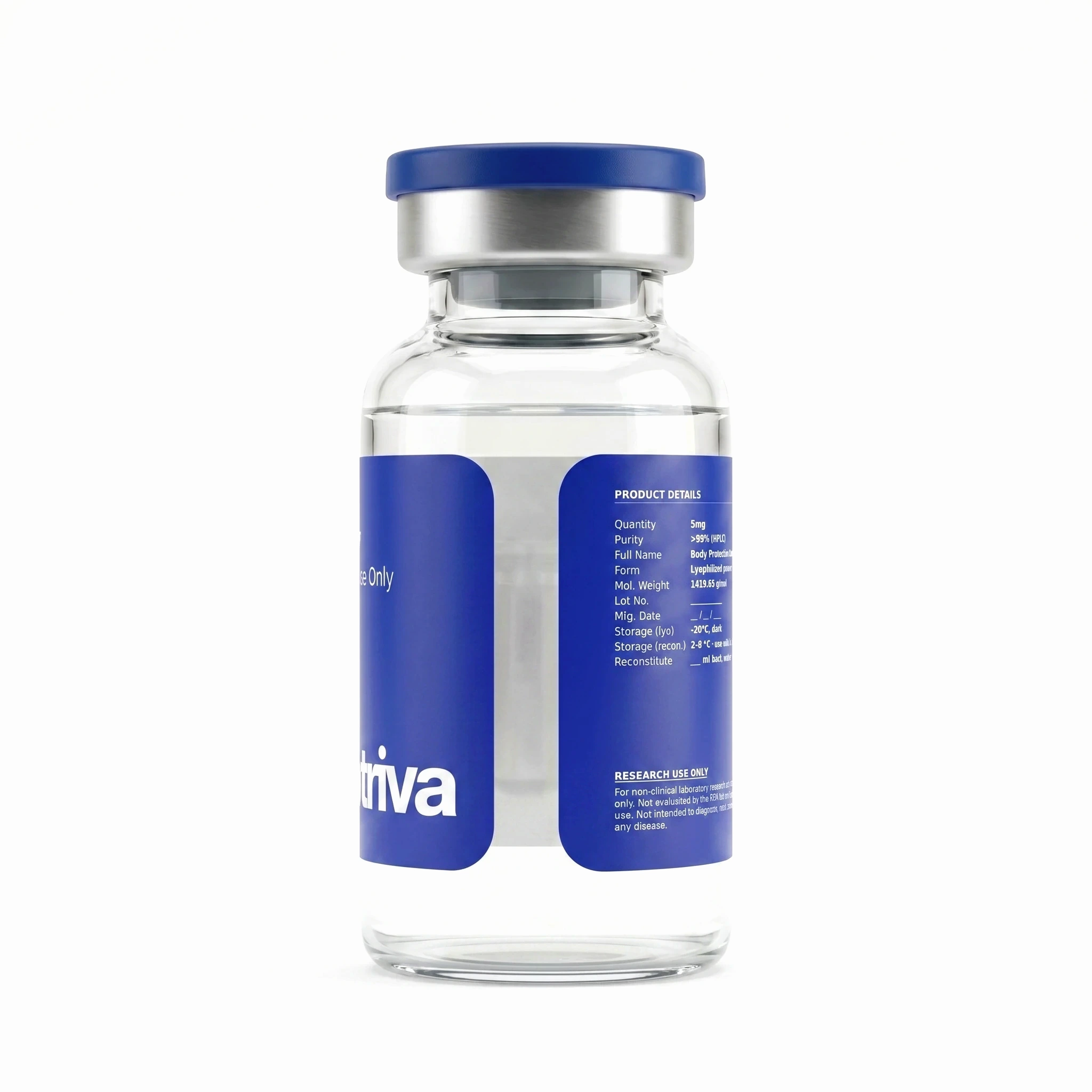
BPC-157
The same compound cited across the 35 preclinical studies in this review. Lab-verified identity and purity.
What does the rodent data really show?
The HSS Journal team, led by Vasireddi at Case Western, screened the published BPC-157 literature against PRISMA standards and ended up with 35 preclinical studies and one human study in their final set. That ratio — 35:1 — is the most important number in the review.
The preclinical signal across those 35 studies is consistent. Rats with surgically detached quadriceps tendons reattached and recovered functional and biomechanical strength at 90 days when given BPC-157 at 10 ng/kg/day orally. Rats with NSAID-induced gut damage saw intestinal permeability normalize. Rodent stroke and spinal-cord-injury models showed reduced lesion volume.
The reviewers’ phrase: “encouraging preclinical signal.” That’s the right phrase.
But there’s an authorship problem the review surfaces. Roughly 80% of the published preclinical work originates from a single research group at the University of Zagreb, led by Predrag Sikiric. That’s unusually concentrated for any therapeutic candidate.
Independent replication is comparatively limited. The Zagreb work isn’t bad science. It’s consistent and methodically reported. But the field needs other groups to reproduce the central findings before the molecule graduates from “promising in one lab’s rodents” to “promising, period.”
Where this falls short. 35 of 36 studies reviewed in HSS Journal are animal models. ~80% come from a single Zagreb research group. The signal across muscle, tendon, ligament, and bone is consistent, but independent replication is the missing piece. We’d hold off declaring this validated until non-Zagreb labs reproduce the core findings.
Where does the human evidence stop?
As of mid-2026, three pilot studies and one retrospective case series constitute the entire published human evidence base for BPC-157. Total exposures across all four publications: fewer than 50 people. None randomized. None placebo-controlled.
The most-cited orthopaedic data point is the Lee & Padgett retrospective from a Florida private clinic. They tracked 17 study participants who received intra-articular BPC-157 for knee pain over a one-year window. Of 16 reachable by phone at 6–12 months, 14 reported subjective relief.
No controls. No validated outcome measures. Recall bias is substantial in a phone-survey design. It’s a useful first signal, not evidence of efficacy.
The other human data points sit outside orthopaedics. A 2024 pilot in 12 women with treatment-refractory interstitial cystitis reported that 10 of 12 had complete symptom resolution after a single intravesical 10 mg dose. Striking, uncontrolled.
A 2025 IV safety pilot in two adults who received 10 mg and 20 mg infusions documented no biomarker changes and no adverse events. The authors flatly note that an n=2 sample establishes nothing about safety.
A 2026 sports-medicine review goes further. Mayfield concludes that the methodological flaws in the single human knee study — small n, no control arm, no validated functional outcomes — significantly limit clinical applicability.
What do reviewers conclude about BPC-157’s clinical status?
The 2025 reviews converge on a consistent position. The aggregate judgment from the HSS Journal systematic review and the McGuire narrative review is captured directly:
Despite the robust preclinical findings, human data are extremely limited, no large-scale randomized trials exist, and BPC-157 should be considered investigational pending well-designed clinical trials.
— McGuire et al., Current Reviews in Musculoskeletal Medicine, 2025
“Should be considered investigational” is the consensus across both the HSS Journal and Curr Rev Musculoskelet Med papers. No validated human dosing protocol exists; any doses reported in the grey-market literature are extrapolated from preclinical rodent data rather than derived from controlled trials. The 2025 systematic review also explicitly flags unregulated manufacturing and contamination risks as a concern independent of the molecule’s pharmacology.
The reviews identify several open questions that well-designed clinical trials would need to address before BPC-157 could be considered for clinical translation in orthopaedic indications:
- Standard-of-care comparators. Eccentric loading, shockwave therapy, PRP, and ultrasound-guided needling carry stronger 2026 evidence for tendon indications; any trial would need to benchmark against these.
- Validated outcome measures. The absence of a pre-specified functional outcome is one of the structural limitations of the existing case series, and a requirement for any Phase II design.
- Manufacturing and chain-of-custody controls. The FDA placed BPC-157 on the Category 2 503A compounding list in 2023, restricting compounding-pharmacy access; unregulated supply represents a documented safety variable.
- Regulatory and anti-doping status. BPC-157 has appeared on the WADA S0 Non-Approved Substances list since January 2022; regulatory classification may evolve as the clinical evidence base develops.
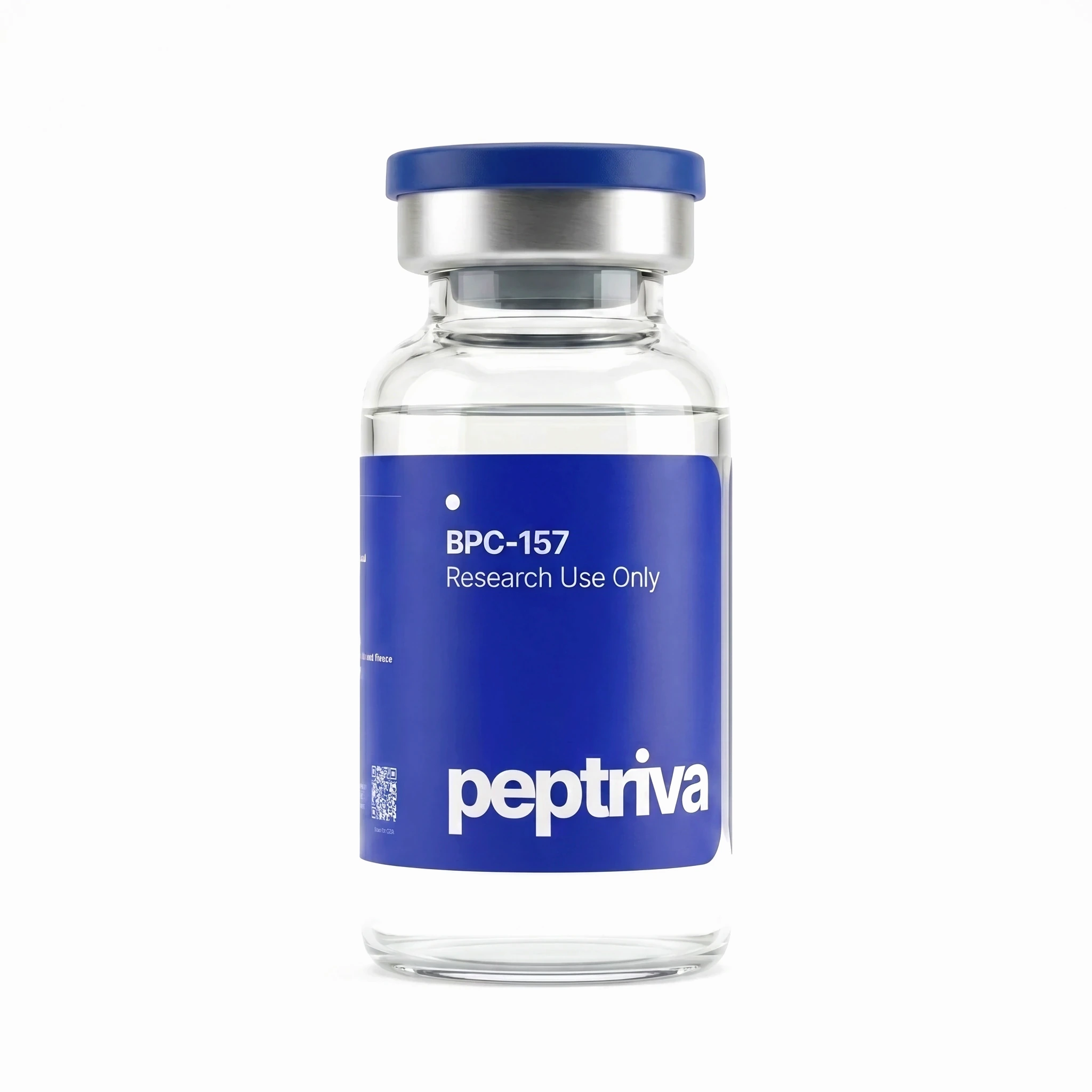
BPC-157
Pentadecapeptide · 15 aa, gastric origin. The same reference compound used across the cited preclinical studies. COA available with each lot.
What about joint pain or post-surgical recovery?
This is where the case-series data gets invoked most often, and where it falls shortest. The Lee & Padgett 2021 chart review is the only published clinical work on intra-articular BPC-157 for joint pain.
Fourteen of sixteen reachable study participants reporting subjective relief is a real signal — small clinics do not typically publish negative recall. But the gap between “subjective relief at phone follow-up” and “clinically meaningful improvement on a validated functional outcome” is the gap randomized trials are designed to close.
Several research groups are now in early-planning stages for formal clinical trials. The HSS Journal review’s most useful contribution may be that it makes the gap obvious enough that funding bodies and IRBs can’t any longer treat BPC-157 as too obscure to study properly.
What to know now
- Evidence base: 36 studies aggregated by HSS Journal in 2025 — 35 preclinical, 1 human case series.
- Authorship concentration: roughly 80% of preclinical work is from one Zagreb research group; independent replication is the missing piece.
- Human exposure: fewer than 50 published human exposures across all pilot studies and case series combined. No RCTs.
- Regulatory status: not FDA-approved for any indication. FDA Cat 2 compounding flag (2023). WADA Prohibited List under S0 since January 2022.
- Mechanism: multifactorial — VEGFR2/Akt/eNOS, ERK1/2, growth-factor modulation. No validated human receptor target identified.
- Standard of care first: for tendon issues, eccentric loading, shockwave therapy, and PRP all carry stronger 2026 evidence than injectable BPC-157.
What we’re watching
Three things over the next 18 months. First, whether independent labs outside the Zagreb group reproduce the core preclinical findings — the most important methodological gap in the field. Second, whether any early-stage RCT planning converts into registered trials on ClinicalTrials.gov. An Achilles-tendinopathy or knee-osteoarthritis Phase II would be the natural first formal test. Third, whether the FDA’s 2023 Cat 2 compounding designation changes — status moves either way are meaningful signals about regulator confidence in the safety profile.
References
- Vasireddi, N., Hahamyan, H., Salata, M. J., et al. (2025). Emerging use of BPC-157 in orthopaedic sports medicine: A systematic review. HSS Journal, 21(4). https://doi.org/10.1177/15563316251355551
- McGuire, F. P., Martinez, R., Lenz, A., Skinner, L., & Cushman, D. M. (2025). Regeneration or risk? A narrative review of BPC-157 for musculoskeletal healing. Current Reviews in Musculoskeletal Medicine, 18(12), 611–619. https://doi.org/10.1007/s12178-025-09990-7
- Mayfield, C. K., Bolia, I. K., Feingold, C. L., et al. (2026). Injectable peptide therapy: A primer for orthopaedic and sports medicine physicians. American Journal of Sports Medicine, 54(1), 223–229. https://doi.org/10.1177/03635465251357593
- Józwiak, M., Bauer, M., Kamysz, W., & Kleczkowska, P. (2025). Multifunctionality and possible medical application of the BPC 157 peptide—Literature and patent review. Pharmaceuticals (Basel), 18(2), 185. https://doi.org/10.3390/ph18020185
- Sikiric, P., Skrtic, A., Gojkovic, S., et al. (2022). Cytoprotective gastric pentadecapeptide BPC 157 resolves major vessel occlusion disturbances. World Journal of Gastroenterology, 28(1), 23–46. https://doi.org/10.3748/wjg.v28.i1.23
- Lee, E., & Padgett, B. (2021). Intra-articular injection of BPC 157 for multiple types of knee pain. Alternative Therapies in Health and Medicine, 27(4), 8–13. PMID 34324435
- Lee, E., Walker, C., & Ayadi, B. (2024). Effect of BPC-157 on symptoms in patients with interstitial cystitis: A pilot study. Alternative Therapies in Health and Medicine, 30(10), 12–17. PMID 39325560
- Lee, E., & Burgess, K. (2025). Safety of intravenous infusion of BPC-157 in humans: A pilot study. Alternative Therapies in Health and Medicine, 31(5), 20–24. PMID 40131143