The mitochondrial peptides don't share an evidence story. One just earned FDA approval. One has decades of cofactor data. Three have almost no human trials. Treating them as a single “mitochondrial health” category hides more than it reveals.
We carry five SKUs here: SS-31, NAD+, 5-Amino-1MQ, MOTS-c, and glutathione. Evidence spans FDA approval (SS-31 for Barth syndrome, September 2025) to essentially zero human data (MOTS-c). The category doesn't have one story. It has five.
Three things you should know before reading further.
First, “mitochondrial” covers four different strategies in this catalog. SS-31 targets the inner membrane directly. NAD+ and its precursors supply a cofactor (nicotinamide adenine dinucleotide is the electron-shuttling molecule that every cell uses to make energy). 5-Amino-1MQ blocks an enzyme called NNMT that normally degrades NAD+. Glutathione is an antioxidant tripeptide. These aren't interchangeable mechanisms.
Second, the longevity marketing covers all five. The actual evidence covers two. SS-31 has approval for a rare disease. NAD+ precursors raise blood NAD+ levels reliably. The other three? Mostly preclinical.
Third, the September 2025 SS-31 approval changed the category. It's the first peptide ever approved for a primary mitochondrial disease. The approval is for Barth syndrome specifically. It's not a green light for the general anti-aging claims the rest of the category sells into.
This overview walks each SKU, then lays out where the evidence actually sits.
SS-31 (elamipretide): the new FDA approval.
SS-31 is the research code. Elamipretide is the clinical name. Forzinity is the trade name approved in September 2025. The molecule is a four-residue peptide (sequence: D-Arg-Dmt-Lys-Phe-NH2).
What makes it unusual: it doesn't bind a classical receptor. It slides into the inner mitochondrial membrane and binds cardiolipin, a phospholipid found almost nowhere else in the cell. That binding stabilizes the membrane's folded geometry and protects the electron transport chain (the assembly that makes ATP) from oxidative damage.
The September 2025 approval is for Barth syndrome only. Barth is an ultra-rare X-linked disease caused by mutations in the TAZ gene that wreck cardiolipin remodeling. The pivotal trial, TAZPOWER, enrolled 12 study participants over 36 weeks. Skeletal muscle function (six-minute walk distance) and cardiac function both improved in the trial cohort. The trial is small because the disease is small. Roughly 200 individuals globally are estimated to have Barth syndrome. The effect size cleared the rare-disease pathway.
What the approval doesn't validate. It says SS-31 is a real drug with a real target in a defined patient group. It doesn't say SS-31 will help heart failure, kidney disease, or healthy aging. Earlier Phase II trials in heart failure with reduced ejection fraction (PROGRESS-HF) and primary mitochondrial myopathy (MMPOWER-3) both missed their primary endpoints. Barth syndrome is the narrowest indication that survived a decade of broader testing.
The cornerstone guide covers the cardiolipin biology, the TAZPOWER trial design, and the prior Phase II failures in detail. Read the full SS-31 guide →
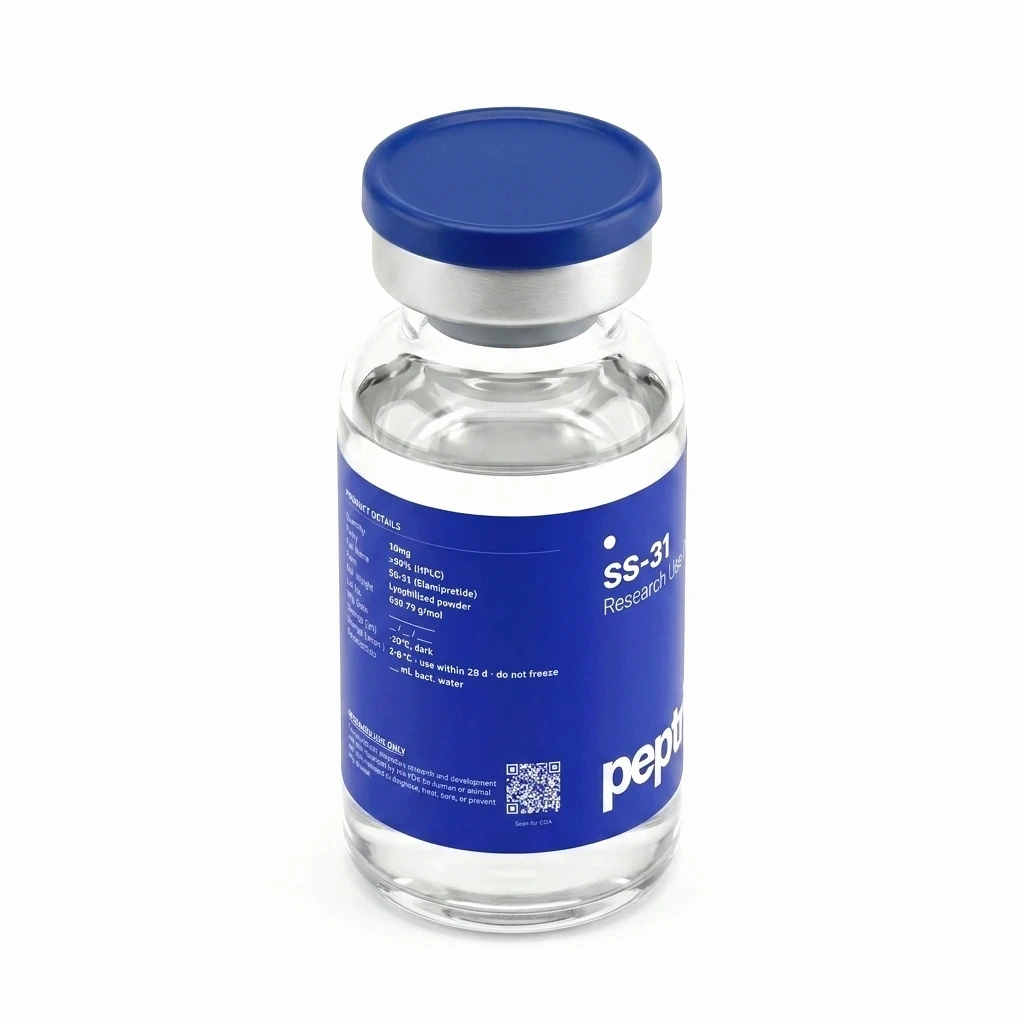
SS-31
The same molecule as FDA-approved Forzinity. The reference compound across the TAZPOWER Barth syndrome program. Lab-verified identity and purity.
NAD+ and its precursors: mature pharmacology, mixed clinical results.
NAD+ isn't a peptide. It's the electron-shuttling cofactor every cell uses to make energy. We carry it here because it's the most-sold “longevity” compound on the market, and its biology sits inside the same mitochondrial-energy story the rest of the category trades on.
The basic biology holds up. NAD+ declines with age in every tissue studied. NAD+-dependent enzymes regulate DNA repair, mitochondrial biogenesis, and metabolic balance. Raising NAD+ in aged rodents reverses several aging markers, and that finding has replicated across independent labs.
The clinical story is where it gets messy. Martens et al. (2018) reported that oral nicotinamide riboside (NR, a vitamin B3 form) at a study dose of 1,000 mg/day raised whole-blood NAD+ roughly 2-fold in healthy middle-aged and older adults. That pharmacodynamic finding has replicated across independent trials and represents the most consistent result for any precursor. Yoshino et al. (2021) observed similar NAD+ elevations with oral NMN across a dose range of 250–1,000 mg/day in study participants.
But the bridge from “blood NAD+ goes up” to measurable functional improvement in aging endpoints has not been consistently demonstrated. Phase II trials in older adults have tested grip strength, gait speed, insulin sensitivity, and VO2 max. Short-term safety is established. Functional outcomes are inconsistent.
Direct IV NAD+ is a separate pharmacokinetic question. Available data suggests parenteral NAD+ may not reach tissues efficiently — CD38, an ectoenzyme on the cell surface, appears to degrade extracellular NAD+ before cellular uptake. Controlled evidence for specific IV NAD+ administration protocols remains limited relative to clinical use patterns that have been reported. Read the full NAD+ guide →
MOTS-c: the most interesting biology, the thinnest evidence.
MOTS-c is a 16-residue peptide. What's wild about it: the gene that codes for it sits inside the mitochondrial 12S rRNA gene. For decades, biologists assumed the mitochondrial genome encoded only a handful of structural and metabolic proteins. MOTS-c showed that assumption was wrong.
The peptide travels from the mitochondrion back to the nucleus and activates AMPK, the cellular energy sensor. The preclinical data is striking. Aged mice given MOTS-c get better insulin sensitivity, longer skeletal muscle endurance, and partial reversal of age-related metabolic decline. Endogenous MOTS-c also rises with exercise and tracks metabolic fitness. It's one of the cleanest exercise-mimetic mechanisms in mammals.
The human side is nearly empty. As of 2026, no published Phase II or III trials exist. A handful of Phase I safety studies show tolerance. No controlled efficacy trial has finished. We're currently out of stock pending the next lot, which mirrors the field: researchers want it; the clinical literature hasn't kept up. Read the full MOTS-c guide →
5-Amino-1MQ and glutathione: the two adjacent compounds.
Two SKUs round out the catalog.
5-Amino-1MQ is a small molecule (not a peptide) that blocks an enzyme called NNMT. NNMT normally degrades methyl groups needed to recycle NAD+. Block it, and intracellular NAD+ rises without supplementing precursor. In rodents, that boost increases fat-tissue energy burn and produces weight loss in obese animals.
The mechanism is a clever workaround. The human data is sparse. Preclinical work plus early safety studies. No Phase II RCT for any metabolic indication has been published. Read the full 5-Amino-1MQ guide →
Glutathione is the body's master antioxidant tripeptide (sequence: γ-Glu-Cys-Gly). Oral bioavailability is poor because the gut degrades it before absorption. Studies have investigated liposomal formulations and N-acetylcysteine (NAC), a glutathione precursor, as alternative delivery approaches for raising intracellular glutathione concentrations.
IV glutathione is a different animal. High doses have been linked to Stevens-Johnson syndrome (a severe skin reaction) and liver toxicity. The FDA has issued warnings on IV glutathione marketed for skin whitening. The compound's legitimate role is as a reference antioxidant for laboratory work, not as a chronic injectable. Read the full Glutathione guide →
SS-31's approval for Barth syndrome is a milestone for mitochondrial medicine. It does not validate the healthy-aging or general fatigue claims that have circulated in the elamipretide marketing for years. The Phase II failures in heart failure and primary mitochondrial myopathy are the more representative signal for broader indications.
— FDA approval summary, Forzinity (elamipretide) for Barth syndrome, September 2025
Where each compound actually sits on evidence.
Where this falls short. The marketing language that bundles these five together oversells. SS-31's approval covers an estimated 200 known cases globally of one rare genetic disease. NAD+ precursors raise blood NAD+ reliably but haven't moved functional aging biomarkers consistently. MOTS-c is biologically the most interesting, clinically the most empty. 5-Amino-1MQ and glutathione lean on rodent and bench-chemistry data, not Phase II RCTs.
Here's how the five rank on human evidence, May 2026.
- SS-31: FDA-approved September 2025 for Barth syndrome. Multiple failed Phase II programs in heart failure and primary mitochondrial myopathy.
- NAD+ / NR / NMN: Mature pharmacodynamic data — 2-fold blood NAD+ elevation at 1,000 mg/day NR. Phase II functional outcomes inconsistent.
- 5-Amino-1MQ: Strong rodent metabolic signal. No Phase II RCT.
- MOTS-c: Compelling preclinical biology. Essentially no human trial evidence.
- Glutathione: Reference antioxidant. IV use carries documented serious risks. No FDA anti-aging approval.
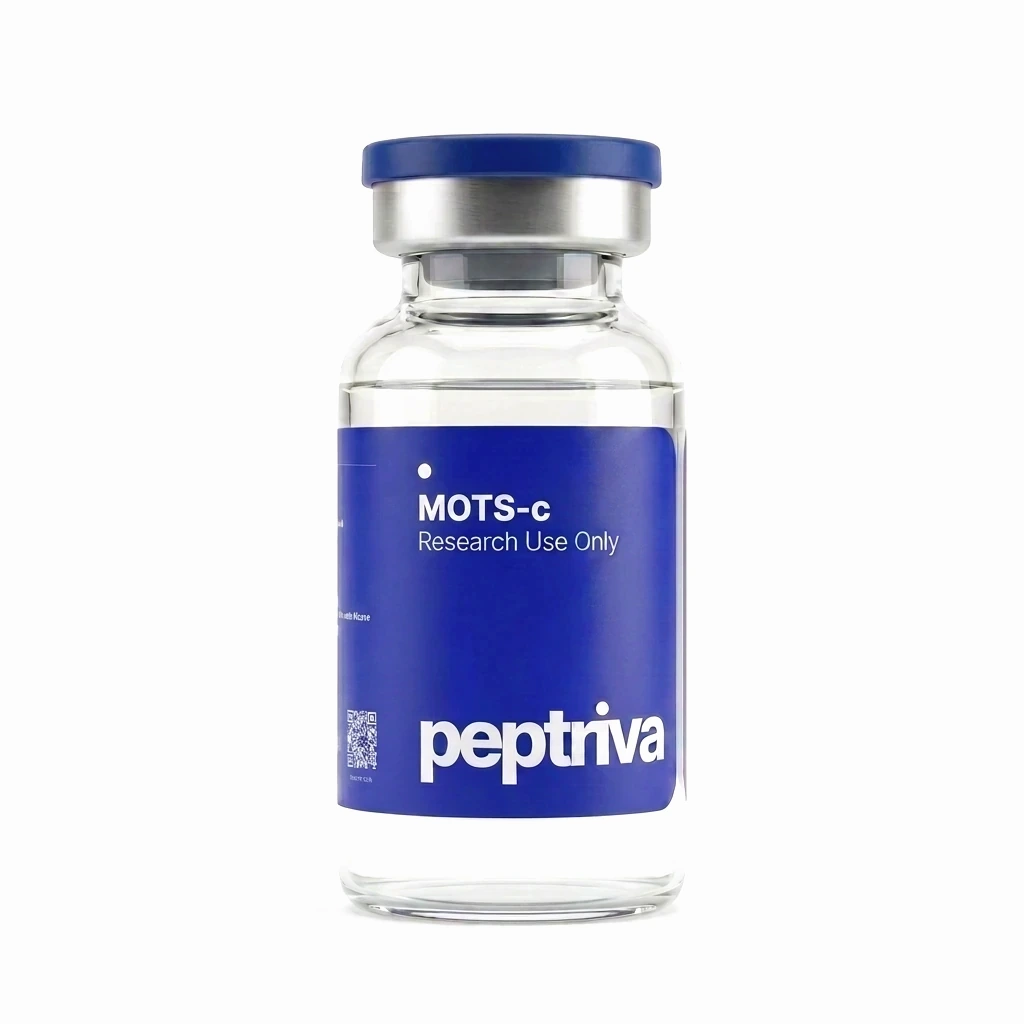
MOTS-c
Mitochondrial-derived peptide · 16 aa. The reference compound used across AMPK-activation and metabolic-homeostasis research. COA available with each lot.
Why mitochondrial peptides are harder to approve.
The category lags GLP-1 obesity drugs for a structural reason. Mitochondrial dysfunction shows up everywhere. Heart, muscle, brain, peripheral nerve. A study participant with cardiac mitochondrial disease presents very differently from one with skeletal-muscle disease. Designing a single trial endpoint that captures “the molecule worked” is genuinely hard.
SS-31 won approval because Barth syndrome is the easiest version of that problem. Defined genetic cause. Defined functional measure (six-minute walk). Small patient pool that justifies small-n trials. The Phase II failures in heart failure and primary mitochondrial myopathy show what happens when you scale to a heterogeneous group: the signal gets diluted.
The translation gap from “SS-31 demonstrated benefit in Barth syndrome” to broader indications is not supported by the available data. Phase II failures in heart failure and primary mitochondrial myopathy are the representative signal for broader indications. The same translation gap applies to NAD+ precursors in functional aging endpoints, MOTS-c preclinical-to-human extrapolation, and 5-Amino-1MQ rodent metabolic findings.
Key evidence gaps across the category.
Researchers and clinicians reviewing this category should note the following evidence limitations:
- Indication specificity: SS-31's FDA approval covers Barth syndrome only — a defined genetic indication. Published evidence for broader mitochondrial disease indications remains inconsistent across Phase II programs.
- Biomarker availability: For NAD+ precursors, whole-blood NAD+ is measurable and meaningful as a pharmacodynamic endpoint. For the remaining compounds in this category, no validated peripheral biomarker has been established in controlled studies.
- Endpoint definition: The absence of pre-specified functional endpoints is the structural limitation in most investigational use of this compound class.
- IV NAD+ evidence base: Controlled clinical evidence for specific IV NAD+ protocols lags behind clinical practice; pharmacokinetic data on CD38-mediated degradation raises questions about tissue delivery.
- Reference compound sourcing: FDA-approved Forzinity (SS-31) carries post-marketing surveillance data that research-grade reference material does not.
What to know now
- One FDA approval: SS-31 (Forzinity) for Barth syndrome, September 2025. Based on a 12-patient TAZPOWER trial.
- Multiple Phase II failures: SS-31 missed in heart failure (PROGRESS-HF) and primary mitochondrial myopathy (MMPOWER-3). The Barth approval doesn't extend to broader indications.
- NAD+ precursors raise blood NAD+ 2-fold at 1,000 mg/day. Functional outcomes inconsistent.
- MOTS-c: the most interesting biology, no Phase II data. Currently out of stock.
- 5-Amino-1MQ: blocks NNMT, strong rodent metabolic data, no Phase II RCT.
- Glutathione: oral bioavailability poor; IV use carries documented serious risks at high doses; FDA warnings on skin-whitening use.
- Bottom line: the category doesn't have one evidence story. Lumping these together as “mitochondrial health” oversells four of the five.
What we’re watching
Three things to track over the next 18 months. First, real-world durability data on SS-31 in Barth syndrome beyond the 36-week trial. Second, whether any developer revisits SS-31 in a redefined heart-failure subpopulation. The PROGRESS-HF program may have been studying the wrong patient phenotype. Third, the first registered Phase II RCT of MOTS-c in a metabolic indication. That trial doesn't exist on ClinicalTrials.gov yet, and registering one would be a major step for the entire mitochondrial-derived-peptide field.
References
- Reid Thompson, W., Hornby, B., Manuel, R., et al. (2021). A phase 2/3 randomized clinical trial followed by an open-label extension to evaluate the effectiveness of elamipretide in Barth syndrome (TAZPOWER). Genetics in Medicine, 23(3), 471–478. https://doi.org/10.1038/s41436-020-01006-8
- Zhao, K., Zhao, G. M., Wu, D., et al. (2004). Cell-permeable peptide antioxidants targeted to inner mitochondrial membrane. Journal of Biological Chemistry, 279(33), 34682–34690. https://doi.org/10.1074/jbc.M402999200
- Lee, C., Zeng, J., Drew, B. G., et al. (2015). The mitochondrial-derived peptide MOTS-c promotes metabolic homeostasis and reduces obesity and insulin resistance. Cell Metabolism, 21(3), 443–454. https://doi.org/10.1016/j.cmet.2015.02.009
- Reynolds, J. C., Lai, R. W., Woodhead, J. S. T., et al. (2021). MOTS-c is an exercise-induced mitochondrial-encoded regulator of age-dependent physical decline and muscle homeostasis. Nature Communications, 12, 470. https://doi.org/10.1038/s41467-020-20790-0
- Martens, C. R., Denman, B. A., Mazzo, M. R., et al. (2018). Chronic nicotinamide riboside supplementation is well-tolerated and elevates NAD+ in healthy middle-aged and older adults. Nature Communications, 9, 1286. https://doi.org/10.1038/s41467-018-03421-7
- Yoshino, M., Yoshino, J., Kayser, B. D., et al. (2021). Nicotinamide mononucleotide increases muscle insulin sensitivity in prediabetic women. Science, 372(6547), 1224–1229. https://doi.org/10.1126/science.abe9985
- Kraus, D., Yang, Q., Kong, D., et al. (2014). Nicotinamide N-methyltransferase knockdown protects against diet-induced obesity. Nature, 508(7495), 258–262. https://doi.org/10.1038/nature13198
- Karaa, A., Haas, R., Goldstein, A., et al. (2018). Randomized dose-escalation trial of elamipretide in adults with primary mitochondrial myopathy. Neurology, 90(14), e1212–e1221. https://doi.org/10.1212/WNL.0000000000005255
- Butler, J., Khan, M. S., Anker, S. D., et al. (2020). Effects of elamipretide on left ventricular function in research subjects with heart failure with reduced ejection fraction: The PROGRESS-HF phase 2 trial. Journal of Cardiac Failure, 26(5), 429–437. https://doi.org/10.1016/j.cardfail.2020.02.001
- Pizzorno, J. (2014). Glutathione! Integrative Medicine: A Clinician's Journal, 13(1), 8–12. https://pubmed.ncbi.nlm.nih.gov/26770075/