5-Amino-1MQ isn’t a peptide. It’s a small molecule the size of an aspirin tablet, weighing just 159 g/mol. Researchers at the University of Texas Medical Branch built it as a lab tool. Vendors sell it next to BPC-157 anyway.
5-Amino-1MQ is a small-molecule inhibitor of NNMT, an enzyme whose expression is elevated in obesity, muscle-wasting, and multiple tumor types. A 2022 mouse study reported significant fat-mass reduction in combination with a low-fat diet. A 2024 paper reported improved anti-PD-L1 efficacy in a bladder tumor model. Zero human trials have been published. Available evidence supports its use as a tool compound for NNMT biology research; no human clinical data exist.
5-Amino-1MQ appears in “weight-loss peptide” bundles and “NAD-sparing” longevity stacks sold through the same grey-market channels as the GLP-1 class. The compound is routinely mis-categorized, which is why a clear, evidence-anchored reference is warranted.
The short version: it’s a real tool compound with two interesting preclinical signals and one big missing piece. We’ll walk through the enzyme it targets, the three papers that matter, and the gaps that make the consumer-facing pitch premature.
What does NNMT actually do?
NNMT is short for nicotinamide N-methyltransferase, an intracellular enzyme that consumes two metabolically valuable substrates in a single reaction. It transfers a methyl group from SAM (the primary cellular methyl donor) onto nicotinamide, the vitamin-B3 precursor that cells would otherwise route into the NAD+ salvage pathway (a coenzyme central to cellular energy metabolism).
So one NNMT reaction drains two pools: the cell’s methylation capacity drops, and the NAD+ salvage pathway loses raw material. That double cost is what makes NNMT a metabolically interesting target.
NNMT expression is elevated in three tissue contexts studied in the literature: adipose tissue from research subjects with obesity, aging skeletal muscle associated with mass loss, and many solid tumors (bladder, cervical, breast). In each setting, higher NNMT expression has been reported to correlate with adverse outcomes. Adipocyte studies have described reduced metabolic activity; muscle-wasting models have observed accelerated atrophy; tumor-associated fibroblasts with high NNMT expression have been shown to attenuate anti-tumor immune responses.
That pattern gives drug developers a mechanistic rationale. In principle, NNMT inhibition should preserve SAM, free nicotinamide for NAD+ salvage, and reduce the metabolic suppression observed in adipose and muscle models. The mechanistic logic is sound; the challenge has been identifying a small molecule capable of achieving this in living animal models with acceptable selectivity. That is the context in which 5-Amino-1MQ was developed.
NNMT sits at the intersection of one-carbon metabolism and NAD+ salvage. Its upregulation in obesity, sarcopenia, and oncology has made it one of the most-studied novel metabolic targets of the last decade.
— Dimet-Wiley et al., Scientific Reports, 2022
The 2022 mouse paper that put it on the map
The headline 5-Amino-1MQ paper is Dimet-Wiley et al., 2022 in Scientific Reports. The Watowich group at UTMB fed mice a high-fat diet to make them obese, then switched them to a low-fat diet plus 5-Amino-1MQ. The combination normalized body weight and fat mass to lean-mouse levels.
A low-fat diet alone couldn’t do that on the same timeline. The drug seemed to amplify the diet’s effect.
The same paper also ran 16S sequencing on the gut microbiome. Treated mice showed a distinct signature: less Erysipelatoclostridium, more Lactobacillus. The authors read that as evidence that NNMT inhibition works on two fronts. It acts directly on fat cells, and indirectly through the gut bacteria.
Where this falls short. This is one paper, in one mouse model, from the lab that built the compound. The effect size is real and unusual. We just haven’t seen it replicated yet by independent groups working with different obesity models. That replication is the next step the field needs, and as of mid-2026 it hasn’t happened at scale.
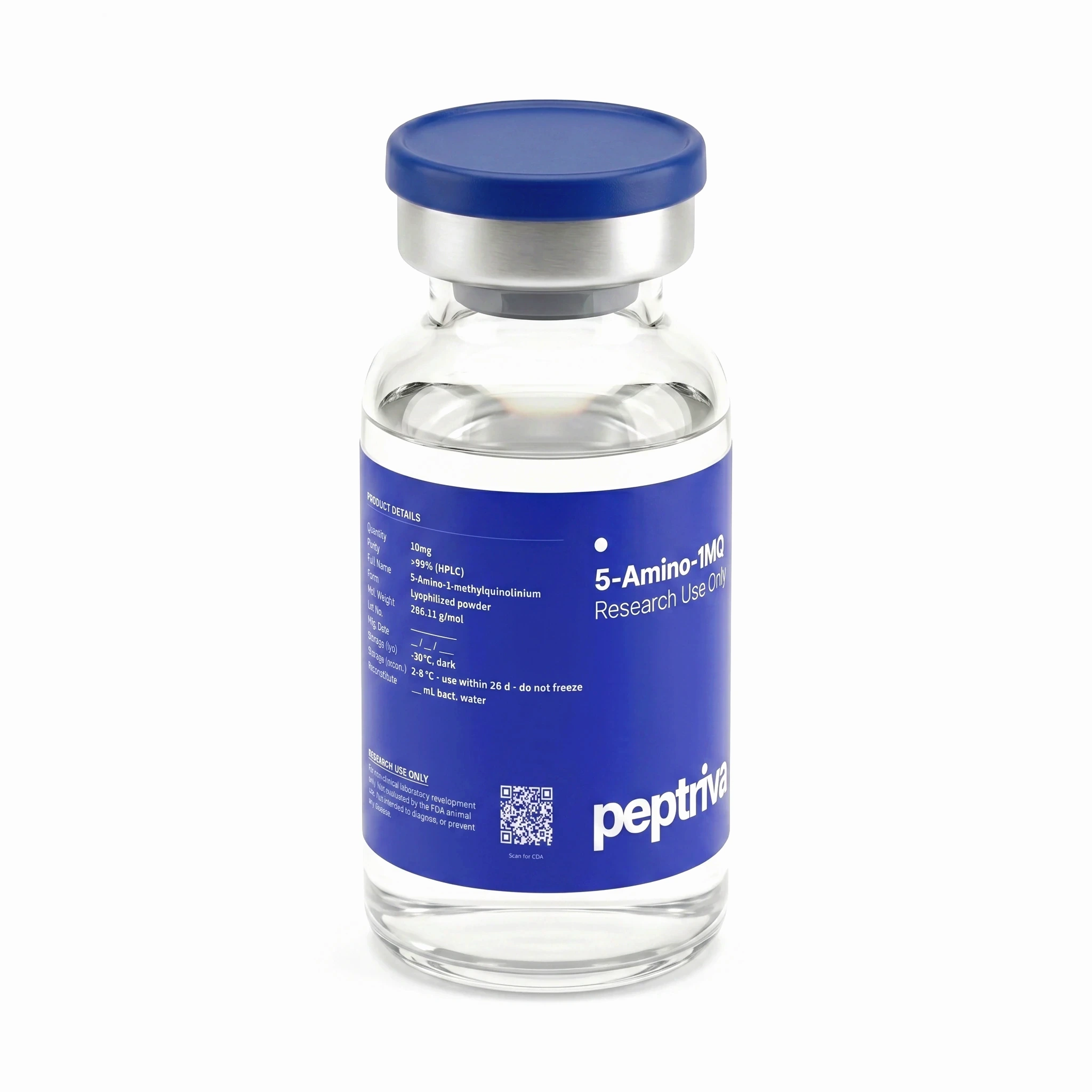
5-Amino-1MQ
The same NNMT-inhibitor tool compound cited across the preclinical studies in this review. Lab-verified identity and purity for in-vitro adipocyte and oncology assays.
The 2024 cancer paper that’s arguably more important
The most rigorous 5-Amino-1MQ paper to date is the 2024 bladder cancer study by Yang et al. in the Journal for ImmunoTherapy of Cancer. The group studied a real failure mode of cancer immunotherapy: tumors recruit a type of support cell called a CAF (cancer-associated fibroblast), and high-NNMT CAFs help the tumor hide from anti-PD-L1 antibodies.
When they added 5-Amino-1MQ to anti-PD-L1 treatment in mice, tumor growth dropped significantly and the immunotherapy worked better. The mechanism made sense, the readout matched the model, and the result is exactly the kind of finding that motivates real Phase I trials.
A 2021 Turkish group (Akar et al.) tested a close cousin compound, 5MQ, against HeLa cervical cancer cells. They saw dose-dependent killing of cancer cells and no effect on healthy HEK-293 controls. Selective tumor activity. That kind of selectivity deserves more replication, but it points in the right direction.
Why the “NAD+-sparing” longevity pitch is mostly hand-waving
Here’s the longevity argument vendors lean on. NNMT eats nicotinamide that could’ve gone to NAD+. So blocking NNMT “spares” NAD+, the way NMN and NR supplements try to boost it from the other direction. Sounds tidy.
The supporting human data is essentially zero. There are no published human trials of 5-Amino-1MQ for NAD+ outcomes, for sarcopenia, for body composition, or for any longevity endpoint. The translational leap from “NNMT inhibition raises NAD+ in mouse fat cells” to human clinical benefit has not been evaluated in any registered trial.
The translational success rate from rodent pharmacology to human clinical outcomes is estimated at roughly 50% across general drug classes and lower for metabolic targets specifically. Without any published human PK study for 5-Amino-1MQ, claims of longevity benefit in humans remain entirely unsupported by clinical evidence.
The evidence summary in one sentence: three preclinical papers across one mouse obesity model, one bladder cancer xenograft, and one cervical cancer cell line; zero human RCTs; and a translational signal that’s genuinely interesting but years away from clinical use.
Open characterization gaps in the published literature
NNMT is not a disease-only enzyme. Healthy tissue relies on it to manage methylation balance and NAD+ flow. Sustained inhibition in non-diseased tissue shifts metabolic equilibria that have not been studied in any published long-term model.
The concerns are not hypothetical. The following are open characterization gaps relevant to any in-vivo or translational research program:
- One-carbon metabolism. NNMT inhibition is expected to raise intracellular SAM levels. SAM is also the methyl donor for DNA methylation, histone methylation, and numerous other methyltransferases. The downstream effects of sustained SAM elevation on epigenomic regulation have not been characterized in published long-term studies.
- NAD+ regulation. Freeing nicotinamide from NNMT-mediated methylation should increase flux through the NAD+ salvage pathway. However, cellular NAD+ levels are subject to tight homeostatic regulation; whether increased nicotinamide availability produces a proportional increase in NAD+ has not been directly demonstrated in human tissue.
- Combination effects. Co-administration studies with NAD+ precursors such as NMN or NR have not been conducted. Additive, neutral, or antagonistic outcomes remain uncharacterized in any published model.
- It’s a small molecule, not a peptide. Oral bioavailability, hepatic first-pass metabolism, and tissue distribution have not been formally characterized. Its physicochemical properties are inconsistent with the reconstitution and administration conventions used for peptide research compounds.
The peptide-marketing problem
5-Amino-1MQ being sold as a “peptide” is a category error worth naming. It’s a small molecule, weighing roughly 1/10 as much as BPC-157 and 1/40 as much as tirzepatide. Its pharmacology looks more like a CNS-active small drug than an injected peptide.
Why do vendors group it with peptides? Convenience. Same audience, same disclaimers, same supply chain. If 5-Amino-1MQ ever becomes an approved drug, it’ll be a tablet, not a lyophilized vial. The eventual product won’t look anything like what’s sold today.
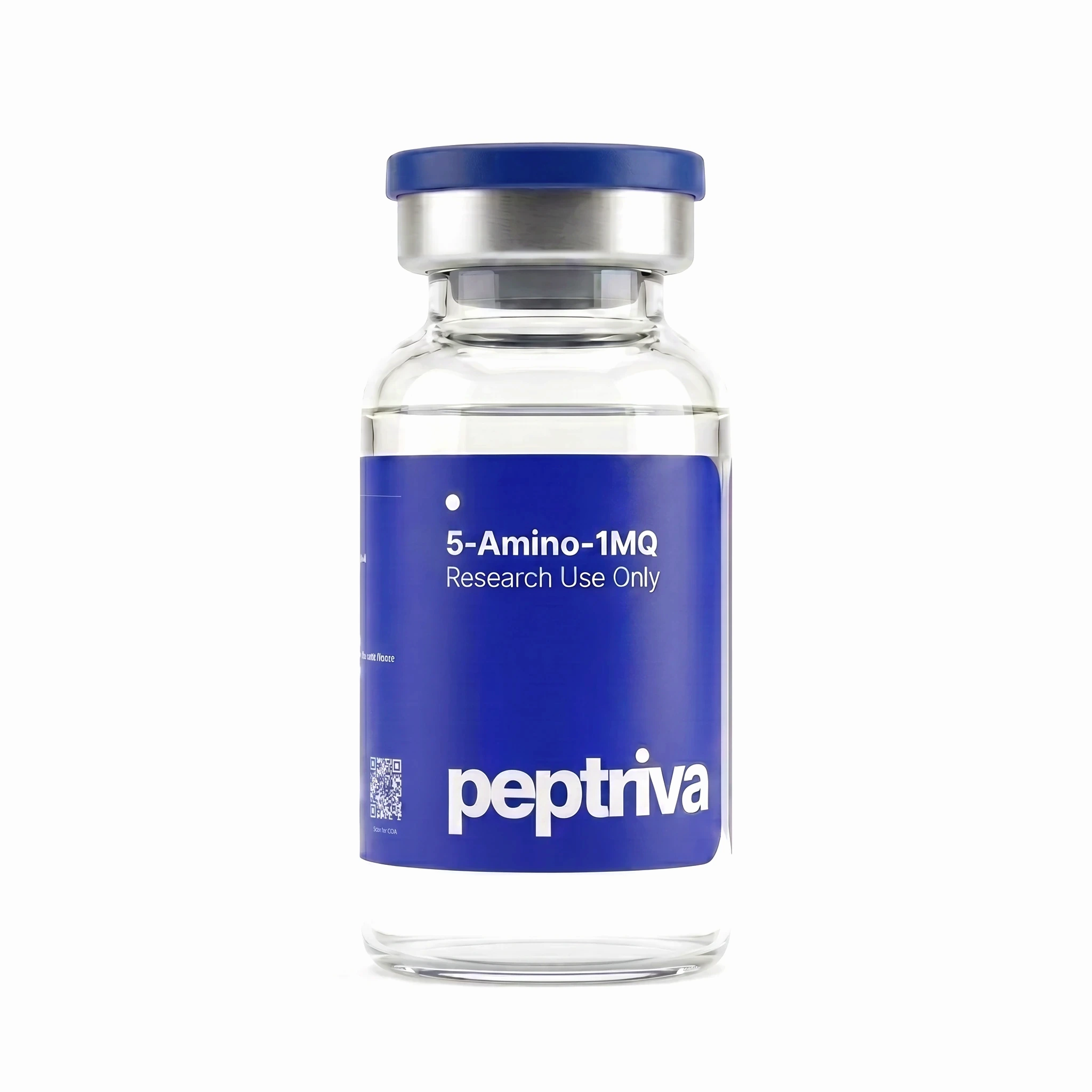
5-Amino-1MQ
A small, membrane-permeable quinolinium NNMT inhibitor. The same reference compound used across the cited preclinical adipose and oncology studies. COA available with each lot.
Procurement and assay considerations for researchers
For an in-vitro project characterizing NNMT in adipocytes, replicating the Watowich data, or exploring anti-PD-L1 synergy, the following checklist covers the key experimental and sourcing decisions:
- Chemical purity and testing method. Small molecules require HPLC and NMR; these are distinct assays from peptide HPLC. Request the supplier’s COA format and confirm the analytical method used.
- Salt form. 5-Amino-1MQ is typically supplied as the iodide salt. The counterion affects solubility, stock preparation, and effective concentration in biological assays. Confirm the salt form in the COA.
- Assay readout selection. NNMT enzyme inhibition is typically measured by HPLC quantification of N-methylnicotinamide. NAD+ salvage pathway endpoints require LC-MS. Cell phenotype readouts (lipid content, tumor-growth inhibition) require dedicated kits. Align reagent selection to the intended readout before procurement.
- Co-treatment with NAD+ precursors. The interaction between 5-Amino-1MQ and NMN or NR in cell culture has not been characterized in published literature. Experimental design should explicitly define whether additivity is being tested or non-interaction is assumed.
- 2024 JITC bladder paper as methodological reference. For oncology-related work, Yang et al. (2024) provides the most detailed characterization to date and serves as the recommended methodological starting point.
- Regulatory and anti-doping status. WADA has not explicitly listed 5-Amino-1MQ as a prohibited substance as of mid-2026, but metabolic modulators are an active anti-doping focus. Regulatory status is subject to change and should be verified against current WADA and applicable national anti-doping authority lists.
Where this might actually go
Reading the literature honestly, we see two translational paths. The metabolic path (obesity, muscle loss) rests on one big mouse paper and needs replication before serious clinical development. The oncology path (sensitizing PD-L1 inhibitors in NNMT-high tumors) has the cleaner mechanism and is our pick for the first credible Phase I indication.
Either way, the right next steps are commercial development, IND-enabling toxicology, formal Phase I dosing studies, and proper Phase II efficacy trials. Ridgeline Therapeutics has signaled interest. Until they file an IND, everything else is preclinical.
For a research laboratory, 5-Amino-1MQ is a legitimate tool compound with relevant preclinical citations. For any application beyond the characterization of NNMT biology in cell or rodent models, the evidence base does not support further extrapolation at this stage of development.
What to know now
- Identity: small-molecule quinolinium NNMT inhibitor, not a peptide. MW 159 g/mol. Developed at UTMB (Watowich lab).
- Mechanism: blocks nicotinamide N-methyltransferase, sparing SAM and freeing nicotinamide for NAD+ salvage.
- Preclinical evidence: three published papers (Watowich 2022 mouse obesity, Yang 2024 bladder cancer + anti-PD-L1, Akar 2021 HeLa with related compound 5MQ).
- Human evidence: zero PubMed-indexed trials for any indication.
- Translation path: Ridgeline Therapeutics signaled commercial interest; no clinical trials registered yet.
- Regulatory: not FDA-approved. Not in the US clinical trial registry. WADA status unlisted but watch this space. Sold through research-chemical vendors as a category-error “peptide.”
- Research use: legitimate tool for NNMT enzyme assays, NAD+ salvage characterization, and oncology immunotherapy work in cell and rodent models.
What we’re watching
Three things to track over the next 24 months. First, whether independent labs replicate the Watowich mouse-obesity finding in different DIO models. One paper from the originating lab is a starting point, not a foundation. Second, the Ridgeline Therapeutics pipeline. An IND filing tells us which signal (metabolic vs oncology) is being prosecuted. Third, follow-up on the 2024 JITC bladder paper. We want to see whether 5-Amino-1MQ or a more drug-like NNMT inhibitor enters formal Phase I immunotherapy-sensitization trials. The oncology path is our pick for the more credible near-term clinical opportunity.
References
- Dimet-Wiley, A., Wu, Q., Wiley, J. T., et al. (2022). Reduced calorie diet combined with NNMT inhibition establishes a distinct microbiome in DIO mice. Scientific Reports, 12(1), 484. https://doi.org/10.1038/s41598-021-03670-5
- Yang, M., Wang, B., Hou, W., et al. (2024). NAD metabolism enzyme NNMT in cancer-associated fibroblasts drives tumor progression and resistance to immunotherapy by modulating macrophages in urothelial bladder cancer. Journal for ImmunoTherapy of Cancer, 12(7), e009281. https://doi.org/10.1136/jitc-2024-009281
- Akar, S., Duran, T., Azzawri, A. A., Koçak, N., Çelik, Ç., & Yıldırım, H. (2021). Small molecule inhibitor of nicotinamide N-methyltransferase shows anti-proliferative activity in HeLa cells. Journal of Obstetrics and Gynaecology, 41(8), 1240–1245. https://doi.org/10.1080/01443615.2020.1854696
- Pissios, P. (2017). Nicotinamide N-methyltransferase: More than a vitamin B3 clearance enzyme. Trends in Endocrinology & Metabolism, 28(5), 340–353. https://doi.org/10.1016/j.tem.2017.02.004
- Kraus, D., Yang, Q., Kong, D., et al. (2014). Nicotinamide N-methyltransferase knockdown protects against diet-induced obesity. Nature, 508(7495), 258–262. https://doi.org/10.1038/nature13198
- Neelakantan, H., Vance, V., Wetzel, M. D., et al. (2018). Selective and membrane-permeable small molecule inhibitors of nicotinamide N-methyltransferase reverse high-fat diet-induced obesity in mice. Biochemical Pharmacology, 147, 141–152. https://doi.org/10.1016/j.bcp.2017.11.007