MOTS-c has been the most credible research-stage longevity peptide for nearly a decade. It is a genuinely endogenous molecule synthesized by mitochondria. The biology is well-described. The human interventional trials that would be required to establish therapeutic utility have not yet been published.
MOTS-c is a 16-amino-acid peptide produced by mitochondria from a gene buried inside their ribosomal RNA. It is one of the few peptides covered here that is both genuinely endogenous (it circulates in human plasma) and well-characterized at the molecular level. The USC Cohen lab's signaling work (AMPK, CK2, myostatin suppression, Bcl-2) is unusually solid for this evidence tier. The honest counter: as of mid-2026, all human MOTS-c data are observational. Zero randomized trials of injected MOTS-c have been published.
The origin story is worth telling. In 2015, Changhan Lee and Pinchas Cohen's lab at USC published the discovery of MOTS-c. They identified a 16-amino-acid peptide encoded inside the 12S rRNA region of the mitochondrial genome. That's odd. Until then, textbooks said the mitochondrial genome encoded 13 electron-transport-chain protein subunits, plus tRNAs and rRNAs. MOTS-c (and its sibling humanin) broke that story.
It turns out mitochondria make extra small peptides too. These peptides travel to the cell nucleus during metabolic stress and tell the nucleus to change which genes it activates. Mitochondria talk back to the nucleus, in other words. Not just through metabolite signals, but through actual peptide messengers.
That shift, mitochondrial-derived peptides as backward-flowing signals, is why MOTS-c attracted serious attention from longevity researchers, exercise physiologists, and metabolic-disease labs. The Cohen lab's follow-up work, plus contributions from groups in Japan, China, and Europe, has built one of the cleanest preclinical stories in the longevity field. The clinical translation hasn't happened. That gap is the most important thing to focus on.
What is MOTS-c at the molecular level?
The sequence is Met-Arg-Trp-Gln-Glu-Met-Gly-Tyr-Ile-Phe-Tyr-Pro-Arg-Lys-Leu-Arg. Sixteen amino acids. Molecular weight of ~2,175 g/mol. It is produced by the mitochondria's own protein-making machinery, distinct from the cytoplasmic ribosomes that handle most cellular translation. It circulates in human plasma. Levels decline with age.
The age-related drop is one reason researchers got interested. NAD+ drops with age. Growth hormone drops with age. Dozens of signaling molecules tied to longevity research drop with age. MOTS-c joined that list.
The way it is made is unusual enough to pause on. MOTS-c is not encoded the normal way most peptides are. The protein-making machinery that produces it is mitochondrial, not cytoplasmic. After synthesis, MOTS-c travels out of the mitochondrion, through the cell, and into the nucleus. That is what makes it a "retrograde signal." Information flows backward, from the organelle to the nucleus, allowing mitochondrial metabolic state to shape which genes are activated in response to stress.
MOTS-c is among the first of a small but growing class of mitochondrial-derived peptides. Its endogenous status, age-related decline, and clean mechanistic biology distinguish it from much of the broader peptide-research landscape. The question is when, and through which sponsor, it enters formal human clinical development.
— Kim et al., GeroScience, 2020
How does MOTS-c work?
The mechanism literature has thickened a lot between 2020 and 2026. Multiple distinct molecular pathways are now characterized. The integration across them is more coherent than for most peptides at this evidence tier. Here are the four main ones.
It activates a kinase called CK2. The 2024 iScience paper from Kumagai and the Cohen group showed MOTS-c directly binds and activates CK2 in skeletal muscle, with tissue-specific effects (it activates CK2 in muscle, suppresses it in fat). Even more interesting: a natural genetic variant called K14Q changes one amino acid and reduces CK2 binding. Male carriers of K14Q have higher rates of muscle loss and type 2 diabetes (Kumagai et al., 2024). That's one of the strongest indirect human-relevance signals in the whole literature.
It activates AMPK. A 2023 paper from Zheng and colleagues integrates the evidence that MOTS-c switches on AMPK signaling and boosts glucose uptake in muscle (Zheng et al., 2023). AMPK is the classic energy-sensing enzyme in cells. It activates when ATP runs low, when energy demand rises, and during exercise. MOTS-c acting through AMPK is the mechanistic basis for the "exercise mimetic" characterization that appears in the literature.
It suppresses myostatin. Myostatin is the protein that signals muscle cells to limit growth. A 2021 paper from Kumagai and colleagues showed MOTS-c lowers myostatin levels and blocks muscle atrophy through a long signaling chain (CK2-PTEN-mTORC2-AKT-FOXO1). They also found that plasma MOTS-c was inversely correlated with myostatin in human study participants (Kumagai et al., 2021). Another indirect human-relevance signal.
It stabilizes Bcl-2. Bcl-2 is a protein that keeps cells alive by blocking cell death. A 2024 Cell Reports paper from Lu and colleagues showed MOTS-c binds Bcl-2 directly and stabilizes it in fatty-liver disease models (Lu et al., 2024). This is a different mechanism from the AMPK and CK2 stories. It points to liver-disease applications that the exercise-mimetic framing doesn't capture.
Add Nrf2 activation in radiation-injury models (Zhang et al., 2024), tumor suppression in ovarian cancer (Yin et al., 2024), and antiviral signaling against hepatitis B (Lin et al., 2024), and the breadth becomes the unusual feature. Most peptides at this evidence tier have one or two mechanism papers from one or two labs. MOTS-c has 6 to 7 distinct mechanism stories from multiple labs.
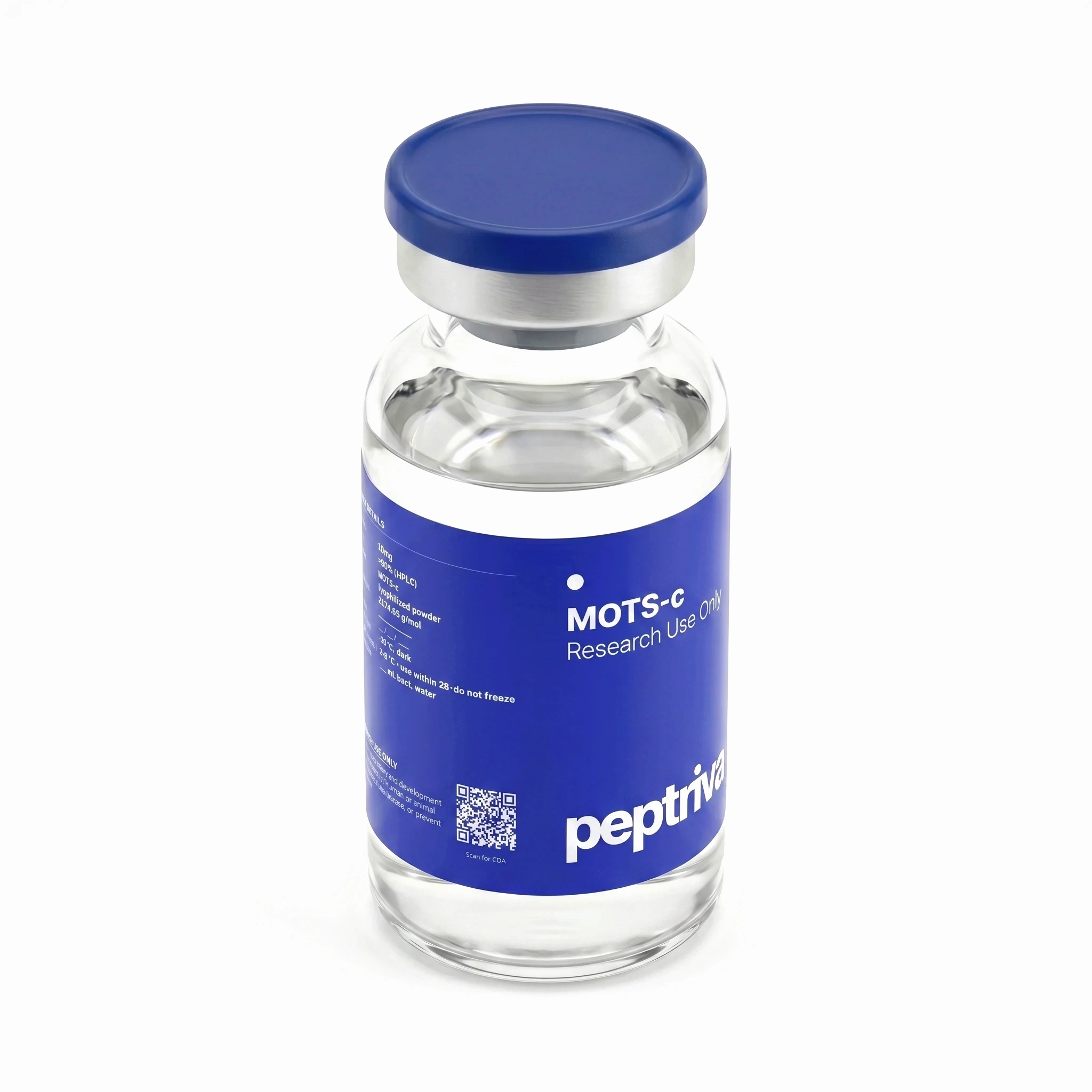
MOTS-c
The same 16-aa mitochondrial-derived peptide cited across the Cohen-lab CK2 / AMPK studies in this review. Lab-verified identity and purity. Currently out of stock — next lot ETA posted on the product page.
The Japanese genetic variant: indirect human evidence
One of the most distinctive features of the MOTS-c story is the population-genetics work on the K14Q variant. The Cohen group has characterized a natural single-letter DNA change that produces a MOTS-c peptide with one different amino acid at position 14. That single change reduces how well MOTS-c binds CK2.
Male carriers of this variant in Japanese-ancestry populations show higher rates of sarcopenia (age-related muscle loss), lower exercise capacity, and higher type 2 diabetes risk.
That kind of genetic-variant-to-disease link is meaningful. If a functionally weaker MOTS-c variant is associated with worse metabolic outcomes in a population, endogenous MOTS-c likely plays a real role in those outcomes. It is the closest the field has to human relevance without an interventional trial. But genetic association and interventional trial data represent fundamentally different evidence classes. The genetic data indicates that endogenous MOTS-c levels matter. It does not establish that exogenous administration of synthetic MOTS-c corrects those outcomes.
Is MOTS-c really an "exercise mimetic"?
The "exercise mimetic" characterization rests on two replicated observations. One: plasma MOTS-c rises acutely during high-intensity exercise in humans. Two: MOTS-c treatment in young and aged mice improved exercise capacity, antioxidant capacity, weight, and insulin sensitivity in preclinical studies (Woodhead and Merry, 2021).
The exercise-response data is real and replicated. The rodent data is real and replicated across multiple labs. However, MOTS-c is one of many signaling molecules produced during exercise — not the complete exercise response. The doses producing functional benefits in mouse studies substantially exceeded physiological levels. Human dose-response data have not been published.
The MOTS-c exercise claim, assessed. Preclinical studies have shown that plasma MOTS-c rises with exercise and that injected MOTS-c improves fitness metrics in rodent models. No published human trial has tested whether exogenous MOTS-c administration replicates exercise adaptations in human subjects. The published literature supports characterizing MOTS-c as a component of the exercise response signal, not a substitute for exercise.
Why no human trials yet?
As of 2026, zero randomized controlled trials of injected MOTS-c in humans have been published. All human MOTS-c data are observational. Researchers measure circulating MOTS-c levels and correlate them with disease states (hepatitis B, ovarian cancer, exercise, muscle loss, diabetes).
The 2024 hepatitis B paper enrolled 404 study participants but used MOTS-c only as a biomarker. The treatment studies were conducted in mice and cell culture.
The trial gap is structural, not accidental. MOTS-c is endogenous, which means there is no obvious patent angle on a synthetic version. The Cohen lab has academic commercial-translation partnerships, but none have produced a registered Phase I trial as of mid-2026. Human pharmacokinetics (distribution, clearance, half-life) have not been published for synthetic MOTS-c.
Dose estimates circulating in the grey-market literature are extrapolated from rodent studies without human pharmacokinetic validation.
The molecular biology is real and unusually well-developed. The human pharmacology is not characterized.
Where this falls short. Despite ~40 preclinical studies, MOTS-c has produced zero published randomized human trials. Pharmacokinetic data is missing. Long-term safety in humans is unknown. The dual cancer-biology effects (anti-tumor in some models, anti-apoptotic via Bcl-2 in others) raise unresolved questions about chronic exposure in non-diseased research subjects.
Where is the preclinical evidence strongest?
If we filter the MOTS-c preclinical literature by methodological strength, 4 areas stand out.
- Skeletal muscle and sarcopenia. Multiple Cohen-lab papers plus the K14Q variant work converge on a coherent muscle-biology story. The myostatin-suppression pathway is well-mapped.
- Glucose handling and insulin sensitivity. AMPK activation in muscle, plus the gestational-diabetes mouse model from Yin et al., 2021, plus the K14Q diabetes-risk correlation.
- Fatty liver disease (NASH). The 2024 Cell Reports Bcl-2 paper is a distinct, mechanism-driven story with both preventive and therapeutic effects in mice on fatty-liver-inducing diets.
- Cancer biology. The 2024 ovarian-cancer paper showed reduced MOTS-c in study participant blood and tumors, with injected MOTS-c blocking tumor growth in vitro and in mice without obvious toxicity.
Each of those is, on its own, a publishable story. The combination across them, multiple diseases tied to a coherent set of pathways, is unusually broad for a peptide that hasn't entered formal human development.
What about side effects?
Honest answer: we don't know what side effects injected MOTS-c produces in humans, because no controlled human safety study has been published. Rodent studies consistently report no major toxicity at high doses, but rodent safety doesn't always translate.
The theoretical concerns are mostly metabolic. Because MOTS-c affects AMPK, insulin sensitivity, and glucose uptake, hypoglycemia in non-diabetic research subjects is a plausible consideration. The dual cancer-biology effects (anti-tumor in ovarian cancer, anti-apoptotic in NASH via Bcl-2) raise the question of how chronic exposure might affect tumor surveillance. None of this has been characterized in human safety studies.
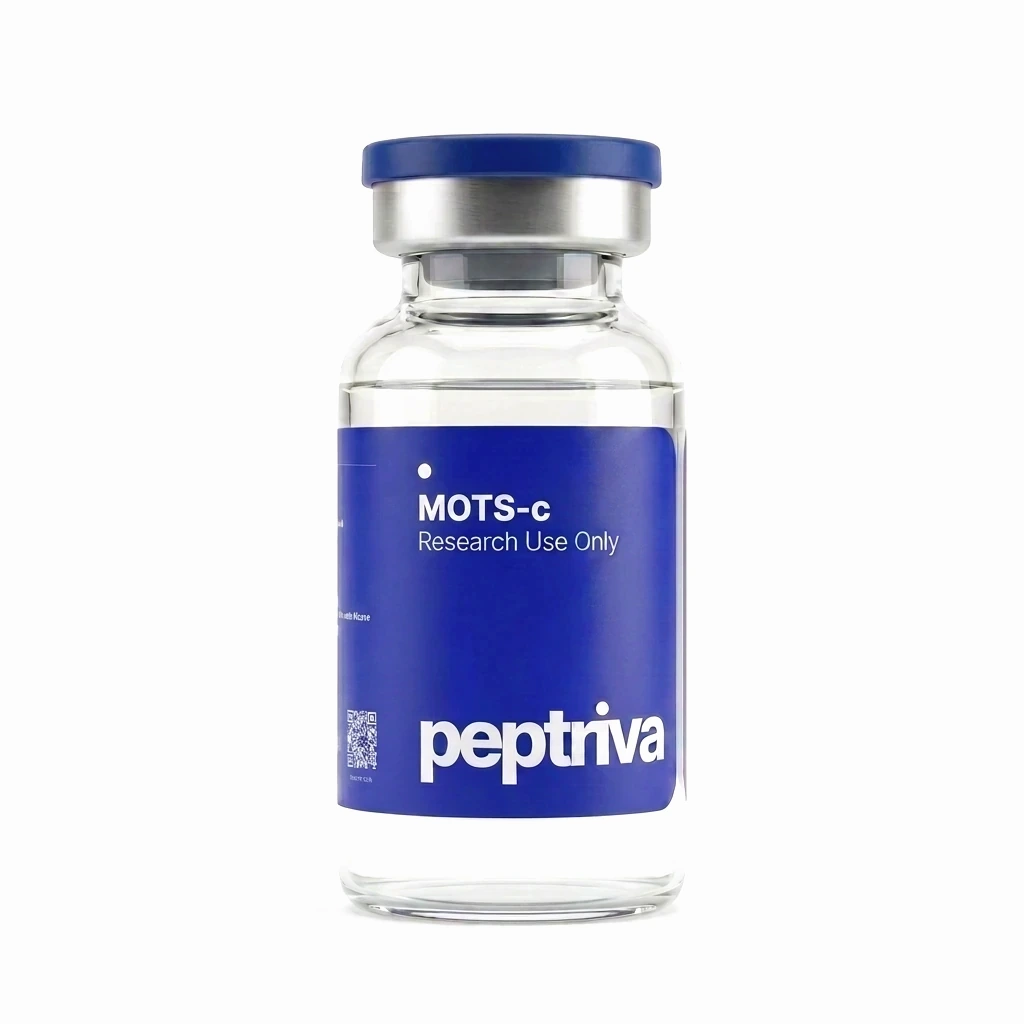
MOTS-c
Mitochondrial-derived peptide · 16 aa, AMPK/CK2 signaling. The same reference compound used across the cited preclinical studies. Currently out of stock — next lot ETA posted on the product page. COA available with each lot.
Open questions in MOTS-c research
The preclinical literature is unusually strong, yet several gaps remain unresolved before clinical translation can proceed.
- Human pharmacokinetics. No published data establish distribution, half-life, or clearance for synthetic MOTS-c in humans. Dose estimates extrapolated from rodent studies lack human validation.
- Validated pharmacodynamic endpoints. Without validated human biomarkers of MOTS-c effect, defining study success criteria for an interventional trial remains an open methodological challenge.
- Reference compound quality. Grey-market MOTS-c circulates as a research chemical with variable quality assurance. Synthesis is technically straightforward, but manufacturing controls and lot-to-lot consistency are uncharacterized for most commercial sources.
- Combination effects. MOTS-c is frequently co-investigated alongside NAD+ precursors or other metabolic modulators in informal research contexts. Interactions are uncharacterized; co-administration creates multi-variable experiments without controls.
- Anti-doping classification. Mitochondrial-derived peptides are emerging on the anti-doping radar. WADA has not yet explicitly listed MOTS-c, but the regulatory trajectory is under active monitoring.
- Cancer-biology dual effects. The preclinical evidence includes both anti-tumor effects (ovarian cancer) and anti-apoptotic effects (NASH via Bcl-2). This duality has not been characterized sufficiently for risk assessment in populations with cancer history.
The bottom line
MOTS-c is among the most scientifically credible peptides in the longevity research category. It is genuinely endogenous — circulating in human plasma and declining with age. It is well-characterized at the molecular level. It is supported by an unusually broad and coherent preclinical literature spanning metabolism, muscle loss, fatty liver disease, cancer, antiviral effects, and radiation protection. Its central caveat is the complete absence of published human interventional trials.
That gap defines the compound's current research utility. For a laboratory studying mitochondria-to-nucleus signaling, MOTS-c is a reasonable preclinical research tool. For groups running rodent metabolic studies, it is a characterized preclinical compound with a well-mapped mechanism. Human pharmacology, dose-response, and long-term safety remain unestablished.
The molecular biology is real and promising. The clinical translation has not occurred. The field awaits a registered Phase I trial.
What to know now
- What it is: a 16-amino-acid mitochondrial-derived peptide, made from a gene inside the mitochondrial 12S rRNA region. Discovered by the Cohen lab at USC in 2015.
- Endogenous status: circulates in human blood. Levels drop with age. One of the few peptides we cover that's truly endogenous, not synthetic-only.
- Mechanism breadth: activates CK2 and AMPK, suppresses myostatin, stabilizes Bcl-2, activates Nrf2, modulates USP7/LARS1 in cancer, boosts antiviral signaling. Unusually broad mechanistic literature.
- Indirect human evidence: K14Q genetic variant linked to muscle loss and diabetes in male Japanese-ancestry carriers. Plasma MOTS-c rises with high-intensity exercise.
- Human RCT data: zero randomized trials of injected MOTS-c, 2020 to 2026.
- Preclinical strengths: muscle and sarcopenia, glucose handling, fatty liver disease, ovarian cancer, radiation injury, hepatitis B.
- Regulatory: not FDA-approved. Not EMA-approved. WADA monitoring of mitochondrial-derived peptides is emerging but not yet explicit. Sold by grey-market research-chemical vendors.
What we're watching
Three things to track over the next 24 to 36 months. First: whether any Cohen-lab spin-out or commercial partner registers a Phase I trial in ClinicalTrials.gov. As of mid-2026, no such trial is registered. That's the single most important missing piece in the clinical-translation pathway. Second: whether the K14Q genetic-variant association is replicated in non-Japanese-ancestry populations. Broader human-relevance evidence depends on it. Third: whether the 2024 ovarian-cancer mechanism paper translates into formal preclinical oncology development. The biology for MOTS-c in tumor microenvironments is interesting enough to warrant proper IND-enabling work.
References
- Lee, C., Zeng, J., Drew, B. G., et al. (2015). The mitochondrial-derived peptide MOTS-c promotes metabolic homeostasis and reduces obesity and insulin resistance. Cell Metabolism, 21(3), 443–454. https://doi.org/10.1016/j.cmet.2015.02.009
- Kumagai, H., Kim, S. J., Miller, B., et al. (2024). MOTS-c modulates skeletal muscle function by directly binding and activating CK2. iScience, 27(11), 111212. https://doi.org/10.1016/j.isci.2024.111212
- Kumagai, H., Coelho, A. R., Wan, J., et al. (2021). MOTS-c reduces myostatin and muscle atrophy signaling. American Journal of Physiology — Endocrinology and Metabolism, 320(4), E680–E690. https://doi.org/10.1152/ajpendo.00275.2020
- Lu, H., Fan, L., Zhang, W., et al. (2024). The mitochondrial genome-encoded peptide MOTS-c interacts with Bcl-2 to alleviate nonalcoholic steatohepatitis progression. Cell Reports, 43(1), 113587. https://doi.org/10.1016/j.celrep.2023.113587
- Lin, C., Luo, L., Xun, Z., et al. (2024). Novel function of MOTS-c in mitochondrial remodelling contributes to its antiviral role during HBV infection. Gut, 73(2), 338–349. https://doi.org/10.1136/gutjnl-2023-330389
- Yin, Y., Li, Y., Ma, B., et al. (2024). Mitochondrial-derived peptide MOTS-c suppresses ovarian cancer progression. Advanced Science, 11(43), e2405620. https://doi.org/10.1002/advs.202405620
- Zhang, Y., Huang, J., Zhang, Y., et al. (2024). The mitochondrial-derived peptide MOTS-c alleviates radiation pneumonitis via an Nrf2-dependent mechanism. Antioxidants, 13(5), 613. https://doi.org/10.3390/antiox13050613
- Yin, Y., Pan, Y., He, J., et al. (2021). The mitochondrial-derived peptide MOTS-c relieves hyperglycemia and insulin resistance in gestational diabetes mellitus. Pharmacological Research, 175, 105987. https://doi.org/10.1016/j.phrs.2021.105987
- Woodhead, J. S. T., & Merry, T. L. (2021). Mitochondrial-derived peptides and exercise. Biochimica et Biophysica Acta — General Subjects, 1865(12), 130011. https://doi.org/10.1016/j.bbagen.2021.130011
- Kim, S. J., Miller, B., Kumagai, H., et al. (2020). Mitochondrial-derived peptides in aging and age-related diseases. GeroScience, 43(3), 1113–1121. https://doi.org/10.1007/s11357-020-00262-5