Glutathione appears in two very different bodies of literature. One: a well-established intracellular antioxidant tripeptide, extensively characterized in redox biology. Two: an IV preparation marketed in cosmetic clinics for skin lightening, carrying documented deaths and formal regulatory warnings. The scientific record on each is reviewed here.
Glutathione (GSH) is a three-amino-acid peptide called γ-L-glutamyl-L-cysteinyl-glycine. It's the workhorse antioxidant inside every cell. The FDA-approved clinical use isn't GSH itself. It's the precursor N-acetylcysteine (NAC), used for acetaminophen overdose and as a mucolytic for COPD and cystic fibrosis. Oral GSH absorbs poorly because gut enzymes chop it apart. IV GSH for skin whitening has documented Stevens-Johnson syndrome, organ toxicity, and reported deaths. Both the Philippines FDA and US FDA have issued formal warnings.
Why glutathione appears in a peptide research library. Chemically, GSH is a tripeptide (three amino acids linked together). Functionally, it does not act like signaling peptides. It does not bind a receptor or trigger a downstream cascade. It is present inside every cell at millimolar concentrations and performs redox chemistry. It is included here because vendor catalogs frequently list it alongside BPC-157 and tirzepatide. Its biology is closer to a redox cofactor (like vitamin C) than to a peptide hormone.
Glutathione has an unusually clear legitimate medical use profile (via the NAC precursor pathway) alongside a documented harm profile for grey-market IV applications. Both are reviewed below.
What is glutathione doing in the cell?
Glutathione is small. Three amino acids, molecular weight 307 g/mol. The sequence is γ-L-glutamyl-L-cysteinyl-glycine. The “gamma” part means the bond between glutamate and cysteine uses an unusual side-chain carbon, not the typical backbone carbon you'd see in most proteins. That detail matters because it's what makes GSH resistant to most peptidases (enzymes that cut peptide bonds).
The chemistry happens at the cysteine residue. Cysteine carries a reactive thiol group (a sulfur-hydrogen pair, written –SH). When something nasty like a free radical or peroxide shows up, that thiol donates a pair of electrons. The free radical gets neutralized. Two GSH molecules link up into oxidized GSSG. The cell can later regenerate GSH from GSSG.
That single mechanism underlies four distinct cellular functions, collectively explaining why GSH is central to cellular redox homeostasis.
- Direct ROS scavenging. The cysteine thiol reacts with hydrogen peroxide, lipid peroxides, and other reactive oxygen species (ROS). This is the textbook antioxidant function characterized in the redox biology literature.
- Glutathione peroxidase (GPx) cofactor. The GPx family of enzymes uses GSH as a substrate. Same chemistry as the direct scavenging, but enzyme-catalyzed, so it's faster and more controlled.
- Glutathione S-transferase (GST) cofactor. The GST family conjugates GSH onto electrophilic xenobiotics, tagging foreign chemicals for hepatic Phase II export. This is a primary mechanism by which the liver processes drugs and environmental toxins.
- Redox buffer. The ratio of reduced GSH to oxidized GSSG sits around 100:1 in healthy cells. That ratio sets the “reducing environment” that lets proteins fold correctly. It's the cellular equivalent of pH for redox chemistry.
Every cell maintains intracellular GSH at 1–10 mM, depending on tissue. That's ~1 million-fold higher than most signaling molecules. For comparison, most signaling molecules sit at nanomolar concentrations. The rate-limiting step in making more GSH is having enough cysteine. That's the pharmacological hook NAC exploits, and we'll cover it next.
Glutathione is the cellular redox workhorse — the antioxidant of antioxidants, the substrate of dozens of detoxification enzymes, and the buffer that sets the reducing environment of the cytoplasm. The therapeutic challenge is delivery: gut peptidases hydrolyze oral GSH, and cellular uptake of intact tripeptide is limited.
— integrated mechanistic context, multiple references
Why does oral glutathione barely work?
The central pharmacology limitation of oral GSH is that most of it does not reach the bloodstream as intact tripeptide.
The reason is an enzyme called γ-glutamyltransferase (GGT). GGT is expressed on the intestinal brush border epithelium and cleaves the gamma-glutamyl bond in glutathione, splitting GSH back into glutamate, cysteine, and glycine. Those three amino acids are absorbed. The intact tripeptide is not.
This is why NAC, not glutathione itself, became the practical drug. NAC is acetylated cysteine. The acetyl group protects the molecule from oxidation in the gut, lets it absorb decently, and once inside cells, the cysteine becomes the rate-limiting building block for the cell's own GSH production. NAC is FDA-approved as an oral and IV drug for acetaminophen overdose, and as Mucomyst® (inhaled or oral acetylcysteine) for COPD and cystic fibrosis.
How modest is oral NAC absorption? A 2025 pharmacokinetic study by Zhang et al. in Poultry Science reported oral bioavailability in chickens at 17–22%, with peak blood levels (Tmax) at 0.65–0.81 h. Human data lines up: roughly 10–20% oral bioavailability. The low absorption explains why FDA-approved clinical mucolytic protocols have required correspondingly large gram-range doses. Most of the dose never reaches the bloodstream.
Oral GSH is even worse for the same job. Intact GSH absorbs less than NAC. And cells prefer to build their own GSH from imported cysteine anyway, rather than importing the finished tripeptide. The combination is bad for both bioavailability and cellular uptake.
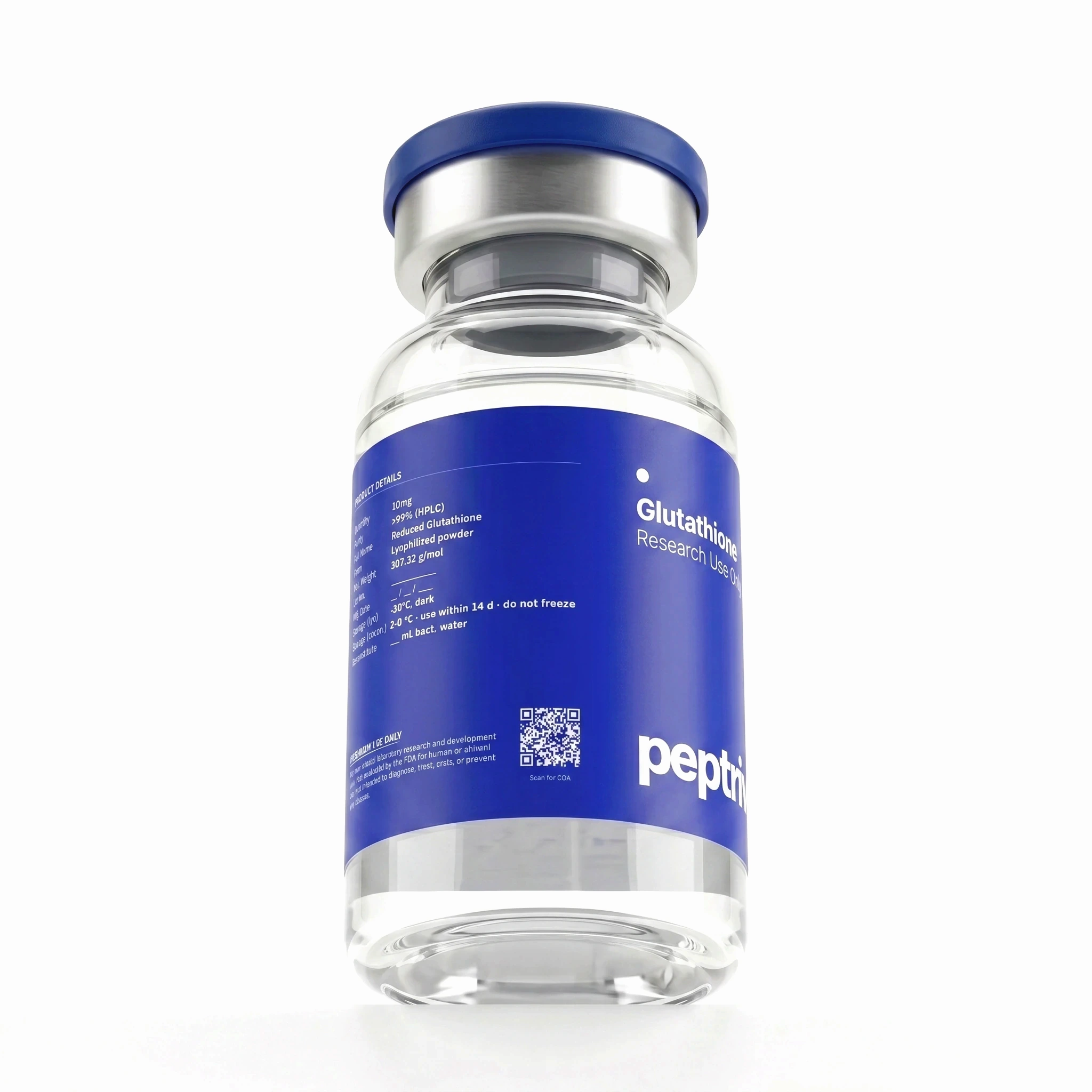
Glutathione
The same reduced-form tripeptide cited across the redox-biology assays in this review. Lab-verified identity and purity for in-vitro ROS scavenging, GPx assays, and detoxification studies.
How NAC saves lives in acetaminophen overdose.
This is the most-validated use of the glutathione pathway in clinical medicine. The mechanism is unusually well-characterized.
Acetaminophen (Tylenol) at normal doses goes through two hepatic pathways: glucuronidation and sulfation. Both attach a sugar or sulfate group, making the drug water-soluble for renal excretion. At toxic doses, those two pathways saturate. The overflow is routed to a different hepatic enzyme system, CYP2E1. That backup pathway produces a reactive metabolite called NAPQI.
NAPQI is the actual poison. It depletes liver glutathione, then covalently bonds to liver-cell proteins. The result is centrilobular hepatic necrosis (death of liver tissue around the central veins), which is the classic injury pattern of acetaminophen poisoning.
NAC addresses this by supplying cysteine. The liver uses the cysteine to rebuild glutathione, which neutralizes remaining NAPQI. The clinical effect is documented in decades of toxicology literature. Studies have reported that NAC administered within the first 8–10 hours post-overdose significantly reduces mortality.
The mucolytic use rests on a different mechanism: NAC's thiol group breaks the disulfide bonds in mucus proteins, lowering mucus viscosity. Different mechanism, same molecule. Both indications are FDA-approved and decades old.
The IV glutathione skin-whitening market — and the FDA warnings.
The largest off-label use of glutathione is intravenous infusion for skin lightening, particularly documented in parts of Asia. This application exists in the grey market and has attracted formal regulatory attention.
The mechanistic basis is pharmacologically established. Glutathione inhibits tyrosinase, the rate-limiting enzyme of melanogenesis. Tyrosinase has a copper-containing active site; the GSH thiol binds the copper. With tyrosinase blocked, melanocytes shift production from eumelanin (dark) toward pheomelanin (light). This is enzyme inhibition pharmacology characterized in in-vitro models.
The 2021 RCT by Wahab et al. in the International Journal of Dermatology tested combination topical + oral GSH against monotherapy in 46 participants. The combination produced statistically significant lightening at 8 weeks. This represents peer-reviewed, modest evidence for the topical and oral route. Oral bioavailability constrains effect size via the GGT hydrolysis mechanism described above.
That evidence does not extend to IV administration. The step from modest topical/oral efficacy to daily IV infusion is not supported by the published evidence base. It is where the documented harm profile emerges.
The harms reported in case series and pharmacovigilance reports include:
- Stevens-Johnson syndrome and toxic epidermal necrolysis. Severe mucocutaneous reactions in which large patches of skin die and slough off. Can be life-threatening.
- Hepatotoxicity and nephrotoxicity. Liver and kidney injury, sometimes with significant lab abnormalities.
- Anaphylactic reactions. Acute hypersensitivity events during or shortly after infusion.
- Loss of skin barrier function. Reported in some IV-GSH cosmetic users.
- Death. Reported in case studies, including in otherwise healthy young adults pursuing cosmetic lightening.
The Philippines FDA issued formal warnings against IV glutathione for skin whitening based on the documented adverse-event record. The US FDA has issued warnings about unapproved IV glutathione products. The risk-benefit calculation here isn't subtle. There's no medical condition that requires IV glutathione for skin lightening. There's serious harm potential. There's no validated medical benefit.
Where this falls short for IV glutathione specifically. The marketing pitch for IV GSH treats it as a souped-up over-the-counter antioxidant. The reality is the opposite. Tyrosinase inhibition is a real cosmetic mechanism. Oral and topical use has modest peer-reviewed evidence. But the IV route has produced Stevens-Johnson syndrome, toxic epidermal necrolysis, organ injury, anaphylaxis, and deaths. Formal FDA warnings are attached. Regulatory agencies and published adverse-event literature have concluded that the risk-benefit profile of IV glutathione for cosmetic skin lightening is unfavorable.
What glutathione is actually used for in research.
In biochemistry research settings, glutathione is among the most widely used reagents. Standard in-vitro applications include the following.
- Redox cycling assays. Researchers measure how cells handle oxidative stress under different interventions.
- GPx activity assays. Measuring glutathione peroxidase enzyme activity in tissue extracts or cell lysates.
- GST activity assays. Characterizing the liver's Phase II detox capacity in microsomes or hepatocyte cultures.
- Mitochondrial-function protection. Adding GSH to mitochondrial-isolation buffers prevents oxidation damage during the fractionation process.
- Affinity chromatography. GST-tagged protein purification uses glutathione-conjugated resin (GSH-agarose). It's a workhorse molecular-biology technique.
These are the established in-vitro research contexts for GSH. The grey-market use of GSH for IV cosmetic lightening or “detox” infusions is a commercially derived downstream application with a distinct and documented risk profile, addressed in the regulatory section above.
Other claimed indications — with thinner evidence.
Two recent dermatology trials tested mixed botanical formulations rather than glutathione itself, though both measured GPx pathway endpoints.
The 2025 Journal of Cosmetic Dermatology RCT by He et al. tested a multi-plant concentrated powder in 60 subjects, with GPx as one antioxidant marker. The result: significant improvements in plasma GPx, skin brightness, tone, and spots. GSH itself wasn't the test compound; the GPx pathway was a measured endpoint.
The 2021 Journal of Cosmetic Dermatology photoaging study by Xie et al. tested a different multi-plant extract with GPx as one of several endpoints, with improvements in skin hydration, elasticity, and ITA° (a tone-measurement metric). Reasonable cosmetic-dermatology work. Not a glutathione trial.
Broader claims associated with glutathione in consumer supplement marketing — immune support, detoxification, anti-aging, longevity — lack rigorous clinical trial support. The mechanistic rationale is plausible (oxidative stress is implicated in many chronic conditions, and GSH is central to redox homeostasis), but published trials have not substantiated these claims for exogenous GSH administration.
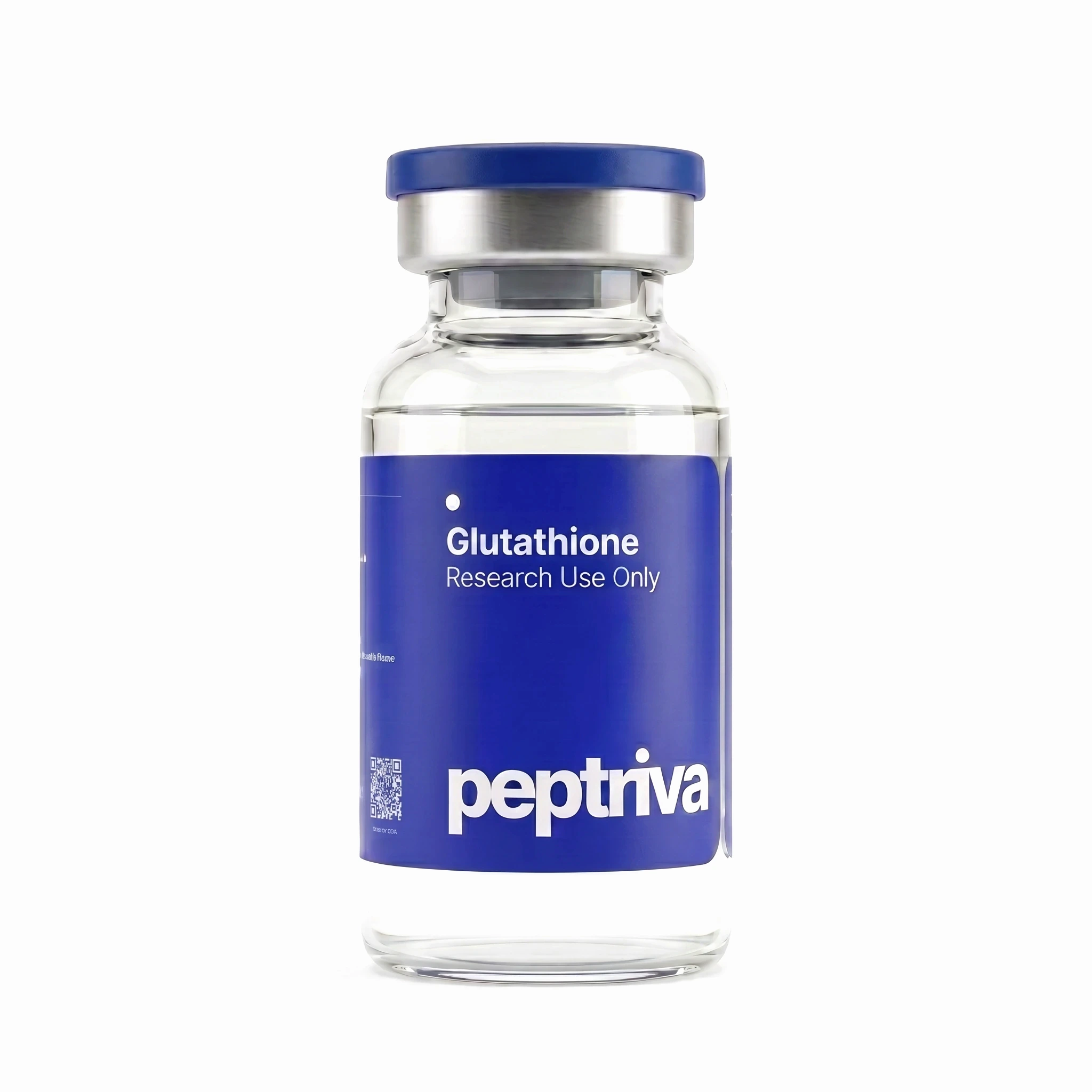
Glutathione
L-γ-Glutamyl-L-cysteinyl-glycine (reduced form / GSH). The same reference compound used across cellular antioxidant assays. COA available with each lot.
Key distinctions in glutathione research contexts.
Glutathione appears across several distinct research and clinical contexts. The following distinctions are relevant when interpreting the literature.
- Glutathione vs. its precursor NAC. The FDA-approved clinical use is NAC. Different pharmacokinetics, different indications. Studies on NAC cannot be directly extrapolated to exogenous GSH.
- Oral bioavailability limitations. Intact oral GSH is largely hydrolyzed in the gut. Studies have found NAC raises intracellular GSH more efficiently via the cysteine-supply route.
- IV route adverse-event record. Regulatory investigations have documented Stevens-Johnson syndrome, toxic epidermal necrolysis, hepatotoxicity, nephrotoxicity, anaphylaxis, and deaths associated with IV glutathione for cosmetic use.
- Injectable-grade quality requirements. Injectable preparations require sterility, isotonicity, and pH control. Adverse-event literature has attributed some IV harms to product-quality issues distinct from the molecule's intrinsic pharmacology.
- Research assay context. GSH for GST-affinity chromatography, GPx activity assays, and mitochondrial buffer protection all have well-established in-vitro protocols. Each application has distinct purity and handling requirements.
- Known drug interactions. NAC has documented interactions with nitroglycerin (potentiation) and has been reported to reduce the efficacy of some chemotherapy regimens via its antioxidant activity.
The bottom line.
Glutathione is a tripeptide by structure and a redox cofactor by function. It's pharmacologically distinct from every signaling peptide we cover elsewhere in this library. The legitimate clinical use is NAC, the precursor, which is FDA-approved for acetaminophen overdose and as a mucolytic. Oral GSH has poor bioavailability because gut peptidases break it down before absorption.
The IV glutathione skin-whitening market is the largest grey-market application. It has documented Stevens-Johnson syndrome, toxic epidermal necrolysis, liver and kidney injury, anaphylaxis, and reported deaths. Both the Philippines FDA and US FDA have issued formal warnings. There's no legitimate medical indication that needs this route. The risk-benefit math comes out lopsided.
For research labs running redox-biology, antioxidant assays, or affinity chromatography, glutathione is an essential reagent. The molecule is real. The redox biology is well-characterized. Studies consistently report that oral bioavailability is poor, and the IV cosmetic-use literature documents serious adverse events. Where clinical evidence exists for addressing glutathione status, it centers on NAC rather than exogenous GSH.
What to know now
- Identity: tripeptide γ-L-glutamyl-L-cysteinyl-glycine. Molecular weight 307 g/mol. The master intracellular antioxidant.
- Functional class: redox cofactor, not signaling peptide. Direct ROS scavenger, GPx substrate, GST cofactor, redox buffer (sets GSH/GSSG ratio).
- Oral bioavailability: poor. Gut peptidases (GGT) chop GSH apart before absorption. NAC (the precursor) is the pharmacologically practical alternative.
- NAC FDA approvals: acetaminophen overdose (oral and IV), and as a mucolytic. Decades of clinical use, well-characterized profile.
- IV GSH for skin whitening: documented Stevens-Johnson syndrome, toxic epidermal necrolysis, hepatotoxicity, nephrotoxicity, anaphylaxis, and reported deaths. Formal Philippines FDA and US FDA warnings against unapproved IV glutathione products.
- Cosmetic mechanism: tyrosinase inhibition via cysteine thiol binding to the copper active site, shifting melanin production toward the lighter form. Real mechanism. Modest evidence for topical and oral use. Unambiguous harm signal for IV use.
- Research use: standard reagent for GST-affinity chromatography, GPx and GST activity assays, mitochondrial buffer protection, and cellular antioxidant status work.
What we're watching
Three things to track over the next 24 months. First, whether more national regulators issue formal warnings against IV glutathione for cosmetic use. The Philippines FDA precedent is important, and broader convergence would reduce harm. Second, whether any new RCT-grade evidence emerges for oral or topical GSH indications beyond the 2021 Wahab combination skin-whitening study. The existing evidence base for non-NAC glutathione use is thinner than the marketing implies. Third, whether NAC-based formulations expand beyond the current acetaminophen-overdose and mucolytic indications. PTSD, psychiatric, and metabolic NAC trials are ongoing and could produce new approved uses for the glutathione-precursor pathway.
References
- Wahab, S., Anwar, A. I., Zainuddin, A. N., et al. (2021). Combination of topical and oral glutathione as a skin-whitening agent: A double-blind randomized controlled clinical trial. International Journal of Dermatology, 60(8), 1013–1018. https://doi.org/10.1111/ijd.15573
- He, Y., Bu, Y., Chiang, C. F., et al. (2025). Multi-plant concentrated powder improved skin whitening: A double-blinded, randomized, and placebo-controlled clinical study. Journal of Cosmetic Dermatology, 24(2), e70011. https://doi.org/10.1111/jocd.70011
- Xie, Y., Zhu, G., Yi, J., et al. (2021). A new product of multi-plant extracts improved skin photoaging: An oral intake in vivo study. Journal of Cosmetic Dermatology, 21(8), 3406–3415. https://doi.org/10.1111/jocd.14620
- Zhang, Y., Chen, J., Lin, W., et al. (2025). Quantitative LC-MS/MS profiling of N-acetylcysteine in chicken plasma: Method validation and pharmacokinetic characterization. Poultry Science, 104(11), 105777. https://doi.org/10.1016/j.psj.2025.105777
- Lu, S. C. (2013). Glutathione synthesis. Biochimica et Biophysica Acta, 1830(5), 3143–3153. https://doi.org/10.1016/j.bbagen.2012.09.008
- Forman, H. J., Zhang, H., & Rinna, A. (2009). Glutathione: Overview of its protective roles, measurement, and biosynthesis. Molecular Aspects of Medicine, 30(1–2), 1–12. https://doi.org/10.1016/j.mam.2008.08.006
- Sotler, R., Poljsšak, B., Dahmane, R., et al. (2019). Prooxidant activities of antioxidants and their impact on health. Acta Clinica Croatica, 58(4), 726–736. https://doi.org/10.20471/acc.2019.58.04.20
- U.S. Food and Drug Administration. (2022). FDA warning on unapproved IV glutathione products [Regulatory notice]. Retrieved from https://www.fda.gov