The mitochondrial stack is longevity-research-community shorthand for three compounds studied in relation to mitochondrial biology: SS-31, MOTS-c, and NAD+. Each one has been investigated at a different level of mitochondrial function. SS-31 has been studied for its role in stabilizing the inner membrane. MOTS-c has been characterized as a signaling peptide encoded inside the mitochondrial genome. NAD+ is the energy-currency cofactor that powers most of mitochondrial metabolism. The mechanistic logic for co-investigating these compounds is clear; the published trial evidence for the three-way combination is essentially absent. The following review covers what each compound does, what the published evidence supports, and where the evidence base is limited.
The stack is SS-31 + MOTS-c + NAD+ (or its oral precursors NMN/NR). Three components, three evidence tiers. SS-31 won FDA accelerated approval in September 2025 as Forzinity for Barth syndrome — the strongest evidence base of the three. MOTS-c has broad preclinical data and zero published human trials. Oral NMN/NR have multiple RCTs at 250–900 mg/day showing modest walking-speed and sleep improvements. No controlled study has tested the three-way combination. The stack rests on mechanism, not data.
What does each component actually do?
What distinguishes the mitochondrial stack from most named peptide stacks: the three components do not share a single mechanism. Each has been investigated at a different layer of mitochondrial biology.
SS-31 (Elamipretide): the inner-membrane stabilizer
SS-31 is a synthetic 4-amino-acid peptide from Stealth BioTherapeutics. Its alternating positive-charge and aromatic structure lets it concentrate inside the inner mitochondrial membrane and bind cardiolipin, a signature lipid that organizes the membrane folds (cristae) and the cytochrome-c supercomplex.
The downstream effect: better electron-transport-chain organization, less reactive oxygen damage, more ATP (Tung et al., 2025).
In September 2025, the FDA granted accelerated approval to SS-31 as Forzinity for muscle strength in Barth syndrome patients ≥30 kg (Shirley, 2025). It's the only mitochondrial-targeted peptide with an FDA approval.
MOTS-c: the signaling peptide encoded in mitochondrial DNA
MOTS-c is a 16-amino-acid peptide with an unusual origin: it is encoded inside the mitochondrial genome itself, not the nuclear one. It has been characterized as a retrograde signal — a message from the mitochondria back to the cell nucleus.
Pinchas Cohen's lab at USC discovered it. Plasma levels decline with age. A 2024 iScience paper showed MOTS-c directly binds and activates CK2 in skeletal muscle (Kumagai et al., 2024). Other mechanisms include AMPK activation (an energy-sensor pathway) (Zheng et al., 2023) and myostatin suppression (Kumagai et al., 2021).
It's often described as an "exercise mimetic" because acute exercise raises plasma MOTS-c in humans.
NAD+: the energy cofactor and sirtuin substrate
NAD+ isn't a peptide. It's a small molecule that accepts electrons in glycolysis, the citric acid cycle, and fat burning. It's also the required substrate for the 7 mammalian sirtuins (SIRT1–7), which are enzymes linked to aging biology.
NAD+ levels decline with age across most tissues. The legitimate clinical research isn't on direct NAD+ infusions — it's on oral precursors NMN (nicotinamide mononucleotide) and NR (nicotinamide riboside).
A 2023 RCT in 80 healthy middle-aged adults tested NMN at 300, 600, or 900 mg daily for 60 days. Blood NAD+ rose at every dose. Six-minute walking distance improved (Yi et al., 2023).
Three different scales: SS-31 at the inner-membrane lipid level, MOTS-c at the organelle-to-nucleus signaling level, NAD+ at the cofactor and downstream enzyme level. The mechanistic rationale for co-investigating them is that they address different bottlenecks and are unlikely to share antagonistic targets.
The following sections review what the published evidence actually supports for each compound individually, and where the evidence base is limited.
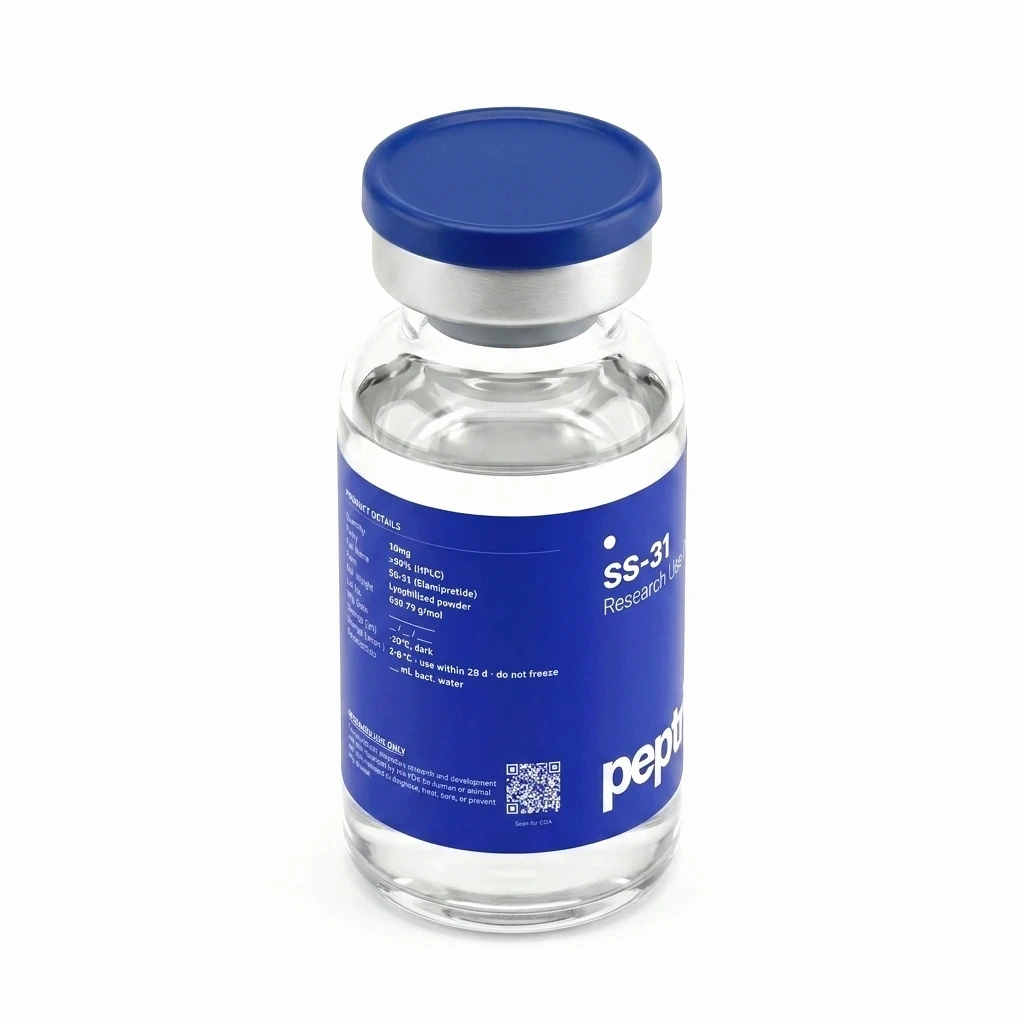
SS-31 (Elamipretide)
The same compound cited across the MMPOWER-3, TAZPOWER OLE, and Forzinity FDA approval reviews in this article. Lab-verified identity and purity.
Why pair the three together?
The mechanistic rationale for co-investigating these compounds: age-related mitochondrial decline involves multiple concurrent bottlenecks. ATP production falls. Mitochondrial DNA accumulates mutations. Cardiolipin oxidizes. Cristae structure breaks down. NAD+ pools drain.
Addressing one bottleneck may not produce net improvements if others remain limiting. Combining a structural intervention (SS-31 targeting inner-membrane lipids), a signaling intervention (MOTS-c via AMPK), and a cofactor intervention (NAD+ restoring the energy-currency pool) has been proposed to address more of the biology than any single compound — though this remains an untested hypothesis in the combination setting.
A 2025 Aging Cell paper makes the case concrete and also limits it. Eight weeks of SS-31 in aged mice produced clear functional improvements: less frailty, better heart function, more skeletal-muscle endurance. But it produced no statistically significant changes in DNA methylation or transcriptomic biological-age markers (Mitchell et al., 2025).
The authors read this as evidence that age-related function can change without moving the deeper epigenetic clock. A single mechanism can shift how an animal performs without rewriting the molecular signature of aging. The case for the stack is reasonable but speculative. No controlled study has tested whether SS-31 + MOTS-c + NAD+ beats any one component on its own.
What does the published evidence actually show?
SS-31: the strongest evidence of the three
Beyond the September 2025 FDA accelerated approval as Forzinity (Shirley, 2025), SS-31 has been through a real Phase III program. The development trials covered 3,500+ subjects.
MMPOWER-3 tested 40 mg/day subcutaneous SS-31 versus placebo for 24 weeks in primary mitochondrial myopathy. The trial missed primary endpoints across the full genetically diverse group (Karaa et al., 2023).
A planned follow-up analysis spotted a responder subgroup: patients with mtDNA-replisome defects (the CPEO subset) did show significant six-minute walking-test improvement (Karaa et al., 2024). TAZPOWER's 168-week open-label extension in Barth syndrome reported sustained walking, fatigue, and biomarker improvements (TAZPOWER OLE, 2024).
MOTS-c: rigorous preclinical, zero human trials
The MOTS-c animal literature is unusually high-quality. A 2021 review noted that acute high-intensity exercise raises plasma and muscle MOTS-c in humans, and that synthetic MOTS-c improved exercise capacity, weight loss, and insulin sensitivity in mice (Woodhead & Merry, 2021).
A 2024 Cell Reports study showed MOTS-c reduced liver fat, inflammation, and fibrosis in mice on a fatty-liver diet via direct Bcl-2 binding (Lu et al., 2024). A 2024 Gut paper measured serum MOTS-c in 404 hepatitis B patients and showed 50–70% inhibition of HBV replication in mouse models (Lin et al., 2024).
The catch: no published interventional human trial of exogenous synthetic MOTS-c exists. Not one.
NAD+: solid oral data, weak IV data
The oral-precursor RCT base is real. Yi 2023 (n=80, NMN 300–900 mg/day, 60 days) showed significant blood NAD+ increases and walking improvements (Yi et al., 2023). A 12-week 250 mg NMN twice-daily RCT showed long-term safety and arterial-stiffness trends (Katayoshi et al., 2023). A 250 mg/day NMN trial in 60 older adults showed faster 4-meter walking and better sleep at 12 weeks (Morifuji et al., 2024).
Direct IV NAD+ infusion — the form clinics market for aging, addiction recovery, and "energy enhancement" — has dramatically weaker trial support. Rigorous evidence for the marketed indications is largely absent from peer-reviewed literature.
Where this falls short. SS-31 is FDA-approved in one rare disease and has Phase III data. MOTS-c has rigorous mouse biology and zero human trials. NAD+ has multiple oral-precursor RCTs and weak IV evidence. Combining all three is mechanistically reasonable, but no controlled study has ever tested the combination. The stack operates ahead of the evidence.
"
The mitochondria-targeted peptide therapeutic elamipretide improves cardiac and skeletal muscle function during aging without detectable changes in tissue epigenetic or transcriptomic age.
Mitchell et al., Aging Cell, 2025
How does this stack sit against other named stacks?
The mitochondrial stack occupies a specific position on the evidence map. The single-agent evidence is stronger than BPC-157 + TB-500, a combination that has also been studied in the preclinical literature without controlled human trial data. There is still no combination-specific trial data for the mitochondrial stack. The evidence profile looks nothing like the cosmetic peptide stacks, which have decades of dermatology RCTs.
What does the published literature say about individual compound dosing?
Published dose data exists only for individual compounds in their respective clinical trials — not for the combination. SS-31 was administered at 40 mg/day subcutaneous in the MMPOWER-3 Phase III trial (Karaa et al., 2023). Oral NMN has been studied at 250–900 mg/day in published RCTs (Yi et al., 2023; Morifuji et al., 2024). MOTS-c has no published human dose-ranging data from interventional trials. Any multi-compound dose or ratio for the three-way combination remains unvalidated in controlled research.
Safety and regulatory status
- SS-31 / Forzinity. FDA-approved (September 2025) for Barth syndrome muscle strength in study participants ≥30 kg. Safety data across 3,500+ trial subjects has been generally favorable. Injection-site reactions are the most commonly reported adverse event in published trial data (Shirley, 2025).
- MOTS-c. No human safety data for exogenous synthetic MOTS-c has been published. Preclinical animal studies have not reported notable toxicity. Theoretical safety considerations noted in the literature include glucose-lowering effects (from AMPK activation) and unclear long-term implications for tumor surveillance.
- Oral NMN/NR. Published RCTs have reported good tolerability in the dose ranges studied. IV NAD+ has been associated with flush reactions (chest tightness, flushing, anxiety) and requires slow multi-hour infusion in clinical reports. High-dose nicotinamide flux has been noted to potentially affect methyl-donor metabolism; the clinical significance has not been rigorously studied.
- Identity verification. Research-chemical SS-31 from grey-market vendors is not the same product as prescription Forzinity. Third-party mass-spec confirmation is the standard identity check for reference compounds.
- WADA status. Mitochondrial-targeted peptides and mitochondrial-derived peptides are an emerging anti-doping area of interest. These compounds are not currently listed as a class on the WADA Prohibited List, but the regulatory landscape may shift. Researchers in athletic contexts should consult the current list directly.
- Evidence scope. The published trial evidence for SS-31 supports narrow rare-disease indications (Barth syndrome, mtDNA-replisome subgroups). No controlled trial has established efficacy in healthy research subjects for any of the three compounds in combination.
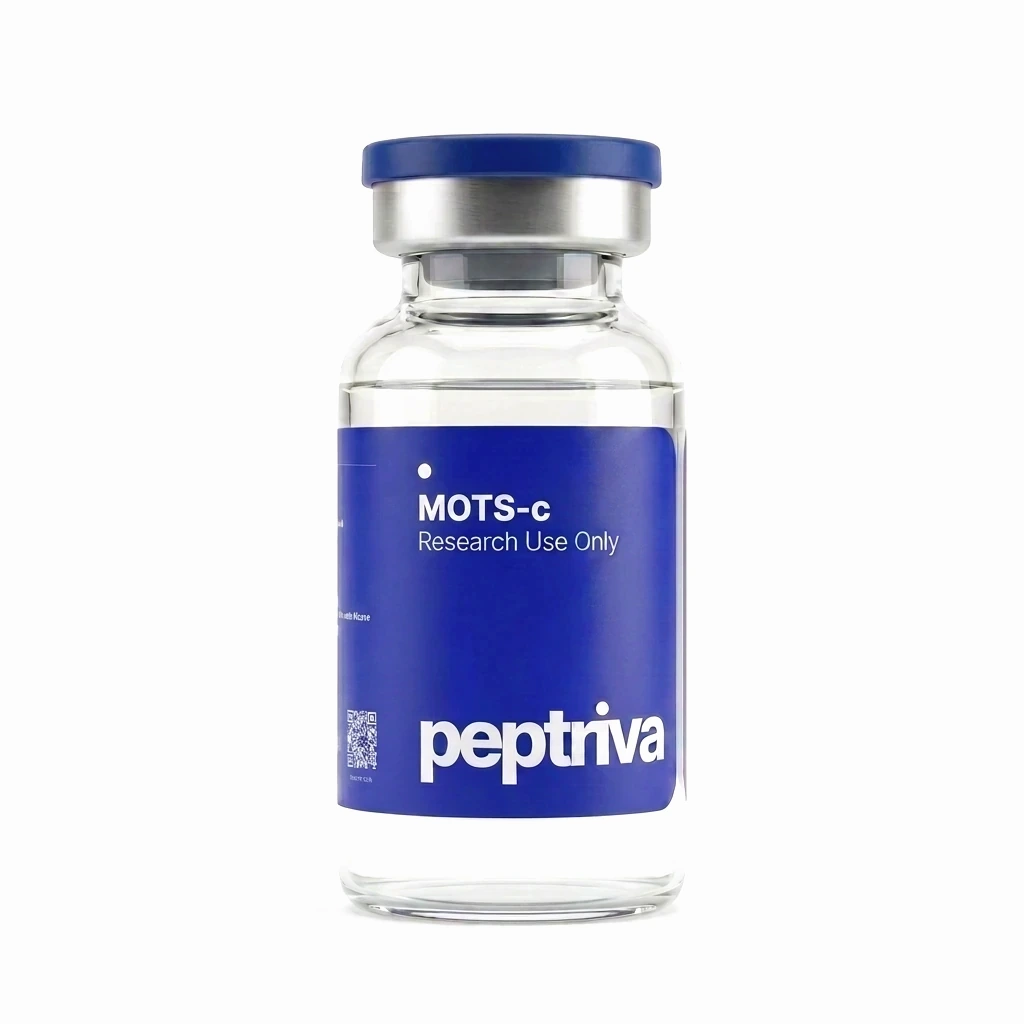
MOTS-c & NAD+
The mitochondrial-DNA-encoded peptide cited across the Kumagai et al., 2024 CK2-binding study, alongside the redox cofactor and sirtuin substrate cited across the Yi et al., 2023 NMN dose-response RCT. COA available with each lot. Shop NAD+ separately →
What to know now
- Stack = SS-31 + MOTS-c + NAD+. Community convention, not a clinical protocol.
- Three different evidence tiers. SS-31: FDA-approved (Sept 2025). MOTS-c: broad preclinical, zero human trials. Oral NMN/NR: multiple RCTs. IV NAD+: weak evidence for marketed claims.
- Complementary mechanisms. SS-31 stabilizes inner-membrane lipid structure. MOTS-c signals from inside the mitochondrial genome. NAD+ is the energy-cofactor pool.
- Zero controlled trials of the combination. Complementarity is a hypothesis, not a finding.
- Grey-market SS-31 ≠ Forzinity. Identity, purity, and lot quality vary by vendor.
What we're watching
The biggest near-term development is NuPOWER, the Phase III follow-up to MMPOWER-3 designed around the post-hoc finding that mtDNA-replisome subgroups respond to SS-31. A positive readout would expand the FDA label beyond Barth syndrome and strengthen the single-agent evidence base. The MOTS-c field is overdue for its first interventional human trial. Until any trial of the three-way combination runs, the mitochondrial stack stays where it is: three compounds, three evidence depths, named together by convention rather than by data.
References
- Shirley, M. (2025). Elamipretide: First approval. Drugs, 86(3), 377–383. https://doi.org/10.1007/s40265-025-02269-8
- Karaa, A., Haas, R., Goldstein, A., Vockley, J., & Cohen, B. (2023). Efficacy and safety of elamipretide in individuals with primary mitochondrial myopathy: The MMPOWER-3 randomized clinical trial. Neurology. https://doi.org/10.1212/WNL.0000000000207402
- Karaa, A., Bertini, E., Carelli, V., et al. (2024). Genotype-specific effects of elamipretide in patients with primary mitochondrial myopathy: A post hoc analysis of the MMPOWER-3 trial. Orphanet Journal of Rare Diseases, 19(1), 431. https://doi.org/10.1186/s13023-024-03421-5
- Stealth BioTherapeutics. (2024). Long-term efficacy and safety of elamipretide in patients with Barth syndrome: 168-week open-label extension results of TAZPOWER. Genetics in Medicine. https://doi.org/10.1016/j.gim.2024.101138
- Tung, C., Varzideh, F., Farroni, E., et al. (2025). Elamipretide: A review of its structure, mechanism of action, and therapeutic potential. International Journal of Molecular Sciences, 26(3), 944. https://doi.org/10.3390/ijms26030944
- Mitchell, W., Pharaoh, G., Tyshkovskiy, A., et al. (2025). The mitochondria-targeted peptide therapeutic elamipretide improves cardiac and skeletal muscle function during aging without detectable changes in tissue epigenetic or transcriptomic age. Aging Cell, 24(6), e70026. https://doi.org/10.1111/acel.70026
- Kumagai, H., Kim, S. J., Miller, B., et al. (2024). MOTS-c modulates skeletal muscle function by directly binding and activating CK2. iScience, 27(11), 111212. https://doi.org/10.1016/j.isci.2024.111212
- Kumagai, H., Coelho, A. R., Wan, J., et al. (2021). MOTS-c reduces myostatin and muscle atrophy signaling. American Journal of Physiology — Endocrinology and Metabolism, 320(4), E680–E690. https://doi.org/10.1152/ajpendo.00275.2020
- Zheng, Y., Wei, Z., & Wang, T. (2023). MOTS-c: A promising mitochondrial-derived peptide for therapeutic exploitation. Frontiers in Endocrinology, 14, 1120533. https://doi.org/10.3389/fendo.2023.1120533
- Woodhead, J. S. T., & Merry, T. L. (2021). Mitochondrial-derived peptides and exercise. Biochimica et Biophysica Acta — General Subjects, 1865(12), 130011. https://doi.org/10.1016/j.bbagen.2021.130011
- Lu, H., Fan, L., Zhang, W., et al. (2024). The mitochondrial genome-encoded peptide MOTS-c interacts with Bcl-2 to alleviate nonalcoholic steatohepatitis progression. Cell Reports, 43(1), 113587. https://doi.org/10.1016/j.celrep.2023.113587
- Lin, C., Luo, L., Xun, Z., et al. (2024). Novel function of MOTS-c in mitochondrial remodelling contributes to its antiviral role during HBV infection. Gut, 73(2), 338–349. https://doi.org/10.1136/gutjnl-2023-330389
- Yi, L., Maier, A. B., Tao, R., et al. (2023). The efficacy and safety of β-nicotinamide mononucleotide (NMN) supplementation in healthy middle-aged adults: A randomized, multicenter, double-blind, placebo-controlled, parallel-group, dose-dependent clinical trial. GeroScience, 45(1), 29–43. https://doi.org/10.1007/s11357-022-00705-1
- Katayoshi, T., Uehata, S., Nakashima, N., et al. (2023). Nicotinamide adenine dinucleotide metabolism and arterial stiffness after long-term nicotinamide mononucleotide supplementation: A randomized, double-blind, placebo-controlled trial. Scientific Reports, 13(1), 2786. https://doi.org/10.1038/s41598-023-29787-3
- Morifuji, M., Higashi, S., Ebihara, S., & Nagata, M. (2024). Ingestion of β-nicotinamide mononucleotide increased blood NAD levels, maintained walking speed, and improved sleep quality in older adults in a double-blind randomized, placebo-controlled study. GeroScience, 46(5), 4671–4688. https://doi.org/10.1007/s11357-024-01204-1
- World Anti-Doping Agency. (2026). The Prohibited List. https://www.wada-ama.org/en/prohibited-list