If you want to buy peptides in the USA, the question isn't whether it's legal. It is. The question is which framework you're buying under, what state lines change anything, and what you actually save by staying domestic. We'll walk you through the federal RUO rule, what changed after the FDA's 2023 503A decision, why customs eats international shipments, and why your card won't work at checkout.
Research peptides sell legally in the U.S. under 21 CFR § 809.10(b)(9). Anything labeled "For Research Use Only. Not for human or veterinary use" is a research reagent, not a drug. No prescription needed. The framework holds in all 50 states; no state has banned RUO peptides. The FDA's 2023 Category 2 decision restricted 503A compounding pharmacies from making peptides for patients. It did not touch research-grade sales. Staying domestic saves you the 2–6 weeks Customs typically holds international peptide shipments and replaces it with 2–5 business days of standard ground shipping.
Quick answer: Yes, you can buy peptides in the U.S. without a prescription when they're labeled For Research Use Only under 21 CFR § 809.10(b)(9). The federal rule covers all 50 states. Domestic shipping dodges the customs holds that wreck international orders. Crypto checkout is the norm because Stripe, PayPal, and Square ban peptide merchants. Ground shipping arrives in 2–5 business days. You don't need a license, permit, or DEA registration.
The federal rule is simple in principle. The FDA regulates how peptides are marketed and labeled, not the molecules themselves. A U.S. supplier labels a vial "For Research Use Only. Not for human or veterinary use," sells it to a researcher for lab or animal work, and it's a research reagent under 21 CFR § 809.10(b)(9). The label defines the category. Your actual use has to match the label. The RUO designation isn't a loophole that lets you dose yourself. If a supplier posts dosing instructions or clinical claims, they've stepped into FDA jurisdiction.
The U.S. peptide regulatory landscape, mapped
Four regulatory categories cover what gets marketed as a "peptide" in the U.S. Each sits under a different statute with a different oversight body. The category decides what you can buy, where, and with what paperwork.
The federal framework — 21 CFR § 809.10 and RUO labeling
The federal rule lives at 21 CFR § 809.10(b)(9). The subpart covers in-vitro diagnostic products in the research phase: anything not yet validated for diagnostic use must carry "For Research Use Only. Not for use in diagnostic procedures." The FDA's 2013 RUO guidance says the same thing in plainer English: an RUO product is "not promoted, marketed, sold, or used for clinical or diagnostic purposes."
Research peptides ship under that exact pattern. The vial says "For Research Use Only. Not for human or veterinary use." The supplier's marketing has to match: no human dosing, no therapeutic claims, no "treats X" or "reverses Y." The FDA has issued warning letters to peptide suppliers whose product pages crossed that line. The agency does not chase compliant research-reagent commerce. Search the Federal Register and you'll find far more enforcement actions over marketing claims than over the chemistry itself.
The RUO label is a statement of regulatory category. It defines the framework under which the product is sold and the controls that apply. It does not function as a disclaimer that immunizes downstream use. The buyer's actual use must remain consistent with the labeled intent.
— FDA Compliance Policy Guide Sec. 100.300 (RUO labeling)
State-level rules — the short answer is "federal preempts"
The most common follow-up question: do individual states add their own rules on top? For research-grade RUO peptides, no. The federal framework governs in all 50 states, and no state has banned RUO peptides as of mid-2026.
Three caveats worth knowing:
- States regulate compounding pharmacies, not research suppliers. Texas, California, and Florida all run active pharmacy boards that govern compounding facilities in their jurisdictions. Those rules apply to compounded medications for patients, not to research-grade peptide sales. A California 503A pharmacy can't prepare BPC-157 for patient use (FDA Category 2). A California-based researcher can still buy research-grade BPC-157, because the federal RUO framework controls that sale.
- A few compounds overlap with state analog-drug laws. Peptides aren't scheduled under the federal Controlled Substances Act. But certain peptides (DSIP, some melanotan analogs with stimulant-adjacent activity) can brush against state-level "controlled substance analog" provisions in California, Florida, and a handful of other states. If you're working with one of those compounds, check your state pharmacy or controlled-substance statute.
- Sales-tax exemptions vary by state. Most states exempt research reagents from sales tax if you hold a state research exemption certificate. University researchers usually have one. Individual researchers without a certificate pay tax at the destination rate.
The general rule: state law defers to the federal RUO framework. State variation matters more for compounded therapeutics than for research-reagent commerce. When in doubt, the state pharmacy board's website is your authoritative source.
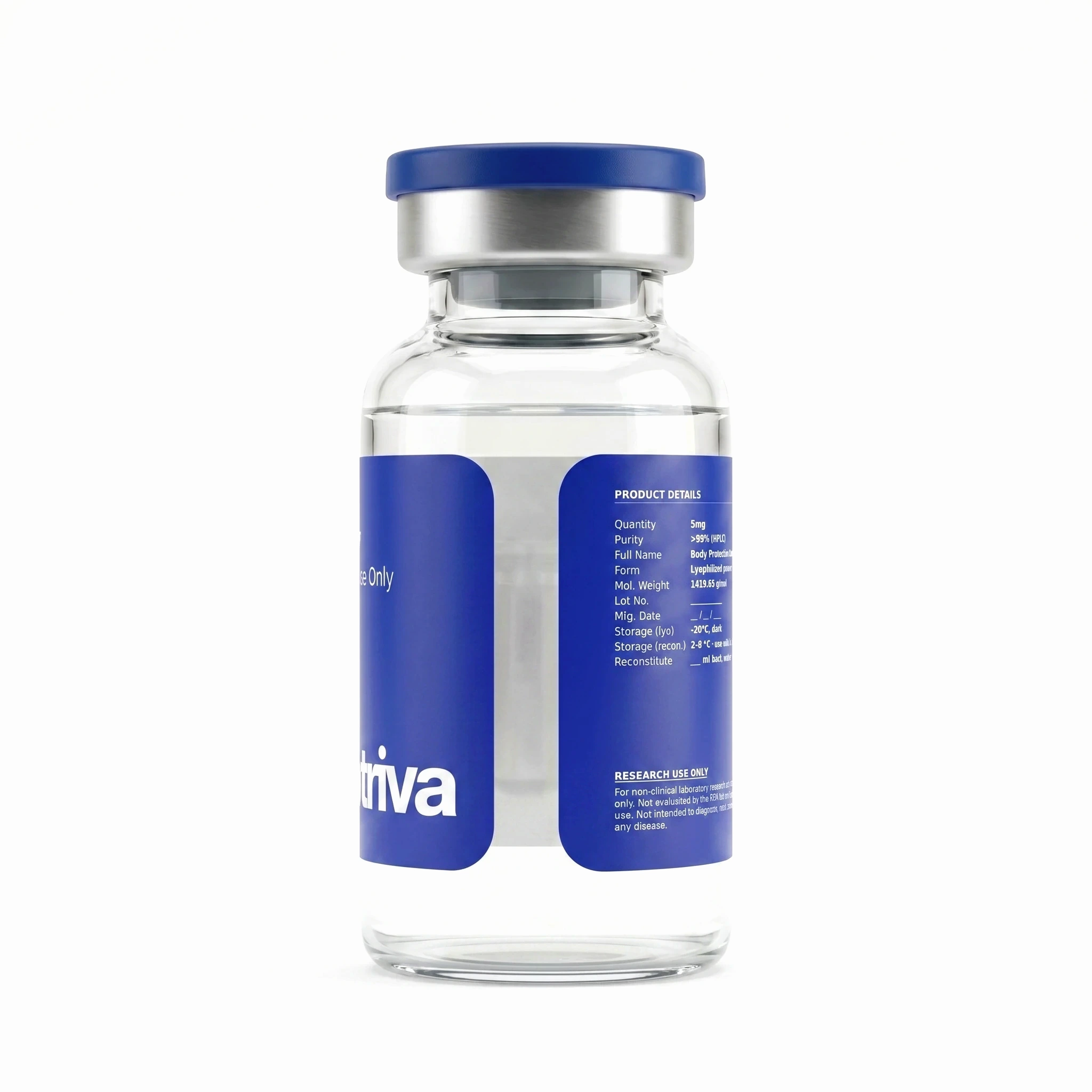
BPC-157
The reference compound used across the literature, shipped from our U.S. domestic facility — no customs holds, 2–5 day transit, batch-matched COA on every lot. ISO/IEC 17025–accredited third-party identity and purity verification.
The customs problem with international shipments
The single biggest reason to stay domestic is U.S. Customs and Border Protection (CBP). CBP inspects international parcels at ports of entry under broad authority over imported goods. Research-chemical shipments, even properly labeled ones, get flagged for secondary inspection often. That goes double for shipments from China, where most international peptide synthesis happens. CBP's prohibited and restricted goods guide lays out the framework: certain biologicals, drugs, and chemicals need import permits or face FDA hold while paperwork gets reviewed.
That produces three concrete problems for U.S. buyers ordering internationally:
- Customs detention. Shipments sit at CBP for 2 to 6 weeks. Lyophilized peptide survives the wait, but temperature cycling in a customs warehouse isn't the storage condition you'd design. Cold-chain peptides are at higher risk.
- Seizure. CBP can seize shipments it deems misdeclared, mislabeled, or non-compliant. You lose the product and the money. Reshipment is at the supplier's discretion and rare.
- FDA Import Alert. The FDA keeps a list of foreign manufacturers whose products get detained on arrival without inspection. Once a manufacturer hits the Import Alert list, every shipment from that source gets held until the manufacturer proves compliance. That takes years, not weeks. Your pre-paid orders simply stop arriving.
Domestic fulfillment sidesteps all three. The package never crosses a border. CBP has no jurisdiction over a USPS Priority Mail box from Kentucky to California. You get conventional e-commerce shipping.
USPS, FedEx, and UPS — how peptides actually ship inside the U.S.
Lyophilized RUO peptides ship as standard chemical reagents domestically. They aren't hazmat under DOT 49 CFR Subchapter C because they're stable, non-flammable powders. They aren't controlled substances. You don't need a license or permit to receive them.
USPS handles the bulk of domestic peptide shipments. Priority Mail and Priority Mail Express run 2–3 day and overnight delivery respectively, with tracking included. The contents declaration lists the material as a research chemical reagent.
FedEx Ground and UPS Ground are common for larger or higher-value shipments where signature confirmation and insurance matter. Both carriers handle research reagents under their general commodity policies. Neither requires special paperwork for properly labeled RUO peptides.
For you as a buyer, domestic shipping feels identical to ordering any other small-parcel reagent. No license, no permit, no special signature. Ground service runs 2–5 business days; overnight is available when you need it faster.
The 503A Category 2 effect on U.S. buyers
In September 2023, the FDA published Category 1–4 designations for bulk drug substances nominated for 503A compounding pharmacies (the traditional pharmacies that prepare patient-specific medications on prescription). The categorization decides which compounds those pharmacies may use:
- Category 1: permitted, no significant safety concerns.
- Category 2: significant safety concerns; should not be used.
- Category 3: additional review needed.
- Category 4: not nominated.
Several research-prominent peptides landed in Category 2: BPC-157, thymosin alpha-1, melanotan II, and certain growth-hormone secretagogues. Compounding pharmacies that used to prepare these for patients largely stopped after the designation.
For research-grade buyers, here's the split:
- What changed: If you used to get BPC-157 or thymosin alpha-1 through a 503A pharmacy on prescription, that pathway is closed.
- What didn't change: The sale of these peptides as RUO reference compounds. Research-grade BPC-157 is regulated under 21 CFR § 809.10(b)(9), not Section 503A. The Category 2 designation hit compounding, not research-reagent commerce. You can still buy BPC-157 and the other Category 2 peptides from research-grade suppliers.
For the detailed treatment, see our 503A and the FDA's 2023 Category 2 list article.
Why U.S.-synthesized peptides have an audit advantage
The chemistry doesn't care where the lab is. Solid-phase peptide synthesis (SPPS, the standard manufacturing method) produces the same molecule in Lexington, Kentucky or Shanghai. What differs is where the manufacturer sits relative to U.S. regulators.
U.S. peptide manufacturers register with the FDA and accept FDA inspection. The agency's inspections database publishes audit findings. You can verify a U.S. manufacturer has been inspected, what was found, and whether observations remain open. Offshore manufacturers, particularly Chinese suppliers, usually aren't inspected by the FDA and don't appear in the database. The FDA can place a foreign manufacturer on Import Alert (effectively a sanction), but it can't walk into a Shenzhen facility the way it can a Kentucky one.
The practical implication is audit traceability. A problem with a U.S.-manufactured batch traces back to a registered, inspected facility with documented quality systems. A problem with an offshore batch usually ends at the shipping label. The manufacturer may exist. They may answer email. But U.S. regulators have no enforcement reach into their factory floor.
Where this falls short: Domestic doesn't automatically mean better quality. A U.S.-based supplier without an ISO 17025 third-party Certificate of Analysis (CoA, the lab report that confirms what's in the vial) can still ship junk. Inspection is a floor, not a ceiling. Verify the COA chain regardless of origin country.
Tax treatment of research peptides
Tax depends on your buyer status and the delivery state. The general rules:
- Sales tax: Most states tax tangible personal property delivered in-state. Research reagents are tangible personal property. Most states exempt research reagents if you hold a state-issued exemption certificate (typically university researchers, registered research businesses, or labs with research-business classification). Without a certificate, you pay sales tax at the destination rate.
- Business expense: If you buy peptides as part of a registered research business, you can deduct the cost under IRS Section 162 (ordinary and necessary business expenses). Keep invoices, COAs matched to invoices, and research records that show the materials were used for legitimate work.
- Individual researchers: If you're buying small quantities for personal research, there's no extra tax filing beyond your normal accounting. The purchase is a research supply expense if you claim it, otherwise it's a personal purchase.
This is general framing, not tax advice. State variation is meaningful, and anyone buying at scale should work with a CPA who knows research-business expense classification. The IRS hasn't issued peptide-specific guidance; you're treated under the general research-supply rules.
Peptriva Research Catalog
Our full U.S. catalog. Crypto and bank-wire payment (card processors prohibit peptide merchants per their terms). Free U.S. domestic shipping over $150. Batch-matched ISO 17025 COA with every order, no customs delays.
Payment methods — why your card doesn't work at checkout
The most common "is this site sketchy?" question from new buyers is about checkout. A reputable U.S. peptide vendor in 2026 doesn't accept Visa, Mastercard, or PayPal for research peptides. The reason is structural, not shady. Stripe's restricted business list, PayPal's acceptable use policy, and Square's terms all ban research chemicals and unapproved drugs. The processors enforce these terms by closing offending merchant accounts and freezing funds, often without warning.
That leaves compliant vendors with three payment options:
- Cryptocurrency: Bitcoin (BTC), Ethereum (ETH), USDC, and other stablecoins, processed through a crypto payment gateway. This is the modal payment method for legitimate U.S. peptide commerce in 2026.
- Bank wire transfer: ACH or wire, useful for larger orders. Slower than crypto but uses conventional banking.
- Money order or check: available at some vendors. They bank the payment before shipping, which adds transit time.
If you see a peptide vendor accepting Visa or Mastercard at checkout, they've either miscategorized their products under the wrong merchant category code (which puts your order at risk if the account gets suspended mid-fulfillment) or they're operating outside processor policy in a way that's about to catch up with them. Crypto checkout is the compliant pattern. It isn't a red flag.
Frequently asked questions about buying peptides in the USA
Is it legal to buy peptides in the USA without a prescription?
Yes. You can buy peptides without a prescription when they're labeled "For Research Use Only. Not for human or veterinary use" under 21 CFR § 809.10(b)(9). The peptide is a research reagent, not a drug. A prescription is only required for peptides approved as human medications — tesamorelin (Egrifta), bremelanotide (Vyleesi), elamipretide (Forzinity), and GLP-1 brands like Ozempic and Mounjaro. The same molecule sold as a research reference compound doesn't need a prescription.
Are peptides legal in California, New York, or Texas?
Yes. The federal RUO framework applies in all 50 states, including California, New York, and Texas. State law doesn't override the federal category, and no state has banned RUO peptides as of mid-2026. State variation matters more for compounded peptide therapeutics through 503A pharmacies than for research-reagent sales. If your specific compound overlaps with a scheduled drug, check your state controlled-substance statute.
Can the FDA stop me from buying research peptides?
The FDA regulates how peptides are marketed and sold, not the act of buying them. The agency issues warning letters to suppliers that market peptides with therapeutic claims or sell unapproved drugs for human use. Buying RUO peptides from a compliant U.S. supplier isn't an enforcement target. If a supplier gets shut down for marketing violations, that affects the supplier. The FDA doesn't pursue individual buyers who purchased properly labeled material.
What does the 503A Category 2 decision mean for U.S. buyers?
In September 2023, the FDA put BPC-157, thymosin alpha-1, melanotan II, and several others in Category 2 for 503A compounding pharmacies. That means those pharmacies can't prepare them as patient-specific medications. The decision did not make the peptides illegal. It closed one specific pathway: compounded preparation for human use. RUO peptides sold to researchers are regulated under 21 CFR § 809.10(b)(9), a separate framework, and were not affected.
Do I need to declare research peptides on my taxes?
Research peptides count as research supplies under federal tax law. Most states exempt them from sales tax if you hold a state research exemption certificate. Individual researchers buying small quantities don't have extra filing obligations. If you claim a business deduction, keep invoices and COAs as documentation. Tax treatment varies by state — a CPA familiar with research-business expenses can give jurisdiction-specific guidance.
Why do U.S. buyers benefit from domestic fulfillment?
Three concrete advantages. First, no customs holds: international shipments sit at CBP for 2–6 weeks, and temperature cycling there damages cold-chain peptides. Second, no inspection seizures: CBP can seize shipments it deems mislabeled, and you typically lose both product and payment. Third, audit traceability: U.S. manufacturers operate under FDA-inspectable facility registration. Offshore manufacturers usually don't.
What payment methods do U.S. peptide vendors use?
Stripe, PayPal, Square, and most card processors prohibit peptide merchant accounts in their terms. That forces vendors to use cryptocurrency (BTC, ETH, USDC), bank wire, or ACH. Vendors offering credit-card checkout are usually miscategorizing their products, which puts your order at risk if the merchant account gets suspended mid-fulfillment. Crypto checkout is the compliant pattern, not a red flag.
How long does shipping take inside the USA?
USPS Priority Mail, FedEx Ground, and UPS Ground all deliver in 2–5 business days from a U.S. fulfillment facility. Lyophilized peptides ship as standard chemical reagents under proper RUO labeling. No special handling, no buyer-side license, no cold-chain for the powder form. Most vendors also offer overnight or two-day options for expedited orders.
What to know now
- Federal RUO framework is the operative law. 21 CFR § 809.10(b)(9). Products labeled “For Research Use Only. Not for human or veterinary use” are research reagents, not drugs. No prescription required.
- State law mostly defers to federal. No U.S. state has issued a blanket prohibition on RUO peptides. State pharmacy boards regulate compounding pharmacies, not research-grade suppliers.
- Domestic fulfillment beats international. Not because the chemistry is different, but because CBP doesn’t hold domestic packages, the FDA can inspect U.S. manufacturers, and transit time is 2–5 days instead of 2–6 weeks.
- 503A Category 2 changed compounding, not research-reagent sales. BPC-157 and the other Category 2 peptides remain available as research-use-only compounds from U.S. research-grade suppliers.
- Crypto checkout is the compliant pattern. Card processors prohibit peptide merchants. A vendor accepting BTC/ETH/USDC is operating within processor policy, not flouting it.
- USPS, FedEx, UPS all handle peptide shipments under standard chemical reagent classification. No buyer license, no permit, no controlled-substance form, no hazmat declaration.
- Tax exemption depends on the buyer. Research-business buyers with state exemption certificates pay no sales tax. Individual buyers pay state sales tax at the delivery rate. Business deduction available with proper documentation.
What we're watching
Three U.S.-specific developments worth tracking. First, the FDA's 503A categorization. Additional peptides may shift between Categories 1, 2, and 3 as the agency reviews more nominated substances. The Federal Register and the FDA's bulk substance docket are the places to watch. Second, state-level legislation. California and Texas have considered (but not passed) bills that would create state pathways for peptide prescribing. These don't touch research-grade sales but signal state interest. Third, CBP enforcement on Chinese-origin shipments. Seizures at ports of entry trended upward through 2025, which strengthens the case for staying domestic regardless of any individual shipment's merits.
References
- U.S. Code of Federal Regulations. (2024). 21 CFR § 809.10 — Labeling for in vitro diagnostic products. eCFR. https://www.ecfr.gov/current/title-21/chapter-I/subchapter-H/part-809/section-809.10
- U.S. Food and Drug Administration. (2013). Distribution of In Vitro Diagnostic Products Labeled for Research Use Only or Investigational Use Only. FDA Guidance Document. https://www.fda.gov/regulatory-information/search-fda-guidance-documents/distribution-vitro-diagnostic-products-labeled-research-use-only-or-investigational-use-only
- U.S. Food and Drug Administration. (2024). Section 503A of the Federal Food, Drug, and Cosmetic Act. https://www.fda.gov/drugs/human-drug-compounding/section-503a-federal-food-drug-and-cosmetic-act
- U.S. Food and Drug Administration. (2024). Bulk Drug Substances Nominated for Use in Compounding Under Section 503A of the FD&C Act. https://www.fda.gov/drugs/human-drug-compounding/bulk-drug-substances-nominated-use-compounding
- U.S. Food and Drug Administration. Warning Letters. https://www.fda.gov/inspections-compliance-enforcement-and-criminal-investigations/warning-letters
- U.S. Food and Drug Administration. FDA Inspections Database. https://www.fda.gov/inspections-compliance-enforcement-and-criminal-investigations/inspections
- U.S. Customs and Border Protection. Prohibited and Restricted Items. https://www.cbp.gov/trade/basic-import-export/prohibited-restricted
- United States Postal Service. Priority Mail — Domestic Service Standards. https://www.usps.com/
- U.S. Department of Transportation, Pipeline and Hazardous Materials Safety Administration. 49 CFR Subchapter C — Hazardous Materials Regulations. https://www.phmsa.dot.gov/
- Stripe, Inc. Restricted Businesses. https://stripe.com/legal/restricted-businesses
- PayPal, Inc. Acceptable Use Policy. https://www.paypal.com/us/legalhub/acceptableuse-full
- World Anti-Doping Agency. (2026). The Prohibited List. https://www.wada-ama.org/en/prohibited-list