The FDA's 2023 categorization of bulk substances under 503A compounding is the single most consequential peptide-policy event in recent U.S. history. It closed one major access pathway for BPC-157, thymosin alpha-1, and several others. It didn't make the molecules illegal. We'll show you what changed, who it affected, and where research-grade peptides still legally sit on the map.
In September 2023, the FDA sorted bulk substances nominated for 503A compounding pharmacies into four categories. Category 1 substances have no significant safety concerns. Category 2 substances carry significant safety risks, and the FDA says compounding pharmacies shouldn't use them. Several research-prominent peptides landed in Category 2: BPC-157, thymosin alpha-1, melanotan II, and several growth-hormone secretagogues. The practical impact: pharmacies that used to prepare these for patients largely stopped. Research-grade peptides sit in a separate regulatory category (research use only, not therapeutic use) and weren't directly affected. But the public debate has reshaped the entire field.
To make sense of the 503A categorization, you need the framework underneath it. The Federal Food, Drug, and Cosmetic Act creates two pathways for pharmaceutical preparation outside FDA-approved manufacturers. Section 503A covers traditional compounding pharmacies that prepare patient-specific medications from individual prescriptions. Section 503B, added by the Drug Quality and Security Act in 2013, covers "outsourcing facilities" that can produce larger batches without patient-specific prescriptions. 503B facilities must register with the FDA and meet stricter quality requirements.
Both 503A and 503B operate inside FDA-maintained lists of approved bulk substances. The 2023 categorization affected the 503A list specifically. The framework is meant to balance access to compounded medications (which fill legitimate clinical needs) against safety risks from substances with thin data, unknown impurities, or no FDA-approval pathway.
What's the difference between 503A and 503B?
The two pathways serve different functions and sit under different oversight.
503A compounding pharmacies prepare patient-specific medications from individual prescriptions written by licensed prescribers. State boards of pharmacy do most of the regulating. FDA oversight focuses on the bulk substance list and certain federal requirements. The pharmacist prepares the medication in response to a prescription, not in anticipation of demand. Quality is governed by USP General Chapter <797> for sterile preparations and <795> for non-sterile ones.
503B outsourcing facilities produce compounded preparations in larger batches without patient-specific prescriptions. The output goes to hospitals and clinics for in-office use. 503B facilities register with the FDA and follow current Good Manufacturing Practice (cGMP) standards. Congress created the 503B pathway after the 2012 New England Compounding Center fungal meningitis outbreak, which killed dozens of patients and exposed quality gaps in traditional compounding.
Peptides have historically used both pathways. 503A pharmacies prepared patient-specific peptide formulations on prescription. 503B facilities prepared bulk peptide products for clinics. The 2023 categorization hit the 503A side specifically. The 503B pathway has its own eligibility list that overlaps but isn't identical.
What do the four categories mean?
The FDA sorts nominated bulk substances into four categories based on safety, efficacy, and historical use:
- Category 1: No significant safety concerns identified. May be used in compounded preparations under the standard 503A framework. This is the "permitted" category in practical terms.
- Category 2: Significant safety risks. The FDA recommends against use in compounded preparations. This is the agency's strongest statement short of formal prohibition, and most 503A pharmacies stopped preparing Category 2 substances after the 2023 designation. The operationally restrictive category.
- Category 3: The FDA has evaluated the substance and decided not to include it, without the safety concerns rising to Category 2 levels. Insufficient justification under the statute.
- Category 4: Under continuing evaluation. The FDA wants more information before deciding. Substances here are in regulatory limbo: not formally restricted, not formally cleared.
The categorization isn't statutorily binding, but it carries practical weight. State pharmacy boards usually align with the FDA list, and major compounding pharmacies comply with the recommendations regardless of strict compulsion.
Which peptides got flagged on Category 2?
The 2023 designation hit several molecules with substantial research interest and grey-market presence. The most prominent:
- BPC-157 (Body Protection Compound-157), a 15-amino-acid peptide derived from gastric juice, widely studied preclinically for tissue repair. Category 2.
- Thymosin alpha-1, an immunomodulatory peptide originally isolated from thymic tissue. Category 2.
- Melanotan II, a synthetic melanocortin agonist (a hormone analog that drives skin pigmentation). Category 2.
- Several GHRP analogs, growth-hormone-releasing peptides flagged for safety or efficacy concerns. Category 2 placements vary by compound.
- Other research-prominent peptides. The full list is published and gets updated as the FDA continues its evaluation.
The FDA's reasoning varies by substance. Common citations: limited or absent human safety data, no FDA-approval pathway, potential for off-label use beyond traditionally compounded indications, manufacturing variability concerns, or doubts about bulk-substance source quality. For BPC-157 specifically, the agency emphasized the absence of human clinical safety data and limited regulatory visibility into manufacturing quality across the bulk substance market.
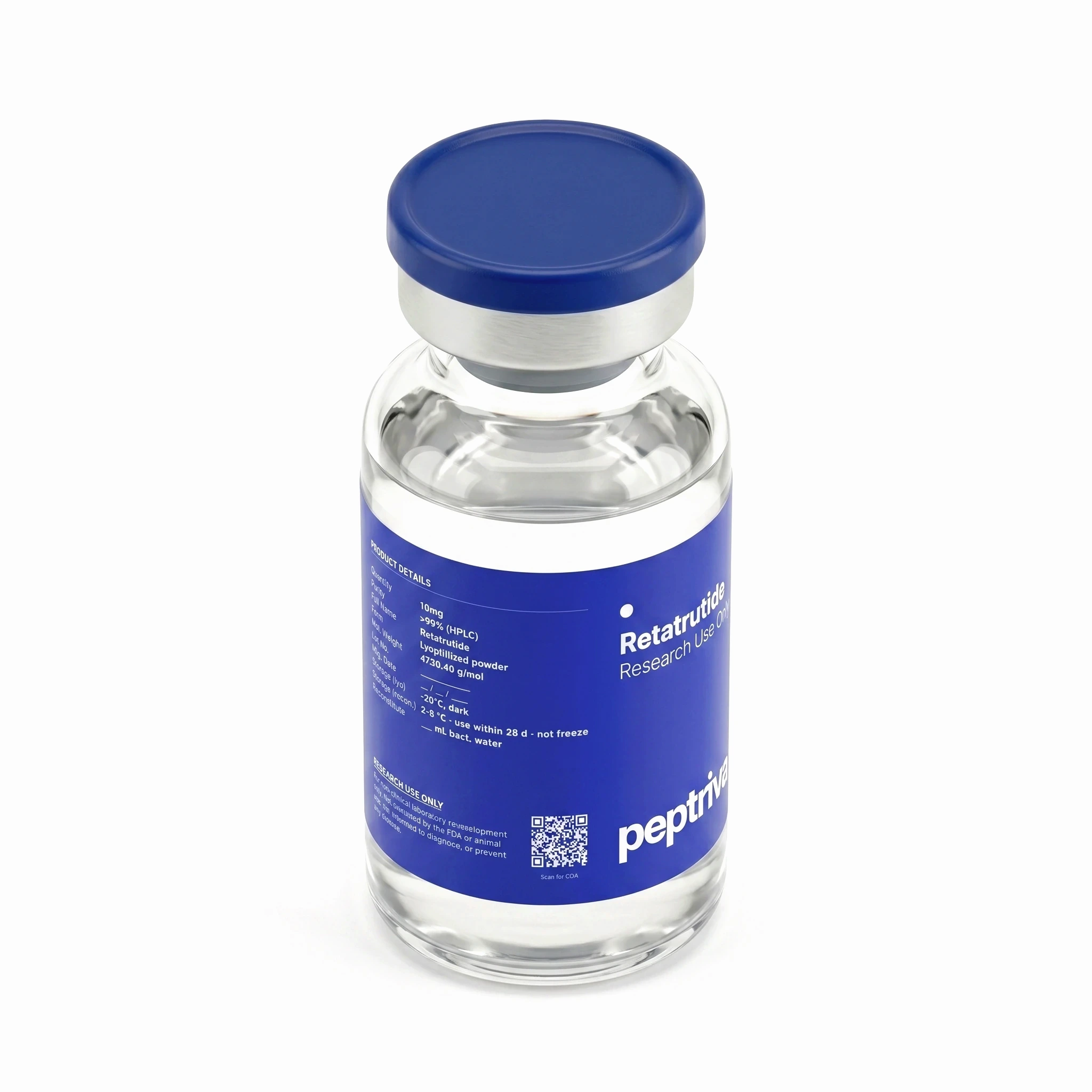
Retatrutide
An investigational triple-incretin agonist with no FDA approval — not eligible for 503A compounding. Strictly for research use only, not for therapeutic preparation.
What's the practical impact?
The Category 2 designation rippled through the peptide ecosystem in five ways.
Pharmacy-channel access dropped sharply. Compounding pharmacies that used to prepare BPC-157, thymosin alpha-1, and other Category 2 peptides for prescriptions largely stopped. Patients who had been getting compounded preparations from licensed pharmacies lost that pathway. Where physicians still prescribe these peptides, fulfillment through legitimate channels is increasingly difficult.
Grey-market activity shifted. The restriction didn't kill demand. The market response was a shift toward less-regulated sources, including online vendors with varying quality standards. The FDA's 2023 action was partly motivated by exactly this segment. The policy may have accelerated grey-market growth in the short term rather than reducing it.
503B outsourcing is a separate question. The 2023 designations hit 503A specifically. 503B facilities operate under different eligibility rules and can still prepare certain compounded peptide products for clinic distribution. But 503B isn't a full substitute for 503A. The patient-specific prescription model that 503A enables has no direct 503B equivalent.
Clinical research is essentially unchanged. Investigational use of peptides under FDA-authorized Investigational New Drug (IND) applications continues. Clinical trials on Category 2 peptides remain feasible with proper IND authorization. The categorization affects compounding pharmacy use, not formal clinical research under regulatory oversight.
Research-grade peptides sit in a separate category. Products sold strictly for research use only (not for human or veterinary therapy, not for compounding) aren't covered by the 503A list. The 503A framework regulates compounded preparations for patient use. Research-grade reference compounds for lab work fall under different rules: workplace safety, hazardous substance handling, research integrity. The two domains are legally distinct, even when the molecule is identical.
What's the policy debate?
The 2023 action generated substantial debate in three directions. The debate is ongoing.
The FDA's position: Category 2 designations reflect legitimate safety concerns about substances without an FDA-approval pathway and without robust human clinical safety data. The compounding pharmacy framework exists for patient-specific medications when approved alternatives don't fit a patient's clinical need. It isn't a general distribution pathway for substances outside the approval process. The categorization is meant to preserve the safety margin that compounded medications are expected to provide.
The compounding pharmacy and prescriber community: the categorization removes legitimate clinical tools from licensed prescribers without offering alternative pathways. For physicians who had been prescribing BPC-157 or thymosin alpha-1 for specific indications based on the available evidence, the designation closes the legitimate access channel without addressing the underlying clinical question.
The patient advocacy and research community: established compounded peptides are being treated more harshly than novel pharmaceuticals approved through standard pathways. Substances with decades of compounding history and few reported adverse events deserve different evaluation than brand-new agents. The counter-argument: compounding history isn't a formal safety study, and absence of reported adverse events from grey-market sources isn't strong safety evidence.
The debate won't resolve quickly. The FDA's categorization is iterative. Substances can move between categories as evidence accumulates. Some Category 4 (under-evaluation) substances may eventually move to Category 1 if safety data justifies it, or to Category 2 if not. The framework is evolving, and stakeholders on multiple sides keep engaging.
Where this falls short: The FDA's reasoning for several Category 2 placements relies on the absence of human safety data, not positive evidence of harm. That's a defensible regulatory posture for a precautionary system, but it's not the same as "these molecules cause harm." For BPC-157 in particular, the published human evidence base is thin in both directions. The categorization is a policy call about who carries the burden of proof, not a verdict on the underlying chemistry.
Section 503A creates a framework for traditional pharmacy compounding of patient-specific medications using bulk drug substances that meet specific criteria. The 2023 categorization of nominated bulk substances reflects the FDA’s evaluation of safety, efficacy, and the appropriateness of compounding use for each substance.
— U.S. Food and Drug Administration, summary framing of the 2023 categorization process
Where do research-grade peptides fit on the map?
This is the distinction that matters most if you're navigating the regulatory landscape around research-grade peptides. The 503A categorization regulates compounding pharmacy preparation of medications for patients. It doesn't regulate research-grade reference compounds for lab work.
Research-grade peptides operate under different rules: workplace hazardous substance regulations (the OSHA Hazard Communication Standard and equivalent international frameworks), animal-research protocols for preclinical work, and research-use-only labeling that explicitly excludes therapy. The Certificate of Analysis (COA) and Safety Data Sheet (SDS) documentation framework is the operational quality regime for research work. The 503A list governs a different question entirely.
The practical implication: the Category 2 placement of BPC-157, thymosin alpha-1, and others on the 503A list doesn't affect availability for legitimate research-grade lab use. A research lab studying BPC-157 in cell culture or rodent models operates under research-use-only rules that are independent of compounding pharmacy regulation. The legal boundaries are distinct, even when the molecule is the same.
What does follow from the categorization: research-grade products should be unambiguously labeled and used as RUO. Crossing into compounding pharmacy preparation, prescribing for human use, or therapeutic distribution would pull you into the 503A framework and the Category 2 restrictions. The cleanest operational posture is to keep the research-use boundary intact.
The regulatory summary, in one block: The FDA's 2023 categorization placed several research-prominent peptides (BPC-157, thymosin alpha-1, melanotan II) in Category 2, restricting use in 503A compounding pharmacies. 503A compounding is patient-specific preparation by traditional pharmacies. 503B outsourcing is bulk-batch preparation under cGMP at registered facilities. Research-use-only peptides operate under a separate framework and weren't directly affected. The research-use boundary has to be maintained; crossing into therapeutic preparation engages the compounding regime.
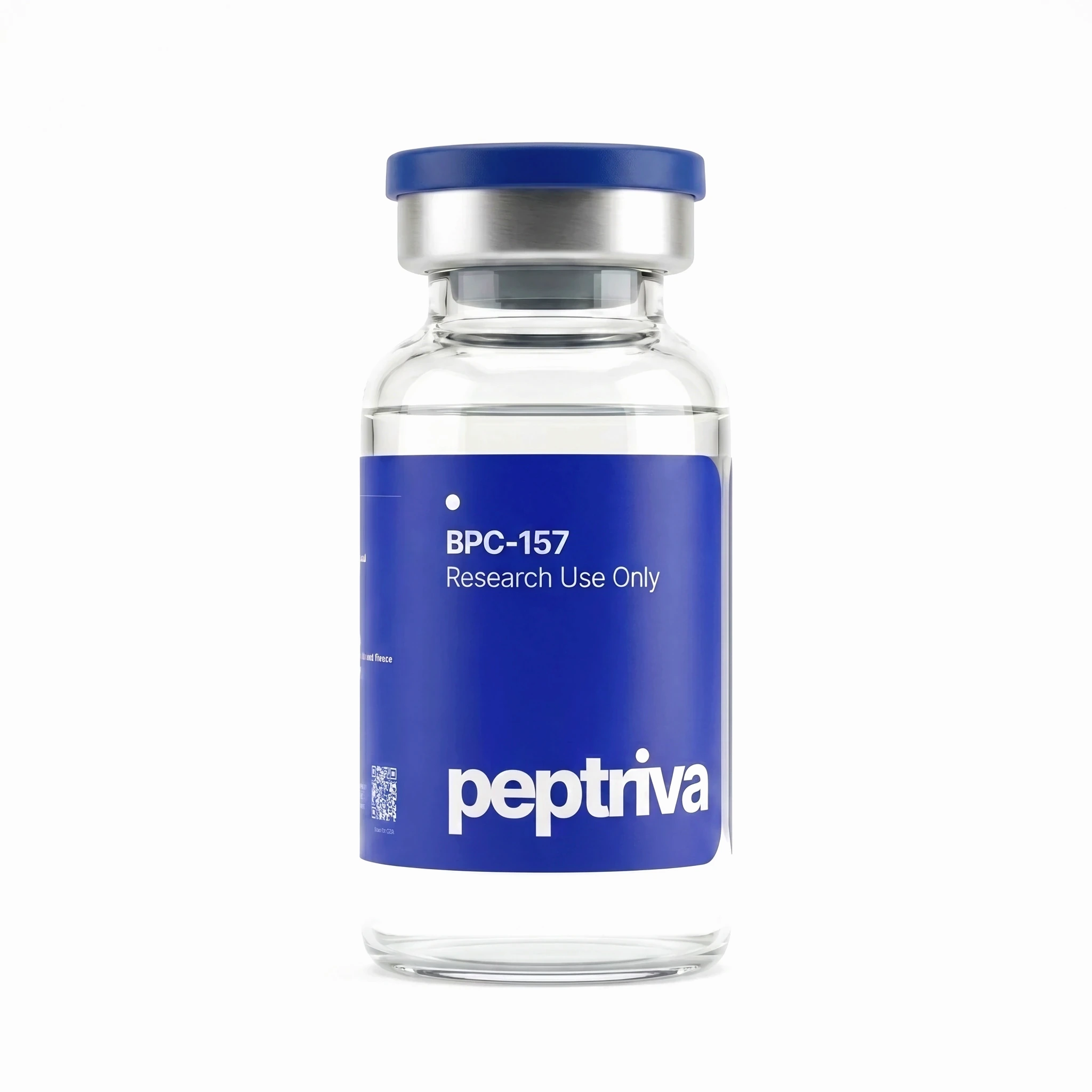
BPC-157
Pentadecapeptide · 15 aa, gastric origin. The compound named in the FDA’s 2023 Category 2 designation. Strictly for research use only — not for compounding, not for therapeutic preparation. COA available with each lot.
Key questions for navigating the 503A regulatory landscape
For those navigating the 503A regulatory landscape — patient, prescriber, pharmacist, or research administrator — the following questions help clarify applicable frameworks:
- What's the current FDA categorization for this substance? The list is published and updated; current status decides what 503A pharmacies can prepare.
- Is the intended use therapeutic or research? The two engage different regulatory frameworks. Clarity on intended use is the gating question.
- Is there an FDA-approved alternative? For many indications, approved alternatives exist that don't require compounding.
- If clinical use is appropriate, is an IND-authorized pathway available? For novel uses without approved alternatives, formal research under IND is the regulatory pathway.
- What's the right framework for research-grade lab use? RUO labeling, OSHA Hazard Communication, animal-research protocols, and institutional review processes all apply differently.
What to know now
- September 2023: FDA published Category 1–4 designations for bulk substances nominated for 503A compounding.
- Category 2: significant safety risks; FDA recommends against use. Most 503A pharmacies stopped preparing these.
- Peptides in Category 2: BPC-157, thymosin alpha-1, melanotan II, several GHRP analogs, and others. The specific list is published and updated.
- 503A vs 503B: 503A is patient-specific compounding by traditional pharmacies. 503B is bulk-batch preparation under cGMP at registered outsourcing facilities. The 2023 designation hit 503A.
- Practical impact: compounding pharmacy access to Category 2 peptides dropped sharply. The legitimate prescribing pathway through compounding largely closed.
- IND research: formal clinical trials on Category 2 peptides remain feasible through FDA IND pathways. The designation didn't touch this.
- Research-grade peptides: separate regulatory framework (RUO). Not directly affected. The research-use boundary must be maintained.
- Policy debate: the framework is iterative. Substances can move between categories as evidence accumulates. Active engagement continues from multiple sides.
What we're watching
Three developments. First, future revisions to the 503A categorization. Substances in Category 4 (under evaluation) may be reclassified as data accumulates, and Category 2 placements can theoretically move to Category 1 with sufficient evidence. Second, formal clinical trial activity for Category 2 peptides. If registered RCTs show safety and efficacy for specific indications, the regulatory landscape changes and approved-drug pathways become possible. Third, state-level responses. Some states have proposed legislative or regulatory frameworks specifically for peptide compounding. The federalism dimension keeps evolving.
References
- U.S. Food and Drug Administration. (2023). Compounding and Bulk Drug Substances: 503A Bulks List Categorization. Silver Spring, MD: FDA, September 2023. https://www.fda.gov/drugs/human-drug-compounding/bulk-drug-substances-nominated-use-compounding-under-section-503a-federal-food-drug-and-cosmetic-act
- U.S. Food and Drug Administration. (2018). Compounding Quality Center of Excellence: 503A and 503B Compounding Pathways. Silver Spring, MD: FDA. https://www.fda.gov/drugs/human-drug-compounding/compounding-quality-center-excellence
- Drug Quality and Security Act, Public Law 113-54 (2013). Title I — Drug Compounding Quality Act. https://www.congress.gov/bill/113th-congress/house-bill/3204
- Federal Food, Drug, and Cosmetic Act, Section 503A (21 U.S.C. 353a) and Section 503B (21 U.S.C. 353b). https://www.fda.gov/drugs/human-drug-compounding/compounding-laws-and-policies
- United States Pharmacopeia. USP General Chapter <797> Pharmaceutical Compounding — Sterile Preparations. Rockville, MD: USP-NF, current revision. https://www.usp.org/compounding/general-chapter-797