ISO 17025 isn’t marketing language. It’s an international standard that defines what a testing lab has to prove to be considered competent. If you’re evaluating a research-peptide supplier, it’s the practical gating question we’d start with.
ISO/IEC 17025:2017 is the international standard for testing and calibration laboratory competence. Accreditation requires the lab to demonstrate technical competence across 5 dimensions, impartiality with no conflicts of interest, and consistent operation through a documented quality system. National accreditation bodies grant it, such as A2LA and ANAB in the US and UKAS in the UK. You can verify any claim through public lookup tools. A CoA from an ISO 17025-accredited lab carries weight a manufacturer-self-tested CoA doesn’t.
The standard exists because the quality of lab results isn’t self-evident from the result itself. A lab can report a peptide as 99% pure by HPLC, and the report can be entirely accurate. But whether the lab can actually produce that measurement reliably is a separate question. ISO 17025 accreditation addresses the capability question. It requires documented evidence and on-site assessment of validated methods, calibrated equipment, qualified personnel, and reproducible results.
The practical implication for buying research-grade peptides is simple. An accredited CoA gives you independently verified confidence. A non-accredited CoA depends entirely on the lab’s self-reported competence. Both can be valid. The verification properties are meaningfully different.
What the standard actually requires
ISO/IEC 17025:2017 is structured around two big groups. Management system requirements and technical requirements. Both have to be in place for accreditation.
Management system requirements cover the documented quality system that governs lab operations. Document control. Record management. Internal audits. Management reviews. Corrective action procedures. Complaint handling. A defined org structure with documented responsibilities. This is the framework that ensures the lab operates consistently over time and can demonstrate compliance through documented evidence.
Technical requirements cover the analytical capabilities. Personnel qualifications, equipment calibration, method validation, measurement uncertainty estimation, sample handling and chain of custody, environmental conditions, traceability of measurements to national or international standards, and proficiency testing participation. These determine whether the lab can actually produce reliable results.
Method validation is one of the most important elements. The standard requires labs to validate the analytical methods they use. They have to demonstrate the method actually measures what it claims to measure, with documented sensitivity, specificity, linearity, accuracy, precision, and robustness. For a peptide purity measurement by HPLC, the lab has to validate the specific HPLC method on the specific peptide class. That means documented limits of detection and quantification, plus documented precision across replicate measurements.
Proficiency testing is another core element. It’s the periodic blind testing of samples against known reference values. Accredited labs must participate in PT programs for the analytical disciplines they offer. Consistent failure or non-participation can result in accreditation suspension or withdrawal.
Who grants accreditation?
National accreditation bodies grant it, not ISO directly. NABs themselves get evaluated under 2 international mutual-recognition arrangements. The International Laboratory Accreditation Cooperation (ILAC) and the International Accreditation Forum (IAF). That’s how accreditation granted in one country gets recognized in others.
The major NABs by jurisdiction:
- United States. A2LA (American Association for Laboratory Accreditation) and ANAB (ANSI National Accreditation Board). NIST and several specialty bodies also accredit specific scopes.
- United Kingdom. UKAS (United Kingdom Accreditation Service), the sole national body recognized by the UK government.
- European Union. Each member state has its own NAB (DAkkS in Germany, COFRAC in France, ACCREDIA in Italy, etc.) operating under the EU Accreditation Regulation.
- Canada. SCC (Standards Council of Canada) and CALA (Canadian Association for Laboratory Accreditation).
- Australia & New Zealand. NATA (National Association of Testing Authorities) for Australia, IANZ (International Accreditation New Zealand) for New Zealand.
- China. CNAS (China National Accreditation Service for Conformity Assessment).
Every NAB maintains a public directory of currently accredited labs, searchable by name, scope, and status. That’s the primary verification mechanism. Any claim of ISO 17025 accreditation should be verifiable through the relevant NAB’s public lookup tool. The verification should match the specific scope the claim is about, whether that’s peptide testing, HPLC, or mass spectrometry.
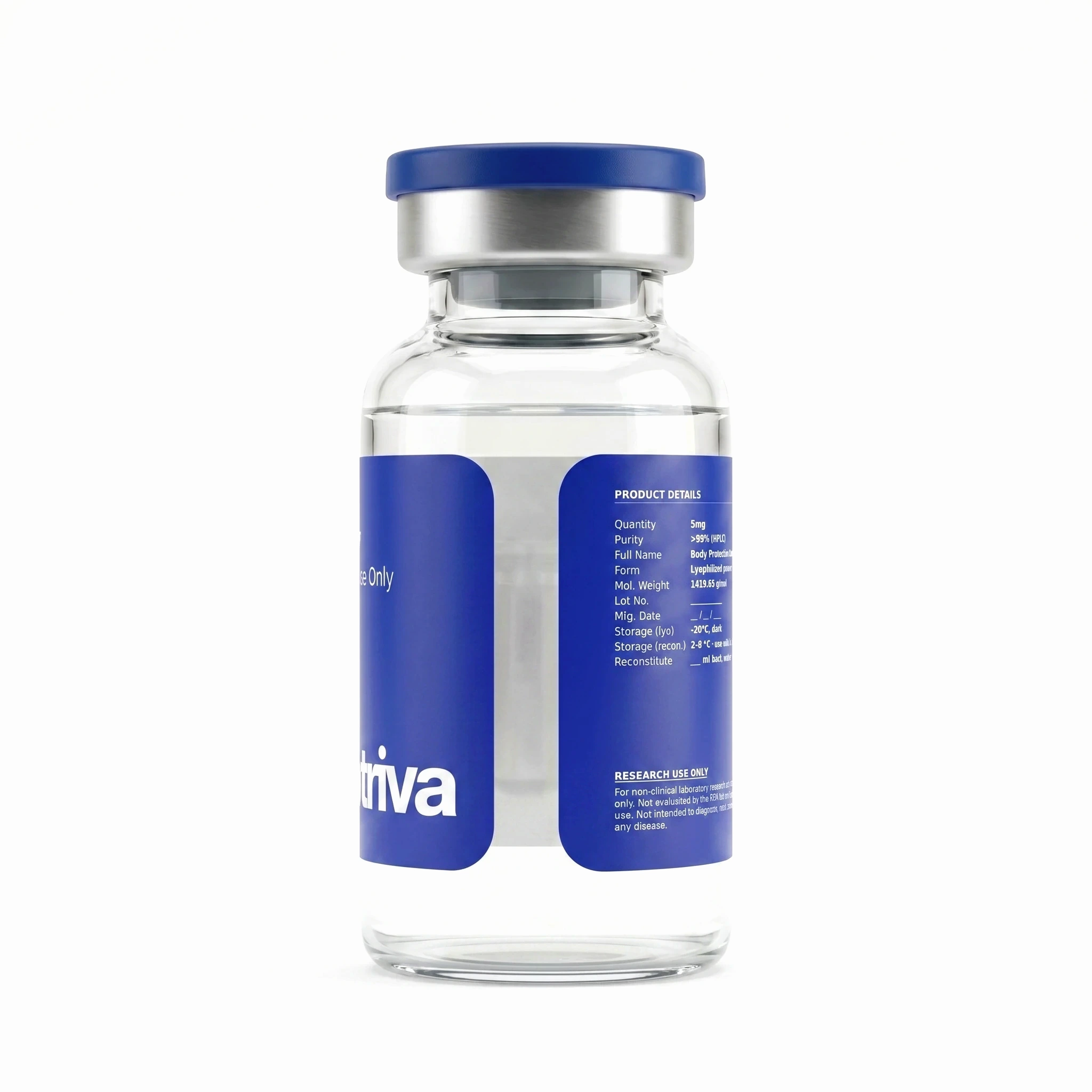
BPC-157
Research-grade reference compound documented through ISO 17025-aligned analytical workflows. Lab-verified identity and purity, COA per lot.
What does accreditation scope mean?
This is the detail that separates a meaningful accreditation claim from a marketing claim. ISO 17025 isn’t a blanket certification. It’s granted for specific analytical methods and matrices within a defined scope. A lab accredited for HPLC analysis of pharmaceutical compounds may not be accredited for mass spectrometry of biological samples. Both can happen in the same building.
The accreditation scope document, published alongside the certificate by the NAB, lists the specific methods, matrices, and analytes that are covered. For peptide testing, the relevant scope items typically include 5 categories:
- Reverse-phase HPLC for peptide purity, with the specific column chemistry, gradient method, and detection wavelength documented.
- Mass spectrometry, typically ESI-MS or MALDI-MS, for identity confirmation. The scope documents the specific instrument configuration and ionization mode.
- Karl Fischer titration for water content.
- Amino acid analysis for compositional verification.
- Endotoxin determination by LAL assay or rFC method, where applicable.
A lab’s CoA for a specific peptide should reference the methods on the scope, not just the general accreditation status. Say a lab has HPLC accreditation but runs mass spectrometry outside the scope. The mass spec result isn’t covered, even if it’s on the same CoA. Reading the scope document is part of meaningful verification.
How to verify a lab’s accreditation
The workflow is simpler than the documentation framework suggests. 3 steps:
- Identify the body and certificate number. A2LA, UKAS, ANAB, etc. Both should be on the CoA or in the lab’s public docs.
- Visit the NAB’s lookup tool. A2LA, ANAB, UKAS, NATA, and most major NABs maintain searchable directories at their primary domain (a2la.org, anab.org, ukas.com, nata.com.au). Search by lab name or certificate number.
- Verify three things. The certificate is currently active. The scope covers the methods used on the CoA. The claimed accreditation matches the public listing.
If any check fails, the CoA’s claim of ISO 17025 testing isn’t supported. That covers cases where the certificate isn’t found, the scope doesn’t match, or the accreditation is listed as suspended. It doesn’t matter how prominently the accreditation is referenced. This is the gating step that separates legitimate accreditation from marketing language.
ISO/IEC 17025:2017 specifies the general requirements for the competence, impartiality, and consistent operation of laboratories. Accreditation under the standard is granted for specific scopes by national accreditation bodies, and verification through the issuing body’s public directory is the appropriate confirmation mechanism.
— ISO/IEC 17025:2017, scope and general framing
Why this matters more for peptides
Research-grade peptide analysis is one of the domains where lab competence varies most. Peptide identity and purity determination is technically demanding. It requires validated HPLC methods, mass-spectrometric capabilities, careful sample handling, and reference standards for the specific peptide being analyzed.
Labs without these capabilities can still produce reports. The reliability of those reports is a separate question.
The market for research-grade peptides has historically included a wide range of quality tiers. At the top, pharmaceutical-grade manufacturers operating under ISO 17025 and GMP standards. At the bottom, small-volume preparations with minimal documentation. Price differences across this range reflect the cost of the underlying quality systems. The analytical documentation is the visible indicator of where a specific product sits.
Our practical recommendation for most research-grade applications is straightforward. Prefer products with CoAs from ISO 17025-accredited labs, verified through the NAB’s public directory. This isn’t a guarantee of any specific outcome. It’s the strongest commonly available verification of analytical competence and the most useful filter when comparing suppliers.
Where this falls short: ISO 17025 accreditation verifies a lab’s capability to produce reliable measurements. It doesn’t verify that the specific lot you received matches what was tested. Sample swaps, chain-of-custody errors, and outright fraud aren’t solved by accreditation alone. We’d cross-check the lot number on your vial against the lot number on the CoA, and prefer suppliers who name their accredited lab publicly so you can trace the audit chain end-to-end.
The verification check, in one block: A meaningful ISO 17025 claim requires 3 things. First, a specific NAB and certificate number on the CoA. Second, public verification through the NAB’s lookup tool showing currently active status. Third, a scope document covering the specific methods used. Without all three, the accreditation reference is marketing language, not verified quality.
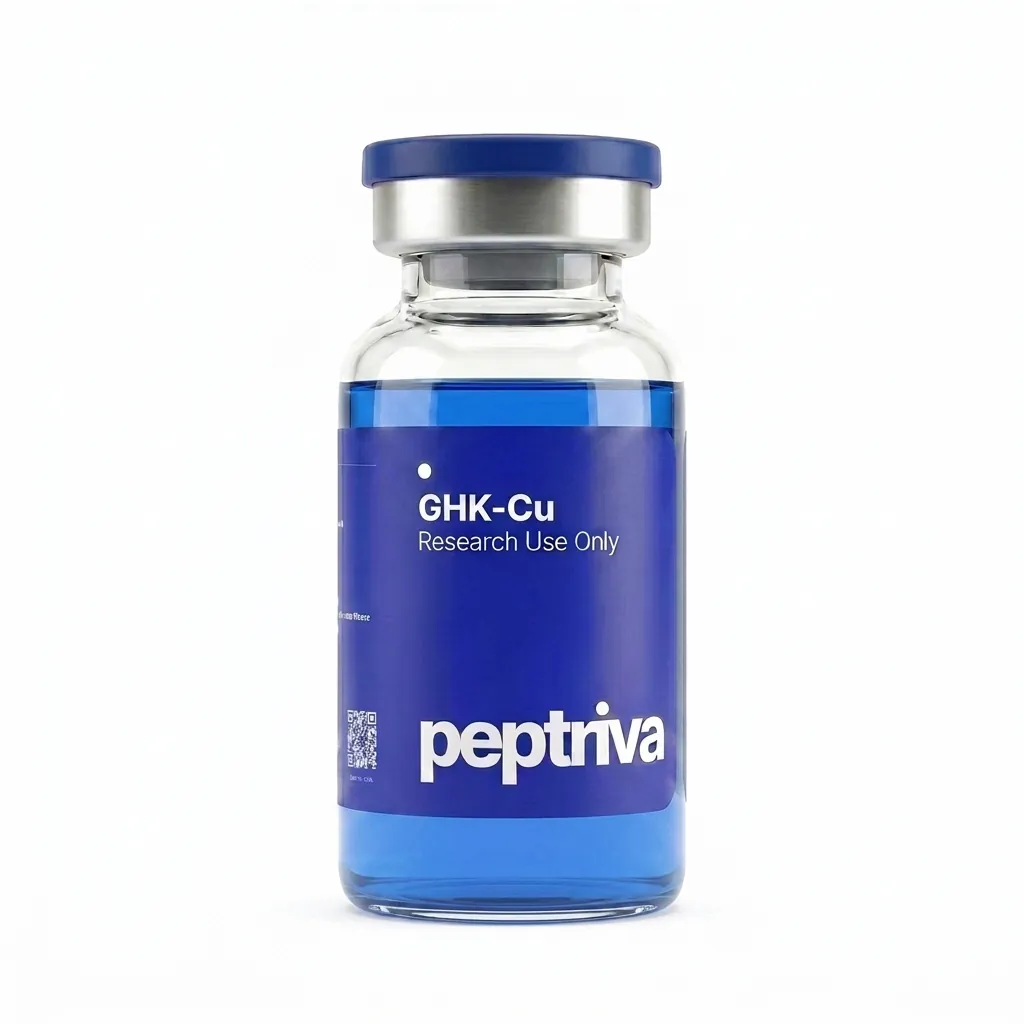
GHK-Cu
Copper-binding tripeptide · Gly-His-Lys, blue lyophilized powder. Research-grade reference compound documented through accredited analytical workflows. COA available with each lot.
What about GMP, GLP, and other quality standards?
ISO 17025 is one of several quality frameworks that apply to research-peptide analytics. They’re not interchangeable. 3 other commonly cited standards are worth understanding for context:
GMP (Good Manufacturing Practice). GMP standards govern pharmaceutical manufacturing. That means the production of drugs intended for human or veterinary therapeutic use. cGMP (current GMP) in the United States is enforced by the FDA under 21 CFR Parts 210 and 211. GMP is a manufacturing standard, not specifically a testing standard. It covers the entire production lifecycle from raw material qualification through finished product release. Research-grade peptide manufacturers typically operate under partial GMP-aligned procedures, but they may not be fully cGMP-compliant because their products aren’t intended for therapeutic use.
GLP (Good Laboratory Practice). GLP standards govern non-clinical laboratory studies submitted to regulatory agencies for product registration. That’s primarily safety and efficacy studies in the drug development context. GLP is enforced by the FDA (21 CFR Part 58) and equivalent international agencies. GLP is more narrowly scoped than ISO 17025 and applies specifically to studies intended to support regulatory submissions, not to general analytical work.
USP-NF (United States Pharmacopeia / National Formulary). The USP-NF is the compendium of monographs and general chapters that define standards for pharmaceutical compounds, including identity, purity, and quality testing methods. USP monographs for specific compounds prescribe the analytical methods required for compendial compliance. Laboratories testing against USP monographs may or may not be ISO 17025 accredited. The two frameworks are complementary.
For research-grade peptide work, ISO 17025 is generally the most relevant accreditation. It directly addresses laboratory competence for analytical testing. GMP applies to manufacturers more than to testing laboratories. GLP applies primarily to safety study contexts. USP-NF defines the testing methods and standards that an ISO 17025 laboratory might use, but it isn’t itself an accreditation.
What questions should I bring to a supplier?
If you’re evaluating research-peptide supplier documentation, here are 6 substantive questions worth asking about analytical testing:
- Is the testing laboratory ISO 17025 accredited? The threshold question. Manufacturer-self-tested COAs are different from third-party-accredited COAs.
- What’s the accreditation body and certificate number? Required for public verification through the NAB’s lookup tool.
- Does the accreditation scope cover the specific analytical methods on the COA? Scope-specific accreditation matters. General accreditation language without scope verification is insufficient.
- Is the laboratory currently in good standing with the accreditation body? Verifiable through the NAB’s public directory.
- What proficiency testing programs does the laboratory participate in for peptide analysis? PT participation is a core element of ongoing competence demonstration.
- How recently was the laboratory’s scope reassessed? Accreditation is typically renewed on multi-year cycles with interim surveillance.
What to know now
- ISO/IEC 17025:2017 is the international standard for testing and calibration laboratory competence; the current revision is 2017.
- What it accredits: technical competence, impartiality, and consistent operation of laboratories.
- Who grants it: national accreditation bodies (A2LA, ANAB in US; UKAS in UK; equivalents elsewhere) operating under international mutual recognition.
- Scope-specific: accreditation applies to specific analytical methods and matrices, not as a blanket certification.
- Verification: NAB public directories allow verification by laboratory name or certificate number; check that scope matches the methods used.
- Why it matters for peptides: peptide identity and purity analysis is technically demanding; laboratory competence varies significantly across the research-peptide market.
- Related standards: GMP for manufacturing, GLP for non-clinical safety studies, USP-NF for pharmaceutical compendial methods — complementary, not interchangeable with ISO 17025.
- Practical recommendation: prefer COAs from ISO 17025-accredited laboratories verified through NAB lookup; treat unverified accreditation claims as marketing language.
What we’re watching
2 developments worth tracking. First, the increasing proportion of research-peptide products with third-party-accredited COAs as buyer expectations rise. This trend has been consistent over the past several years and is likely to continue. Second, potential revisions to ISO 17025 itself. The 2017 revision was a major restructuring relative to the 2005 version. Future revisions could introduce further changes to the management system or technical requirements. Laboratories will need to adapt over multi-year transition windows.
References
- International Organization for Standardization. (2017). ISO/IEC 17025:2017 — General requirements for the competence of testing and calibration laboratories. Geneva: ISO. https://www.iso.org/standard/66912.html
- International Laboratory Accreditation Cooperation. ILAC Mutual Recognition Arrangement. Silverwater, NSW: ILAC. https://ilac.org/ilac-mra-and-signatories/
- American Association for Laboratory Accreditation (A2LA). Directory of accredited laboratories. https://www.a2la.org
- United Kingdom Accreditation Service (UKAS). Accredited organisation search. https://www.ukas.com