Retatrutide is the triple GIP/GLP-1/glucagon agonist that produced 24.2% mean weight reduction at the highest dose in the 2023 NEJM Phase II trial — the largest pharmacological weight-reduction magnitude reported in that trial cohort (Jastreboff et al., 2023). It’s also not FDA-approved. Where to buy retatrutide in 2026 means one channel only: a research-supply vendor. This guide covers the $200–$400 price band, the FG-series codename problem plaguing the market, and the mass-spec verification that confirms what’s actually in the vial.
Retatrutide (development code LY3437943) is Eli Lilly’s once-weekly triple GIP/GLP-1/glucagon agonist under clinical investigation. Currently in Phase III (the TRIUMPH program). Not FDA-approved. Available as a research reference compound for laboratory use. 2026 pricing runs $200–$400 per 10 mg vial ($20–$40 per mg). Meaningfully more than BPC-157 because of synthesis complexity (39 residues plus a fatty-acid modification). The single biggest red flag: vendors selling under codenames like FG-1, FG-2, FG-blend without disclosing the chemical identity. Identity transparency is non-negotiable for a peptide this complex.
The sourcing summary: A credible vendor sells it as “retatrutide,” not under a codename. A batch-matched CoA from an ISO 17025-accredited lab should show HPLC purity ≥98% and mass-spec confirming the lipid-modified peptide. Current pricing runs $200–$400 per 10 mg vial.
Research sourcing channels in 2026
Retatrutide is still in clinical trials. That dramatically narrows the available channels. Three channels exist, but only one is accessible for research procurement:
- Doctor’s prescription: Not available. Retatrutide isn’t FDA-approved yet. No pharmacy can fill a prescription for it.
- Compounding pharmacy: Not available. The 503A compounding channel requires either FDA approval or a Drug Shortage listing for the active ingredient. Retatrutide has neither.
- Research-supply vendor: The only channel. Lyophilized powder under Research Use Only labeling. No prescription needed. Buyer must use it for research, not human consumption.
Research-supply channel limitations: No physician oversight. No prescribed dose. No insurance. No FDA-regulated batch testing — quality assurance relies entirely on the vendor’s third-party CoA. The molecule is patented. Lilly holds active IP. The grey-market synthesis landscape is unsettled and could shift as Phase III completes.
Compound identity and structure
Retatrutide is a 39-amino-acid peptide engineered to engage three receptors at once: GIP, GLP-1, and glucagon. These are the gut and pancreatic hormones that control insulin release, appetite, and energy expenditure. The triple-agonist design adds glucagon receptor activation to the GIP/GLP-1 platform that tirzepatide pioneered (Jastreboff et al., 2023).
The molecule also carries a fatty-acid side chain. That side chain helps it bind to albumin (a blood protein) and extends the half-life enough to enable once-weekly dosing.
The backbone weighs about 4,731 Da unmodified. With the lipid modification, the observed mass on a CoA lands in the high-4,900s. Long sequence, lipid modification, multiple basic residues that need careful counterion management. Retatrutide is at the high end of synthesis complexity for any peptide. Cost reflects the chemistry, not vendor markup.
“
Retatrutide led to substantial weight reduction in adults with obesity. At 48 weeks, the highest-dose group lost a mean of 24.2% of body weight.
— Jastreboff et al., NEJM, 2023 (Phase II, n=338)
The four checks that matter for retatrutide
The standard eight vendor criteria apply. Four are sharper here, and the first one is unique to this peptide.
1. Identity transparency: no codenames, ever
Credible suppliers sell retatrutide under its actual name. Some grey-market vendors sell what appear to be retatrutide-class compounds under codes like FG-1, FG-2, FG-3, FG-blend. They refuse to confirm the chemical identity on the product page or CoA.
Based on pricing and catalog placement, these codenamed compounds are widely believed to be GLP-1-class molecules sold under codes to dodge trademark, intellectual-property, and regulatory scrutiny. When purchased, an FG-series compound offers no way to verify chemical identity without independent mass-spec testing.
The rule: if it’s not labeled retatrutide on both the product page and the CoA, it isn’t retatrutide.
2. Mass-spec must match the lipid-modified peptide
The observed mass on the CoA should reflect the 39-residue backbone plus the fatty-acid modification. A CoA reporting just the unmodified backbone mass indicates incomplete synthesis or substitution. For a peptide this complex, the mass-spec identity line is the single most reliable check for compound authenticity.
3. Storage stability documentation
The lipid modification and basic residue content make retatrutide more sensitive to freeze-thaw cycles than simpler peptides. A research-grade vendor should document how long the lyophilized vial keeps potency at −20°C versus refrigerated reconstituted solution. Vendors that supply no stability data on a peptide this complex are skipping work that matters.
4. Synthesis source disclosure
Reputable suppliers will disclose, on request, where the peptide was synthesized: in-house, a contract lab, or a named overseas manufacturer. For retatrutide specifically, this matters because Lilly holds active patents. Sources that decline to name their facility may be using channels that create downstream legal exposure or quality uncertainty.
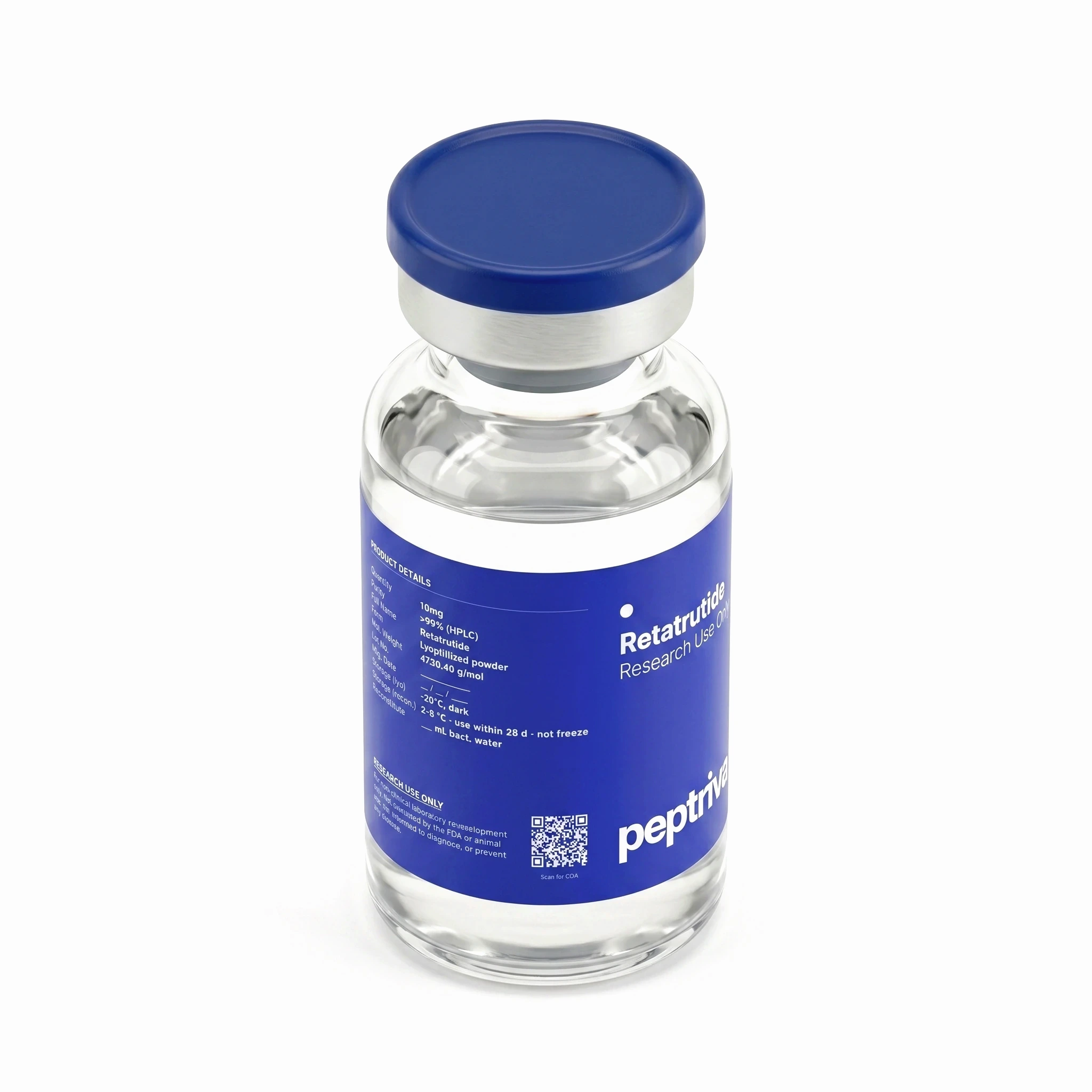
Retatrutide
The triple-agonist molecule from the 2023 NEJM Phase II trial. Sold under the actual peptide name, with a batch-matched CoA from an ISO 17025 third-party lab. Mass-spec identity confirmed for the lipid-modified 39-residue peptide.
2026 pricing benchmarks
Research-grade retatrutide pricing in 2026:
- 5 mg vial: $120–$220 ($24–$44/mg).
- 10 mg vial: $200–$400 ($20–$40/mg). Most common size.
- 20 mg vial: $360–$720. Slight per-mg discount over the 10 mg.
- Multi-vial discounts: 10–25% off for 3-pack or 6-pack purchases.
Below $150 per 10 mg vial, identity verification is warranted. The synthesis floor is real. A 39-residue lipid-modified peptide costs roughly 10x what a 15-residue unmodified peptide like BPC-157 costs to manufacture. A vendor offering retatrutide at $80–$100 per 10 mg is either absorbing unsustainable losses, selling a less-pure preparation, or selling a different compound entirely. Mass-spec CoA testing distinguishes between these scenarios.
The legal picture
As of May 2026, retatrutide is in Phase III. The TRIUMPH program is enrolling. No FDA approval. No EMA approval. Three things follow:
- Research-compound sales are legal. Retatrutide can ship in the U.S. as a Research Use Only reference compound. Use must stay consistent with research intent.
- Therapeutic sales are illegal. Marketing retatrutide for weight loss, with dosing instructions or clinical claims, crosses into FDA jurisdiction. Credible suppliers avoid this.
- Patents are active. Eli Lilly holds the IP on LY3437943. The grey-market synthesis landscape is unsettled. The picture could shift as Phase III completes.
Red flags specific to retatrutide
- Sold under codenames (FG-series or similar) without chemical identity disclosure. The biggest retatrutide-specific red flag.
- Pricing below $150 per 10 mg vial. Below the synthesis cost floor. Question the identity.
- Mass-spec CoA missing or showing only the unmodified backbone. The lipid modification is essential. Confirmation has to cover the modified molecule.
- Therapeutic dosing instructions on the product page. “Start at 1 mg weekly, titrate to 12 mg” is selling-for-human-use language. The FDA notices.
- No third-party ISO 17025 lab partner. Internal QC isn’t enough for a peptide this complex.
- Inconsistent or absent lot numbering. Each batch should have its own lot number, its own CoA, and its own retest date.
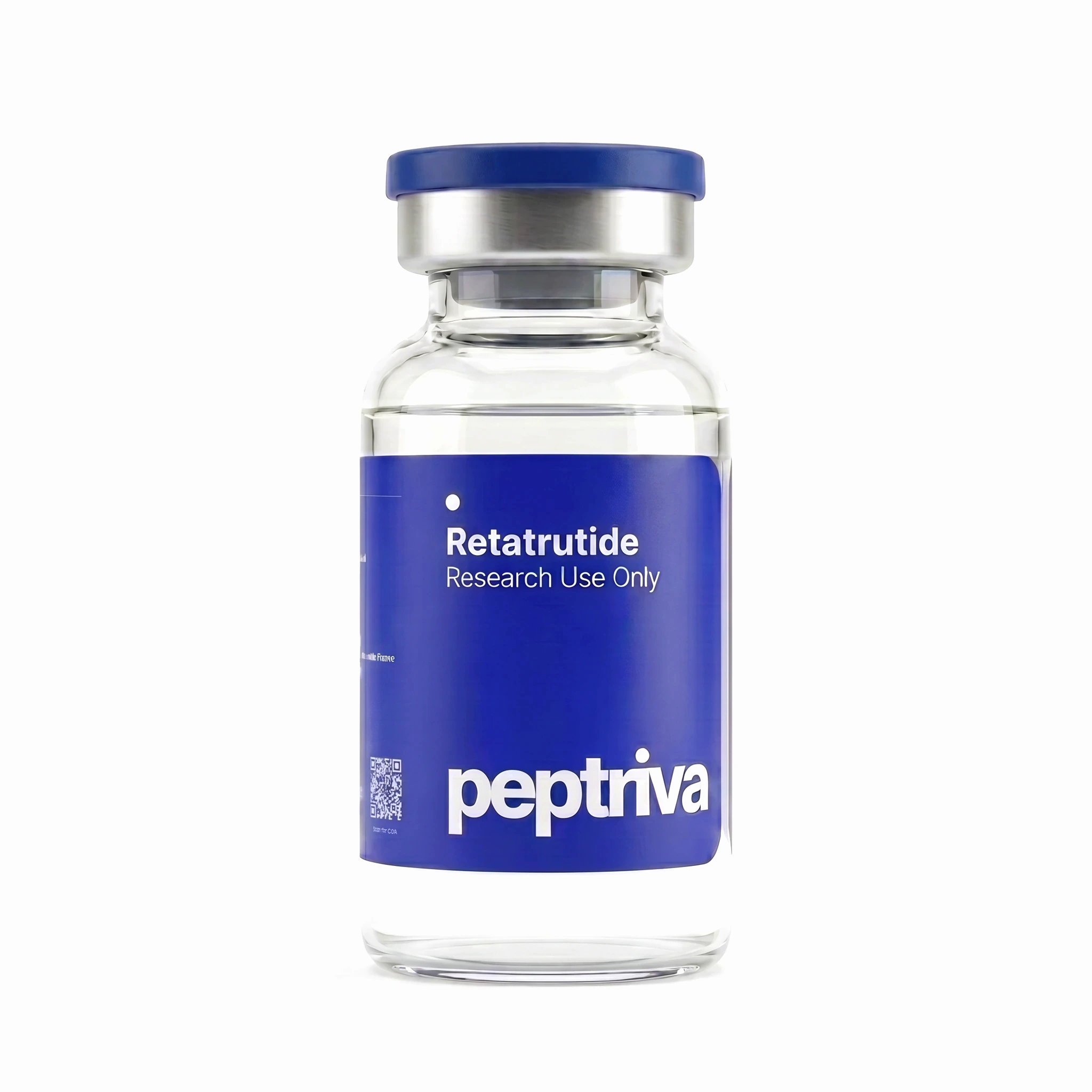
Retatrutide
39-residue triple incretin agonist with fatty-acid modification. The same reference compound cited across the Jastreboff et al. Phase II trial. Lot-specific CoA with ISO 17025 third-party HPLC and mass-spec identity ships with every order.
Frequently asked questions
Is retatrutide legal to buy in the USA?
Yes, as a research reference compound. The Phase III TRIUMPH program is still ongoing. Not FDA-approved yet. Selling for human consumption is illegal. Buying from a vendor that ships it under Research Use Only labeling isn’t.
How much should research-grade retatrutide cost?
2026 pricing: $200–$400 per 10 mg vial ($20–$40 per mg). Below $150 per 10 mg, verify the identity. The synthesis cost floor is real.
What is the FG-series and why does it matter?
Some grey-market vendors sell compounds under codes like “FG-1,” “FG-2,” or “FG-blend” with no chemical identity disclosure. Based on pricing and catalog placement, these are widely believed to be retatrutide-class molecules sold under codes to dodge trademark and regulatory scrutiny. Without third-party mass-spec testing, identity cannot be verified. A credible retatrutide vendor lists it under the actual compound name with a clear CoA.
What should a retatrutide Certificate of Analysis show?
HPLC purity ≥98% with chromatogram. Mass-spec identity matching the lipid-modified peptide (unmodified backbone ~4,731 Da; observed mass is higher with the lipid). Water content via Karl Fischer titration. Counterion content. An ISO 17025-accredited lab on the report.
Why is retatrutide so much more expensive than BPC-157 or GHK-Cu?
Retatrutide is 39 residues with a fatty-acid modification. BPC-157 is 15 residues, unmodified. GHK-Cu is 3 residues. Each extra amino acid in solid-phase synthesis adds a coupling step plus more purification. Modifications add specialized chemistry. The price reflects roughly 13x the synthesis complexity. That’s why GLP-1-class peptides retail at $40–$80/mg vs $0.50–$2/mg for cosmetic peptides.
How does retatrutide compare to tirzepatide for research?
Both are research-relevant incretin agonists. Tirzepatide is FDA-approved as Mounjaro and Zepbound. As a dual GIP/GLP-1 agonist, the SURMOUNT-1 trial reported 22.5% mean weight reduction at the highest dose (Jastreboff et al., 2022). Retatrutide adds glucagon receptor agonism and the Phase II trial reported 24.2% at its highest dose (Jastreboff et al., 2023). See retatrutide vs tirzepatide for the head-to-head.
What to know now
- Identity transparency is the #1 red flag. Codenames like FG-1, FG-2, FG-blend without chemical disclosure mean grey-market sourcing.
- $200–$400 per 10 mg vial. Below $150, verify the identity.
- Mass-spec CoA must confirm the lipid-modified molecule, not just the unmodified backbone.
- Phase III is ongoing. Research-compound sales are legal. Therapeutic sales aren’t.
- Lilly holds active patents. Synthesis source disclosure matters.
What we’re watching
The Phase III TRIUMPH readouts start publishing late 2026 through 2027. That’ll set the next pricing and regulatory benchmark for retatrutide. FDA approval (likely 2027–2028 if Phase III replicates Phase II) would reshape the market overnight. Post-approval, retatrutide becomes available as a compounded therapeutic through 503A pharmacies, which would change both pricing and the regulatory framing for non-clinical use. The FG-series codename trend is also worth tracking. If FDA enforcement targets the codename obfuscation, the sourcing landscape changes immediately.
References
- Jastreboff, A. M., Kaplan, L. M., Frías, J. P., Wu, Q., Du, Y., Gurbuz, S., Coskun, T., Haupt, A., Milicevic, Z., & Hartman, M. L. (2023). Triple–hormone-receptor agonist retatrutide for obesity — A phase 2 trial. New England Journal of Medicine, 389(6), 514–526. https://doi.org/10.1056/NEJMoa2301972
- Jastreboff, A. M., Aronne, L. J., Ahmad, N. N., et al. (2022). Tirzepatide once weekly for the treatment of obesity (SURMOUNT-1). New England Journal of Medicine, 387(3), 205–216. https://doi.org/10.1056/NEJMoa2206038
- International Organization for Standardization. (2017). ISO/IEC 17025:2017 — General requirements for the competence of testing and calibration laboratories. https://www.iso.org/standard/66912.html
- U.S. Food and Drug Administration. (2023). Section 503A of the Federal Food, Drug, and Cosmetic Act. https://www.fda.gov/drugs/human-drug-compounding/section-503a-federal-food-drug-and-cosmetic-act
- ClinicalTrials.gov. A Study of Retatrutide (LY3437943) in Participants Who Have Obesity or Are Overweight (TRIUMPH-1). clinicaltrials.gov retatrutide