Bacteriostatic water is the unglamorous half of a peptide reconstitution workflow. It’s the diluent, not the active compound. But it’s where sourcing errors most often occur. Where to buy bacteriostatic water in 2026 hinges on one identity check: does the label read “Bacteriostatic Water for Injection, USP” with 0.9% benzyl alcohol stated as the preservative? If not, it is a different product.
Bacteriostatic water is sterile water plus 0.9% benzyl alcohol — a mild preservative that supports a reconstituted peptide vial through a 28-day in-use window under refrigerated storage (2–8°C). It is sold legally in the U.S. as a USP-monographed (pharmacopeia-standard) product. Typical 2026 pricing is $5–$15 per 30 mL vial. The most common sourcing error: receiving “sterile water” or “saline” instead. Both look identical in the vial. Neither provides a multi-dose diluent. The label has to state the words.
Quick answer: Source a 30 mL vial labeled “Bacteriostatic Water for Injection, USP” with 0.9% benzyl alcohol added on the label. Typical price $5–$15. Avoid anything labeled “sterile water” (no preservative, single-use) or “normal saline” (0.9% sodium chloride, no preservative). One 30 mL vial supports many peptide reconstitutions.
What bacteriostatic water actually is
Bacteriostatic water has a precise pharmaceutical definition. It’s sterile water with 0.9% benzyl alcohol added as a preservative, sold in a sealed multi-dose vial good for up to 28 days after the first puncture (FDA, 2018).
The 0.9% number is the regulatory standard. Not 0.5%, not 1%, not vague “contains benzyl alcohol” copy. That exact concentration is where benzyl alcohol provides bacteriostatic action while remaining compatible with injection-site tissue in pharmaceutical preparations.
The mechanism: benzyl alcohol slips into bacterial cell membranes, scrambles their fluidity, and shuts down the membrane-anchored processes bacteria need to replicate. It’s gentle enough that the same diluent works across most lyophilized peptide classes without degrading the molecule.
For the chemistry background, see the complete bacteriostatic water reconstitution guide. This article is the sourcing version — what to look for on the label, what to pay, and the common mislabels.
The four-question identity check
Most sourcing errors are not about quality. They are about receiving an entirely different product. Four questions resolve which one a given vial is:
1. Does the label say “0.9% benzyl alcohol”?
This is the preservative. The number and the substance both have to appear on the label.
Some products marketed as “bacteriostatic” substitute methylparaben, propylparaben, or chlorobutanol. They aren’t interchangeable with benzyl alcohol for peptide compatibility. The published research literature is anchored on the 0.9% benzyl alcohol standard. Different preservative, different product.
2. Is it USP-grade?
USP stands for United States Pharmacopeia, the body that defines pharmaceutical standards in the U.S. A USP-grade label means the product meets pharmacopeia rules for identity, purity, sterility, and pyrogen content (USP-NF, 2026).
USP also publishes Chapter <797>, the sterile-compounding standard pharmacies follow. Non-USP grades may meet some other standard, but they aren’t the baseline the published reconstitution research assumes.
3. Is the in-use window 28 days?
This is the operational test. A vial preserved with 0.9% benzyl alcohol stays safe for 28 days after first puncture when you store it refrigerated (2–8°C) and access it with clean technique. That’s the same convention used for human insulin and most preserved injectables (ASHP Handbook on Injectable Drugs).
A vendor who won’t state the 28-day window is signaling something about their preservative concentration. Verify identity before sourcing from that supplier.
4. Is the volume 30 mL?
The 30 mL multi-dose vial is the standard size. 10 mL and 50 mL exist for specialty uses. A single 30 mL vial supports reconstitution of many lyophilized peptide samples across a research workflow.
If a vendor only sells 1–5 mL ampules, that’s usually preservative-free sterile water in single-dose packaging. Different product. Different rules.
Where this falls short: Bacteriostatic water isn’t universal. A few specialty peptides have documented incompatibility with benzyl alcohol — some research-grade GLP-1 analogs can show subtle aggregation at the preservative concentration over longer timelines. For those, preservative-free sterile water is the cleaner default, traded against losing the 28-day window. Always check the peptide manufacturer’s reconstitution documentation if you have it. The default works for most peptides, not all.
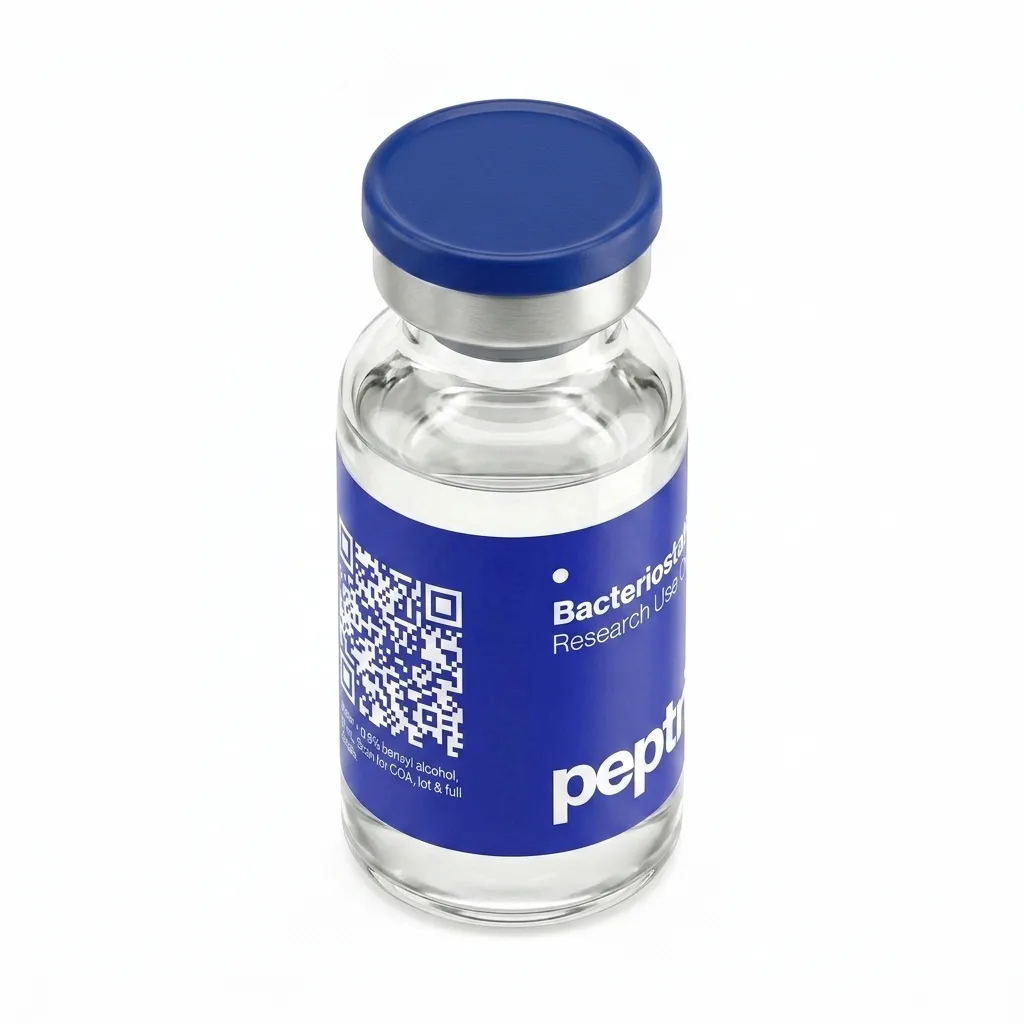
Bacteriostatic Water
The standard 0.9% benzyl alcohol preparation referenced throughout this sourcing guide as the USP-monographed reconstitution diluent. Sealed multi-dose vial; supports the full 28-day in-use window when stored at 2–8°C between uses.
2026 pricing benchmarks
Bacteriostatic water is a utility product. Production is cheap, benzyl alcohol costs pennies, and the regulatory framework is settled. Pricing reflects all of that:
- 30 mL vial: $5–$15 per vial. The standard size; covers many peptide reconstitutions per bottle.
- Multi-pack tiers: 10–25% off per vial for 3-pack or 6-pack orders.
- 10 mL vial: $3–$8 per vial. Usually worse per-mL than the 30 mL.
- 50 mL vial: $10–$20 per vial. Specialty size from some compounding pharmacies.
Above $20 per 30 mL is usually retail markup or a specialty preparation (preservative-free, glass ampule, certified compounding grade). Below $5 deserves a second look — the product floor reflects regulatory and packaging costs, and prices below that often signal a different product entirely.
For context, a 10 mg BPC-157 reference compound vial typically runs $80–$150. Bacteriostatic water at 5–10% of peptide cost is a minor line item in research budgets. Price optimization below the floor is counterproductive. Correct identity is the priority.
Is bacteriostatic water legal to buy?
Yes, easily. It’s an FDA-recognized pharmaceutical preparation with an established USP monograph. You can buy it from compounding pharmacies, online research suppliers, and laboratory chemical distributors. It carries no controlled-substance scheduling, no 503A category designation, no WADA Prohibited List status.
The label distinction matters for which channel sells it. “Bacteriostatic Water for Injection, USP” is technically a drug product. Compounding pharmacies and licensed pharmaceutical distributors sell that version. The same chemical sold under research-use-only labeling lives at research-supply distributors. Both are legal. Both contain the same substance.
Red flags specific to bacteriostatic water
Seven warning signs we’d skip:
- Label says “sterile water for injection.” No preservative, single-use only. Same cost, identical look, completely different product.
- Label says “0.9% sodium chloride” (saline). No preservative. The salt content can also promote aggregation in some peptides. The “0.9%” matches; the active ingredient doesn’t.
- Preservative isn’t benzyl alcohol. Methylparaben, propylparaben, and chlorobutanol-preserved products exist. None are the literature standard.
- No in-use stability claim. A vendor that won’t state the 28-day window is signaling something about their preservative dose.
- Marketing for human use or dosing. Bacteriostatic water itself carries no special restriction, but a vendor who pairs it with human dosing instructions is operating outside research channels and is at higher regulatory enforcement risk.
- Pricing below $3 per 30 mL. Under the regulatory floor usually means it’s a different product under a similar name.
- Glass ampule packaging. Ampules are single-use packaging for preservative-free preparations. Bacteriostatic water ships in multi-dose vials because the preservative is what enables multi-dose use.
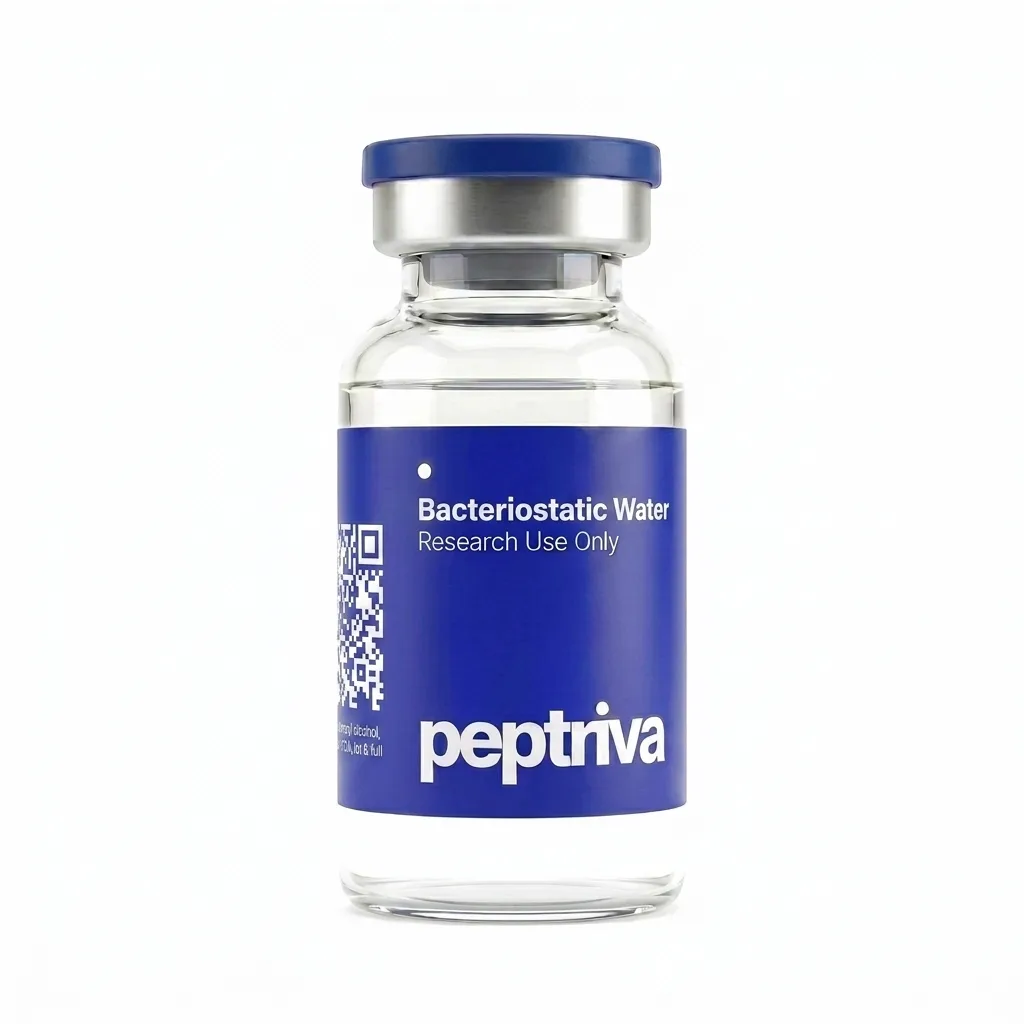
Bacteriostatic Water
USP-grade bacteriostatic water for injection · 10 mL multi-dose vial with 0.9% benzyl alcohol preservative. One bottle supports reconstitution of many lyophilized peptide reference compounds. Multi-pack tiers available for parallel research workflows.
Frequently asked questions
What is bacteriostatic water?
Sterile water with 0.9% benzyl alcohol added as a preservative. The benzyl alcohol prevents bacteria from replicating after first puncture, supporting a 28-day in-use window under refrigerated storage. Without that preservative, an opened vial is single-use only.
How is it different from saline?
Bacteriostatic water is sterile water plus 0.9% benzyl alcohol — a microbial preservative. Normal saline is sterile water plus 0.9% sodium chloride — salt that makes the solution isotonic. They are not interchangeable. Bac water supports a 28-day in-use window. Saline is single-use, and its ionic strength can promote aggregation in some peptide classes.
How long does a reconstituted peptide vial remain viable?
The standard pharmaceutical convention is 28 days at refrigerated (2–8°C) storage, accessed with sterile technique, with the vial inspected before each use. This is the same convention used for insulin preparations and a wide range of benzyl-alcohol-preserved injectables. The 28-day clock starts on the reconstitution date, not the date the bac water vial was first opened. Individual peptides may have shorter or longer documented stability — the manufacturer’s data is authoritative when available.
Is bacteriostatic water legal to source?
Yes. It is an FDA-recognized pharmaceutical preparation sold legally through compounding pharmacies, online research suppliers, and lab chemical distributors. It carries no scheduling and no 503A category restriction. The label must read “Bacteriostatic Water for Injection, USP” with 0.9% benzyl alcohol stated explicitly.
Can sterile water be used instead?
Sterile water for injection (SWFI) is the chemically cleanest available diluent — no preservative, no salt, just sterile water. It is also single-use once opened, as there is no antimicrobial protection after first puncture. For multi-dose peptide vials accessed across days or weeks, bac water is the more practical choice. SWFI is preferred only when a specific peptide has documented benzyl alcohol incompatibility, or for single-dose reconstitution volumes.
What reconstitution volume is standard for peptide vials?
Reconstitution volume is concentration-specific and peptide-specific. As a reference calculation: for a 10 mg lyophilized vial, adding 2 mL of bac water yields a 5 mg/mL stock solution; 1 mL yields 10 mg/mL. The arithmetic is straightforward: weight (mg) ÷ volume (mL) = concentration (mg/mL). One 30 mL bac water vial supports reconstitution of many research-grade peptide vials across a workflow. See the peptide reconstitution guide for step-by-step mechanics.
What to know now
- Label has to read “Bacteriostatic Water for Injection, USP” with 0.9% benzyl alcohol stated. Other labels mean different products.
- $5–$15 per 30 mL vial. A utility product priced well below the peptides it reconstitutes.
- 28-day in-use window at 2–8°C. Same convention as human insulin.
- USP-grade is the regulatory baseline. Non-USP grades may meet other standards but aren’t the literature default.
- 30 mL multi-dose vial is the standard size. One bottle covers many reconstitutions.
- No scheduling or 503A restriction. Legal through pharmacy or research channels.
- Optimize for identity, not price. Below-floor pricing usually signals a different product.
What we’re watching
One trend to track: the pharmaceutical industry’s ongoing shift toward preservative-free single-dose prefilled syringes for some specialty injectables. That’s driven by the benzyl alcohol caution in neonates (the “gasping syndrome” first described in the 1980s) and by a broader move toward fewer in-vial additives. For multi-dose lyophilized peptide reconstitution, the 28-day window is the operational reason the preservative exists, so bacteriostatic water stays the practical default. Separately, we’re watching USP-NF monograph updates — any change to the 28-day convention would propagate across the entire reconstitution literature.
References
- U.S. Food and Drug Administration. (2018). Bacteriostatic Water for Injection, USP — approved label (Hospira/Pfizer, NDA 018632). https://www.accessdata.fda.gov/drugsatfda_docs/label/2018/018632s044lbl.pdf
- United States Pharmacopeial Convention. (2026). Bacteriostatic Water for Injection, USP — monograph in current USP-NF. https://www.usp.org/usp-nf
- United States Pharmacopeial Convention. USP General Chapter <797> — Pharmaceutical Compounding: Sterile Preparations. https://www.usp.org/compounding/general-chapter-797
- American Society of Health-System Pharmacists. Handbook on Injectable Drugs — benzyl alcohol preservative compatibility and stability data. https://www.ashp.org/products-and-services/database-tools/handbook-on-injectable-drugs
- Gershanik, J., Boecler, B., Ensley, H., McCloskey, S., & George, W. (1982). The gasping syndrome and benzyl alcohol poisoning. New England Journal of Medicine, 307(22), 1384–1388. https://doi.org/10.1056/NEJM198211253072206
- U.S. Food and Drug Administration. Insanitary Conditions at Compounding Facilities — Guidance for Industry. https://www.fda.gov/regulatory-information/search-fda-guidance-documents/insanitary-conditions-compounding-facilities-guidance-industry