After reconstitution, route selection is the next methodological decision. The three injection routes used in published peptide research aren’t interchangeable. Absorption differences are large enough to substantially alter the compound’s pharmacokinetic profile.
Subcutaneous (SubQ), intramuscular (IM), and intravenous (IV) injection produce wildly different absorption profiles. SubQ is the slowest and most-used in research: absorption over 1–3 hours, gentle peaks, low technical barrier. IM is intermediate: 30–60 minutes, higher peaks. IV delivers 100% bioavailability instantly, demands the most skill, and is reserved for specific clinical contexts. This is route mechanics, not dosing advice.
Most research-grade peptide reference compounds are supplied as lyophilized powder. Following reconstitution with bacteriostatic water, the route of administration determines whether the solution enters the fat layer just under the skin (SubQ), the muscle beneath (IM), or directly into a vein (IV). Each route has its own pharmacokinetic signature, its own equipment, and its own technical requirements.
This article is a procedural reference on route mechanics, not a dosing protocol. Whether a specific peptide is appropriate for a given research application is a separate question that depends on the compound, the research framework, and the applicable legal and clinical context. What follows focuses on what happens at the route level once that determination has been made.
SubQ: the research default
Subcutaneous injection puts the dose into the loose fatty layer just under the skin. Typical sites: abdomen, outer thigh, back of the upper arm. Absorption is slow because the tissue doesn’t have a dense capillary network. A reconstituted peptide injected SubQ reaches peak plasma concentration in 1–3 hours, depending on molecule size and any modifications (acyl chains, PEGylation) that further slow absorption.
SubQ is the default in published peptide research for three reasons. First, the absorption profile is forgiving: gentle peaks reduce the GI side-effect burden for compounds like the GLP-1 class, where rapid plasma spikes drive nausea. Second, the technique is teachable — procedural complexity is minimal, and it is the standard route used in long-term diabetes management research. Third, SubQ accommodates the half-life-extension chemistry that defines modern peptide therapeutics. The C20 acyl chain on tirzepatide and semaglutide is engineered specifically to bind albumin in the SubQ depot and create a slow-release reservoir.
The standard SubQ equipment is the insulin syringe. A U-100 or U-50 barrel with a fixed, short (4–8 mm), thin (29–31 gauge) needle. The short length is a safety feature: it physically can’t reach muscle through normal adult body habitus, which prevents accidental IM dosing. The thin gauge cuts injection discomfort substantially.
Why insulin syringes work for most lyophilized peptides: they are calibrated in “units” (1 unit = 0.01 mL on a U-100 syringe). For a peptide reconstituted at standard concentrations, this calibration is fine-grained enough to measure small fractional volumes accurately. Published research protocols typically work with solution volumes in the 0.05–0.5 mL range — volumes where a 1 mL tuberculin syringe’s coarser graduations introduce real measurement error.
Site rotation matters. Repeated injection into the same SubQ site causes lipohypertrophy (fatty tissue thickening), which then alters absorption from that site unpredictably. Rotating between abdomen, thigh, and upper arm on a predictable schedule has been the standard approach in insulin-dependent diabetes management for decades.
IM: faster absorption, narrower applications
Intramuscular injection puts the dose into the muscle beneath the SubQ layer. Standard sites: deltoid (shoulder), vastus lateralis (outer thigh), or gluteal muscles. Muscle has much higher capillary density than SubQ fat, so absorption is faster — peak plasma in 30–60 minutes for most molecules.
IM shows up less often in peptide research because faster absorption is not the pharmacokinetic target for most engineered peptide therapeutics. These compounds are typically designed for slow release, not rapid systemic exposure. IM is more common in contexts where rapid effect matters: vaccines (where adjuvant-driven local immune activation is part of the mechanism), some antibiotics, and certain hormone preparations.
Standard IM equipment is the tuberculin syringe: 1 mL barrel with a longer (16–25 mm) and wider (22–25 gauge) needle that reaches through SubQ tissue into muscle. The longer needle is what makes IM and SubQ syringes non-interchangeable.
Site selection is more constrained than for SubQ. Published protocols specify anatomical landmarks (the deltoid V, the upper-outer quadrant of the gluteus medius) to avoid nerve and vascular structures. The Z-track technique — laterally displacing skin and SubQ tissue before needle entry and releasing after withdrawal — is standard when the solution is irritating or staining. It traps the dose in muscle tissue and reduces SubQ leakage.
IV: immediate, complete, and rarely used here
Intravenous injection delivers the full dose directly into circulation. Bioavailability: 100% instantly. Plasma concentration peaks within seconds. There is no absorption phase — the compound enters distribution and elimination immediately.
IV is the hardest of the three routes and the least common in peptide research. Most peptide therapeutics are designed for SubQ self-administration, because IV introduces real problems. It requires venous access (a skill that takes hundreds of reps to do reliably without local complications). It produces the highest possible peak concentration, which exacerbates dose-dependent side effects. The dose-to-effect relationship is harder to titrate without absorption-phase modulation.
The 2025 BPC-157 IV safety pilot is one of the rare published examples. Lee & Burgess infused two adults with 10 mg and 20 mg doses respectively, explicitly to document safety at IV doses. The authors noted no biomarker abnormalities and also that n=2 establishes nothing definitive. The choice of IV in that pilot was driven by the safety-pharmacology question; SubQ would have introduced an unwanted absorption variable.
Why SubQ dominates peptide research
The SubQ default isn’t accidental. Three design constraints push the industry toward it.
- Trial design favors self-administration. Peptide therapeutics for chronic conditions (T2D, obesity, growth-hormone deficiency) have been studied in long-term trials where research participants administer SubQ injections across months or years. SubQ is the route these published trial protocols were built around.
- Slow-release chemistry needs SubQ. The C20 acyl chains on tirzepatide and semaglutide, cholesterol modifications on cagrilintide, polymer backbones on extended-release formulations — all engineered for SubQ-depot retention. IM or IV would defeat the half-life extension entirely.
- Slow absorption reduces peak-concentration burden. GLP-1 GI symptoms scale with peak plasma concentration. Studies have shown that the same mass dose IV produces markedly higher Cmax than SubQ, which corresponds to greater nausea burden. Slow absorption is a deliberate pharmacokinetic design choice, not a compromise.
The 2022 SURMOUNT-1 trial of tirzepatide (Jastreboff et al., NEJM 2022) used SubQ once-weekly across all 2,539 study participants. SURPASS-2 (Frías et al., NEJM 2021) used the same route. Nearly every published Phase III trial in the GLP-1 / dual-agonist / triple-agonist class uses SubQ. That’s deliberate, not accidental.
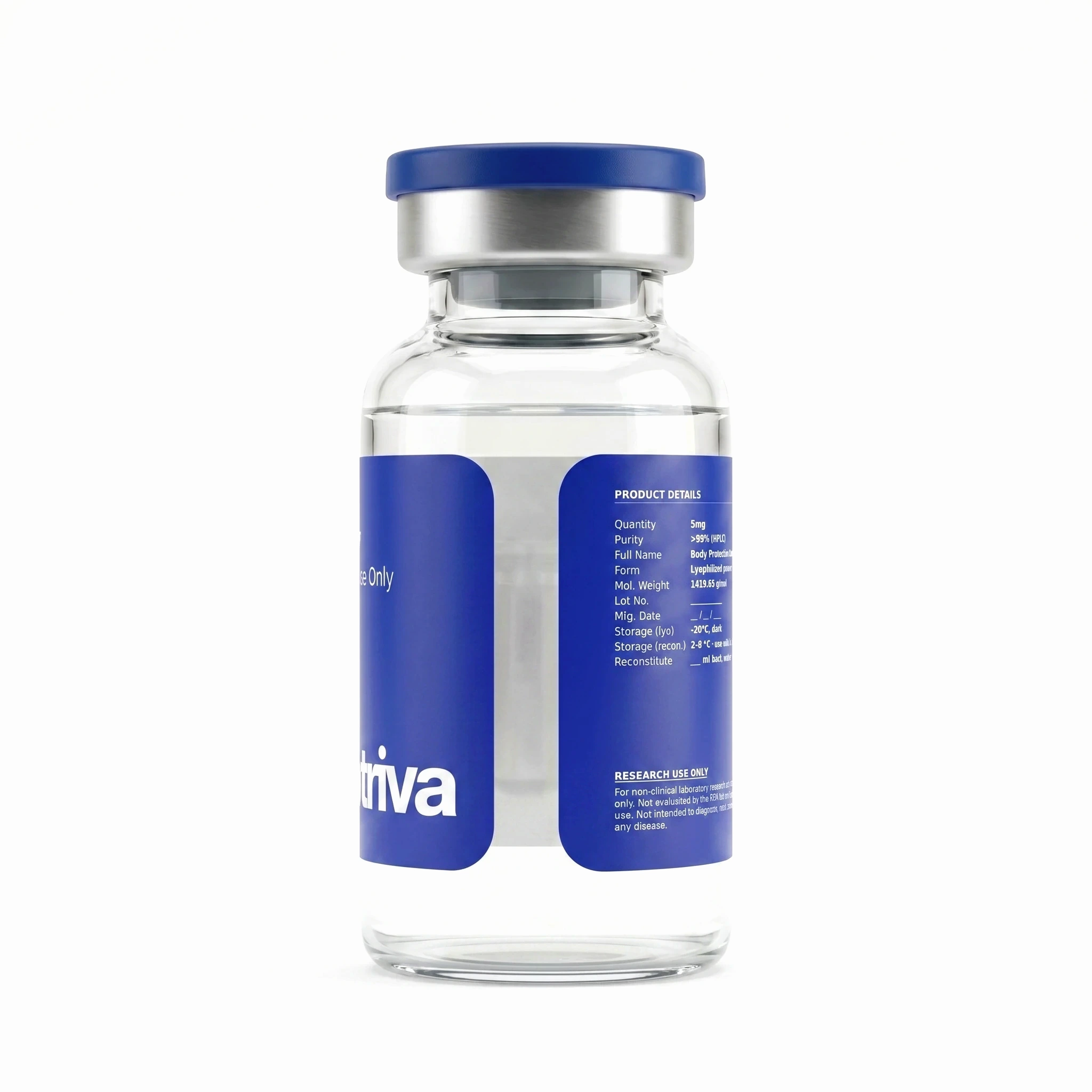
BPC-157
A representative lyophilized peptide used across the SubQ, IM, and IV research contexts referenced in this guide. Lab-verified identity and purity.
Insulin syringes vs tuberculin syringes
The two syringe families aren’t interchangeable. Here’s the difference:
- Insulin syringe (U-100): 0.3 mL, 0.5 mL, or 1 mL barrel. Fixed, short (4–8 mm), thin (29–31 gauge) needle. Calibrated in “units” (1 unit = 0.01 mL). Designed for SubQ injection of small volumes. Can’t reach muscle in typical adult body habitus.
- Tuberculin syringe: 1 mL barrel with detachable needle. Length 16–25 mm, gauge 22–25. Calibrated in milliliters. Designed for IM injection or larger-volume SubQ injection.
For most lyophilized peptide research applications, the insulin syringe is the appropriate tool. Standard reconstitution concentrations produce solution volumes in the 0.05–0.5 mL range. Insulin-syringe unit calibration provides fine-grained measurement at that scale. Tuberculin-syringe mL calibration introduces measurement error at these volumes. The exception is IM administration: the insulin syringe’s short needle cannot reach muscle, requiring a tuberculin syringe (or specialized IM syringe with a detachable longer needle).
Why injection volume matters
SubQ tissue can only absorb so much liquid per site without swelling, discomfort, and altered absorption kinetics. The practical limit studied in clinical literature is roughly 1–1.5 mL per site for the adult abdominal region, slightly less for thigh and upper arm. Volumes above this threshold have been split across multiple sites in published protocols.
This constraint drives reconstitution-concentration choices. Consider a 10 mg peptide vial: reconstituted with 2 mL of bacteriostatic water it produces a 5 mg/mL solution; reconstituted with 10 mL it produces a 1 mg/mL solution. The same mass quantity drawn at 1 mg/mL occupies five times the volume as at 5 mg/mL. Researchers select a reconstitution concentration that keeps the required volume within SubQ tissue tolerances for the mass being studied.
Concentration matters for measurement accuracy, but it also determines whether a given volume is compatible with the target tissue site.
IM tissue can accommodate larger volumes (up to 2–3 mL in the deltoid, more in larger muscle groups), but the same site-rotation principle applies. IV is volume-unconstrained at the injection level because the dose dilutes instantly into circulating blood volume.
Sterile-technique fundamentals
These details aren’t glamorous, but they’re the difference between a clean injection and an iatrogenic infection (one the procedure itself caused). Standard sterile technique in published research protocols covers the following steps.
- Hand hygiene before handling. Soap and water for at least 20 seconds, or 60%+ alcohol-based hand rub.
- Swab the vial septum. Single-use alcohol prep pad on the rubber stopper — applied to the diluent vial during reconstitution and to the reconstituted peptide vial before each withdrawal. The alcohol must be allowed to dry; the antimicrobial action occurs during evaporation, not during wet contact.
- Fresh needle for each withdrawal. Reused needles carry contamination, dull (increasing tissue trauma), and create injection-site reactions. Insulin syringes are designed as single-use.
- Purge air bubbles. Air displaces peptide solution volume, affecting measurement accuracy.
- Swab the injection site. Same single-use prep pad, same dry-before-injection rule.
- Rotate sites predictably. Repeated same-site injection causes lipohypertrophy and unpredictable absorption. Site documentation and rotation schedules are standard practice in long-term SubQ research protocols.
- Sharps disposal. Hard-sided sharps container, one-handed scoop. Not regular waste, not recapped.
The 28-day in-use window for a reconstituted multi-dose vial is defined under the assumption that sterile technique is followed on every withdrawal. Contamination of the vial septum during repeated access is the most common failure mode. The bacteriostatic agent suppresses microbial growth — it does not eliminate it.
Common technique mistakes
The procedural errors most commonly documented in research administration literature:
- Injecting through clothing. Fabric carries skin-surface flora into SubQ tissue. The purpose of site swabbing is to reduce the microbial load at the skin surface before needle entry.
- Skipping the alcohol-dry step. Wet alcohol reduces the antimicrobial effect — the bactericidal mechanism operates during evaporation, not during wet contact. Wet alcohol on the skin also stings on injection.
- Using one syringe for multiple withdrawals. Even within a single session, reusing a syringe reintroduces contamination back into the vial via backflow.
- Shaking instead of swirling during reconstitution. Foaming denatures peptide structure. Standard protocol is to add bacteriostatic water and gently swirl until clumps dissolve.
- Neglecting site rotation. Repeated injection into the same abdominal site produces lipohypertrophy — fatty thickening that alters local absorption kinetics unpredictably.
- Injecting cold reconstituted solution. Refrigerated solution straight from storage causes localized discomfort. Published protocols recommend allowing the syringe to equilibrate to room temperature for 5–10 minutes before administration.
- Reusing needles. Dulling and surface contamination accumulate with reuse. Injection-site reactions are a documented consequence.
Bacteriostatic water for injection is sterile water for injection containing 0.9% benzyl alcohol added as a bacteriostatic preservative. It is intended for use in preparing parenteral solutions and is provided in multiple-dose containers from which multiple withdrawals may be made over a period not exceeding 28 days after first use.
— USP Pharmacopeia monograph on Bacteriostatic Water for Injection — the 28-day in-use window assumes sterile technique on every withdrawal.
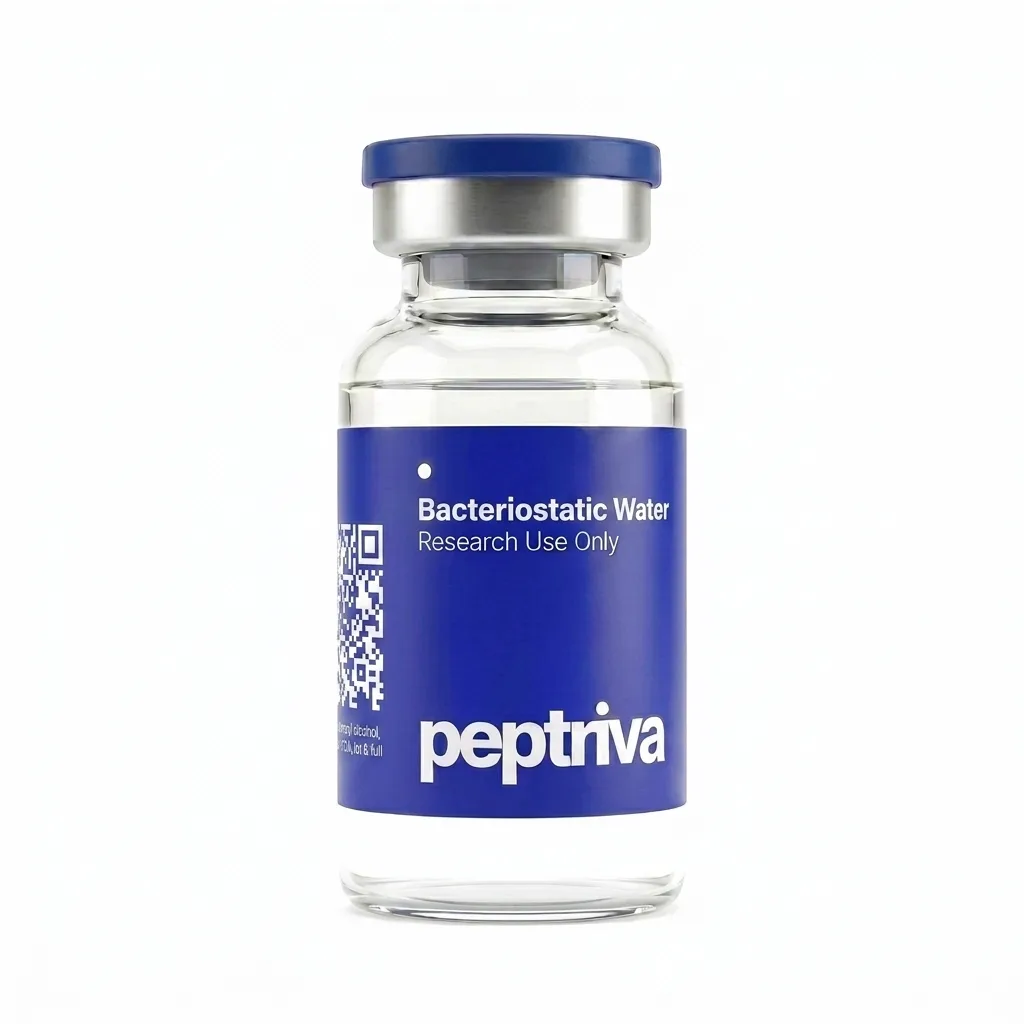
Bacteriostatic Water
Sterile water with 0.9% benzyl alcohol — the standard diluent for reconstituting lyophilized peptide vials before any SubQ, IM, or IV administration. One bottle reconstitutes multiple vials.
Choosing the right route
Route selection in published peptide research is dictated by the molecule’s design and the research question, not by convenience. Tirzepatide is studied SubQ because that’s how it was designed to work. BPC-157 has been studied across many routes (intraperitoneal, intragastric, intra-articular, intravesical, IV) depending on the injury model being investigated. Using a route that diverges from the published evidence base introduces a pharmacokinetic variable that no published trial has characterized.
Research protocols should match the route used in the primary published evidence base. When SURMOUNT data is SubQ once-weekly, the published safety and pharmacokinetic profile applies specifically to that route and schedule. IM or IV administration would produce a different Cmax and Tmax profile than what the trial data describes.
Where this falls short: The published research routes reflect what pharma companies tested for FDA approval, not necessarily the optimal route for every clinical context. For BPC-157 specifically, the human evidence is so thin (one IV n=2 safety pilot, no Phase III data) that any route extrapolation is speculative. Match the published route as a default, but recognize the evidence base for non-FDA-approved peptides is fundamentally limited.
What to know now
- Three primary routes: subcutaneous (SubQ), intramuscular (IM), and intravenous (IV) — not interchangeable.
- SubQ profile: slow absorption (1–3 hours to peak), gentle peaks, minimal technique skill, used in the vast majority of published Phase III peptide trials.
- IM profile: faster absorption (30–60 minutes), higher peaks, more anatomically constrained site selection, less common in peptide research.
- IV profile: 100% bioavailability immediately, requires venous-access skill, used in specific safety-pharmacology contexts.
- Insulin syringe (U-100): short fixed needle, thin gauge, calibrated in units (0.01 mL each) — the right tool for most SubQ research-peptide doses.
- Tuberculin syringe: 1 mL barrel, detachable longer needle — required for IM administration; coarser calibration is the trade-off.
- Sterile technique: alcohol-swab (allow to dry), fresh needle each dose, site rotation, sharps disposal — the 28-day in-use window depends on these.
What we’re watching
Three things in 2026. First, oral incretin formulations like orforglipron — if and when oral GLP-1-class peptides clear Phase III, the route-mechanics conversation shifts entirely for that class. Second, intranasal peptide research — selank and semax are administered intranasally in the Russian literature, and Western interest in non-injectable routes is increasing. Third, depot and slow-release SubQ formulations that extend dosing intervals from weekly to monthly — the next iteration of the SubQ-default design constraint.
References
- Jastreboff, A. M., Aronne, L. J., Ahmad, N. N., et al. (2022). Tirzepatide once weekly for the treatment of obesity. New England Journal of Medicine, 387(3), 205–216. https://doi.org/10.1056/NEJMoa2206038
- Frías, J. P., Davies, M. J., Rosenstock, J., et al. (2021). Tirzepatide versus semaglutide once weekly in patients with type 2 diabetes. New England Journal of Medicine, 385(6), 503–515. https://doi.org/10.1056/NEJMoa2107519
- Lee, E., & Burgess, K. (2025). Safety of intravenous infusion of BPC-157 in humans: A pilot study. Alternative Therapies in Health and Medicine, 31(5), 20–24. PMID 40131143
- Vasireddi, N., Hahamyan, H., Salata, M. J., et al. (2025). Emerging use of BPC-157 in orthopaedic sports medicine: A systematic review. HSS Journal, 21(4). https://doi.org/10.1177/15563316251355551
- United States Pharmacopeia. (2024). Bacteriostatic Water for Injection — monograph and in-use stability guidance. USP-NF. (See institutional access.) https://doi.org/10.4135/9781412963855.n1200
- Centers for Disease Control and Prevention. (2024). Injection safety: One Needle. One Syringe. Only One Time. CDC Safe Injection Practices. cdc.gov/injectionsafety