Peptides are short chains of amino acids. Same building blocks as proteins, just shorter. That one-line definition hides almost everything interesting about the category. If you’ve seen the word on skincare, in a fitness forum, and in a weight-loss-drug news story, all three contexts are technically correct. They’re also describing completely different molecules.
A peptide is a short chain of amino acids (small molecules that link together like beads on a string). The standard cut-off between “peptide” and “protein” is around 50 amino acids. Anything shorter is a peptide. The line is fuzzy. Your body makes thousands of peptides naturally. The pharmaceutical industry has approved more than 100 peptide drugs. And a much bigger informal category called “research peptides” sits entirely outside FDA approval. Any peptide article you read makes more sense if you remember those three buckets.
Most people first see the word “peptide” on a skincare label, in a fitness forum, or in a news story about weight-loss drugs. Those three contexts point at very different molecules. The copper tripeptide in your face cream is 3 amino acids long. BPC-157, the connective-tissue research peptide, is 15. Tirzepatide, the obesity drug behind Mounjaro and Zepbound, is 39 residues with a fatty tail attached. All three are “peptides” in the textbook sense. That’s why the word gets abused on so many marketing pages.
The chemistry, in one paragraph
An amino acid is a small molecule. It has a central carbon atom with two reactive ends: an amine group on one side, an acid group on the other. Your body uses 20 standard amino acids. When two amino acids meet, the amine of one bonds to the acid of the other. A water molecule pops off. A peptide bond forms. Chain a bunch of those bonds together and you get a peptide.
The sequence determines the shape. The shape determines what receptors the molecule binds. The receptors determine what it does. That’s the whole molecular story. The complexity comes from how that sequence-to-function map plays out in real tissue. Working that part out for any new candidate takes decades of trials.
Peptides represent a unique class of pharmaceutical compounds, molecularly poised between small molecules and proteins, yet biochemically and therapeutically distinct from both.
— Muttenthaler et al., Nature Reviews Drug Discovery, 2021
Where peptides come from
The peptides moving through your body right now come from three places. Your cells chop longer proteins into shorter peptide fragments. Your ribosomes (the cell’s protein factories) make short signaling peptides directly. And specialized enzymes assemble a few peptides outside the ribosome system entirely.
Examples you’ve heard of: oxytocin (made in the brain’s hypothalamus). Insulin (technically a 51-residue protein, but usually grouped with peptides; made in pancreatic beta-cells). Glucagon, vasopressin, ghrelin, ACTH, beta-endorphin, GLP-1, somatostatin. All peptides. All made by your body in tiny quantities to send signals between cells.
Manufactured peptides come from two main routes. Solid-phase peptide synthesis (SPPS) builds the peptide one amino acid at a time on a tiny plastic bead. Bruce Merrifield invented it at Rockefeller in 1963 and won the Nobel Prize for it in 1984. It’s the standard route for everything under about 50 residues. Recombinant expression engineers bacteria or yeast to grow longer peptides and proteins from a DNA blueprint. It’s how insulin has been made commercially since the early 1980s.
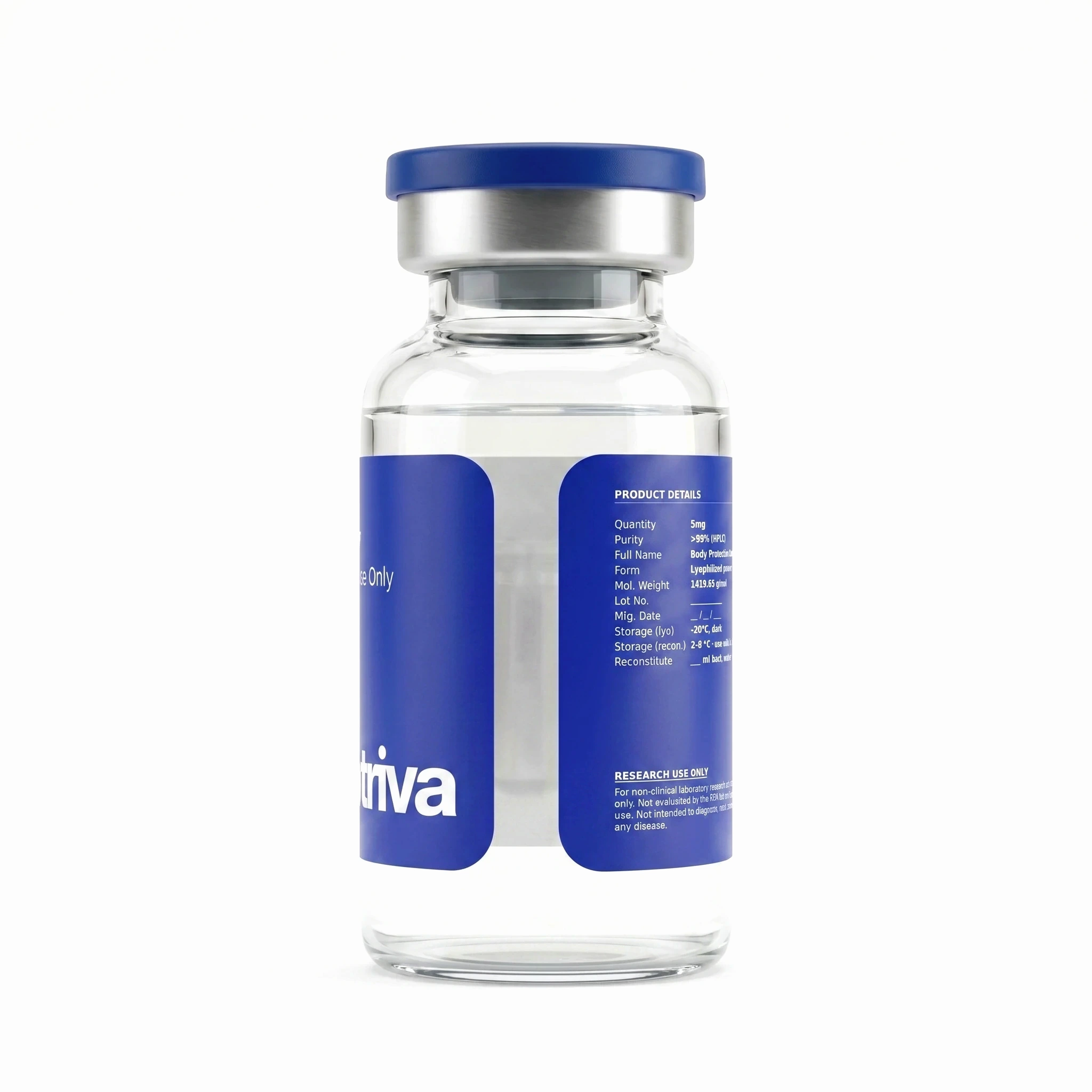
BPC-157
A representative research peptide. 15 amino acids, derived from a protective protein in human gastric juice. Lab-verified identity and purity.
Three categories of peptide, three different worlds
If you remember nothing else from this article, remember that “peptides” isn’t one category. It’s three. The difference matters more than any other detail.
FDA-approved peptide drugs. These are the most evidence-anchored class. Insulin, semaglutide (Ozempic and Wegovy), tirzepatide (Mounjaro and Zepbound), liraglutide (Saxenda), tesamorelin (Egrifta), octreotide, leuprolide, glucagon, oxytocin, and around 90 others have cleared full FDA review. That means randomized controlled trials, careful absorption and clearance studies, and post-market safety monitoring. The 2021 Nature Reviews Drug Discovery review counted about 80 approved peptide drugs as of that year, with roughly 170 more in clinical development. These are real drugs with real efficacy data and known side effects.
Compounded peptides. These come from licensed compounding pharmacies under FDA Section 503A or 503B. Tesamorelin and semaglutide have both been compounded heavily during shortages. Compounded products skip the full new-drug approval process but operate under pharmacy regulation. Which peptides qualify shifts year to year. The FDA moved BPC-157 onto Category 2 in 2023, which means insufficient evidence to allow compounding.
Research peptides. The largest and noisiest category. Made for laboratory and preclinical use. Sold legally for in-vitro research only. Explicitly not for human use. Most peptides discussed on fitness forums sit here: BPC-157, TB-500, GHK-Cu, KPV, MOTS-c, epithalon, ipamorelin, CJC-1295, and various nootropic peptides. Some have substantial preclinical literature. Some have almost none. None have passed full FDA review.
Why this distinction matters. When a headline says “a study showed peptides do X,” the right follow-up is always “which peptide, and in what model?” A Phase III trial in 2,500 humans is a completely different kind of evidence than one rodent study. The word “peptide” alone tells you almost nothing about the strength of any specific claim.
What peptides do at the cellular level
Most peptides act as signaling molecules. They bind to receptors on the outside of cells (or, for some small ones, slip inside and bind internal targets) and trigger a chain reaction. Examples: GLP-1 peptides bind the GLP-1 receptor in your pancreas and brain. That slows your stomach emptying and triggers insulin release. Oxytocin binds OXTR receptors on smooth muscle and in your brain. Growth-hormone-releasing peptides (GHRPs) bind the ghrelin receptor in your pituitary and tune growth-hormone release.
Peptides became attractive as drugs for two reasons. They’re more specific than small-molecule pills (so fewer off-target side effects) and easier to manufacture than antibody biologics. The downside: enzymes in your gut and bloodstream chew them up fast. That’s why most peptide drugs are injected. Modern peptide design works around this. Tricks like D-amino-acid substitutions, ring-closing the molecule, capping the front end, attaching a fatty chain, or attaching a polymer all make the molecule harder for enzymes to break down.
The category caveats no one mentions
It’d be easier to write a clean sales-friendly article that skips the inconvenient parts. We’re not going to. Three things worth knowing before you read another peptide article:
- “Peptide” on a label isn’t a regulatory claim. Cosmetics, supplements, and research compounds all use the word. It’s not regulated like “USDA Organic” or “FDA-approved.” The word alone implies zero clinical evidence.
- Most marketed peptides aren’t FDA-approved drugs. The ones you see in fitness and longevity circles (BPC-157, TB-500, MOTS-c, epithalon, the GHRPs) are research compounds. Preclinical evidence varies. BPC-157 has dozens of rodent studies. Others have a handful. Treat them accordingly.
- Manufacturing matters as much as the molecule. Two vials labeled “BPC-157” from different sources can have very different purity, identity, contamination, and salt content. The only real check is the Certificate of Analysis (CoA), a per-batch lab report. That’s the part of peptide buying that doesn’t get talked about enough.
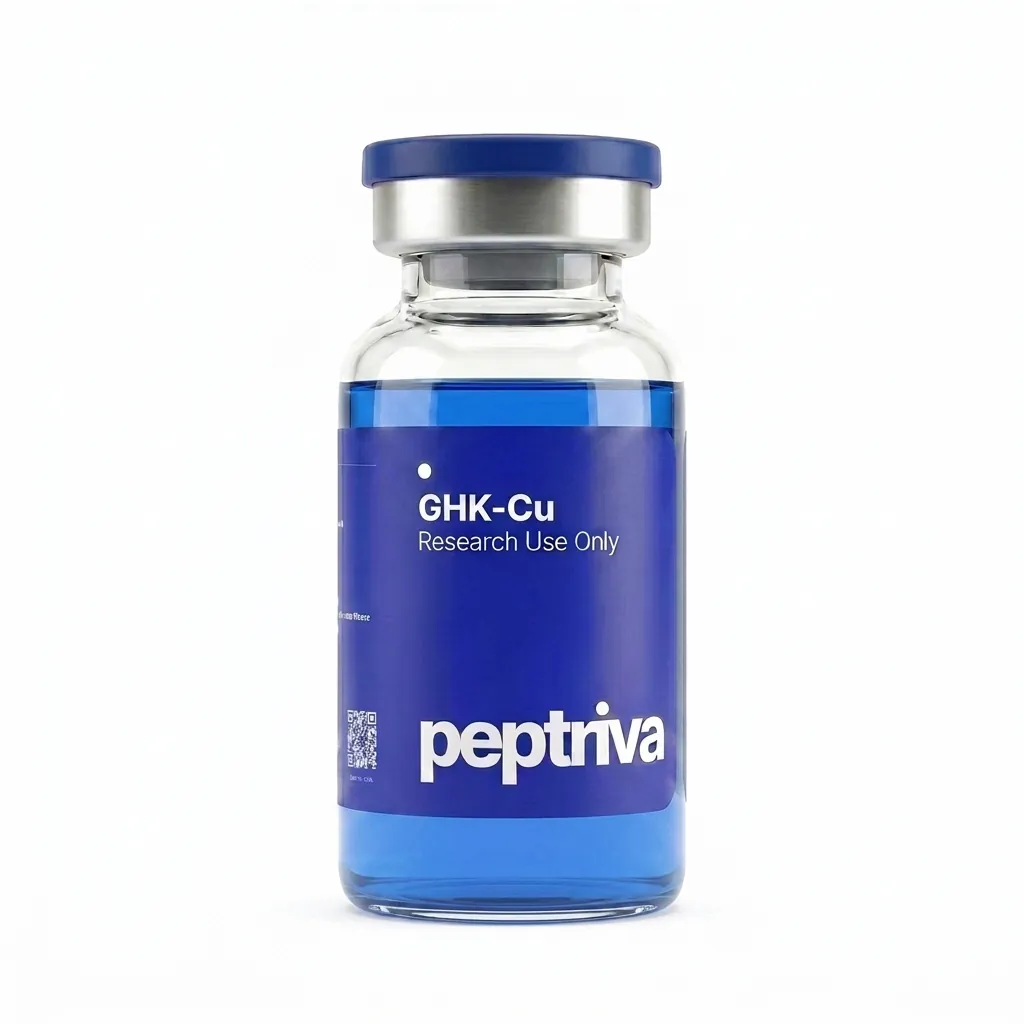
GHK-Cu
Copper-binding tripeptide · Gly-His-Lys, blue lyophilized powder. A widely studied research peptide with a third-party COA shipped per lot.
What “research use only” means in practice
Almost every peptide vial sold outside a prescription pharmacy is labeled “for laboratory research only. Not for human or veterinary use.” That phrase isn’t marketing fluff. It’s the regulatory line that separates a research chemical from a drug. Research-use peptides are made under chemistry standards appropriate for lab work, not under the cGMP rules that govern pharmaceutical drugs. Identity and purity should still be verified by independent labs. But the legal product is a research reagent, not a medicine.
That regulatory framing is the boundary research-peptide vendors operate inside. It’s why every page on this site (including this one) carries the “research use only” banner at the top. It’s not a disclaimer hedge. It’s the category definition.
Questions worth asking before you buy
If you’re considering a research peptide for lab work, the questions are mostly practical. Most of them are about the supplier, not the peptide.
- What’s the purity? HPLC-verified purity should be at least 95%. Most reputable suppliers test to 98% or 99%.
- Is there a Certificate of Analysis (CoA) for every lot? A CoA documents identity (usually confirmed by mass spec), HPLC purity, and water content for that specific batch. No CoA, no confidence.
- What’s the storage protocol? Most lyophilized peptides need −20°C for the powder and 2 to 8°C for reconstituted solutions, with a roughly 30-day use window. Suppliers who can’t answer this haven’t thought about stability.
- Where is it manufactured? Country of synthesis, lab credentials, and whether the testing lab is ISO 17025 accredited are basic chain-of-custody questions.
- What’s the regulatory status? FDA-approved? Compounded? Research-only? On a sports prohibited list? These categories don’t overlap cleanly and matter for whoever you’re working with.
What to know now
- Definition: a peptide is a chain of amino acids linked by peptide bonds, typically up to ~50 residues. Beyond that, biochemists call it a protein.
- Three categories: FDA-approved peptide drugs (~100+), compounded peptides (under 503A/503B rules), and research peptides (in-vitro only). They share a word but not regulatory status.
- Mechanism: mostly receptor-binding signalling molecules. More specific than small-molecule drugs, easier to make than antibodies.
- Manufacture: solid-phase peptide synthesis (SPPS) for short and mid-length peptides; recombinant expression for longer ones like insulin.
- What “peptide” on a label tells you: very little on its own. The relevant question is always which peptide, at what dose, and with what evidence.
- Buyer’s checklist: purity, CoA per lot, storage protocol, and clear regulatory framing — in that order.
What we’re watching
Two things to track over the next two years. First, the FDA’s ongoing classification work on bulk compounding substances — several peptides have shifted between Category 1, 2, and 3 over the past three years, and those moves change which compounded peptides are legally available. Second, the broader regulatory framing of research-use compounds at the state level — some states have started restricting peptide sales beyond federal rules, and that pattern is likely to spread before it stabilises.
References
- Muttenthaler, M., King, G. F., Adams, D. J., & Alewood, P. F. (2021). Trends in peptide drug discovery. Nature Reviews Drug Discovery, 20(4), 309–325. https://doi.org/10.1038/s41573-020-00135-8
- Merrifield, R. B. (1963). Solid phase peptide synthesis. I. The synthesis of a tetrapeptide. Journal of the American Chemical Society, 85(14), 2149–2154. https://doi.org/10.1021/ja00897a025
- U.S. Food and Drug Administration. (2023). Bulk drug substances nominated for use in compounding under section 503A of the Federal Food, Drug, and Cosmetic Act. FDA.gov. FDA bulk substances list
- Fosgerau, K., & Hoffmann, T. (2015). Peptide therapeutics: Current status and future directions. Drug Discovery Today, 20(1), 122–128. https://doi.org/10.1016/j.drudis.2014.10.003