How peptides work comes down to two things. First, they bind to specific docking sites on cells. Second, the body breaks them down fast. Once you understand those two, almost everything else makes sense. Why peptides are injected instead of swallowed. Why administration frequency in clinical studies is tightly constrained by half-life. Why drug designers attach fatty chains to make the molecule last. Here’s the picture.
Most peptides are signaling molecules. They bind specific docking sites on the outside of cells (usually a protein family called GPCRs) and kick off a chain reaction inside. Your digestive enzymes chop up most swallowed peptides within 2 minutes. That’s why almost all peptide drugs are injected, why their effects fade in minutes to hours without help, and why every modern peptide drug uses some chemical trick to last longer. About 75% of all drug targets are GPCRs.
Here’s the textbook version. A cell releases a peptide into your bloodstream. The peptide drifts until it bumps into a docking site on a target cell. It binds. The dock flexes. That flex passes the signal through the cell wall to the inside. Within seconds to minutes, the target cell changes what it’s doing. It might release a hormone, divide, die, contract, move, or shift how it uses energy.
Receptor binding: the “lock and key” that’s mostly true
The classic model: a peptide fits its target like a key fits a lock. Specific enough that only the right peptide unlocks the right cellular response. Mostly right, slightly oversimplified. Modern structural biology shows that docking sites are flexible. One site can flex into several active shapes. Different peptides binding the same site can push the signal in different directions. The literature calls this “biased” signaling. It’s why two peptides hitting the same target can produce different effects.
The protein family that matters most for peptide drugs is called GPCRs. These are docking proteins that weave through the cell wall seven times. When activated, they grab onto helpers inside the cell that kick off chain reactions using messengers like cyclic AMP or calcium. Insulin uses a different system. But most peptide drugs you see in the news (Ozempic, growth-hormone peptides, the Vyleesi sexual-function drug, vasopressin copies) all target GPCRs.
Peptides typically have higher target specificity than small molecules, lower off-target activity, and a better safety profile. The trade-off is shorter half-life and almost always parenteral administration.
— Fosgerau & Hoffmann, Drug Discovery Today, 2015
The clearance problem
Your body is built to break down peptides quickly. That’s a feature, not a bug. You don’t want an insulin signal to last all day. You want it to spike and clear. The same enzymes that recycle the peptides your body makes will happily destroy any drug peptide too. Stomach acid and pepsin in the stomach. Enzymes in your small intestine. Two enzymes in your blood called DPP-4 and neprilysin. Together they explain why almost no peptide drug works as a pill.
The numbers are striking. The natural GLP-1 hormone lasts about 2 minutes in your bloodstream. DPP-4 chops it apart almost as fast as your body makes it. Oxytocin lasts 3 to 5 minutes. Natural growth-hormone-releasing hormone lasts about 7 minutes. None of these would work as a drug without stabilization. You’d be dosing every hour.
This is the engineering problem modern peptide drugs solve. Semaglutide stretches the natural 2-minute lifetime to about 7 days. Three tricks combine to do it. A swapped amino acid blocks DPP-4 from chopping it. A fatty chain ties the molecule to a blood protein called albumin. A linker keeps the whole thing circulating. The trick isn’t building a better signal. Natural GLP-1 is already perfect. The trick is keeping it around long enough to be useful.
Stabilizing tricks, in plain English
Five modifications show up over and over in peptide drug design. Once you know them, peptide news stories are much easier to parse:
- Mirror-image swap. Your body’s amino acids come in one specific 3D orientation. Your enzymes only recognize that orientation. Swap a key amino acid for its mirror image and the enzyme can’t grip it. Used in DSIP, PT-141, and most growth-hormone peptides.
- Front-end cap. Adding a small chemical group (called an acetyl) to the front of the peptide blocks enzymes that would otherwise nibble from that end. Standard on Semax and Selank.
- Closing the ring. Linking the head and tail of a linear peptide locks the molecule into a stable loop with no free ends for enzymes to attack. Octreotide and PT-141 use this.
- Fatty-chain attachment. Attaching a fatty acid lets the peptide ride along on a blood protein called albumin. The peptide that would clear in minutes now lasts days. Liraglutide, semaglutide, and tirzepatide all use this trick.
- Polymer wrap. Wrapping the peptide in polyethylene glycol (PEG) chains shields it from enzymes and makes the molecule larger, which slows how fast your kidneys filter it out. Used in pegfilgrastim and some other biologics.
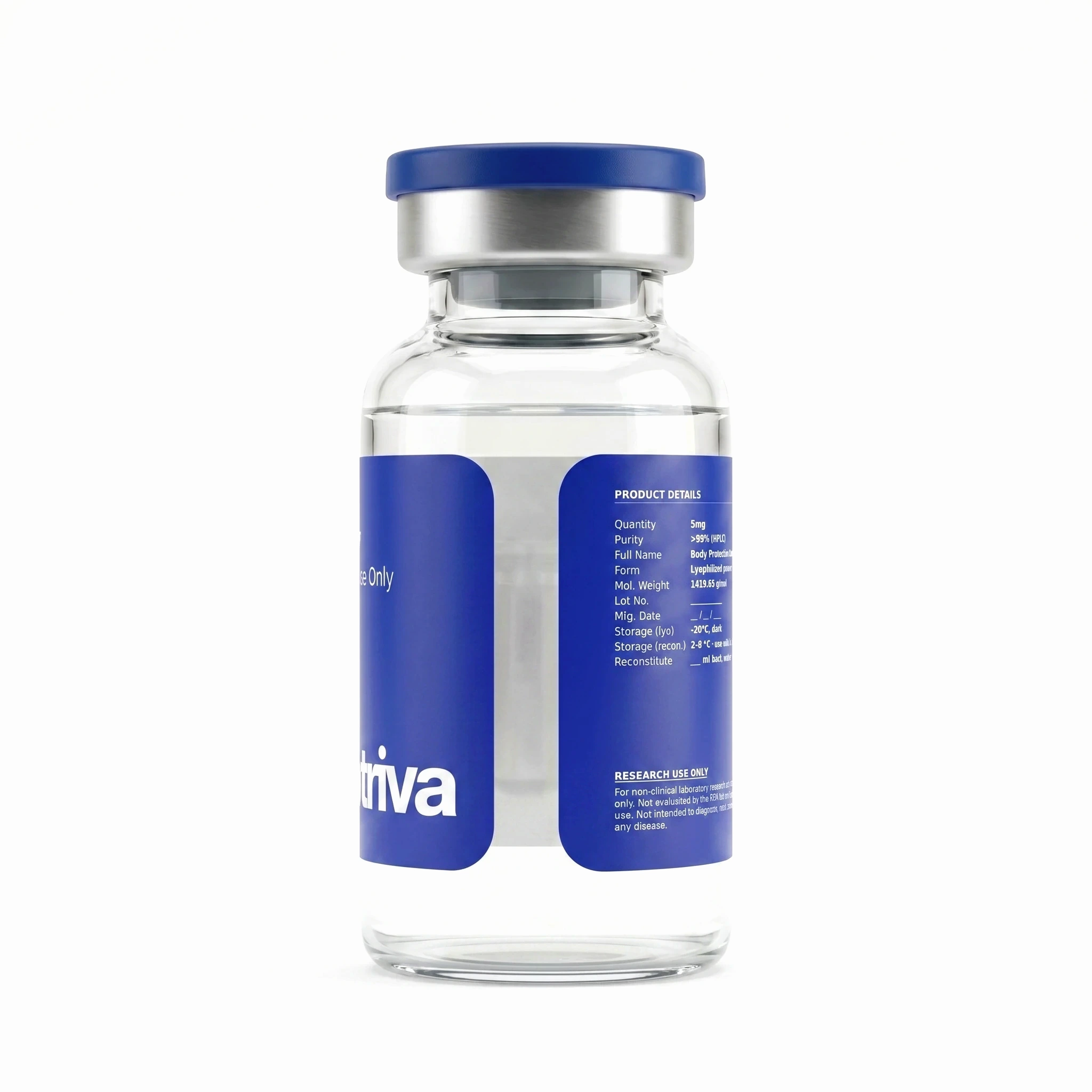
BPC-157
A pleiotropic research peptide — multiple proposed mechanisms (VEGFR2, ERK1/2, fibroblast recruitment) rather than a single receptor target. Research-grade reference compound, COA per lot.
Why almost every peptide drug is injected
Your gut is the most hostile environment in your body for a peptide. Stomach acid unfolds it. Pepsin chops it apart. What survives into your intestine gets further dismantled by trypsin, chymotrypsin, and other enzymes. Even if a fragment survived all that, peptides are too big and too water-loving to cross the intestinal wall efficiently. The result: most swallowed peptides reach your bloodstream at essentially zero concentration.
This is why subcutaneous injection (just under the skin) is the standard delivery route. The peptide gets deposited under your skin, where capillaries absorb it over minutes to hours. Intramuscular and IV routes get used less often. A few oral peptide drugs exist. Rybelsus is oral semaglutide. Oral octreotide and oral cyclosporine also work. Each one needs elaborate formulation tricks (permeation enhancers like SNAC, lipid-based delivery) just to push oral absorption from essentially zero up to roughly 1 to 2%. That tiny fraction works if the daily dose is high enough. But the engineering cost is real.
Nasal sprays, under-the-tongue, and inside-the-cheek delivery can work for very small peptides. Oxytocin, DSIP, Semax, and Selank are all delivered nasally in some protocols. Short peptides can cross the highly vascular nasal lining straight into the bloodstream. Past about 10 residues, nasal delivery stops working well. Topical creams work for cosmetics (GHK-Cu, palmitoyl pentapeptides) but don’t deliver meaningful concentrations to the rest of the body.
Pharmacokinetics in one sentence. Every peptide drug has to survive long enough to bind its receptor. Once you remember that, every design choice falls out of it. Why peptides are injected. Why fatty chains get attached. Why D-amino acids get swapped in. Why molecules get looped into rings.
Peptides that don’t fit the GPCR story
Not every peptide is a classic receptor activator. A few work differently:
Cell-penetrating peptides. KPV is the example. These are short and oily enough to slip through the cell membrane directly and act on targets inside the cell, often nuclear-receptor or gene-expression signaling. The compactness is the point.
Mitochondria-targeting peptides. SS-31 (elamipretide) is the textbook case. These concentrate inside mitochondria (the cell’s power plants) and stabilize a key lipid called cardiolipin. They’re not receptor activators at all. They’re structural helpers.
Multi-pathway peptides. BPC-157 is the most-discussed example. These appear to work through several downstream pathways (a blood-vessel-growth receptor, a growth-signal cascade, nitric-oxide production, connective-tissue cell recruitment) without one single confirmed target. The preclinical signal is real. The exact mechanism isn’t locked down. That ambiguity is part of why BPC-157 is hard to classify next to cleaner one-target drugs.
Antimicrobial peptides. Cathelicidins and defensins disrupt bacterial membranes directly. The mechanism is physical, not signaling.
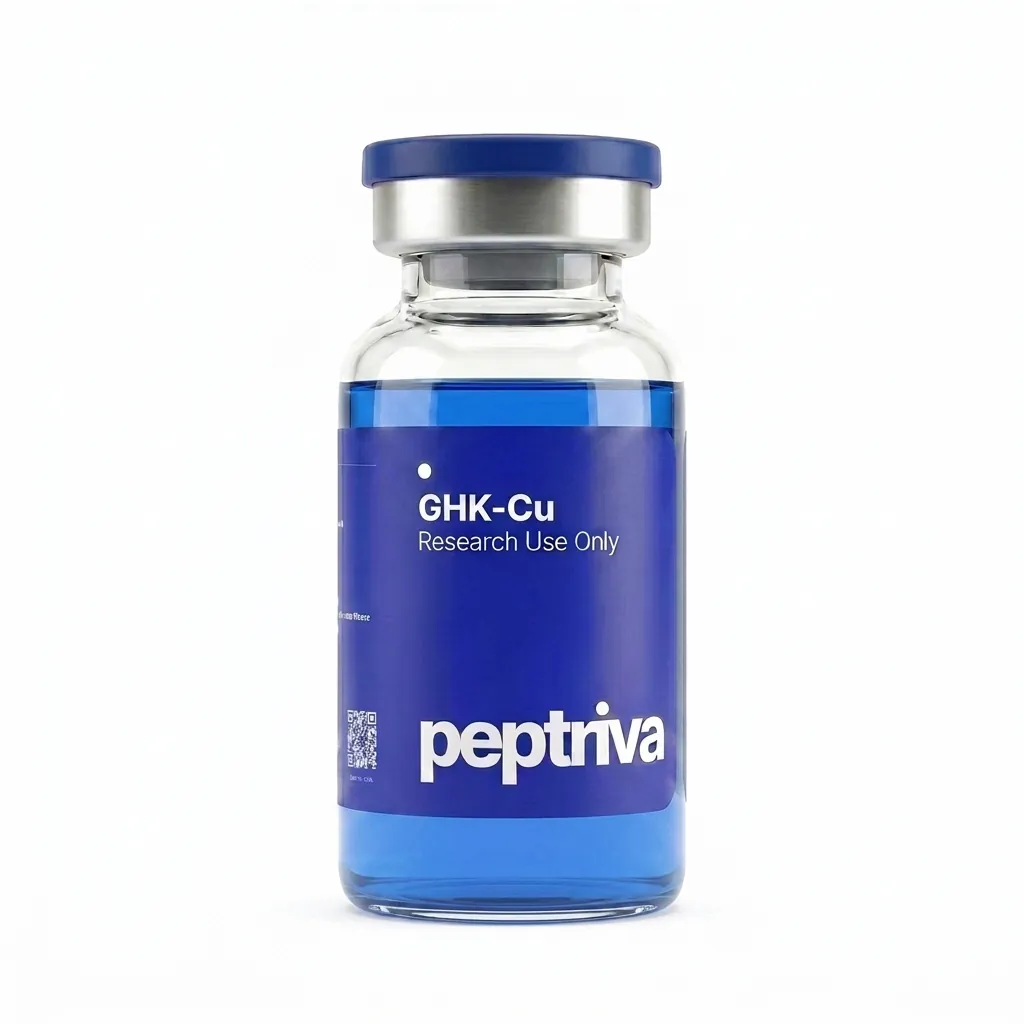
GHK-Cu
Copper-binding tripeptide · Gly-His-Lys, blue lyophilized powder. A pleiotropic research peptide widely studied in preclinical mechanism work. Research-grade reference compound, COA per lot.
Why specificity is the headline feature
Small-molecule drugs (the kind you find in most prescription pills) often bump into receptors they weren’t meant to hit at the doses needed to work. That’s where most side effects come from. Peptides, by contrast, are usually big enough that they only fit the receptor they evolved or were designed to bind. That high specificity is the headline advantage of the whole peptide drug class.
The flip side: peptides make bad pills, cost more to manufacture than small molecules, and are harder to formulate. Modern peptide drug development (the GLP-1 boom is the prime example) has solved enough of those problems that the class is now a dominant area of new drug approvals. More than 30 new peptide drugs got FDA approval between 2015 and 2024. That’s the highest pace in the class’s history.
Questions worth asking
If you’re trying to evaluate a peptide claim, these are the questions that matter:
- What target does it bind? A defined target tells you the mechanism is well-characterized. Peptides without a confirmed target (BPC-157 is the obvious case) can still work. They just sit at an earlier stage of understanding.
- How fast does the body clear it? This sets the dosing schedule and tells you whether the molecule needs a stabilization trick.
- How is it given? Oral peptides are rare. If a product page claims an oral form, look for the absorption-enhancer technology and the data.
- Acute or chronic effect? Some peptides (Ozempic, growth-hormone peptides) need long-term dosing for effects to show up. Others (oxytocin, bremelanotide) work in minutes.
- What evidence model? Test-tube binding is the weakest evidence. Rodent results are stronger. Human Phase III data is the strongest. Most research peptides sit between test-tube and rodent.
Where this story falls short. The clean GPCR-binding model fits about 75% of marketed peptide drugs. It doesn’t fit BPC-157, SS-31, TB-500, or several of the most-discussed research peptides. For those, the literature still calls the mechanism “proposed” or “multi-pathway,” which is a polite way of saying nobody’s nailed it down yet. That ambiguity is real, and it shapes how cautiously you should read efficacy claims for those compounds.
What to know now
- Mechanism: most peptides bind cell-surface receptors (often GPCRs) and trigger downstream signalling cascades. A few act intracellularly, structurally, or antimicrobially.
- Half-life: native peptides are degraded by proteases within minutes. Therapeutic peptides use D-amino-acid substitution, acetylation, cyclisation, or lipidation to extend half-life.
- Route: nearly all peptide drugs are injected. Oral bioavailability is typically near zero without elaborate formulation tricks.
- Specificity: high target specificity is the headline pharmacological advantage of peptides relative to small-molecule drugs.
- Caveat: not every peptide has a clean receptor story. Pleiotropic peptides (BPC-157) show preclinical signal across multiple pathways without a single confirmed receptor — interesting, but harder to characterise pharmacologically.
What we’re watching
Two themes worth tracking. First, oral peptide delivery: SNAC-formulated oral semaglutide proved the route is possible, and several Phase II oral GLP-1 candidates are now in human trials. If oral bioavailability for peptides climbs from ~1% to 5–10%, the whole class’s reach expands. Second, biased agonism: the idea that one receptor can produce different therapeutic profiles depending on which downstream pathway gets activated. This is changing how next-generation GLP-1 agonists, melanocortin agonists, and opioid analogs are designed.
References
- Fosgerau, K., & Hoffmann, T. (2015). Peptide therapeutics: Current status and future directions. Drug Discovery Today, 20(1), 122–128. https://doi.org/10.1016/j.drudis.2014.10.003
- Muttenthaler, M., King, G. F., Adams, D. J., & Alewood, P. F. (2021). Trends in peptide drug discovery. Nature Reviews Drug Discovery, 20(4), 309–325. https://doi.org/10.1038/s41573-020-00135-8
- Lau, J. L., & Dunn, M. K. (2018). Therapeutic peptides: Historical perspectives, current development trends, and future directions. Bioorganic & Medicinal Chemistry, 26(10), 2700–2707. https://doi.org/10.1016/j.bmc.2017.06.052
- Knudsen, L. B., & Lau, J. (2019). The discovery and development of liraglutide and semaglutide. Frontiers in Endocrinology, 10, 155. https://doi.org/10.3389/fendo.2019.00155