The phrase “research grade” gets used like everyone knows what it means. It doesn’t have a single regulatory definition. It’s a working standard the field has converged on over the past two decades. Research-grade peptides are defined by the intersection of 6 things. A documented purity number. A confirmed identity. A third-party verification trail. A specific physical form. Quantification of what’s actually in the vial. And a regulatory label that frames what the material is for. Anything calling itself “research grade” without all six is using the term loosely.
Research-grade peptides are synthetic peptides produced for laboratory work. They’re defined by a 6-element standard. HPLC purity ≥98% with chromatogram. Mass-spec identity confirmation. Karl Fischer water content, typically 2–8%. Lyophilized presentation sealed under inert atmosphere. A third-party CoA from an ISO/IEC 17025 lab. And the regulatory label “For laboratory research use only.” The chemical molecule can be identical to a pharmaceutical-grade equivalent. What changes is the documentation chain, manufacturing controls, and intended use.
Quick answer: 6 criteria in combination. HPLC purity ≥98%. Mass-spec identity. Karl Fischer water content. Lyophilized presentation. Third-party ISO 17025 CoA. And Research Use Only labeling. The chemical molecule is often identical to its pharmaceutical-grade counterpart. What differs is the documentation chain, regulatory framework, and intended use. Anything labeled “research grade” without all six is using the term aspirationally.
A semaglutide vial from a pharmacy has been through Phase I to III trials, FDA approval, and cGMP manufacturing. The same molecule from a research-grade supplier is produced under analytical-chemistry-grade controls, verified by HPLC and mass spec, and labeled “Research Use Only.” The same molecule from a grey-market source might be either, or neither. The chemistry doesn’t change. The evidentiary chain does.
The six elements that define research-grade
The standard isn’t codified in a single document the way ICH Q3A defines pharmaceutical-grade impurity reporting. It’s a convergent practice across reputable suppliers, ISO 17025 laboratories, and the published analytical literature. 6 elements show up consistently.
1. HPLC purity with the chromatogram shown
Reverse-phase HPLC separates a peptide from its impurities at the detection wavelength. That’s typically 214 nm, where the peptide bond absorbs strongly. The 2026 working floor is ≥98%, and ≥99% is increasingly the norm at reputable suppliers (Verlander, 2007). The chromatogram is what separates a credible claim from a marketing claim. Real traces yield two-decimal precision like 99.18%, and they show every peak above the integration threshold. Full mechanics in our HPLC explainer.
2. Mass-spectrometry identity confirmation
HPLC tells you how much of one substance is in the vial. Mass spec tells you which. The standard methods are ESI-MS or MALDI-TOF, with observed mass matching theoretical within 0.5 Da. USP General Chapter 1503 frames this pair as the floor for peptide identity. A CoA without mass spec tells you the purity of something, not what that something is.
3. Water content by Karl Fischer titration
Lyophilized peptides contain residual water that freeze-drying didn’t fully remove. Karl Fischer titration quantifies it. Most come in at 2–8%. A vial labeled “10 mg” with 8% water and 6% counterion contains roughly 8.6 mg of actual peptide. Without this number, experimental quantity calculations are approximate.
4. Lyophilized presentation under inert atmosphere
Research-grade peptides ship as lyophilized powders in glass vials sealed with butyl rubber stopper and aluminum crimp. Without water, hydrolytic degradation is effectively zero. At −20°C a lyophilized peptide is stable for years (Wang, 1999; Manning et al., 2010). Ideally the vial is sealed under nitrogen or argon to prevent oxidation of methionine, cysteine, and tryptophan. Pre-reconstituted solutions without cold chain are not research-grade. See our storage guide.
5. Third-party CoA from an ISO/IEC 17025 lab
This is the documentation element that ties everything else together. The CoA lists lot number, HPLC purity with chromatogram, mass-spec identity, water content, counterion, and ideally endotoxin. A lab signs it under ISO/IEC 17025:2017 accreditation. You can verify the lab through the national accreditation body, such as A2LA, ANAB, or UKAS. A manufacturer-internal CoA is a starting point, not a substitute. See our ISO 17025 explainer and CoA guide.
6. The Research Use Only regulatory label
“For laboratory research use only. Not for human or veterinary use.” That’s not a disclaimer. It’s a regulatory category. Under 21 U.S.C. 321(g)(1), a product is a “drug” partly by intended use. Products labeled exclusively for laboratory research aren’t drugs under that definition. The FDA codified the principle in its 2013 guidance on RUO labeling for in-vitro diagnostics. The same logic extends to research-grade chemicals and peptides. Full framing in our RUO explainer.
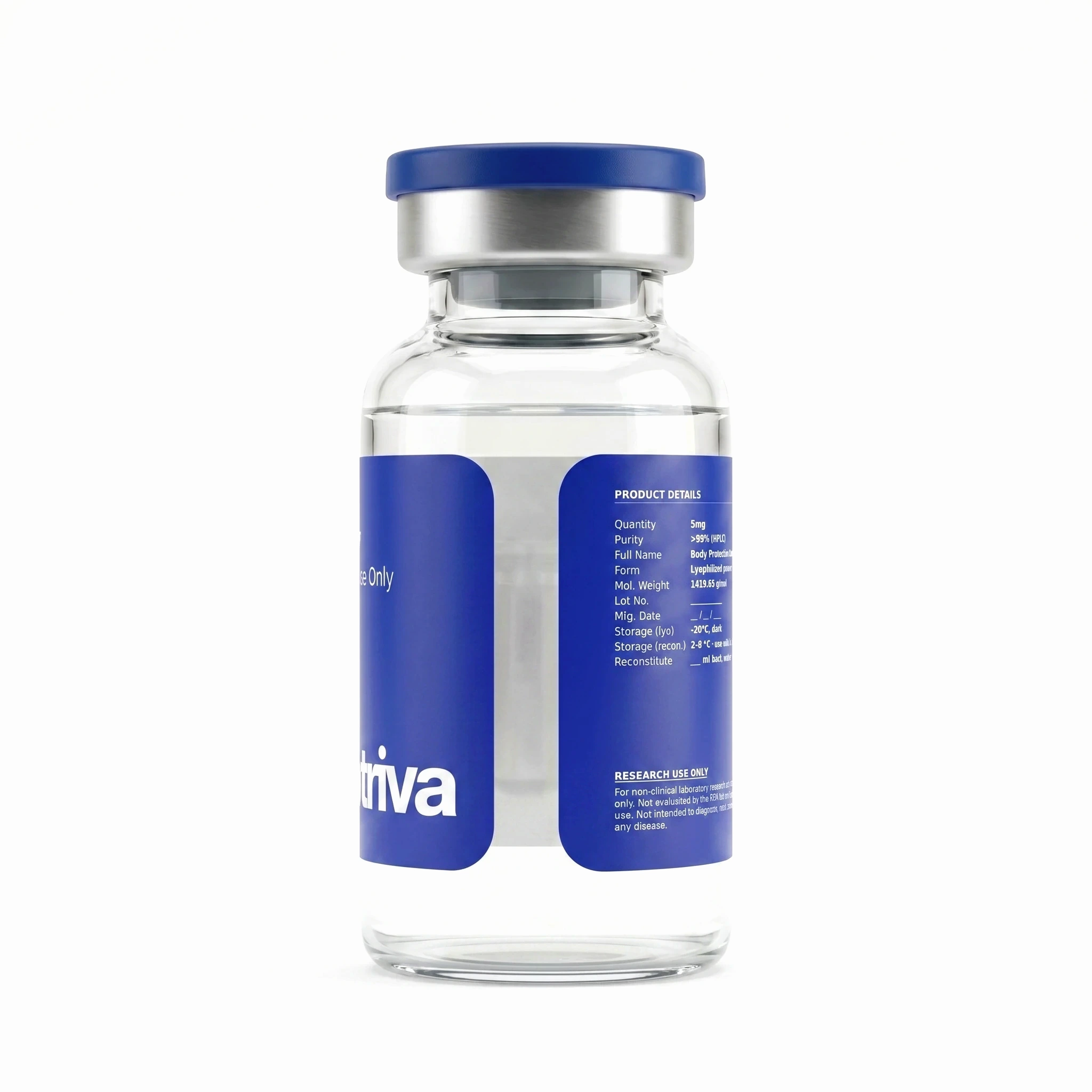
BPC-157
The reference compound used across our research-grade documentation example — every claim about HPLC purity, mass-spec identity, and third-party verification applies to every lot we ship. Lab-verified identity, ≥99% HPLC purity, ISO 17025 third-party CoA on every lot.
Research-grade vs pharmaceutical-grade — what actually differs
The common misconception is that “grade” refers to the chemistry. It mostly doesn’t. The same molecule, with the same sequence, same mass, and same purity, can be manufactured under either standard. What changes is the documentation chain.
Pharmaceutical-grade peptides are produced under current Good Manufacturing Practice (cGMP), codified at 21 CFR Part 210 and Part 211. That covers environmental monitoring, validated cleaning, batch genealogy, change control, and periodic FDA inspections. Impurity characterization follows the ICH Q3A(R2) framework. Every impurity above 0.1% by mass gets identified, with qualification studies above threshold. A regulatory authority approves the peptide, and licensed pharmacies dispense it. Examples: semaglutide (Ozempic, Wegovy), tirzepatide (Mounjaro, Zepbound), tesamorelin (Egrifta), and elamipretide (Forzinity, approved September 2025).
Research-grade peptides meet the analytical endpoints. ≥98% HPLC, mass-spec identity, under lighter process controls. Synthesis happens in research-chemistry facilities rather than cGMP plants. Impurity characterization stops at the area-percentage level rather than the full ICH Q3A profile. The CoA confirms identity and purity but doesn’t include batch genealogy or process validation. cGMP manufacturing can cost an order of magnitude more per gram for the same molecule. The analytical endpoint can be indistinguishable. The documentation overhead is not.
Quality attributes of therapeutic peptides include identity, content (potency), purity, and impurity profile, with each attribute verified by appropriate analytical methods. For research-grade applications, the combination of high-performance liquid chromatography for purity and mass spectrometry for identity constitutes the analytical floor.
— United States Pharmacopeia, General Chapter <1503> Quality Attributes of Therapeutic Peptides
Research-grade vs grey-market — the document trail is the difference
Below the research-grade standard sits a less-defined tier the field generally calls grey-market. The chemistry can be the same. The documentation isn’t. Grey-market doesn’t necessarily mean counterfeit. Many grey-market peptides are correctly identified and reasonably pure. The problem is that you have no way to verify any of that. 7 specific signals separate the two tiers:
- No batch-matched CoA before purchase. Research-grade suppliers email the lot CoA on request within one business day. Grey-market suppliers offer generic example CoAs, delay, or never respond.
- Internal-only testing. The CoA is signed by the manufacturer’s own lab with no third-party verification. ISO 17025 accreditation is implied but not verifiable.
- Round-number purity. HPLC purity reported as “99%” flat without a chromatogram. Real traces yield two-decimal precision.
- Missing mass-spec line. Purity reported but identity unconfirmed.
- Lot number doesn’t match the vial label. Either a clerical error or a CoA recycled across batches.
- Pre-reconstituted vials with no cold chain. Peptide sold in solution rather than lyophilized, with vague storage guidance.
- Therapeutic claims on the product page. The supplier has stepped outside the RUO framework into drug marketing.
None of these individually proves mis-labeling or impurity. Cumulatively, they indicate a documentation chain that doesn’t meet the research-grade standard. A research-grade supplier can prove its claims with a paper trail. A grey-market supplier asks you to trust the vial.
Why the integrated standard matters
Each criterion catches a failure mode the others don’t. HPLC purity without mass-spec identity can clear a sample whose dominant peak is a co-eluting impostor or degradation product. Identity confirmation without third-party verification depends on a self-interested party auditing its own work. Third-party CoA without lyophilization documents a peptide already degrading in solution. Lyophilization without quantified water content leaves your dosing approximate.
All 5 analytical elements without the RUO label creates legal ambiguity. A peptide without RUO framing is implicitly marketed as something else. That triggers FDA drug-approval requirements the supplier hasn’t satisfied. The combination is what makes the documentation chain trustworthy.
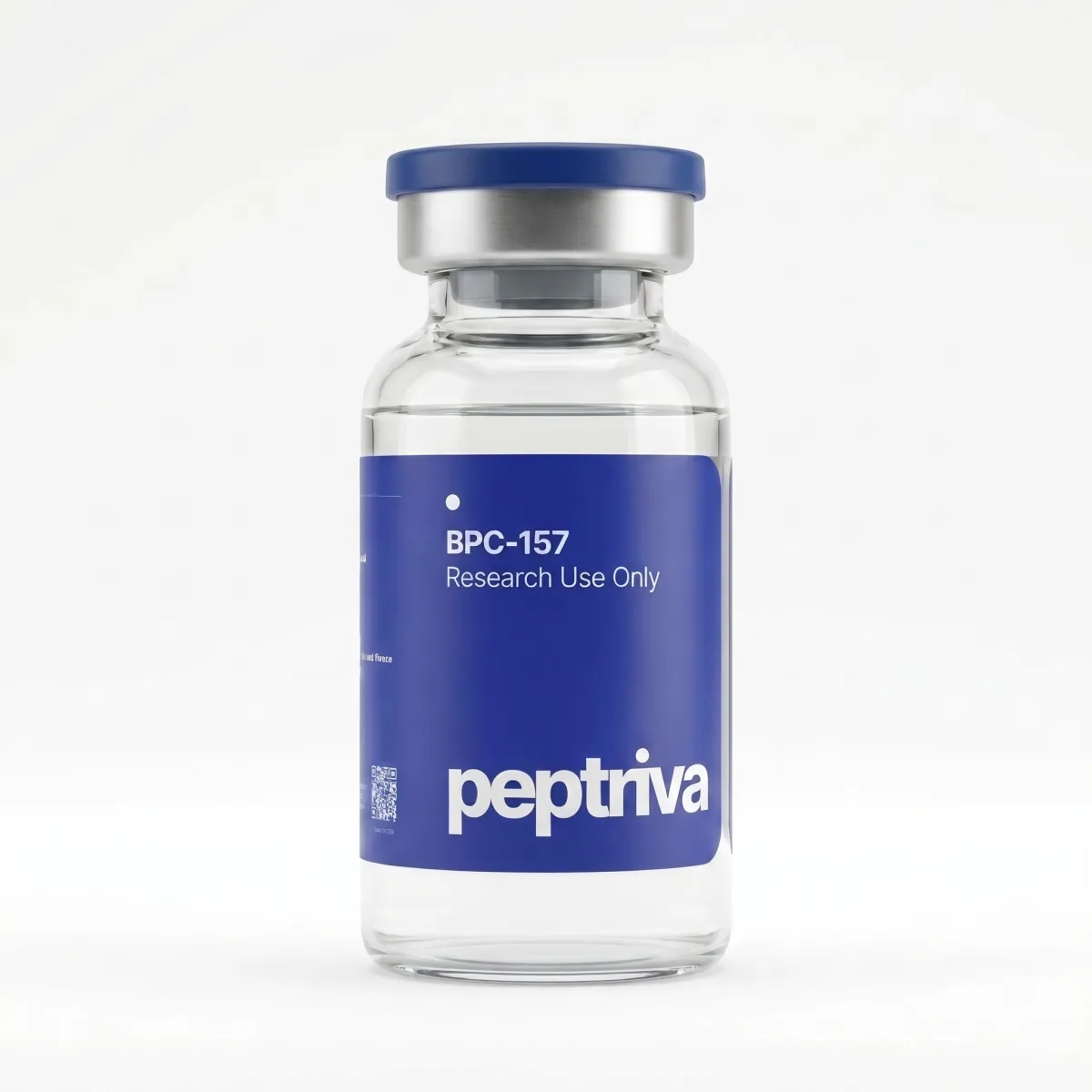
Peptriva Catalog
Our full catalog ships under the research-grade standard described above. Every product page links to its lot-specific COA — ISO 17025 third-party verification, HPLC chromatogram, mass-spec identity, Karl Fischer water content, and counterion documented per lot.
The research-grade verification workflow, in 5 steps
- Request the lot CoA. A research-grade supplier responds within one business day with a batch-matched PDF.
- Read the analytical lines. HPLC ≥98% with chromatogram. Observed mass matches theoretical within 0.5 Da. Karl Fischer water at 2–8%. Counterion specified. Lot number matches.
- Verify the testing laboratory. Look up the lab in the accreditation body’s public directory: A2LA, ANAB, or UKAS. Confirm active accreditation, with scope covering HPLC, mass spec, and Karl Fischer.
- Check the regulatory label. “For laboratory research use only. Not for human or veterinary use” on both product page and vial. Pages making therapeutic claims have stepped outside RUO.
- Inspect the vial. Lyophilized cake, intact stopper and crimp, no discoloration or cake collapse, label lot matches CoA.
All 5 pass: research-grade. Any fail: ask for clarification or walk away.
The RUO category exists because the modern life-sciences economy depends on a huge market of reagents useful for laboratory research but never intended for therapeutic use. The label distinguishes those products from items held to drug-approval standards; the analytical documentation makes the distinction verifiable.
— U.S. FDA, Distribution of In Vitro Diagnostic Products Labeled for Research Use Only (2013 guidance)
Frequently asked questions about research-grade peptides
What does “research-grade” mean for peptides?
It’s an integrated standard combining 6 elements. HPLC purity ≥98% with chromatogram. Mass-spec identity. Karl Fischer water content. Lyophilized presentation. Third-party ISO 17025 CoA. And Research Use Only labeling. The chemical molecule can be identical to a pharmaceutical-grade equivalent. What differs is the documentation chain and intended use.
What’s the difference between research-grade and pharmaceutical-grade?
Pharmaceutical-grade peptides are manufactured under cGMP per 21 CFR 210 and 211, with full ICH Q3A/B impurity profiling, batch genealogy, FDA approval, and prescription dispensing. Research-grade meets the analytical endpoints, ≥98% HPLC and mass-spec identity, but under lighter process controls and labeled “Research Use Only.” The analytical purity can be identical. The documentation chain and intended use are not.
What are high purity peptides for research?
Typically ≥98% pure by reverse-phase HPLC at 214 nm with mass-spec identity. ≥99% is increasingly the norm at reputable suppliers. Below 95% is generally unsuitable for serious research because the impurity fraction can confound results. “High purity” without a chromatogram and mass-spec identity is a number on a PDF.
How do I know if a peptide is actually research-grade?
6 checks. Third-party ISO 17025 CoA, not internal. HPLC ≥98% with chromatogram. Mass-spec observed-vs-theoretical match within 0.5 Da. Karl Fischer water content quantified at 2–8%. Lyophilized vial. RUO labeling. Missing any one moves the product toward grey-market.
Are research-grade peptides safe for human use?
They are sold for laboratory research, not human or veterinary use. They haven’t gone through Phase I to III trials, and cGMP controls appropriate for therapeutic use aren’t part of the standard. Absence of approval isn’t a demonstration of harm, but it does mean the evidentiary basis for clinical use doesn’t exist.
Why does research-grade need third-party ISO 17025 testing?
An internal lab can produce a CoA that’s entirely accurate. But capability is a separate question from the report, and an interested party verifying its own work is weak verification. ISO 17025 requires documented method validation, calibrated equipment, and proficiency testing against blind samples. That’s the strongest commonly available independent verification.
What’s the minimum HPLC purity for research-grade peptides?
The 2026 working standard is ≥98% at 214 nm. The legacy minimum was ≥95%, and ≥99% is achievable for most catalog peptides. Below 95% the impurity fraction begins to materially confound quantitative work.
Can a research-grade peptide become pharmaceutical-grade?
Yes. The chemical molecule is the same. What changes is the manufacturing process and regulatory framework. Tirzepatide, semaglutide, tesamorelin, and elamipretide all started as research compounds before going through IND-stage cGMP re-manufacture, Phase I to III trials, and FDA approval. Molecular identity is preserved. The documentation chain and intended use are upgraded.
What to know now
- Research-grade is six things together. HPLC ≥98% with chromatogram, mass-spec identity, Karl Fischer water content, lyophilized presentation, third-party ISO 17025 CoA, and RUO labeling. Missing one is missing the standard.
- Chemistry doesn’t separate research-grade from pharmaceutical-grade. The same molecule can be either. What separates them is process documentation (cGMP vs analytical-grade SOPs), regulatory framework, and intended use.
- HPLC purity without mass spec is incomplete. Chromatographic purity tells you the sample is clean; identity confirmation tells you it’s the right molecule. Both, not either.
- Third-party ISO 17025 testing is the documentation backbone. An internal-only CoA depends on the manufacturer auditing itself. Accreditation is independently verifiable through the national accreditation body’s public directory.
- RUO is a regulatory category, not a disclaimer. It defines the product as a laboratory reagent rather than a drug.
- Grey-market isn’t necessarily counterfeit. Many grey-market peptides are correctly identified and reasonably pure. The buyer just has no way to verify it. The document trail is the differentiator.
What we’re watching
3 developments. First, the gradual adoption of ICH Q3A/B impurity reporting in research-grade CoAs. Pharmaceutical-grade requires identification of every impurity above 0.1% by mass, and research-grade is slowly converging on that standard. Second, the publication of peptide-specific stability data moving the field beyond the generic 12–36-month lyophilized shelf-life convention. Third, the broader regulatory environment. FDA reclassification on the 503A bulk substances list, state-level peptide statutes emerging in 2024–2026, and WADA additions to the S0 category all shape the edges of what “research grade” will mean in 2027.
References
- International Organization for Standardization. (2017). ISO/IEC 17025:2017 — General requirements for the competence of testing and calibration laboratories. Geneva: ISO. https://www.iso.org/standard/66912.html
- United States Pharmacopeia. (2022). General Chapter <1503>: Quality attributes of therapeutic peptides. USP-NF. https://www.usp.org/
- United States Pharmacopeia. General Chapter <621> Chromatography. Rockville, MD: USP-NF, current revision. https://www.usp.org/
- United States Pharmacopeia. (2022). General Chapter <85>: Bacterial endotoxins test. USP-NF. https://www.usp.org/
- International Council for Harmonisation. (2022). ICH guideline Q3A(R2): Impurities in new drug substances. https://www.ich.org/page/quality-guidelines
- U.S. Food and Drug Administration. (2013). Distribution of in vitro diagnostic products labeled for research use only or investigational use only: Guidance for industry and FDA staff. FDA RUO/IUO guidance
- U.S. Code of Federal Regulations. Title 21 Part 210 — Current good manufacturing practice in manufacturing, processing, packing, or holding of drugs; general. https://www.ecfr.gov/current/title-21/chapter-I/subchapter-C/part-210
- U.S. Code of Federal Regulations. Title 21 Part 211 — Current good manufacturing practice for finished pharmaceuticals. https://www.ecfr.gov/current/title-21/chapter-I/subchapter-C/part-211
- 21 U.S.C. §321(g)(1). Federal Food, Drug, and Cosmetic Act: Definitions — Drug. FFDCA full text
- U.S. Food and Drug Administration. (2023). Section 503A of the Federal Food, Drug, and Cosmetic Act. https://www.fda.gov/drugs/human-drug-compounding/section-503a-federal-food-drug-and-cosmetic-act
- American Association for Laboratory Accreditation (A2LA). Accredited laboratory directory. https://a2la.org/
- World Anti-Doping Agency. (2026). The Prohibited List. https://www.wada-ama.org/en/prohibited-list
- Verlander, M. (2007). Industrial applications of solid-phase peptide synthesis — a status report. International Journal of Peptide Research and Therapeutics, 13(1–2), 75–82. https://doi.org/10.1007/s10989-006-9075-7
- Wang, W. (1999). Instability, stabilization, and formulation of liquid protein pharmaceuticals. International Journal of Pharmaceutics, 185(2), 129–188. https://doi.org/10.1016/s0378-5173(99)00152-0
- Manning, M. C., Chou, D. K., Murphy, B. M., Payne, R. W., & Katayama, D. S. (2010). Stability of protein pharmaceuticals: An update. Pharmaceutical Research, 27(4), 544–575. https://doi.org/10.1007/s11095-009-0045-6