Peptide research forums repeat the same handful of combinations as if they were validated protocols. Most stacking evidence is community convention, not peer-reviewed clinical practice. Worth stating clearly before reviewing them.
Of the five most-popular peptide stacks in the 2026 research community, only one — topical GHK-Cu + retinoid in cosmetic dermatology — has published efficacy evidence directly supporting the combination. The other four are mechanistic combinations: pharmacologically defensible, sometimes extrapolated from single-agent data, but lacking head-to-head trial evidence that the combination beats well-chosen monotherapy. The honest framing: most stacks are community combinations, not validated clinical protocols.
Peptide stacking is one of those topics where the gap between community confidence and published evidence is widest. Combinations acquire informal names and pseudo-protocols (specific ratios, specific cycling patterns) that imply a body of clinical work behind them. The underlying data is almost entirely single-agent preclinical research, plus investigator reports and mechanistic extrapolation.
We'll walk through the five most-discussed combinations. For each one: what the published evidence supports, and where the gap between rationale and validation sits. Each stack is anchored to a published reference. We call out the methodological caveats plainly.
1. BPC-157 + TB-500 — a tissue-repair combination studied in the literature
This is the most frequently discussed combination in peptide research culture. The investigator rationale: BPC-157 drives angiogenesis (new blood vessels) and fibroblast recruitment. TB-500 supports actin polymerization and cell migration. Two complementary tissue-repair mechanisms studied in a single protocol.
What the combination evidence actually shows
Charitably, thin. The 2025 HSS Journal systematic review aggregated 36 BPC-157 studies in orthopedic sports medicine. The 2026 Mayfield et al. primer in Am J Sports Med summarized the parallel TB-500 literature. Neither review found a single peer-reviewed clinical study testing the combination in humans.
The only published human data point that even touches the combination is the Lee & Padgett 2021 chart review. It included a subgroup of 4 study participants who received TB-500 alongside BPC-157 for knee pain. The same methodological problems that limit the broader case series (no controls, no validated outcomes, recall bias) apply here. The n=4 makes any combination-specific claim functionally impossible.
"
Despite the robust preclinical findings, human data are extremely limited, no large-scale randomized trials exist, and BPC-157 should be considered investigational pending well-designed clinical trials.
McGuire et al., Current Reviews in Musculoskeletal Medicine, 2025
The combination is mechanistically defensible. It is not validated. Reported community-use ratios for this combination carry no derivation from controlled dose-finding studies — they reflect investigator convention, not published trial data.
2. CJC-1295 + Ipamorelin — dual GH-axis combination
The second-most-frequently studied combination. The mechanistic rationale is more sophisticated than the BPC-157 + TB-500 case.
CJC-1295 (also called Mod GRF) is a 29-amino-acid peptide that tells the pituitary to release growth hormone. Ipamorelin is a 5-amino-acid peptide that triggers a separate, complementary pituitary pathway with the same end effect.
Hitting both pathways at once produces a larger pulse of growth hormone than either does alone. That's the case for stacking.
This is the rare case where the rationale has 30+ years of preclinical and Phase II human pharmacology work behind it. The dual mechanism has been a research tool for understanding the growth-hormone axis since the 1990s. Synergistic GH release from combining the two is one of the most reproducible findings in pituitary endocrinology.
Where the evidence base is genuinely thin: human clinical trials of the specific CJC-1295 + Ipamorelin combination as a therapeutic regimen. No FDA-registered RCT exists for the combo at any indication. The synergistic pharmacology is well-established. The long-term safety of chronic dual-pathway stimulation isn't. The Sigalos & Pastuszak review in Sexual Medicine Reviews covered the broader class and called out the same gap.
CJC-1295 + Ipamorelin — evidence status. The synergistic pharmacology is well-replicated in preclinical and early-phase human studies. The chronic-use safety profile has not been formally characterized in any registered clinical trial. Community-reported concentration ratios are empirical, not derived from published dose-finding studies.
3. GHK-Cu + topical retinol — the one stack with real evidence
The cosmetic-dermatology stack of GHK-Cu paired with topical retinoid is the lone outlier on this list. It has direct published efficacy evidence for the combination.
GHK-Cu is a 3-amino-acid copper-binding peptide with well-documented effects on collagen and skin-matrix synthesis. Topical retinoids (retinol, retinaldehyde, tretinoin) are the gold standard for stimulating dermal collagen turnover. They have decades of clinical-trial evidence behind them.
Combination topical formulations have been studied in head-to-head designs against single-active products in cosmetic dermatology trials. The 2018 Pickart and Margolina IJMS review summarized the broader GHK-Cu skin literature, including additive or synergistic effects when paired with complementary actives.
The cosmetic context is what sets this stack apart. Topical use bypasses most of the systemic regulatory and safety concerns that complicate injectable peptide protocols. Compatibility between GHK-Cu (water-loving, copper-bound peptide) and retinol (oil-loving vitamin-A derivative) requires careful formulation work for stability, but cosmetic manufacturers have largely solved this through pH and emulsion-system optimization.
This is the one combination in this review with direct published efficacy evidence. That evidence pertains to topical cosmetic use, not injectable systemic administration.
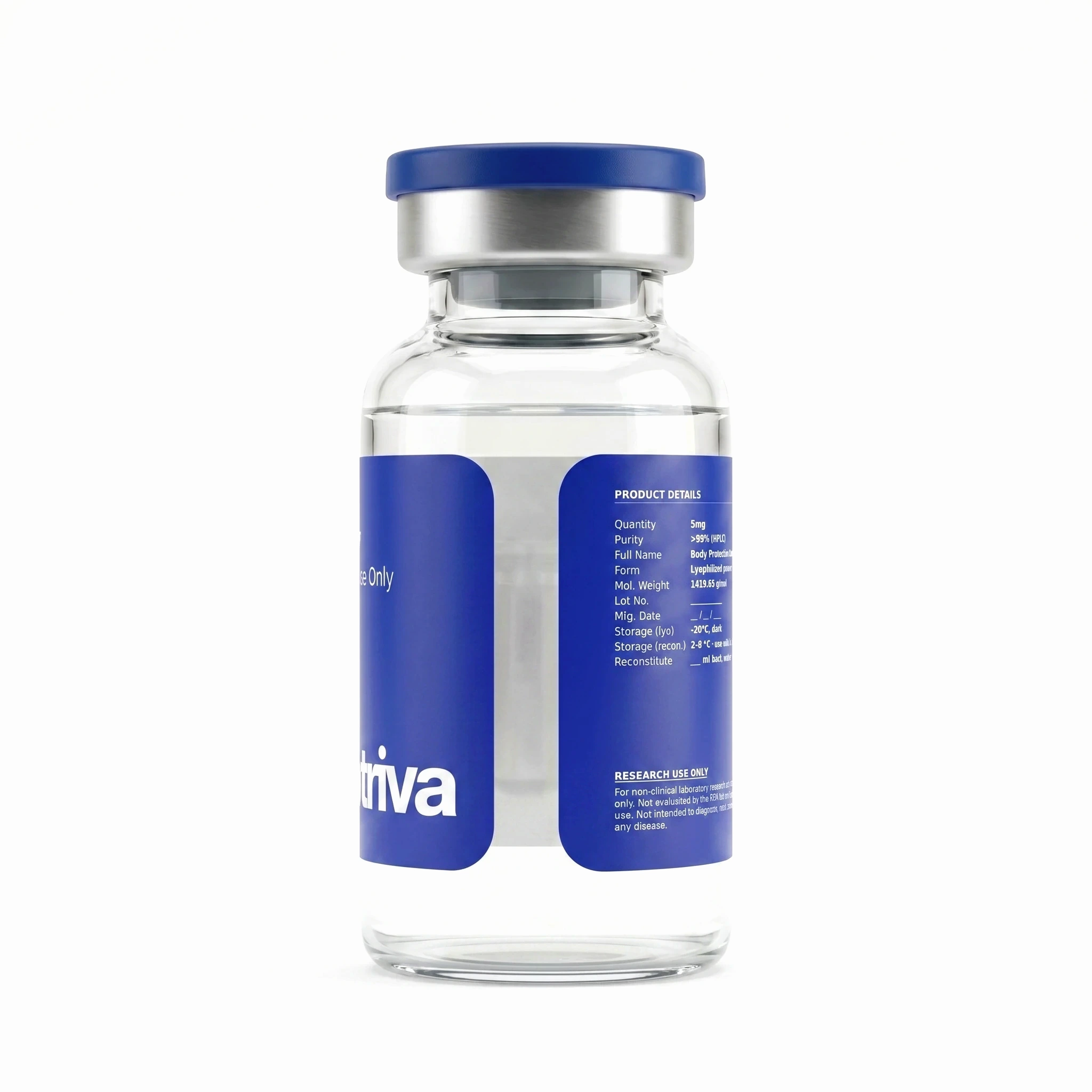
BPC-157
The same compound at the center of the most-discussed peptide stack in this review. Lab-verified identity and purity.
4. Tirzepatide + cagrilintide — the dual-mechanism story
This pairing is structurally different from the others on this list. It's a formally developed pharmaceutical combination, not a community-assembled stack.
Tirzepatide is the FDA-approved dual hormone analog (sold as Mounjaro or Zepbound) that mimics both GIP and GLP-1, two gut hormones that signal fullness. Cagrilintide is an investigational long-acting amylin analog from Novo Nordisk that targets a different pathway in the satiety system.
Eli Lilly's tirzepatide approach and Novo Nordisk's amylin approach are mechanistically distinct, which is why the pairing has clinical-trial logic. The closest existing data point is CagriSema (Novo's combination of cagrilintide with semaglutide). The REDEFINE-1 Phase III trial reported about 20.4% mean weight loss at 68 weeks — slightly more than semaglutide alone (~15% in STEP-1), less than tirzepatide alone (22.5% in SURMOUNT-1).
The implied logic for a hypothetical tirzepatide + cagrilintide combination: "dual-incretin + amylin" — pairing the strongest single-agent metabolic compound with an orthogonal mechanism. As of 2026, no peer-reviewed clinical trial has tested this specific combination in humans. Industry analysts reference it as a plausible multi-mechanism development scenario, but it does not exist as a registered clinical entity.
The contrast with formally developed combinations is instructive. The pharmaceutical industry pursues multi-mechanism therapy by designing single molecules that hit several targets, not by stacking separate compounds. Retatrutide is the structural answer to "what if we combined three satiety pathways?" One molecule, not three injections.
5. SS-31 + antioxidants — mechanistic sense, no evidence
The last item is the inverse of a stack: SS-31 monotherapy, and whether adding antioxidants alongside it makes sense.
SS-31 (also called elamipretide or Bendavia) is a 4-amino-acid mitochondria-targeting peptide. It selectively partitions into the inner mitochondrial membrane and stabilizes cardiolipin (the signature lipid that organizes the membrane folds). Its mechanism is fundamentally different from systemic antioxidant supplementation. It acts at the mitochondrial level, not by scavenging reactive oxygen species in plasma or the cell body.
Shirley's 2025 first-approval review summarized the mechanism alongside the September 2025 Forzinity FDA accelerated approval. Conventional antioxidants (vitamin C, vitamin E, CoQ10) act in different cellular compartments. The rationale for combining them: they operate at different sites and could in principle complement each other. No published clinical combination data exists. The framing is mechanistic-plausibility only.
The evidence base for any specific antioxidant combination with SS-31 is functionally zero. The Stealth Biotherapeutics Phase II program for elamipretide has tested SS-31 as monotherapy in heart failure, Barth syndrome, and primary mitochondrial myopathy. Not in combination.
Cell-culture studies show SS-31 produces effects conventional antioxidants don't duplicate. That's the basis for the "mechanistically distinct" claim. It's a different question from whether stacking them produces additive clinical benefit.
For SS-31 in 2026: the molecule is interesting, its monotherapy program is the most rigorous test of the cardiolipin-stabilization hypothesis, and combination strategies are theoretical, not evidence-based.
"
Most peptide stack protocols in the research community are empirical combinations — pharmacologically defensible, frequently rational in mechanism, but lacking head-to-head trial evidence that combination produces meaningfully better outcomes than well-chosen monotherapy.
The framing this article argues for
Why don't most stack protocols have RCT evidence?
The structural reason peptide stacks lack the evidence base that single-agent pharmaceuticals carry is the regulatory pathway. FDA-registered combination trials require demonstrating the combination is incrementally better than each component alone. That's a high bar: it means running the combination arm plus at least two single-agent comparator arms. Cost and complexity scale with the number of factors tested.
Peptide manufacturers operating in the research-use-only space have no commercial incentive to fund such trials. Academic literature has shown limited interest. The result: combination evidence accumulates either through accidental case-series inclusion (the n=4 TB-500 subgroup in Lee & Padgett) or through formally developed pharmaceutical combinations (CagriSema). Rarely from designed combination trials of research-grade peptides.
Practical research considerations. Studies investigating peptide combination protocols have highlighted several recurring methodological challenges:
- Evidence gap. Most reported combinations have not been validated in randomized controlled trials. Study designs often lack appropriate comparator arms.
- Mechanistic rationale. Characterizing which mechanism each component engages — and whether the combination is mechanistically additive or redundant — is foundational to interpreting combination data.
- Individual outcome tracking. Without clearly defined outcome measures per compound, isolating contribution of individual agents within a combination is methodologically intractable.
- Interaction potential. Most combinations have been studied at single-agent concentration ranges. Combined activity across multiple targets may produce pharmacological profiles that differ from either agent alone.
- Monotherapy preference. In published research, the simplest protocol with the strongest evidence for a defined endpoint has generally produced more interpretable results than multi-agent empirical combinations.
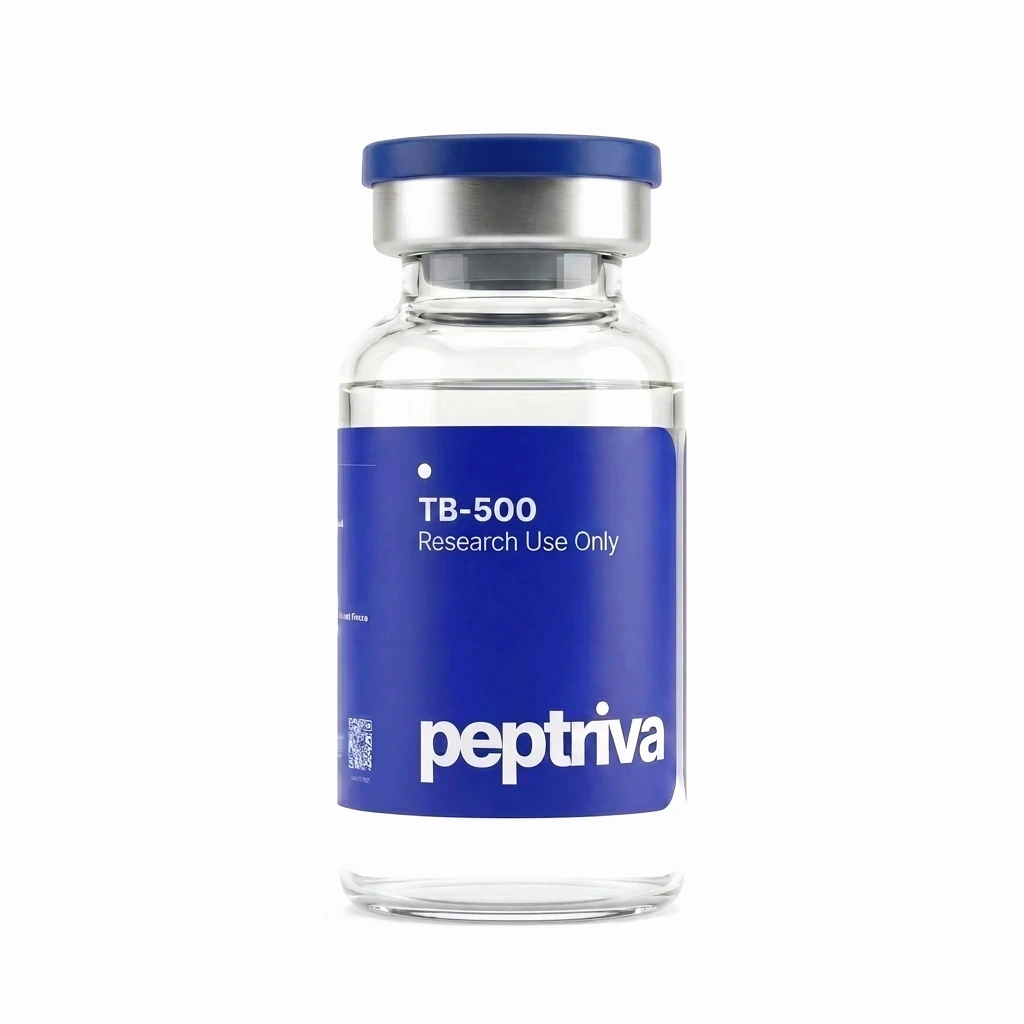
TB-500
Ac-LKKTETQ heptapeptide · Tβ4 active fragment. The same reference compound used across the cited preclinical studies. COA available with each lot.
The bottom line on stacking
Of the five stacks above:
- One (topical GHK-Cu + retinoid) has direct combination efficacy evidence.
- One (CJC-1295 + Ipamorelin) has well-replicated synergistic pharmacology with no formal clinical trial.
- Two (BPC-157 + TB-500, tirzepatide + cagrilintide) are mechanistically defensible empirical combinations without head-to-head clinical evidence.
- One (SS-31 + antioxidants) is mechanistically theoretical without supporting data.
One out of five with real combination evidence. That's roughly the field average.
The 2026 framing: combining peptides is rational in the same way combining compounds in pharmacology research is rational. Peptide combination protocols are largely not validated in the way established pharmaceutical combinations are. The gap between rationale and validation is the gap between empirical community use and formally registered clinical investigation.
What to know now
- BPC-157 + TB-500. Mechanistically defensible. Zero published combination RCT data. Only the n=4 TB-500 subgroup in Lee & Padgett 2021 even brushes combination evidence.
- CJC-1295 + Ipamorelin. Synergistic growth-hormone-release pharmacology is well-replicated. No chronic-combination clinical trial data. Community-reported concentration ratios are empirical, not from dose-finding studies.
- GHK-Cu + topical retinoid. The one stack with direct combination efficacy evidence. Cosmetic dermatology only.
- Tirzepatide + cagrilintide. No peer-reviewed combination trial in humans. The industry pursues this kind of multi-mechanism therapy through single-molecule design (retatrutide), not stacking.
- SS-31 + antioxidants. Different cellular compartments make the rationale plausible. No clinical combination evidence published.
- Structural reason for the gap. Combination RCTs require multiple comparator arms. Research-grade peptide manufacturers lack the commercial incentive to fund them.
What we're watching
Three things over the next 18 months. First, whether any formally registered BPC-157 RCT appears. Even a single Phase II trial would make the combination question more tractable. Second, whether CagriSema (cagrilintide + semaglutide) clears Phase III in a way that motivates analogous multi-mechanism combination development in the weight-loss class. Third, whether independent labs reproduce the dual-target synergistic GH-release pharmacology behind the CJC-1295 + Ipamorelin combination. The single-lab dependency in this literature looks similar to the BPC-157 problem.
References
- Vasireddi, N., Hahamyan, H., Salata, M. J., et al. (2025). Emerging use of BPC-157 in orthopaedic sports medicine: A systematic review. HSS Journal, 21(4). https://doi.org/10.1177/15563316251355551
- McGuire, F. P., Martinez, R., Lenz, A., Skinner, L., & Cushman, D. M. (2025). Regeneration or risk? A narrative review of BPC-157 for musculoskeletal healing. Current Reviews in Musculoskeletal Medicine, 18(12), 611–619. https://doi.org/10.1007/s12178-025-09990-7
- Lee, E., & Padgett, B. (2021). Intra-articular injection of BPC 157 for multiple types of knee pain. Alternative Therapies in Health and Medicine, 27(4), 8–13. PMID 34324435
- Pickart, L., & Margolina, A. (2018). Regenerative and protective actions of the GHK-Cu peptide in the light of the new gene data. International Journal of Molecular Sciences, 19(7), 1987. https://doi.org/10.3390/ijms19071987
- Sigalos, J. T., & Pastuszak, A. W. (2017, updated 2024 review). The safety and efficacy of growth hormone secretagogues. Sexual Medicine Reviews, 6(1), 45–53. https://doi.org/10.1016/j.sxmr.2017.02.004
- Jastreboff, A. M., Aronne, L. J., Ahmad, N. N., et al. (2022). Tirzepatide once weekly for the treatment of obesity. New England Journal of Medicine, 387(3), 205–216. https://doi.org/10.1056/NEJMoa2206038
- Garvey, W. T., Blüher, M., Osorto Contreras, C. K., et al. (2025). Cagrilintide-semaglutide for the treatment of obesity (REDEFINE-1). New England Journal of Medicine, advance online. NEJMoa2502081
- Shirley, M. (2025). Elamipretide: First approval. Drugs, 86(3), 377–383. https://doi.org/10.1007/s40265-025-02269-8