When evaluating a research-peptide supplier, the difference between a CoA and an MSDS is the first quality gate. The two documents answer different questions, and a supplier who cannot produce both is a red flag.
A Certificate of Analysis (CoA) is a lot-specific lab report that proves what’s in the vial: identity, purity, water content, sterility, residual contaminants. A Safety Data Sheet (SDS), formerly called MSDS, is a generic handling reference for the compound: hazards, first-aid, spills, storage, disposal. The CoA is per-batch. The SDS is per-compound. We need both, and they don’t substitute for each other.
The two documents came from different regulatory worlds. The CoA traces to pharmaceutical and ISO 17025 quality systems, where every manufacturing lot gets tested against spec and documented before release. The SDS traces to occupational-safety frameworks: OSHA’s Hazard Communication Standard in the US, the Globally Harmonized System (GHS) internationally. Different jobs, different documents.
The naming has evolved. MSDS was the old term. SDS is the current GHS-aligned name. They mean the same thing.
The practical rule for research-grade peptides: a credible supplier hands you both. If they’ll send the SDS but not the lot CoA, you’ve got safety info and no quality verification. If they’ll send the CoA but not the SDS, you’ve got quality data and no handling documentation. Both, or walk.
What does a real CoA contain?
A research-grade CoA documents lot-specific test results against the manufacturer’s specs. Here’s what we look for, in the order it usually appears:
Identity confirmation. Proof that the compound in the vial is actually the labeled peptide, not something structurally similar. The standard methods are mass spectrometry (matching the observed mass to the theoretical mass) and peptide mapping (digesting the peptide and checking the fragment pattern against the expected sequence). Some CoAs add amino acid analysis, which quantifies the residue composition against expected stoichiometry.
Purity by HPLC. High-performance liquid chromatography, typically reverse-phase with C18 columns, is the standard test for peptide purity. The CoA reports the area-under-curve percentage of the main peak relative to total signal. Research-grade specs run ≥95%, ≥98%, or ≥99% depending on supplier and peptide. The CoA should include the actual chromatographic trace, or at minimum a summary with the retention time, area percentage, and detection wavelength (usually 214 nm for peptide bond absorbance).
Water content by Karl Fischer titration. Lyophilized peptides should be dry. Typical residual water is <5%, and often <3% for high-grade preparations. More water means faster hydrolytic degradation in storage. Karl Fischer is the standard method because it specifically measures water without picking up other volatile solvents.
Residual solvents and counter-ions. Solid-phase peptide synthesis uses cleavage cocktails containing trifluoroacetic acid (TFA), and residual TFA is the most common counter-ion you’ll see. The CoA should report TFA content (often as percentage by mass) or note a TFA-free preparation. Some downstream applications require TFA-free formats (acetate salt or hydrochloride), which the CoA should specify.
Sterility and endotoxin. For peptides intended for parenteral preparation, the CoA should document sterility test results or state that sterility testing isn’t part of the standard release. Endotoxin (bacterial lipopolysaccharide) content gets reported in endotoxin units per mass (EU/mg). Low-endotoxin specs matter for certain experimental contexts.
Lot identification and date. Manufacturing lot number, analysis date, release date, responsible analyst or lab. This is the audit trail that connects your vial to the test results on the CoA. Without it, you’ve got a number on a PDF.
What does a Safety Data Sheet contain?
The SDS structure is standardized by GHS. It’s 16 sections in a fixed order. The sections that matter most for lab work:
- Section 1 · Identification. Product name, manufacturer, emergency contact information, and recommended use.
- Section 2 · Hazard identification. Classification under GHS hazard categories, signal word (Warning or Danger), hazard statements (e.g., “may cause skin irritation”), and precautionary statements.
- Section 3 · Composition. Chemical name and CAS number for the active compound and any significant impurities or counter-ions.
- Section 4 · First-aid measures. Specific actions for skin contact, eye contact, inhalation, and ingestion exposure.
- Section 5 · Firefighting measures. Suitable extinguishing media and hazardous combustion products.
- Section 6 · Accidental release measures. Containment and cleanup procedures for spills.
- Section 7 · Handling and storage. Safe handling procedures and storage conditions.
- Section 8 · Exposure controls and personal protective equipment. Recommended PPE (gloves, eye protection, respiratory protection) and engineering controls.
- Section 9 · Physical and chemical properties. Appearance, melting point, solubility, etc.
- Section 10 · Stability and reactivity. Conditions to avoid (heat, light, moisture) and incompatible materials.
- Section 11 · Toxicological information. Known acute and chronic toxicity data; route-specific effects.
- Section 12 · Ecological information. Environmental fate and ecotoxicity.
- Section 13 · Disposal considerations. Recommended disposal methods.
- Section 14 · Transport information. UN classification and shipping requirements.
- Section 15 · Regulatory information. Applicable regulations.
- Section 16 · Other information. Revision date, sources, etc.
OSHA requires the SDS for any hazardous chemical in a US workplace, and equivalent frameworks elsewhere do the same. Research labs need a current SDS for every chemical they handle. For peptides, the toxicology section is often sparse because many research-grade peptides have limited published tox data. The document still communicates what’s known and what protective measures to use.
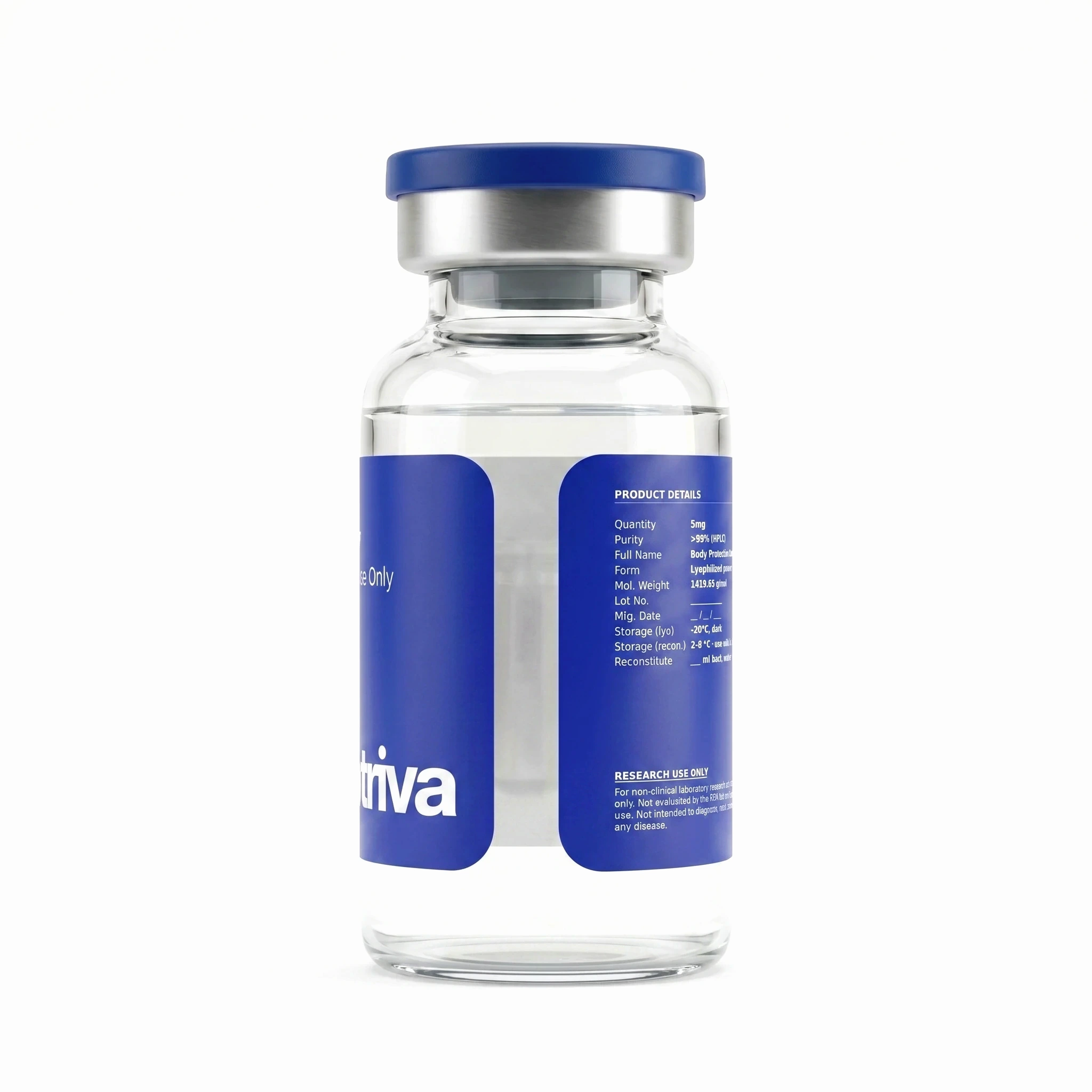
BPC-157
The same reference compound documented with full COA and SDS in this guide. Lab-verified identity and purity. Research-grade reference compound, COA per lot.
Why you need both
The CoA answers “is this vial actually what I ordered, at the right purity?” The SDS answers “how do I work with this material safely?” You can’t skip either before introducing a peptide into a protocol.
Here’s the practical example. A peptide that’s 95% pure by HPLC has a 5% fraction of related impurities, often truncated or modified versions of the target sequence. The CoA documents that purity number. The CoA doesn’t tell you whether those impurities are hazardous, whether the peptide presents skin-contact or inhalation risk, or what first-aid response to use if you get exposed. That’s the SDS’s job.
The reverse case works too. An SDS describes standard peptide handling (gloves, eye protection, sealed storage). It doesn’t tell you whether the vial in your inventory actually contains what the label claims. A counterfeit vial would have a perfectly valid SDS, because the SDS describes what the compound should be. A CoA would catch the discrepancy.
A Certificate of Analysis is the lot-specific quality record. A Safety Data Sheet is the substance-level handling reference. The two documents serve different functions, and a credible research-peptide supplier provides both for every product in their catalog.
— ISO 17025:2017 framework summary; OSHA Hazard Communication Standard alignment
Strong CoA vs thin CoA
CoA quality varies wildly across the research-peptide market. Here’s what a strong CoA gives you:
- Actual analytical traces. HPLC chromatogram with retention time and peak integration. Mass spectrum with annotated molecular ion peak. Not just a summary statement.
- Spec ranges and observed values. Not just “passes” or “meets specification” — the actual numerical value compared against the spec limit.
- Multiple identity tests. Mass spec, plus HPLC retention time, plus amino acid analysis or peptide mapping. Identity by one method is weaker than identity by three.
- Counter-ion specification. Explicit TFA content (or other counter-ions) and the salt form.
- Lab accreditation reference. ISO 17025 or equivalent third-party accreditation. Shows the lab’s competence got verified against a recognized standard.
- Audit trail. Lot number, analyst signature or initials, analysis date, release date. Clear traceability from sample to certificate.
A thin CoA gives you a summary line like “HPLC purity: ≥98%” without the underlying trace. One identity test, no counter-ion data, no accreditation reference. Thin CoAs aren’t automatically fraudulent. They may reflect a reputable manufacturer’s standard release documentation. But they give you less to independently verify, and they make spotting discrepancies harder.
The verification check, in one block: A strong research-peptide CoA contains the HPLC trace with retention time and area integration, mass spectrum with annotated molecular ion, peptide mapping or amino acid analysis for sequence confirmation, Karl Fischer water content, counter-ion specification, and a lab accreditation reference. The SDS contains all 16 GHS sections with peptide-specific handling guidance.
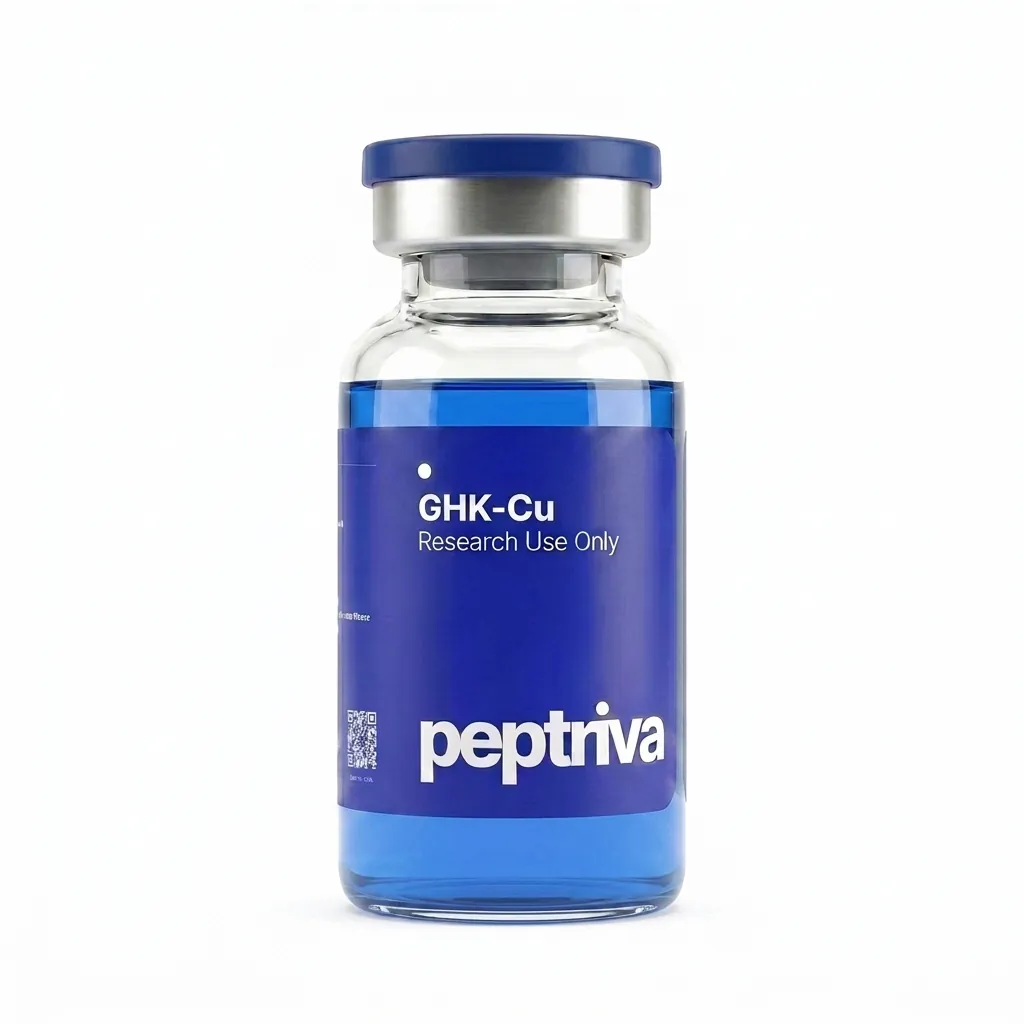
GHK-Cu
Copper-binding tripeptide · Gly-His-Lys, blue lyophilized powder. Research-grade reference compound with full COA and SDS documentation. COA available with each lot.
MSDS or SDS? Same thing.
MSDS (Material Safety Data Sheet) was the original name. It dates back to OSHA’s pre-GHS Hazard Communication Standard. The Globally Harmonized System alignment in 2012 shortened it to SDS (Safety Data Sheet) and locked in the 16-section structure.
In practice, the documents serve the same purpose. Many labs and suppliers still use the terms interchangeably or keep MSDS-labeled archives next to current SDS documents. If you’ve got something labeled “MSDS” from a current source, the content should align with the GHS 16-section standard regardless of what the cover page calls it.
CoAs from non-accredited labs — how much weaker are they?
Here’s a meaningful quality distinction. A manufacturer-self-tested CoA documents results from the manufacturer’s own internal quality lab. A third-party-tested CoA documents results from an external lab, ideally one with ISO 17025 accreditation. Both can be valid, but their verification properties differ.
Self-tested CoAs depend on the manufacturer’s honesty and the rigor of their internal QC. For established manufacturers with regulatory compliance history, that’s usually adequate. For newer or less-documented manufacturers, the lack of independent verification is a weakness. A third-party CoA from an ISO 17025-accredited lab provides external verification independent of any incentive to under-report defects.
Our pragmatic rule: prefer third-party accredited CoAs when available, especially for higher-stakes work. For research-grade peptide work, manufacturer-self-tested CoAs from established suppliers are typically acceptable. But if there’s no analytical data at all — just a summary statement — that’s a red flag regardless of who tested the lot.
Questions to bring to a supplier
If you’re evaluating a research-peptide supplier, these are the documentation questions worth asking:
- Can you provide both a lot-specific CoA and a current SDS? A supplier who can’t produce both is missing standard documentation.
- Does the CoA include the actual HPLC trace and mass spectrum? Underlying data is more verifiable than summary statements.
- Is the testing laboratory ISO 17025 accredited? Third-party accreditation is independent verification of lab competence.
- What’s the counter-ion form, and what’s the residual TFA content? Counter-ion form affects mass calculations and downstream compatibility.
- What’s the documented endotoxin level? Some applications need low-endotoxin preparations.
- When was the CoA generated, and does it match my lot? The audit trail from vial to CoA should be traceable.
What to know now
- COA = what’s in the vial: lot-specific quality record documenting identity, purity, water content, counter-ion, and sterility/endotoxin where applicable.
- SDS (formerly MSDS) = how to handle it: substance-level handling reference covering hazards, first-aid, spill response, storage, and disposal, in the GHS 16-section structure.
- Both documents are required: a credible supplier provides both for every product; they answer different questions and don’t substitute for each other.
- Strong COAs include: HPLC trace with retention time, mass spectrum, peptide mapping or amino acid analysis, water content by Karl Fischer, counter-ion specification, and laboratory accreditation reference.
- Thin COAs include: only summary statements without underlying analytical data; valid but less independently verifiable.
- Third-party ISO 17025 accreditation for the testing laboratory provides external verification beyond manufacturer self-testing.
- SDS structure: 16 standardized sections under GHS; the same purpose as the older MSDS naming convention.
- Counter-ion forms: most synthesized peptides are TFA salts unless specifically prepared otherwise; this should be documented on the COA.
What we’re watching
Two developments worth tracking. First, the increasing adoption of ISO 17025 accreditation across research-peptide testing laboratories — the proportion of products with third-party-accredited COAs has grown over the past several years, and this trend is likely to continue as buyer expectations rise. Second, the harmonization of SDS content standards across major regulatory jurisdictions — the GHS framework is now the dominant global standard, but jurisdiction-specific variations still exist in some regions, and convergence over time should make multi-jurisdiction compliance simpler.
References
- International Organization for Standardization. (2017). ISO/IEC 17025:2017 — General requirements for the competence of testing and calibration laboratories. Geneva: ISO. https://www.iso.org/standard/66912.html
- United Nations. (2023). Globally Harmonized System of Classification and Labelling of Chemicals (GHS). Tenth revised edition. Geneva: UN. https://unece.org/transport/dangerous-goods/ghs-rev10
- U.S. Occupational Safety and Health Administration. Hazard Communication Standard, 29 CFR 1910.1200. Washington, DC: OSHA. https://www.osha.gov/hazcom
- United States Pharmacopeia. USP-NF General Notices and Requirements, current revision. https://www.usp.org/usp-nf