“MOTS-c is an exercise mimetic” is the single most-marketed claim about this mitochondrial-derived peptide. That claim rests on 2 genuinely true observations that, together, do not support what the marketing implies.
MOTS-c plasma levels rise with high-intensity exercise in humans, and MOTS-c administration in mice improves exercise capacity, antioxidant capacity, weight loss, and insulin sensitivity. Those are real, replicated observations. But the leap to “inject MOTS-c and obtain fitness-like benefits without exercising” runs ahead of the evidence on every axis. Zero RCTs have tested whether injectable MOTS-c in humans produces fitness gains comparable to training. The right framing is “MOTS-c is part of the molecular response to exercise,” not “MOTS-c is a substitute for exercise.”
This article is a focused use-case piece on the most-marketed MOTS-c application. We’re looking at the “exercise in a syringe” positioning that’s become dominant in grey-market peptide forums, podcast appearances, and consumer-targeted longevity content. The underlying biology is real and interesting (we cover it in our MOTS-c complete guide). What we’ll answer here: is the exercise-mimetic marketing claim supported by the evidence base? Our answer: not in the way the marketing implies.
What MOTS-c does during exercise.
The exercise-response biology of MOTS-c is well-characterized at this point. Acute high-intensity exercise in humans increases plasma and skeletal-muscle MOTS-c by roughly 2-fold. The magnitude varies by exercise modality, training status, and age. The 2021 review by Woodhead and Merry in Biochimica et Biophysica Acta summarizes multiple human exercise studies, animal interventional work, and mechanistic biology.
The mechanism integrates with the broader AMPK pathway, the cellular energy sensor. When skeletal muscle contracts, ATP demand rises. AMP/ATP ratio rises. AMPK activates. A coordinated set of metabolic adaptations follows: increased glucose uptake, increased fatty-acid oxidation, and mitochondrial biogenesis via the PGC-1α pathway. MOTS-c sits in the middle of that cascade, acting both upstream as an AMPK activator and downstream through CK2 binding in muscle and myostatin suppression.
That positioning is what makes MOTS-c interesting biologically. It’s not just a downstream marker that rises with exercise. It’s a peptide messenger contributing to the metabolic response that makes exercise beneficial. That’s the “exercise-mimetic” argument. If MOTS-c is part of how exercise produces its benefits, administering it exogenously should reproduce some of those benefits.
MOTS-c is a molecular messenger of the exercise response. It rises with high-intensity exercise, acts via AMPK signaling, and contributes to the metabolic adaptations that make training beneficial. The translational question is whether exogenous administration in untrained humans reproduces those adaptations.
— Woodhead & Merry, BBA General Subjects, 2021
The mouse exercise-capacity data.
The strongest piece of evidence the “exercise mimetic” marketing rests on is mouse data showing MOTS-c improves exercise capacity. The Cohen-lab work has shown that MOTS-c treatment in both young and aged mice produces 4 effects:
- Improved exercise capacity. Treadmill running performance, time to exhaustion, and other endurance measures improve in MOTS-c-treated mice.
- Increased antioxidant capacity. Mitochondrial ROS handling and antioxidant enzyme activity rise.
- Weight loss and improved insulin sensitivity. Particularly in high-fat-diet models, MOTS-c administration produces meaningful weight and metabolic improvements.
- Reduced muscle atrophy. Through the myostatin-suppression pathway characterized in Kumagai et al., 2021, MOTS-c protects against atrophy in stress models.
Those mouse results are real and replicated across multiple labs. They represent the strongest mechanistic basis for the “exercise mimetic” framing. A methodologically critical gap exists, however, between “MOTS-c improves mouse treadmill performance” and “MOTS-c substitutes for human exercise training” — a gap consumer marketing typically skips.
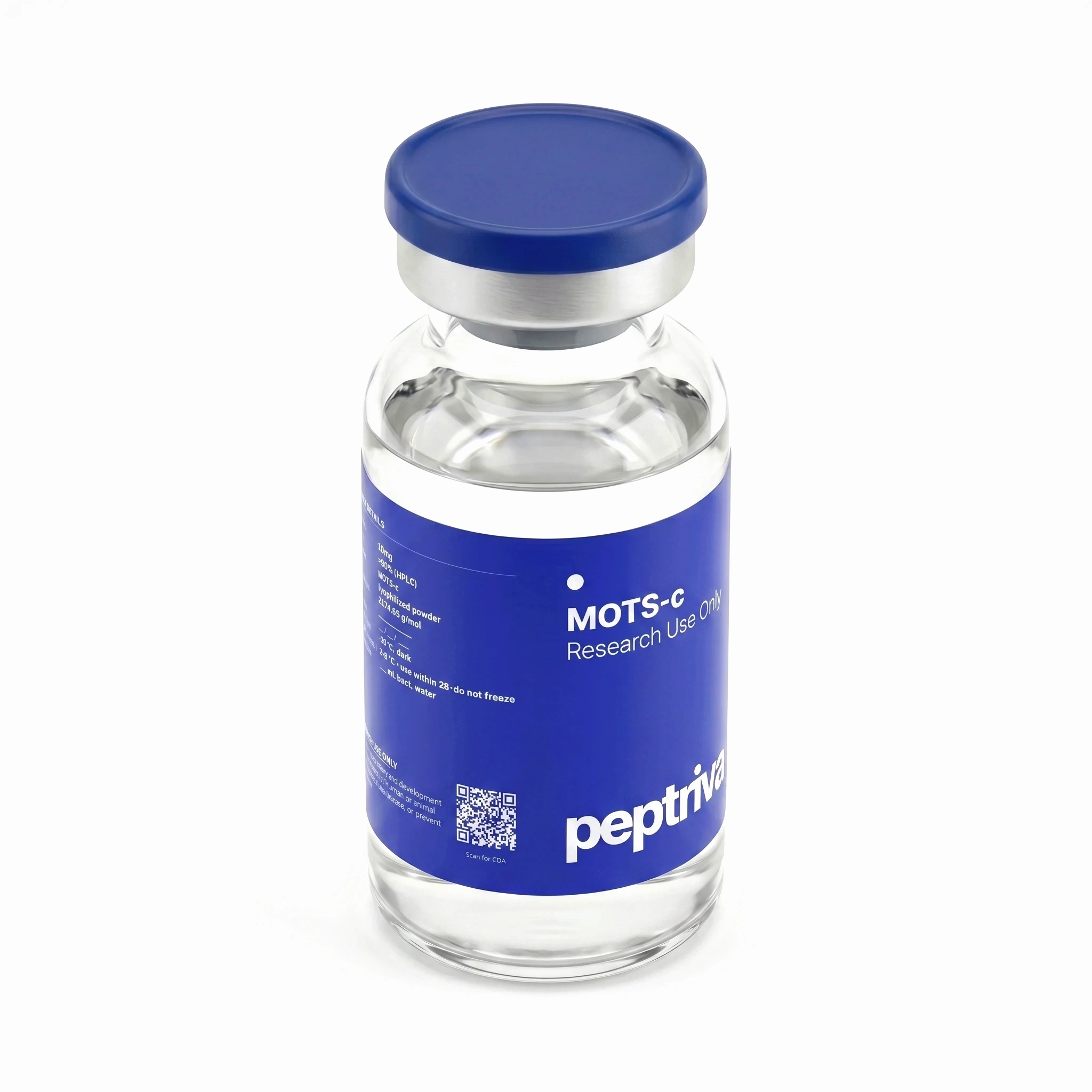
MOTS-c
The same 16-aa mitochondrial-derived peptide cited across the Cohen-lab exercise-response and AMPK-signaling studies in this review. Currently out of stock — next lot ETA posted on the product page.
Where the inferential leap fails.
The leap from “MOTS-c improves mouse treadmill performance” to “injectable MOTS-c substitutes for human exercise” involves 5 inferential steps that each weaken the chain:
Mouse-to-human translation. Mouse exercise physiology shares some features with human exercise physiology, but it differs in others. Metabolic rate per body mass, fiber type composition, baseline activity levels, dosing scaling. Mouse studies showing exercise-capacity improvements at supraphysiological doses don’t translate to predictable human responses at consumer doses.
Supraphysiological dose vs. physiological response. The mouse studies typically use MOTS-c doses producing circulating concentrations well above the physiological range endogenous MOTS-c reaches during exercise. Even if those doses produce benefits in mice, whether physiological or pharmacological dosing in humans produces comparable benefits is a separate empirical question that hasn’t been tested.
Single-pathway vs. coordinated response. Exercise produces a coordinated response involving dozens of signaling pathways, cellular adaptations, and organ-system changes. Cardiovascular, musculoskeletal, neurological, endocrine, immune. MOTS-c is one molecule in that broader response. Administering one component is unlikely to reproduce the integrated benefit.
Acute response vs. training adaptation. A key distinction in exercise physiology is between the acute response to a single bout and the chronic training adaptation that accumulates over weeks and months. The acute response is rising lactate, AMPK activation, peptide messenger release. The training adaptation is mitochondrial biogenesis, capillary density changes, cardiac remodeling. MOTS-c mimics aspects of the acute response. Whether it produces the cumulative training adaptations is a separate empirical question with no supporting human data.
No human interventional trial. Underneath all of the above: zero published RCTs testing whether injectable MOTS-c in humans produces fitness gains comparable to training. The marketing claim is being made in the absence of the most basic interventional evidence.
What “rises with exercise” actually means.
The observation that plasma MOTS-c rises with high-intensity exercise is real and meaningful. But the directionality matters.
If MOTS-c rises during exercise because the exercising organism needs more of it to coordinate the response, then exogenous MOTS-c administered alongside exercise might amplify the response. That is the “ergogenic aid” framing the WADA monitoring interest reflects. If endogenous MOTS-c contributes to adaptation, exogenous supplementation might augment athletic performance outcomes in trained subjects.
If MOTS-c rises because the cellular stress response is producing it as a downstream marker, without it being functionally upstream of the benefits, then exogenous MOTS-c is adding a downstream signal without the upstream physiological context that gives it meaning. That’s a different framing the published evidence cannot yet distinguish from the first.
The honest read from the published literature: MOTS-c is part of the molecular response to exercise. Whether exogenous administration produces a functionally similar response in sedentary subjects, or amplifies the response in exercising subjects, remains empirically open. Consumer marketing typically assumes the most optimistic answer to both questions.
Where this falls short. The MOTS-c exercise-mimetic claim, honestly: there’s rodent interventional evidence and human observational evidence supporting MOTS-c as part of the molecular machinery of exercise adaptation. There’s zero published human interventional evidence that exogenous MOTS-c substitutes for or augments training adaptations in humans. The marketing claim is being made in the absence of the empirical test.
The K14Q variant: indirect human evidence.
One of the strongest pieces of indirect human-relevance evidence for MOTS-c is the K14Q genetic variant work from the Cohen group. The 2024 iScience paper from Kumagai et al. characterized a naturally occurring SNP that produces a MOTS-c peptide with a glutamine substitution at position 14, reducing CK2 binding affinity.
Male carriers of the K14Q variant in Japanese-ancestry populations show higher rates of sarcopenia (age-related muscle loss) and elevated type 2 diabetes risk. The simplest reading: reduced functional MOTS-c via K14Q is associated with worse muscle and metabolic phenotypes. That’s consistent with the model where endogenous MOTS-c contributes to maintaining those phenotypes.
This is real evidence for MOTS-c functional importance. But it’s evidence for a specific claim: that endogenous MOTS-c matters for endogenous physiological function. It’s not direct evidence that exogenous synthetic MOTS-c corrects K14Q variant consequences, nor that exogenous administration in non-K14Q-carriers produces additional benefits beyond what endogenous MOTS-c already does. Those would require interventional trials.
Where “skip the gym” fails the evidence test.
The most concentrated form of the consumer MOTS-c claim is some version of “inject this peptide and get the benefits of exercise without exercising.” That fails the evidence test in 5 specific ways:
- Cardiovascular benefits. Regular aerobic training improves resting heart rate, blood pressure, vascular function, and cardiac output. No evidence shows MOTS-c in untrained humans produces comparable adaptations.
- Musculoskeletal benefits. Strength training improves muscle mass, bone density, and tendon function. MOTS-c reduces atrophy under stress in rodents, but it doesn’t appear to produce strength-equivalent hypertrophy in unstressed conditions.
- Mental health benefits. Regular exercise affects depression, anxiety, sleep, and cognition. No comparable MOTS-c evidence exists. The molecular pathways involved (BDNF, serotonin, dopamine) aren’t obviously downstream of MOTS-c.
- Glycemic benefits. Acute exercise improves insulin sensitivity via AMPK-mediated GLUT4 translocation. MOTS-c does activate AMPK in mouse muscle, so this is the strongest possible mimetic claim. But the head-to-head between exogenous MOTS-c and actual exercise on human insulin sensitivity hasn’t been published.
- Caloric expenditure. A 30-minute moderate workout burns 200–400 calories. MOTS-c produces no comparable caloric expenditure. The “weight loss” effects in mouse studies are smaller and depend on supraphysiological dosing.
The pattern is consistent. The integrated, multi-system benefits of regular exercise aren’t reproduced by injecting one signaling molecule that participates in a subset of those pathways. That covers cardiovascular, musculoskeletal, mental health, cognitive, metabolic, and sleep effects.
Where MOTS-c might legitimately fit.
The honest read: MOTS-c may have genuine therapeutic potential in specific contexts very different from the “exercise mimetic for healthy adults” marketing. Specifically, 3 contexts:
- Sarcopenia in older adults who can’t exercise. If MOTS-c reduces atrophy through myostatin suppression, then for elderly patients who can’t do resistance training due to frailty or chronic disease, exogenous MOTS-c might provide some anti-atrophy benefit. It still requires clinical validation.
- Insulin sensitization in metabolic disease. The AMPK-activation biology might benefit specific populations. Comparison to first-line interventions (metformin, GLP-1 agonists, exercise) would be the right empirical question.
- Rare-disease contexts. The K14Q variant data suggests supplementing functional MOTS-c in K14Q carriers might address the specific deficit. This is the most mechanism-driven and trial-able application.
None of those correspond to the “inject MOTS-c and skip the gym” consumer marketing. They correspond to specific populations where exogenous MOTS-c might provide a benefit not easily obtained through exercise or first-line pharmacotherapy. Those are the contexts a properly designed Phase II trial would inform.
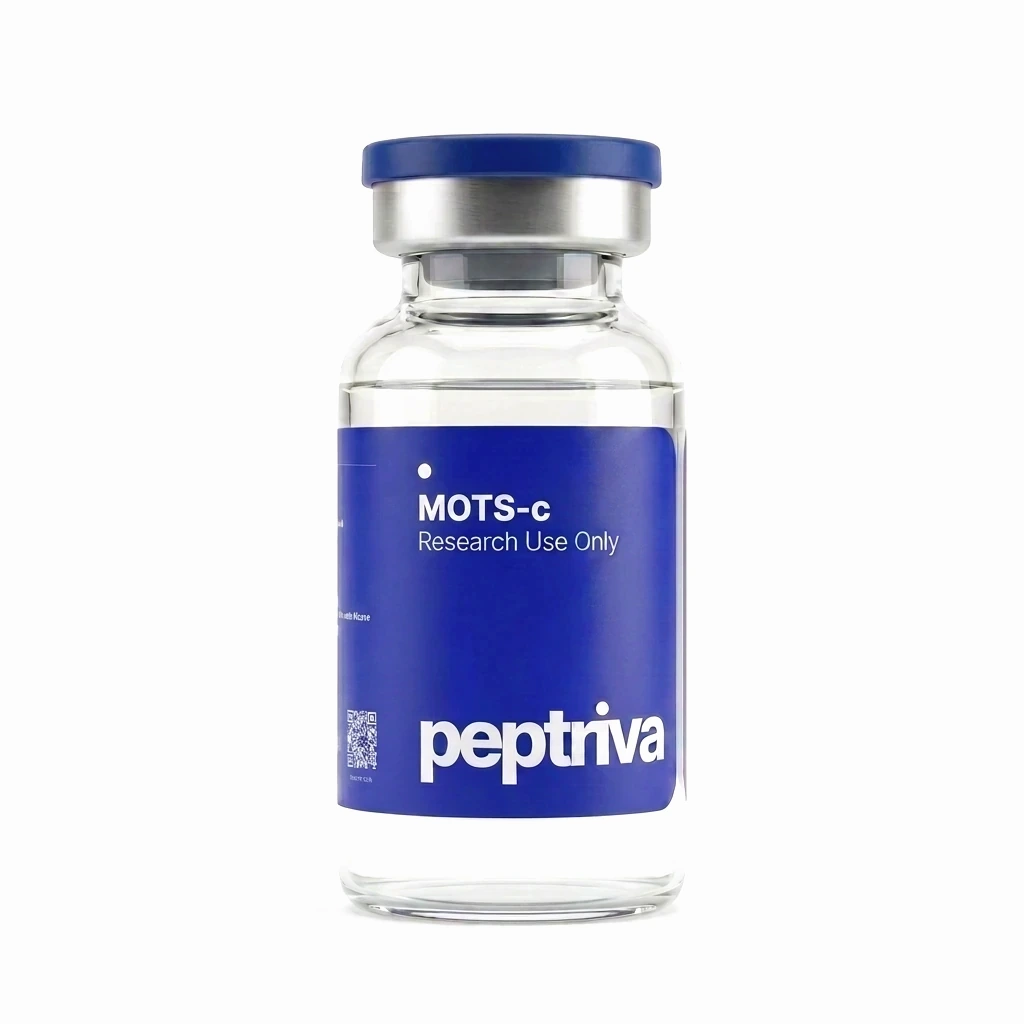
MOTS-c
Mitochondrial-derived peptide · 16 aa, AMPK/CK2 signaling. The same reference compound used across the cited preclinical exercise-response studies. Currently out of stock — next lot ETA posted on the product page. COA available with each lot.
Key methodological questions the literature leaves open.
Researchers and reviewers examining the exercise-mimetic framing for MOTS-c have identified 6 methodological gaps that preclinical and observational studies have not yet resolved:
- Validated outcome measures. Absent validated human biomarkers for MOTS-c-specific activity, preclinical studies rely on surrogate endpoints (treadmill time-to-exhaustion, grip strength) that may not translate to clinically meaningful human outcomes.
- Dosing and pharmacokinetic validation. Published preclinical protocols use doses scaled from rodent body weight without human PK/PD validation. No validated human dosing regimen for MOTS-c has been established in the peer-reviewed literature.
- Standalone vs. adjunct administration. Preclinical models have examined both standalone MOTS-c administration and administration alongside exercise. The mechanistic coherence of the adjunct framing (amplification of the endogenous response) differs substantially from the standalone (replacement) framing; the published data do not yet adjudicate between them.
- Anti-doping status. Mitochondrial-derived peptides represent an emerging anti-doping category. WADA monitoring activity in this class suggests regulatory classification is an active area of interest.
- Reference compound quality. The 16-aa peptide (MW 2,175 g/mol) is structurally defined and synthesizable to high purity; research use requires verified identity and purity documentation (HPLC trace, COA per lot) to ensure results are attributable to the compound rather than impurities.
- Comparative effectiveness context. Studies investigating MOTS-c as a potential exercise surrogate should benchmark outcomes against the established cardiovascular, musculoskeletal, and metabolic effects of regular aerobic and resistance training, which remain the evidence-validated standard for those outcomes.
The bottom line.
MOTS-c is part of the molecular machinery of the human exercise response. Rising with high-intensity exercise. Acting via AMPK signaling. Contributing to the metabolic adaptations that make training beneficial. That biology is real and unusually well-characterized for a peptide at this evidence tier.
What the published evidence does not support is the marketing framing that MOTS-c substitutes for exercise training in healthy adults. No human RCT has tested whether injectable MOTS-c produces fitness gains comparable to training. The mouse data showing exercise-capacity improvements uses supraphysiological doses in a model organism with different exercise physiology. The K14Q variant data shows endogenous MOTS-c matters for endogenous function. Not that exogenous MOTS-c reproduces exercise benefits.
The most evidence-consistent framing: MOTS-c may have genuine therapeutic potential in 3 specific clinical populations — frailty cohorts unable to exercise, particular metabolic-disease contexts, and K14Q variant carriers. Those populations are very different from the “exercise mimetic for healthy adults” positioning. The biology is real. The consumer-marketing claim runs far ahead of where the trial evidence currently sits. The integrated cardiovascular, musculoskeletal, and cognitive benefits of regular exercise have not been shown to be reproduced by exogenous administration of one signaling molecule in published human interventional studies.
What to know now
- Exercise response biology: plasma and skeletal-muscle MOTS-c rise acutely with high-intensity exercise in humans. Replicated observation.
- Mouse interventional data: MOTS-c administration improves exercise capacity, antioxidant capacity, weight loss, insulin sensitivity, and reduces atrophy in rodents. At supraphysiological doses.
- Human interventional data: zero PubMed-indexed RCTs testing whether exogenous MOTS-c reproduces or substitutes for exercise training benefits in humans.
- K14Q variant: male carriers in Japanese-ancestry populations show higher sarcopenia and T2D risk. Indirect evidence that endogenous MOTS-c matters. Not direct evidence that exogenous substitutes for exercise.
- Mechanistic positioning: MOTS-c is part of the AMPK / CK2 / myostatin-suppression signaling response to exercise. Participating, not substituting.
- “Skip the gym” claim: not supported. The integrated cardiovascular, musculoskeletal, mental-health, and cognitive benefits of exercise aren’t reproduced by a single signaling-molecule injection.
- Legitimate potential: sarcopenia in research subjects who cannot exercise (frailty, chronic disease), specific metabolic disease contexts, K14Q carriers. Each application requires Phase II clinical validation.
What we’re watching
3 things to track over 24–36 months. First, whether any Cohen-lab spin-out or commercial partner registers a Phase I or Phase II trial of synthetic MOTS-c in a specific clinical population. That would be frailty, sarcopenia, or metabolic disease. The complete absence of registered human MOTS-c interventional trials is the most important missing piece. Second, the WADA position on MOTS-c and broader mitochondrial-derived peptides. The trajectory toward listing would affect competitive athletes and the research-chemical market. Third, whether independent groups replicate the K14Q variant association outside Japanese-ancestry populations.
References
- Woodhead, J. S. T., & Merry, T. L. (2021). Mitochondrial-derived peptides and exercise. Biochimica et Biophysica Acta — General Subjects, 1865(12), 130011. https://doi.org/10.1016/j.bbagen.2021.130011
- Kumagai, H., Kim, S. J., Miller, B., et al. (2024). MOTS-c modulates skeletal muscle function by directly binding and activating CK2. iScience, 27(11), 111212. https://doi.org/10.1016/j.isci.2024.111212
- Kumagai, H., Coelho, A. R., Wan, J., et al. (2021). MOTS-c reduces myostatin and muscle atrophy signaling. American Journal of Physiology — Endocrinology and Metabolism, 320(4), E680–E690. https://doi.org/10.1152/ajpendo.00275.2020
- Zheng, Y., Wei, Z., & Wang, T. (2023). MOTS-c: A promising mitochondrial-derived peptide for therapeutic exploitation. Frontiers in Endocrinology, 14, 1120533. https://doi.org/10.3389/fendo.2023.1120533
- Lee, C., Zeng, J., Drew, B. G., et al. (2015). The mitochondrial-derived peptide MOTS-c promotes metabolic homeostasis and reduces obesity and insulin resistance. Cell Metabolism, 21(3), 443–454. https://doi.org/10.1016/j.cmet.2015.02.009
- Kim, S. J., Miller, B., Kumagai, H., et al. (2020). Mitochondrial-derived peptides in aging and age-related diseases. GeroScience, 43(3), 1113–1121. https://doi.org/10.1007/s11357-020-00262-5
- Wu, Y., Sun, L., Zhuang, Z., Hu, X., & Dong, D. (2022). Mitochondrial-derived peptides in diabetes and its complications. Frontiers in Endocrinology, 12, 808120. https://doi.org/10.3389/fendo.2021.808120