Here’s what makes the ipamorelin GHS-R1a mechanism different. It’s a five-amino-acid peptide that releases growth hormone (GH) from the pituitary without activating the cortisol or prolactin pathways the older drugs in this class engage. Selectivity is the design feature. The clinical track record is less impressive.
Ipamorelin binds the ghrelin receptor (GHS-R1a, the receptor to which endogenous ghrelin binds) on pituitary GH cells. That triggers GH release. Older GHRPs like GHRP-6 act at the same receptor but also elevate cortisol, prolactin, and ACTH. Ipamorelin does not. The N-terminal Aib residue, a non-natural amino acid, makes the peptide resistant to plasma proteolysis. One human Phase III trial was completed. It tested ipamorelin for postoperative bowel paralysis. It failed. Novo Nordisk discontinued development. No randomised controlled trial has evaluated ipamorelin for muscle gain, fat loss, anti-aging, or recovery in healthy adults.
This article is for researchers who want the actual receptor pharmacology, not the “selective GH releaser” marketing line. We’ll walk through the ghrelin-receptor biology, what makes ipamorelin selective, the CJC-1295 co-administration logic, the failed Phase III trial, and the strange shape of what the human evidence actually says.
GHS-R1a: the ghrelin receptor as a GH-release switch
The growth hormone secretagogue receptor 1a (GHS-R1a) is the receptor that endogenous ghrelin binds. Ghrelin originates from gastric tissue, acts on hypothalamic circuits to signal energy status, and also activates pituitary somatotrophs to release a pulse of growth hormone.
The receptor is expressed at two sites of mechanistic relevance. One: hypothalamic neurons in the arcuate nucleus (the appetite-control zone). Two: GH-producing cells in the anterior pituitary.
The other major GH-release pathway uses a completely different intracellular signal. GHRH receptors signal through cAMP. GHS-R1a signals through calcium. Two distinct signaling systems converging on the same output means co-administration of agents targeting each receptor does not produce pathway competition.
That is the mechanistic basis for the CJC-1295 plus ipamorelin co-administration studied in preclinical models. Two receptors, two cascades, one larger pulse than either alone.
The 2024 Lu paper confirmed receptor specificity by the standard antagonist-blockade method. Ipamorelin’s effects were abolished by a ghrelin-receptor antagonist. Blocking the effect by occupying the receptor confirms that receptor was mediating the response.
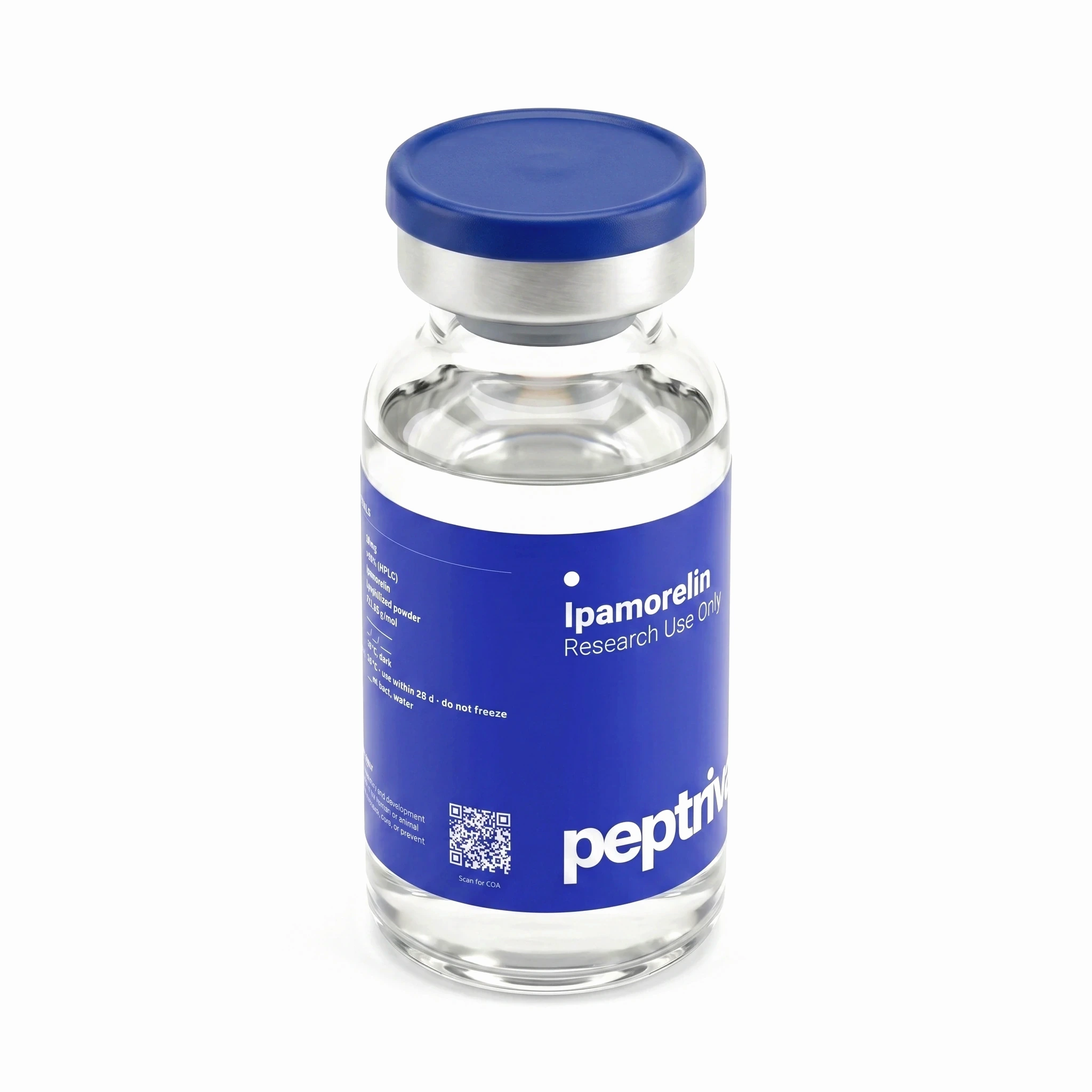
Ipamorelin
The same compound cited across the GHS-R1a mechanism reviews in this article. Lab-verified identity and purity of the Aib-His-D-2-Nal-D-Phe-Lys-NH₂ pentapeptide used in receptor pharmacology studies.
The Aib residue: why ipamorelin doesn’t get chewed up
Ipamorelin’s defining structural feature is the first amino acid: Aib, short for alpha-aminoisobutyric acid. Aib is not one of the standard 20 amino acids. It is a synthetic non-natural residue that plasma proteases do not readily cleave.
Placement of Aib at the N-terminus produces two structural consequences. First, N-terminal exopeptidases that normally degrade peptide bonds at the N-terminus do not cleave the Aib linkage — the peptide persists longer in plasma. Second, Aib constrains the backbone conformation into a shape that fits the ghrelin-receptor binding pocket selectively.
The remaining four residues are optimised to engage the ghrelin receptor while minimising binding at related receptors. That is the structural basis for the selectivity profile.
In practical research terms: older GHRPs in this class (GHRP-2, GHRP-6, hexarelin) all stimulate GH release from the pituitary but also elevate cortisol, prolactin, and sometimes ACTH and aldosterone. That co-activation makes them poor tools for isolating GH/IGF-1 axis effects. Ipamorelin produces a clean GH signal without the corticosteroid confounders.
Why “selectivity” is the headline
The 2026 Rahman review groups ipamorelin with CJC-1295, tesamorelin, sermorelin, and AOD-9604. Within that family, ipamorelin’s distinction is the clean profile. The 2020 Sinha review on GH secretagogues in hypogonadal men picks ipamorelin as the candidate with the most favorable side-effect profile, on the same basis.
The nuance worth noting: “selective” does not mean ipamorelin produces fewer downstream effects. Studies have reported the same GH release, the same hepatic IGF-1 induction, and comparable metabolic effects seen with other ghrelin-receptor agonists. Selective refers specifically to the absence of cortisol- and prolactin-pathway co-activation. That distinction is meaningful in controlled research settings where isolating GH/IGF-1 axis effects from corticosteroid confounders is the experimental goal.
Ipamorelin's selectivity is what made it the workhorse research peptide for studying isolated GH/IGF-1 axis biology. The cortisol and prolactin signals from older GHRPs were the confounders the field needed to eliminate.
— The pharmacological framing
The CJC-1295 pairing: mechanism, not marketing
Ipamorelin’s most common research use is in combination with CJC-1295. The logic is real. GHS-R1a and the GHRH receptor signal through different cascades. Combined activation produces a larger GH pulse than either drug alone.
The 2026 Mayfield review reports the combination significantly improved tetanic muscle tension in mice with steroid-induced muscle loss. That’s the kind of preclinical signal that’d justify a human trial. No human trial has been published.
Honest framing: mechanistically credible. Preclinically supported. Clinically untested in healthy adults for the indications grey-market protocols promise.
The Phase III trial that ended development
The single most important data point in the ipamorelin literature is also the worst one for the marketing. Novo Nordisk pursued ipamorelin for postoperative ileus, the temporary bowel paralysis that follows abdominal surgery. The mechanism made sense. Ghrelin-receptor activation moves the gut. The Phase III trial missed its primary endpoint. Novo Nordisk discontinued development.
That trial is the only completed human Phase III for ipamorelin, ever. Every claim about ipamorelin’s efficacy in healthy adults (body composition, muscle gain, fat loss, anti-aging, recovery) rests on extrapolation from animal models or from older studies that measured GH release as a surrogate marker.
The 2026 Mendias Sports Medicine review says it directly: despite ipamorelin’s frequent appearance in grey-market protocols, robust human evidence for performance or recovery indications is essentially absent.
What the Phase III ileus failure means and doesn’t mean.
- It means: ipamorelin’s GH-release effect didn’t translate into a meaningful clinical endpoint in the one indication the developer tested.
- It doesn’t mean: ipamorelin fails to release GH. The pharmacology is intact.
- For extrapolation: any effect on body composition or recovery in healthy adults would require its own controlled trial. The ileus failure cannot be used to infer efficacy or lack thereof in other populations.
- For regulatory status: no developer is currently pursuing ipamorelin for any indication. The FDA placed it among substances ineligible for 503A pharmacy compounding.
Other preclinical findings worth knowing
The 2020 Mohammadi rat study found ipamorelin reduced visceral and somatic pain sensitivity in non-inflammatory models. A ghrelin-receptor antagonist blocked the effect. That hints at ghrelin-receptor-driven pain relief independent of GH release. It’s a preclinical signal in a specific model.
The 2024 Lu ferret study found ipamorelin (1–3 mg/kg, IP) reduced cisplatin-induced weight loss during chemotherapy. It didn’t reduce nausea itself. That’s consistent with ipamorelin’s original cachexia development rationale, but again, animal-model territory.
The 2024 Gouda and Ganesh tilapia study found ipamorelin increased sperm production and reproductive hormones in a cichlid fish. Whether that translates to mammals isn’t known.
Evidence summary and research context
Ipamorelin is the cleanest pharmacological tool in the GHS-R1a agonist family for research purposes. The mechanism is well-validated at the receptor and signaling level. The clinical track record consists of one Phase III failure and no subsequent development. Controlled human evidence supporting body-composition claims does not exist in the peer-reviewed literature.
Where the evidence falls short. The molecular biology of ipamorelin is unusually clean. The clinical biology is not. Zero RCTs in healthy adults for body composition, muscle gain, fat loss, or anti-aging have been published. One Phase III failure in surgical research subjects is the sole completed human trial. Everything else remains preclinical extrapolation. Research use of ipamorelin as a receptor pharmacology tool rests on well-validated mechanistic ground; claims of efficacy in body-composition outcomes in healthy adults do not.
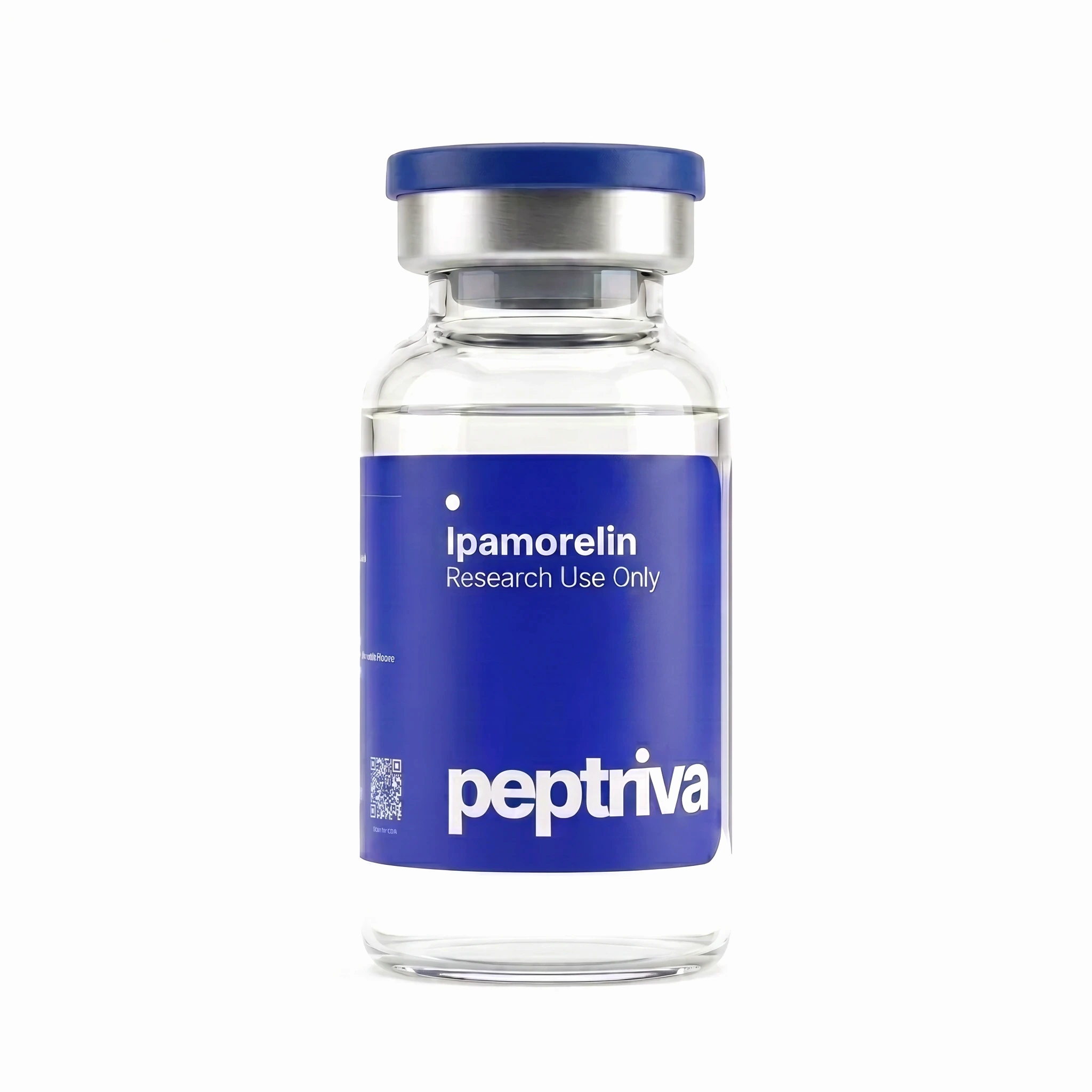
Ipamorelin
Selective ghrelin-receptor agonist · Aib-His-D-2-Nal-D-Phe-Lys-NH₂. The same reference pentapeptide used across the cited preclinical receptor-mechanism studies. COA available with each lot.
Interpreting the ipamorelin literature
The receptor pharmacology represents solid molecular biology applied to a well-mapped target. GHS-R1a is real. Ipamorelin is a clean agonist. The selectivity profile is research-useful and well-supported.
The Phase III ileus failure is the single most important real-world data point in the literature. A mechanistically credible peptide was tested in a controlled human trial for the indication its mechanism predicted. It did not meet its primary endpoint.
Grey-market body-composition and anti-aging claims for ipamorelin remain unsupported by controlled human data. No comparable trial has been conducted in healthy adults, and the one completed Phase III trial — in a different indication — failed to meet its primary endpoint.
What to know now
- GHS-R1a agonist. Binds the ghrelin receptor on pituitary GH cells. Signals through calcium, not cAMP.
- Aib stability. The synthetic N-terminal amino acid resists digestion in plasma and locks the peptide into receptor-fit shape.
- Clean profile. Triggers GH release without bumping cortisol, prolactin, or ACTH. The differentiator vs older GHRPs.
- CJC-1295 synergy. Two different receptor cascades produce a larger GH pulse than either alone.
- One Phase III failure. Postoperative ileus. Missed primary endpoint. Development discontinued.
- Zero RCTs for off-label uses. No trials for body composition, muscle gain, or anti-aging in healthy adults.
- 503A ineligible. FDA placed ipamorelin among substances banned for pharmacy compounding.
What we’re watching
Two questions over the next 18 months. First, whether anyone revives ipamorelin clinical development for cachexia or sarcopenia. The Phase III failure was indication-specific. A new trial in a wasting population could test whether the GH-release pharmacology produces a meaningful clinical outcome anywhere. Second, whether the preclinical pain findings get tested in humans. Ghrelin-receptor analgesia is mechanistically distinct from anything in the current pain pharmacopoeia.
References
- Lu, Z., Ngan, M. P., Liu, J. Y. H., et al. (2024). The growth hormone secretagogue receptor 1a agonists, anamorelin and ipamorelin, inhibit cisplatin-induced weight loss in ferrets. Physiology & Behavior, 284, 114644. https://doi.org/10.1016/j.physbeh.2024.114644
- Mohammadi, E. N., Louwies, T., Pietra, C., Northrup, S. R., & Greenwood-Van Meerveld, B. (2020). Attenuation of visceral and somatic nociception by ghrelin mimetics. Journal of Experimental Pharmacology, 12, 267–274. https://doi.org/10.2147/JEP.S249747
- Sinha, D. K., Balasubramanian, A., Tatem, A. J., et al. (2020). Beyond the androgen receptor: The role of growth hormone secretagogues in the modern management of body composition in hypogonadal males. Translational Andrology and Urology, 9(Suppl 2), S149–S159. https://doi.org/10.21037/tau.2019.11.30
- Gouda, M., & Ganesh, C. B. (2024). The influence of ghrelin agonist ipamorelin acetate on the hypothalamic-pituitary-testicular axis in a cichlid fish. Animal Reproduction Science, 268, 107550. https://doi.org/10.1016/j.anireprosci.2024.107550
- Rahman, O. F., Lee, S. J., & Seeds, W. A. (2026). Therapeutic peptides in orthopaedics: Applications, challenges, and future directions. Journal of the American Academy of Orthopaedic Surgeons Global Research & Reviews, 10(1). https://doi.org/10.5435/JAAOSGlobal-D-25-00236
- Mendias, C. L., & Awan, T. M. (2026). Safety and efficacy of approved and unapproved peptide therapies for musculoskeletal injuries and athletic performance. Sports Medicine. https://doi.org/10.1007/s40279-026-02437-0
- Mayfield, C. K., Bolia, I. K., Feingold, C. L., et al. (2026). Injectable peptide therapy: A primer for orthopaedic and sports medicine physicians. American Journal of Sports Medicine, 54(1), 223–229. https://doi.org/10.1177/03635465251357593
- Mavrych, V., Shypilova, I., & Bolgova, O. (2026). Therapeutic peptides in gerontology: Mechanisms and applications for healthy aging. Frontiers in Aging, 7, 1790247. https://doi.org/10.3389/fragi.2026.1790247