The growth-hormone axis peptides represent the oldest and most extensively discussed peptide category in the research literature — as well as the most claim-heavy in commercial contexts. This overview covers which compound holds an actual regulatory approval and which remain research tools without clinical-outcome data to support broader efficacy claims.
Six peptides get sold under this category. One is FDA-approved: tesamorelin, sold as Egrifta, and only for HIV-associated belly-fat redistribution. The other five all produce real but short-lived bumps in growth hormone and the downstream repair hormone GH triggers. None has finished a Phase III trial for anti-aging, muscle gain, or body composition. The category is built on extrapolation, not outcomes.
Three things define this category.
One. All six molecules act on the same hormone loop. The hypothalamus signals the pituitary, the pituitary releases GH, the liver then makes IGF-1. They push different buttons in that loop.
Two. The pharmacology is well-documented. Administration in controlled studies produces measurable GH and IGF-1 elevation. The literature has measured that hundreds of times across preclinical and early clinical models.
Three. No controlled trial has established a bridge from “hormone rose for an hour” to a meaningful body-composition or longevity outcome at 12 months for the unapproved members. That bridge is the central unanswered question in the literature.
We'll cover the three peptides we stock (Tesamorelin, CJC-1295 no DAC, Ipamorelin), then walk through the secondary cast. The evidence-tier chart below shows where each one sits.
Tesamorelin: the one with an actual approval
Tesamorelin, sold as Egrifta, is the only peptide in this category that has earned an FDA approval. It is a 44-amino-acid synthetic version of the endogenous growth-hormone-releasing hormone, with a chemical modification that confers resistance to DPP-IV enzymatic cleavage in the bloodstream.
The approved use is narrow. Tesamorelin reduces excess belly fat in HIV patients whose antiretroviral medications cause that fat to accumulate. That's a specific clinical problem that emerged in the early 2000s, and tesamorelin solved it.
The pivotal data: two 26-week double-blind RCTs in HIV-lipodystrophy patients, n=410 and n=404, showed roughly 15–18% reduction in belly fat measured by CT scan. Safety profile was benign. FDA approval came in 2010.
The mechanism is the cleanest in the category. Tesamorelin amplifies the endogenous pulsatile GH signal, which drives IGF-1 production, which in turn mediates lipolysis in deep abdominal tissue.
What's happening beyond the approval? A 2025 program is testing whether GH-axis amplification helps cognition in older adults. That's the endpoint wellness marketers love to extrapolate to. Early results are mixed and small. There's also active work in fatty liver disease, where the visceral-fat mechanism is a clean fit. Neither has FDA approval as of mid-2026.
The complete guide covers the Phase III HIV-lipodystrophy program, the cognition-in-aging work, IGF-1 monitoring, and the safety profile in depth. Read the full Tesamorelin guide →
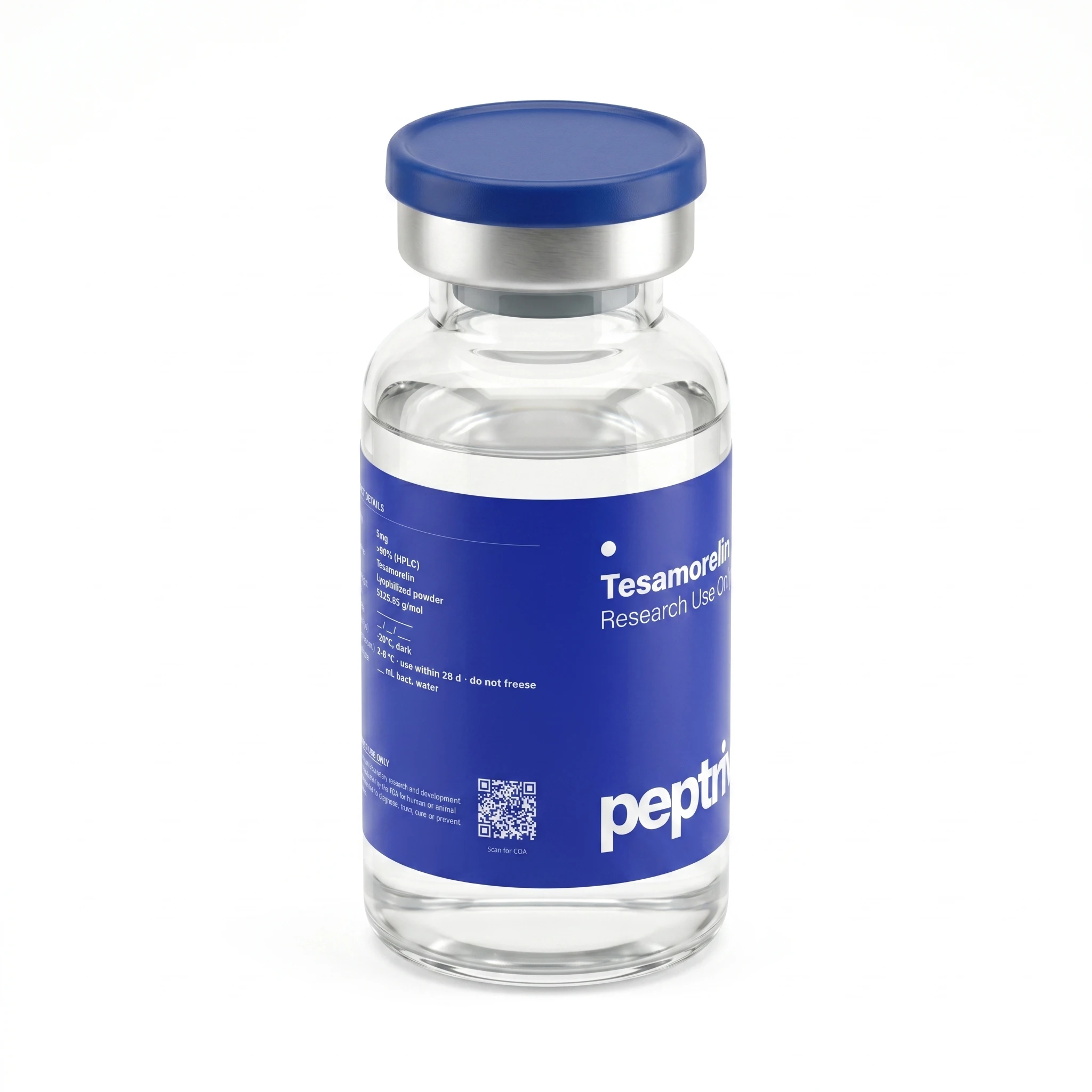
Tesamorelin
The same molecule as FDA-approved Egrifta. The only growth-hormone-axis peptide in this category with completed Phase III data. Lab-verified identity and purity.
CJC-1295 (no DAC): a research tool, not a therapy
CJC-1295 is available in two formulations. The “with DAC” version uses a Drug Affinity Complex linker that binds the peptide to serum albumin, extending plasma half-life to approximately 8 days. The “no DAC” version, also called Mod GRF 1-29, has a plasma half-life of approximately 30 minutes.
The short duration is the whole point for research applications. The no-DAC version has been used to study endogenous pulsatile GH rhythm. The long-acting DAC variant smooths that pulse into a flat, sustained elevation, which disrupts the natural secretory pattern.
The pharmacology is well-documented. In published pharmacokinetic studies, CJC-1295 no DAC administered subcutaneously produced a GH spike peaking approximately 30–60 minutes post-dose. The receptor activity is identical to tesamorelin's. Just different durability.
Where the evidence stops: no Phase III trial. No FDA approval. No body-composition outcome data. The 2017 fatality reports tied to a contaminated DAC formulation further complicate the regulatory picture. The peptide sits on the WADA Prohibited List under S2.
The honest framing. CJC-1295 no DAC is a real research tool for studying GH-pulse dynamics. It's not a clinically validated therapy for body composition or anti-aging. Read the full CJC-1295 guide →
Ipamorelin: the cleanest of the GH secretagogues
Ipamorelin is a 5-amino-acid peptide that activates the ghrelin receptor (GHS-R1a) — a receptor expressed in the hypothalamus and pituitary that mediates both appetite signalling and GH release. The full sequence is Aib-His-D-2-Nal-D-Phe-Lys-NH₂.
It became the standard tool for studying isolated GH-pathway dynamics because it's selective. Older GH-releasing peptides like GHRP-2, GHRP-6, and hexarelin also bump cortisol, prolactin, and ACTH. Ipamorelin doesn't. That clean profile is why researchers pair it with CJC-1295. The two together hit different receptors and produce a synergistic GH spike without the off-target endocrine noise.
The pharmacology is solid. In published studies, subcutaneous administration of Ipamorelin produced a GH peak approximately 30–60 minutes post-dose. The downstream IGF-1 signal rose over the following 12–24 hours.
Where the evidence stops: no Phase III. No FDA approval. The largest controlled human study was a 2011 trial in postoperative ileus, the gut paralysis that follows abdominal surgery. The trial missed its primary endpoint. That was the molecule's one serious shot at a clinical indication. WADA prohibits Ipamorelin under S2.
The complete guide covers receptor selectivity, the CJC-1295 pairing protocols, the ileus trial, and the safety profile. Read the full Ipamorelin guide →
Pharmacodynamic elevation of GH and IGF-1 is not a substitute for a clinical outcome trial. Every secretagogue in this class can produce measurable hormone changes. None of the unapproved compounds has shown a controlled, clinically meaningful body-composition or longevity outcome in a Phase III trial.
— Endocrine Reviews on the GH-axis pharmacology literature
The secondary cast: Sermorelin, GHRP-2, Hexarelin
Three more GH-axis peptides show up in adjacent product lines and compounding pharmacies. Only one is in our catalog. The short framing:
- Sermorelin, also called GRF 1-29. A 29-amino-acid GHRH analog — the native N-terminal active sequence of endogenous GHRH, without the stabilising modifications present in tesamorelin or CJC-1295. It was formerly FDA-approved as Geref Diagnostic for testing GH deficiency in paediatric subjects. The parent product was withdrawn from the US market in 2008 for commercial reasons, not safety. Plasma half-life is approximately 10–20 minutes, comparable to CJC-1295 no DAC.
- GHRP-2, also called pralmorelin. A synthetic 6-amino-acid ghrelin-receptor agonist. Approved in Japan as a diagnostic tool for adult GH deficiency. Elevates cortisol and prolactin meaningfully — the off-target noise Ipamorelin was designed to avoid.
- Hexarelin. Another 6-amino-acid ghrelin-receptor agonist with significant cardiac-receptor binding. The preclinical literature on post-heart-attack cardioprotection in rodents is interesting, but the human signal is older and small. Tachyphylaxis — the GH response getting weaker with repeated dosing — is documented.
None of these three is FDA-approved for an anti-aging, body-composition, or recovery indication in the US. Two have niche approvals for diagnostic testing: Sermorelin historically, GHRP-2 in Japan. That's a very different use than the wellness market suggests.
Where the evidence actually sits
Where this falls short. Tesamorelin is FDA-approved for one narrow indication, HIV-lipodystrophy, not for healthy aging. The other five peptides in the category have real pharmacology and zero Phase III outcomes data for body composition, longevity, or recovery. The marketing claim “raises your growth hormone” is technically true for all six. The marketing claim “produces meaningful body-composition or anti-aging results” is supported only for tesamorelin in HIV-lipodystrophy.
That gap matters. The populations enrolled in existing studies — HIV patients with lipodystrophy, GH-deficient children, and healthy subjects in short crossover pharmacodynamic trials — differ substantially from the populations for whom off-label use is discussed in the literature. Studies have not established that findings from these cohorts generalise to other groups.
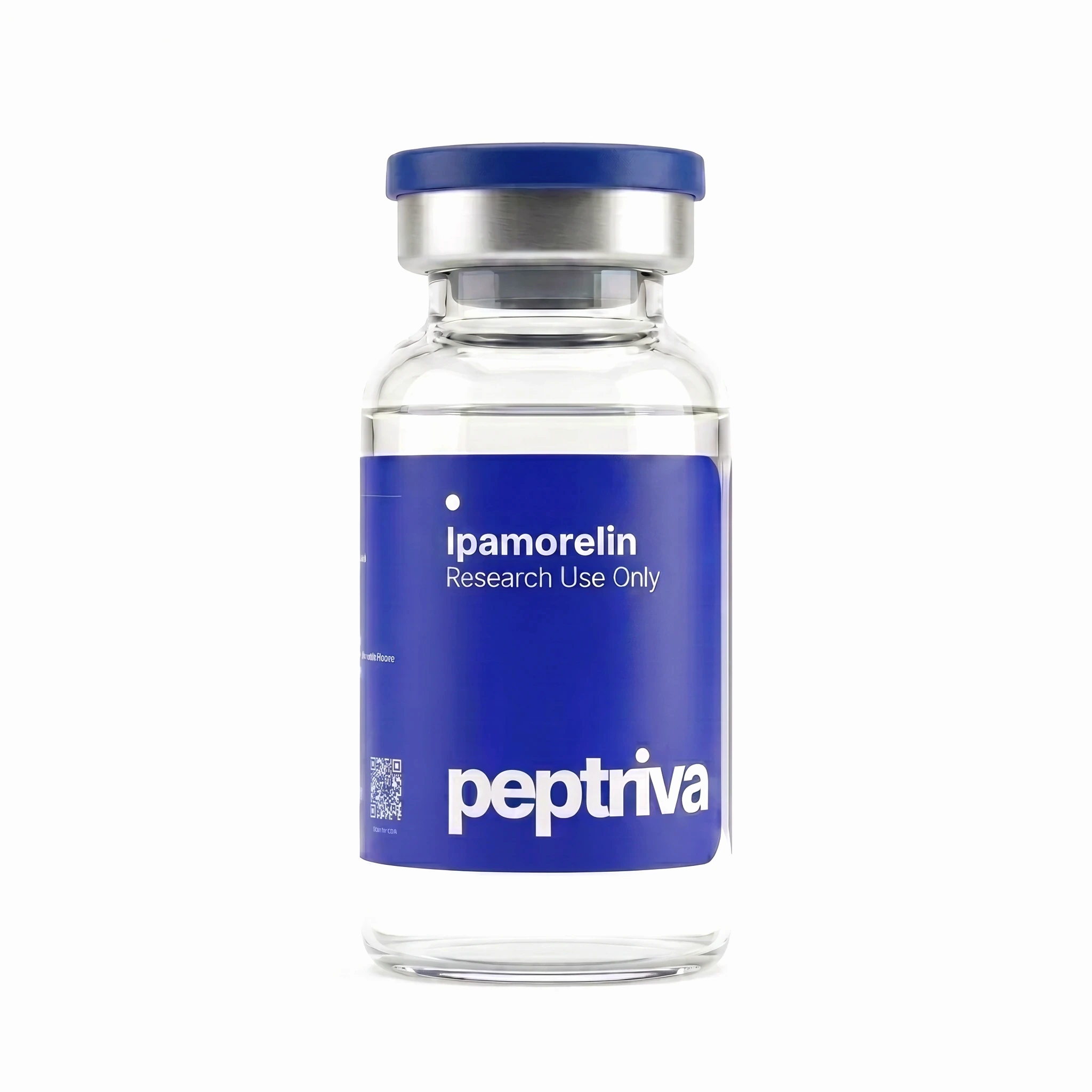
Ipamorelin
Pentapeptide ghrelin-receptor agonist with the cleanest GH-release profile of the GHRP family. The same reference compound used across the cited pharmacology studies. COA available with each lot.
Why this category extrapolates so hard
The biology is genuinely elegant. Growth hormone drops measurably with age. So does muscle mass. Belly fat goes up. Collagen production goes down. All three track that hormonal drop.
A short-term peptide that produces a GH spike is mechanistically connected to all three of those processes. The leap is from “mechanistically connected’’ to “clinically reverses age-related decline.’’
That leap needs an RCT in older adults, with a pre-specified body-composition or functional endpoint, sustained for at least 6–12 months. No unapproved peptide in this class has been put through that trial.
What would close the gap? A properly powered RCT in healthy older adults, comparing tesamorelin, a CJC-1295 + Ipamorelin combination as investigated in the literature, and placebo — with body composition and functional endpoints over 6–12 months. That trial has not been conducted. The closest analogue is the tesamorelin cognition work, which is small-n and ongoing.
Key research and regulatory considerations
The published literature and regulatory record raise several considerations relevant to this compound class:
- Regulatory status varies within the class. Tesamorelin holds FDA approval for one indication. The other compounds in this category lack that designation. The regulatory and evidence picture differs substantially between approved and unapproved members.
- IGF-1 monitoring in clinical studies. Sustained elevation of IGF-1 has been associated in the literature with theoretical risks to metabolic and cancer pathways. Published protocols have incorporated biomarker monitoring for this reason.
- WADA prohibition. Every peptide in this category appears on the WADA Prohibited List under S2. Studies involving competitive athletes should account for this status.
- Pre-specified endpoints. Pharmacodynamic hormone elevation is not a substitute for a clinical outcome endpoint. Studies without a pre-specified primary outcome cannot determine efficacy.
- Source quality. The 2017 adverse events tied to a contaminated CJC-1295 DAC formulation documented that compound purity and chain-of-custody are material to research integrity, independent of the molecules themselves.
What to know now
- One FDA approval in the entire category: Tesamorelin (Egrifta) for HIV-lipodystrophy. Approved 2010. Two pivotal Phase III RCTs.
- Three peptides we carry: Tesamorelin, CJC-1295 no DAC, Ipamorelin. All produce measurable growth hormone elevations. None has Phase III body-composition or anti-aging data.
- Two adjacent peptides: Sermorelin (historic FDA approval for diagnostic use, withdrawn 2008), GHRP-2 (Japan diagnostic approval). Hexarelin shows tachyphylaxis with repeated dosing.
- Receptor mechanics: Tesamorelin, CJC-1295, and Sermorelin hit the natural growth-hormone-releasing receptor at the pituitary. Ipamorelin, GHRP-2, and Hexarelin hit the ghrelin receptor instead.
- WADA status: every peptide here is Prohibited under S2.
- The evidence gap: a measurable GH spike isn't a clinical outcome trial. The bridge has been built only for tesamorelin in HIV-lipodystrophy.
What we're watching
Three things over the next 18 months. First, whether the tesamorelin cognition-in-aging program produces a properly powered Phase II or III trial. That would be the first GH-axis approval outside of HIV. Second, whether NAFLD trials with tesamorelin convert from Phase II positive signal into Phase III. The visceral-fat mechanism is the cleanest mechanistic case here. Third, whether any RCT comparing CJC-1295 + Ipamorelin to placebo in healthy older adults appears on ClinicalTrials.gov. That's the trial the category most needs and the one no developer has a commercial reason to fund.
References
- Falutz, J., Allas, S., Blot, K., et al. (2007). Metabolic effects of a growth hormone–releasing factor in patients with HIV. New England Journal of Medicine, 357(23), 2359–2370. https://doi.org/10.1056/nejmoa072375
- Falutz, J., Mamputu, J. C., Potvin, D., et al. (2010). Effects of tesamorelin (TH9507), a growth hormone-releasing factor analog, in HIV-infected patients with excess abdominal fat: A pooled analysis of two multicenter, double-blind placebo-controlled phase 3 trials. Journal of Clinical Endocrinology & Metabolism, 95(9), 4291–4304. https://doi.org/10.1016/s1096-6374(10)70016-2
- Ionescu, M., & Frohman, L. A. (2006). Pulsatile secretion of growth hormone (GH) persists during continuous stimulation by CJC-1295, a long-acting GHRH analog. Journal of Clinical Endocrinology & Metabolism, 91(12), 4792–4797. https://doi.org/10.1210/jc.2006-1702
- Raun, K., Hansen, B. S., Johansen, N. L., et al. (1998). Ipamorelin, the first selective growth hormone secretagogue. European Journal of Endocrinology, 139(5), 552–561. https://doi.org/10.1530/eje.0.1390552
- Beck, D. E., Sweeney, W. B., McCarter, M. D., & the Ipamorelin 201 and 202 Study Groups (2014). Prospective, randomized, controlled, proof-of-concept study of the Ipamorelin for the management of postoperative ileus in bowel resection patients. International Journal of Colorectal Disease, 29(12), 1527–1534. https://doi.org/10.1007/s00384-014-2030-8
- Stanley, T. L., Falutz, J., Mamputu, J. C., et al. (2011). Effects of tesamorelin on inflammatory markers in HIV patients with excess abdominal fat. AIDS, 25(10), 1281–1288. https://doi.org/10.1097/qad.0b013e328347f3f1
- Walker, R. F. (2006). Sermorelin: A better approach to management of adult-onset growth hormone insufficiency? Clinical Interventions in Aging, 1(4), 307–308. https://doi.org/10.2147/ciia.2006.1.4.307
- Bowers, C. Y. (2012). History to the discovery of ghrelin. Methods in Enzymology, 514, 3–32. https://doi.org/10.1016/b978-0-12-381272-8.00001-5
- Ghigo, E., Boghen, M., Casanueva, F. F., & Dieguez, C. (1994). Growth hormone-releasing peptides. European Journal of Endocrinology, 136(5), 445–460. https://doi.org/10.1530/eje.0.1360445
- Stanley, T. L., Fourman, L. T., Feldpausch, M. N., et al. (2019). Effects of tesamorelin on non-alcoholic fatty liver disease in HIV: A randomised, double-blind, multicentre trial. The Lancet HIV, 6(12), e821–e830. https://doi.org/10.1016/s2352-3018(19)30338-8