The Epithalon telomerase mechanism is the central marketing claim for the most prominent "longevity peptide" you'll see in the consumer space. It's also one of the clearest cases we've found of consumer claims outrunning the evidence.
Epithalon is a synthetic 4-amino-acid peptide (sequence Ala-Glu-Asp-Gly, abbreviated AEDG) developed by Vladimir Khavinson's group in Saint Petersburg, Russia. The proposed mechanisms: turn up a gene called hTERT that builds the telomerase enzyme, extend the protective caps on chromosomes (telomeres), stimulate pineal-gland melatonin output, and reduce markers of cellular aging. A 2025 independent paper from Brunel University London confirmed the telomere extension in normal cells, but the same paper showed AEDG also activates a backup telomere-maintenance pathway in cancer cells. That's a caveat the marketing rarely mentions.
We wrote this for researchers who want to understand the actual molecular biology — not the "longevity peptide" shorthand. We'll walk you through five things. The hTERT/telomerase story. The single-source problem in the literature. The 2025 Brunel replication. The pineal-melatonin axis. And the cancer-cell ALT finding the field hasn't grappled with.
- Telomere. Repetitive DNA at the ends of chromosomes. Like the plastic caps on shoelaces. They shorten each time a cell divides. When they get too short, the cell stops dividing.
- Telomerase. The enzyme that adds telomere DNA back on. Active in stem cells and most cancers. Mostly silent in somatic cells.
- hTERT. Human Telomerase Reverse Transcriptase. The gene that makes the working part of telomerase.
- ALT. Alternative Lengthening of Telomeres. A backup telomere-maintenance pathway used by about 10-15% of cancers. It doesn't rely on telomerase.
- Pineal gland. A small pinecone-shaped gland that produces melatonin, the hormone involved in circadian rhythm regulation.
Four amino acids, one big claim
Epithalon is the smallest peptide we cover in this mechanism series. Just 4 amino acids: Ala-Glu-Asp-Gly. Hence AEDG. Vladimir Khavinson's group in Saint Petersburg synthesized it based on the amino-acid composition of Epithalamin, a cow pineal-gland extract the same lab has studied since the 1970s. Epithalon is the flagship of Khavinson's "short peptide bioregulator" class.
Here's the most important thing to know before you read the literature: the single-source problem. The vast majority of Epithalon research comes from the Khavinson group itself or close collaborators. Independent Western replication is sparse. Many older Russian-language clinical trials aren't indexed in PubMed and aren't accessible for outside quality review. The 2025 Brunel paper is one of the few non-Khavinson outputs on the molecule. It confirmed a key mechanism. It also raised a caveat the Khavinson literature doesn't emphasize.
The hTERT and telomerase story
The central claim for Epithalon is hTERT upregulation. hTERT is the gene that builds the working part of telomerase. Telomerase is the enzyme that adds new DNA to the protective caps (telomeres) at the ends of chromosomes. Most somatic adult cells silence telomerase. Stem cells keep it on. Most cancers turn it back on.
Telomeres shorten each time a cell divides. When they get too short, the cell stops dividing. That's one of the cleanest molecular features of cellular aging we know. So a peptide that reactivates telomerase in normal cells is, in theory, a candidate "lifespan extender" in preclinical models. That's the claim Khavinson's group has built around AEDG since the late 1990s — and the claim the consumer "longevity peptide" market has widely repeated.
The 2020 Khavinson-group Molecules paper used molecular modeling to propose that AEDG binds linker histones (proteins that package DNA). The proposed effect is to relax the chromatin around the hTERT gene, making it easier to read. The mechanism is indirect. AEDG doesn't bind telomerase itself. It supposedly opens up the gene that makes telomerase.
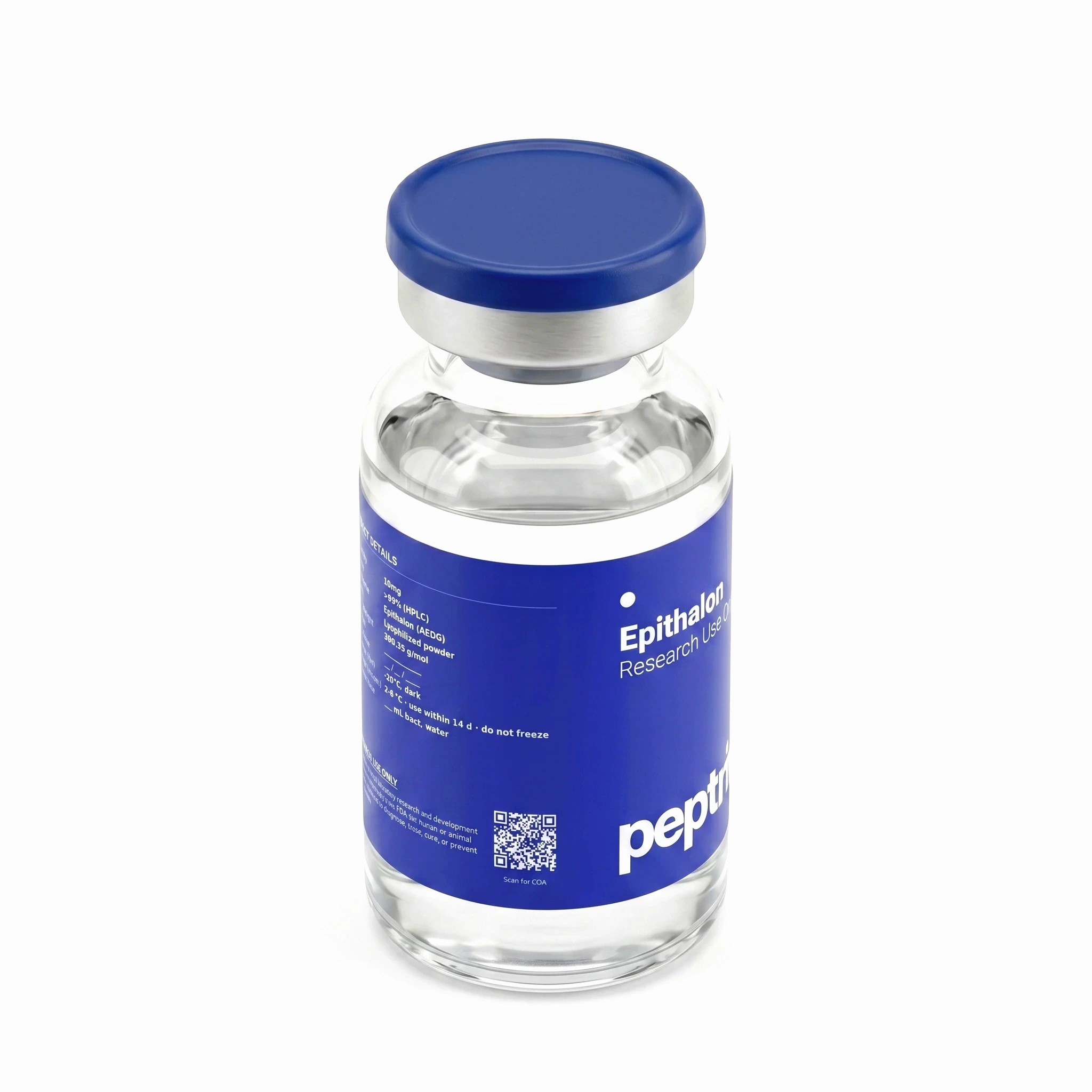
Epithalon
The same AEDG tetrapeptide cited across the 7 mechanism studies in this article — including the 2025 Brunel replication. Lab-verified identity and purity.
The 2025 Brunel paper — and the cancer-cell caveat
The most informative recent paper on Epithalon is a 2025 study from Brunel University London, published in Biogerontology. The authors tested AEDG on three cell systems: two breast cancer cell lines (21NT and BT474), normal epithelial cells, and fibroblasts. They reported dose-dependent telomere extension in the normal cells, via hTERT upregulation. That's independent confirmation of Khavinson's mechanism. It's the strongest piece of evidence the Epithalon literature has.
The same paper also reported that AEDG activated the ALT pathway in the cancer cell lines. ALT is the backup telomere-maintenance route used by about 10-15% of cancers. It uses DNA recombination instead of telomerase. So the Brunel finding is that Epithalon doesn't just turn up telomerase in normal cells. It can also turn on the ALT pathway in cancer cells that lack telomerase.
That second half is a real safety concern. Roughly 90% of cancers depend on telomerase reactivation to keep dividing. Chronic telomerase activation in someone with an undetected pre-cancerous lesion is theoretically problematic. The Brunel paper extends the concern to ALT: even in the 10% of cancers that use ALT instead, AEDG appears to enhance the pathway. The consumer marketing almost never mentions this.
The pineal-melatonin axis
The second major proposed mechanism is pineal-gland modulation. Epithalon was derived from a pineal extract, and Khavinson's group has consistently positioned it as a melatonin-output stimulator. A 2024 Russian-language study by Ivko et al. reported that AEDG modulates four genes in pineal-gland cells: CLOCK, Cry2, AANAT, and ASMT. Those are the genes that build the melatonin-making machinery and the body's master clock.
The biological plausibility is reasonable. Melatonin output declines with age. Disrupted circadian rhythm is linked to many age-related diseases. A peptide that nudges pineal output is a coherent (if hard-to-test) longevity strategy. The catch: the strongest pineal-axis evidence is in Russian-language literature, not in PubMed-indexed Western trials.
Epitalon increases telomere length in human cell lines through telomerase upregulation in normal cells, and through ALT activity in cancer cells.
— Al-Dulaimi et al., Biogerontology, 2025
Histone binding and the epigenetic story
The 2020 Khavinson Molecules paper proposed a more upstream mechanism. AEDG binds linker histones (specifically H1/3 and H1/6) at their DNA-contact sites. That binding could relax chromatin and change which genes get read. The proposed downstream effects are increased expression of stem-cell markers, plus turned-up hTERT.
This is the most ambitious claim in the Epithalon literature. It's also the one with the least independent replication. Molecular modeling of histone binding is suggestive, not the same thing as demonstrated chromatin remodeling in a live cell. If the histone-H1 hypothesis is right, it would unify the various downstream effects Khavinson reports under one mechanism. If it isn't, the mechanism story falls back on a scattered set of downstream-marker observations.
Antioxidant and anti-senescence activity
A separate axis of the literature emphasizes antioxidant activity (comparable to melatonin's) and reduction of cellular-aging markers like p16, p21, and p53. A 2022 mouse-oocyte study by Yue et al. reported that AEDG at 0.1 mM reduced reactive oxygen species, fixed spindle defects, raised mitochondrial activity, and cut cell death in aging oocytes.
A 2025 Italian-Russian collaboration (with Khavinson co-authorship) reported improved wound healing in damaged retinal cells. These findings are consistent with a cytoprotective profile in cell culture. We'd call AEDG a "tissue-stress modulator" rather than a single-mechanism telomere extender. Whether the antioxidant effects, the senescence-marker reduction, the histone binding, and the hTERT upregulation are all the same underlying mechanism or four separate activities is unresolved.
The gap between the data and the marketing
Our honest read on the Epithalon literature: the molecular biology is interesting and at least partly confirmed by independent work. The consumer claims of "telomere extension" and "life extension" outrun the human evidence. The 2025 ALT-in-cancer-cells finding is a caveat the field hasn't adequately addressed in the consumer-facing marketing. Three structural caveats you should keep in mind: the single-source dominance of the Khavinson group, the absence of Western RCTs, and the cancer-cell ALT activation.
The mechanism summary in one sentence. Epithalon is a 4-amino-acid peptide proposed to turn up the hTERT gene through chromatin remodeling, stimulate the pineal gland, and cut cellular-aging markers — with cell-culture confirmation of telomere extension in normal cells (Brunel 2025), and the same paper showing ALT activation in cancer cells. That last finding is a meaningful and rarely-acknowledged caveat.
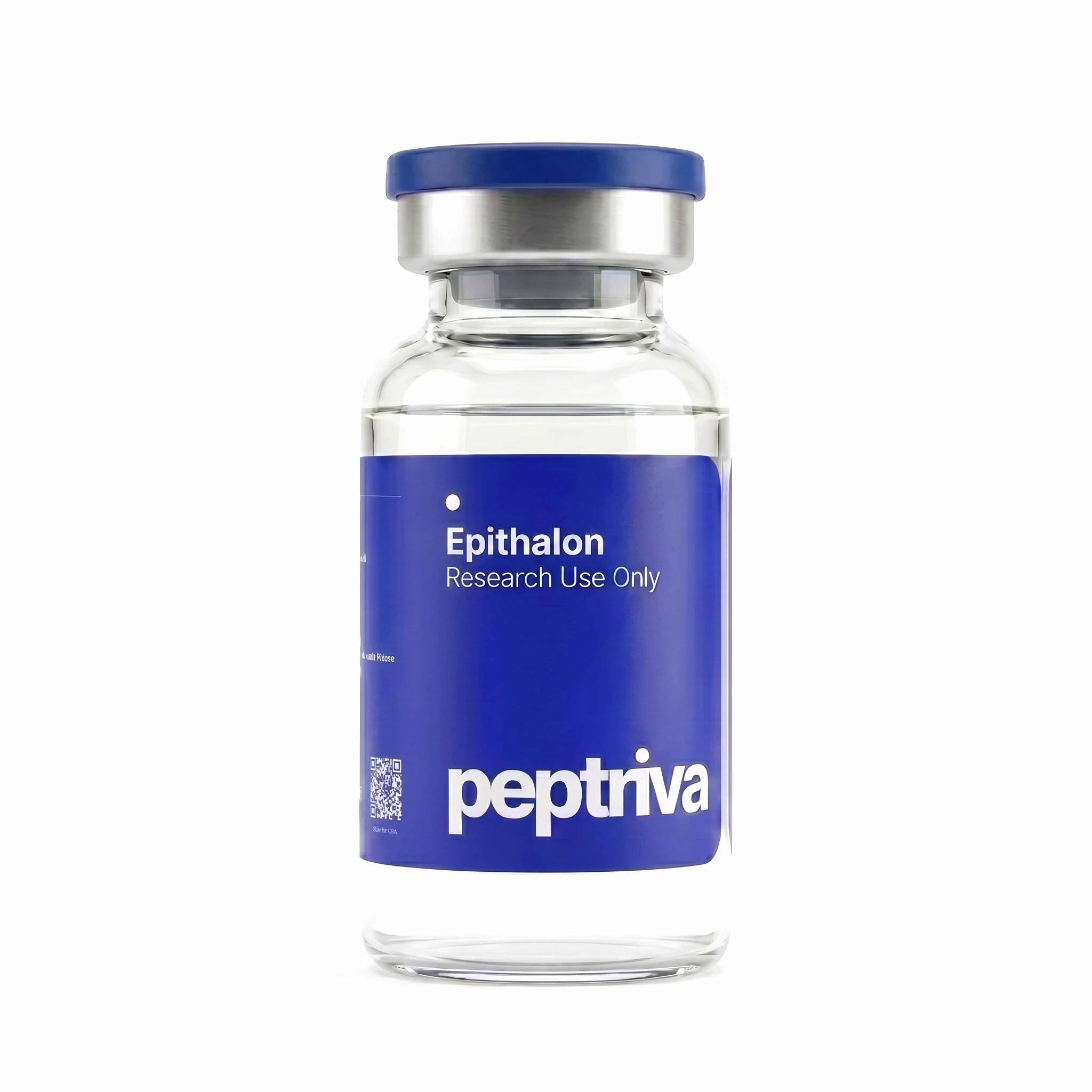
Epithalon
The AEDG tetrapeptide. The same reference compound used across the cited Khavinson-group and Brunel 2025 mechanism studies. COA available with each lot.
How to read the Epithalon literature honestly
Our honest reading: the proposed mechanisms are biologically coherent and partly confirmed at the cell-culture level. The single-source-dominance problem makes any broader claim harder to verify than it would otherwise be. The 2025 Brunel paper is the strongest independent confirmation of the telomerase-induction mechanism. The same paper is also the strongest evidence that the molecule has effects in cancer cells that the consumer story doesn't acknowledge.
For research-context use, the literature supports a narrower claim than the marketing does. AEDG has cell-culture evidence for telomerase induction, antioxidant activity, and modest pineal modulation. The published evidence does not extend to human longevity outcomes. The ALT-cancer-cell finding is a real caveat the field has not yet fully addressed.
What to know now
- Tetrapeptide: AEDG (Ala-Glu-Asp-Gly), derived from bovine pineal-gland extract Epithalamin.
- Central mechanism: proposed hTERT mRNA upregulation and telomere extension, possibly via histone-H1-mediated chromatin remodelling.
- Brunel 2025: independent confirmation of telomere extension in normal cells via hTERT — the strongest non-Khavinson evidence in the literature.
- ALT-in-cancer-cells caveat: the same Brunel paper showed AEDG activates the ALT pathway in breast cancer cell lines.
- Pineal axis: proposed melatonin-synthesis stimulation and circadian-gene modulation; evidence is largely in Russian-language journals.
- Antioxidant and anti-senescence: reduction of ROS, p16, p21, p53, and spindle defects in oocyte and stem-cell systems.
- Single-source dominance: the vast majority of efficacy claims come from the Khavinson group or close collaborators.
- No Western RCTs: consumer "telomere extension" framing outpaces the supporting human evidence.
What we're watching
Two questions over the next 24 months. First, whether any Western group runs an independent in-vivo study addressing the ALT-cancer-cell finding — the absence of follow-up on the Brunel 2025 caveat is a notable gap. Second, whether a single PubMed-indexed Western RCT of Epithalon for any indication enters the published literature; the consumer-marketing claims have outpaced the evidence base for two decades, and a single rigorous Western trial would meaningfully reshape interpretation.
References
- Khavinson, V., Diomede, F., Mironova, E., et al. (2020). AEDG peptide (Epitalon) stimulates gene expression and protein synthesis during neurogenesis: Possible epigenetic mechanism. Molecules, 25(3), 609. https://doi.org/10.3390/molecules25030609
- Al-Dulaimi, S., Thomas, R., Matta, S., & Roberts, T. (2025). Epitalon increases telomere length in human cell lines through telomerase upregulation or ALT activity. Biogerontology, 26(5), 178. https://doi.org/10.1007/s10522-025-10315-x
- Araj, S. K., Brzezik, J., Mądra-Gackowska, K., & Szeleszczuk, Ł. (2025). Overview of Epitalon — highly bioactive pineal tetrapeptide with promising properties. International Journal of Molecular Sciences, 26(6), 2691. https://doi.org/10.3390/ijms26062691
- Yue, X., Liu, S. L., Guo, J. N., et al. (2022). Epitalon protects against post-ovulatory aging-related damage of mouse oocytes. Aging (Albany NY), 14(7), 3191–3202. https://doi.org/10.18632/aging.204007
- Gatta, M., Dovizio, M., Milillo, C., et al. (2025). The antioxidant tetrapeptide Epitalon enhances delayed wound healing in an in vitro model of diabetic retinopathy. Stem Cell Reviews and Reports, 21(6), 1822–1834. https://doi.org/10.1007/s12015-025-10911-x
- Ullah, S., Haider, Z., Perera, C. D., et al. (2025). Epitalon-activated telomerase enhances bovine oocyte maturation rate and post-thawed embryo development. Life Sciences, 362, 123381. https://doi.org/10.1016/j.lfs.2025.123381
- Ivko, O. M., Trofimova, S. V., Trofimov, A. V., Sharkovich, Z., & Mogilev, V. A. (2024). Peptidergic regulation of expression of cellular aging marker proteins in buccal epithelium. Advances in Gerontology, 37(5), 516–524. PMID 39742404