The headline number on DSIP, stress, and cortisol: one published human cortisol study, from 1988, in ~15 alcohol-withdrawal patients. That’s the entire human evidence base, after 50 years of research.
DSIP (Delta Sleep-Inducing Peptide) is a 9-amino-acid peptide isolated from rabbit brain blood in 1977. Despite the name, its signature claim — inducing sleep in humans — has never been confirmed in five decades of research. No DSIP receptor has been identified. Modern Western RCT evidence is essentially absent. The strongest human cortisol data is a small 1988 alcohol-withdrawal study. Modern Russian preclinical work focuses on stroke and heart-attack injury, not stress. The “natural stress relief” marketing significantly outpaces the controlled human evidence.
DSIP holds an odd distinction. It’s one of the longest-studied peptides in the grey-market space that has produced almost no durable clinical translation.
The discovery story is real. Schoenenberger and Monnier’s Swiss group isolated DSIP from rabbit brain blood collected during electrically-induced sleep. They characterized the 9-residue sequence (Trp-Ala-Gly-Gly-Asp-Ala-Ser-Gly-Glu) and proposed a sleep-regulatory role.
Fifty years later, that proposed role remains contested. The literature has shifted. Modern preclinical work focuses on protecting the brain after a stroke, not on sleep or stress.
The “DSIP for cortisol management” consumer pitch is an attempt to keep the molecule marketable as the original sleep claim weakened. Here’s what the evidence actually supports for that pitch.
What does the HPA-axis claim mean?
The HPA axis (hypothalamic-pituitary-adrenal axis) is the principal stress-response system in mammals. Stress signals activate the hypothalamus, which signals the pituitary, which signals the adrenal glands to release cortisol. Cortisol then feeds back to modulate system activity.
The DSIP hypothesis is that the peptide either directly or indirectly dampens one of those steps, usually framed as cortisol suppression or reduced stress reactivity.
The case rests on three legs. Early animal work showed DSIP reduced cortisol-equivalent (corticosterone) responses to challenge in stressed rodents. Some human observations suggested HPA blunting. And the broader argument: an endogenous sleep peptide should plausibly modulate stress too, given the well-established crosstalk between sleep and the cortisol system.
The case is plausible but thin. No DSIP receptor has been identified in humans, so the receptor-level pharmacology can’t be characterized. The downstream readouts (cortisol levels, stress questionnaires, sleep tracking) are measurable, but without a defined receptor, dose-response and reproducibility across labs have been hard to establish.
What did the 1988 Iyer study actually find?
The most-cited single human data point in the DSIP cortisol literature is the 1988 Iyer study. It reported cortisol suppression after DSIP administration in alcohol-withdrawal patients.
The trial is old, small (~15 active, ~5 control), and methodologically of its era. Not a modern double-blind placebo-controlled design with validated outcomes and pre-specified analysis plans. It predates the 2020–2026 PubMed window most contemporary reviews use.
Our honest read of Iyer 1988: it’s an early-stage signal in a stress-intense clinical context (alcohol withdrawal is one of the most reliably HPA-activating conditions in medicine). The cortisol effect was statistically significant in the original report. That’s real preliminary data.
But it hasn’t been replicated in modern Western RCT conditions over the next four decades, even though alcohol withdrawal is an active clinical-research area.
The 2020–2026 PubMed-indexed DSIP literature contains no modern human RCT data on cortisol or HPA effects. Recent work focuses elsewhere, mainly on stroke and heart-attack injury in Russian preclinical models. That doesn’t mean the cortisol claim is fake. It means modern controlled-trial evidence for it is essentially absent.
Despite nearly 50 years since DSIP’s discovery, definitive human RCT evidence supporting the sleep-induction or stress-protective claims has not emerged in the modern PubMed-indexed literature. Russian-language clinical work on DSIP exists but is not indexed in PubMed and is not Western RCT-grade.
— peptriva research, drawing on the published DSIP literature
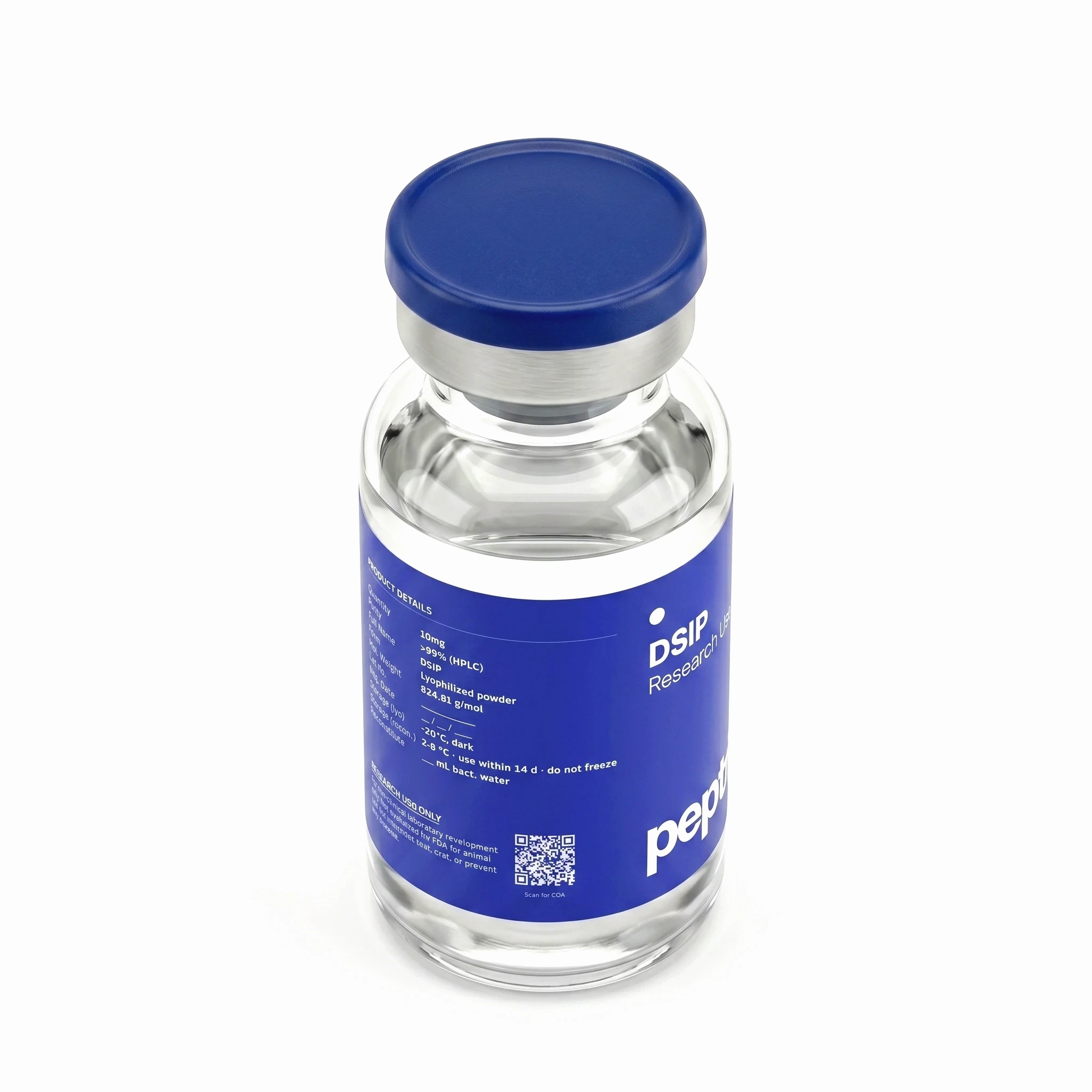
DSIP
The same compound cited across the preclinical stress and reperfusion-injury studies in this review. Lab-verified identity and purity.
What does the modern Russian preclinical work show?
The most active 2020–2026 DSIP research comes from the Shemyakin and Ovchinnikov Institute of Bioorganic Chemistry (Russian Academy of Sciences).
A 2021 paper by Tukhovskaya showed that intranasal DSIP (and a modified version, KND peptide) given during reperfusion reduced infarct volume in mouse stroke models and rat heart-attack models. A separate 2021 paper from the same group showed that intranasal DSIP at 120 mcg/kg for 7 days post-stroke improved motor coordination in rats.
This work is methodologically careful and produced one critical safety finding the consumer marketing skips entirely. In pilot studies, administering these peptides during the artery blockage (rather than after blood flow returned) caused 100% mortality.
The authors are direct about it. Timing matters. Indiscriminate DSIP use could be deleterious if mistimed in any acute ischemic event.
That finding doesn’t map cleanly onto consumer cortisol use, where the peptide is taken prophylactically rather than during a stroke. But it shows something important about DSIP biology. The effects are context-specific. Some could be harmful in the wrong context. And modern research has shifted away from the “general stress-protective peptide” framing that consumer marketing still leans on.
A 2024 paper by Mu studied a yeast-secreted DSIP fusion peptide engineered to cross the blood-brain barrier in an insomnia mouse model. It modulated serotonin, glutamate, dopamine, and melatonin. The paper acknowledged plain DSIP performed worse than the engineered version.
That matches the historic concern: ordinary DSIP doesn’t cross the blood-brain barrier well. It’s a critical detail for any consumer claim that injected or sprayed DSIP modulates central nervous system stress responses. The basic question of whether the peptide actually reaches the brain hasn’t been resolved in favor of plain DSIP.
What about the sleep-stress overlap?
The strongest framing for the DSIP stress claim leans on the real crosstalk between sleep and the stress system. Bad sleep raises evening cortisol. Chronic stress destroys sleep. The two systems modulate each other reciprocally.
An endogenous “sleep-inducing peptide” that dampens stress fits that framework conceptually. The problem: DSIP’s sleep claim itself has never been confirmed across five decades.
If the sleep effect isn’t reproducible, the “sleep-stress overlap” argument inherits the same evidence problem. The consumer narrative treats both effects as confirmed, then invokes their mechanistic overlap as additional support. Our honest read: neither effect is robustly confirmed in modern Western RCT conditions.
Where this falls short. The 1988 Iyer alcohol-withdrawal study is the most-cited human cortisol-suppression data point, and modern Western replication is essentially absent. The 2020–2026 preclinical work focuses on stroke and heart-attack injury, not stress. The blood-brain-barrier penetration problem complicates the CNS-stress story for plain DSIP. The evidence base for “DSIP as cortisol modulator” is preliminary and thin.
How the evidence stacks up for stress-related claims
DSIP has been marketed as a “natural stress-relief peptide” and “cortisol management” compound; the evidence base for those claims is preliminary on its strongest day.
The mechanism is plausible but underspecified. The strongest human data point is nearly 40 years old. Modern preclinical work has shifted to different indications. The blood-brain-barrier question for plain DSIP remains unresolved.
The existing literature does not establish that DSIP reliably modulates stress responses in controlled human trials. The 1988 Iyer study represents the only available human cortisol data, and it has not been replicated under modern RCT conditions.
Research into HPA-axis dysregulation has identified several pharmacological and behavioral interventions with substantially stronger controlled-trial evidence, including validated anxiolytics, cognitive-behavioral approaches, and mindfulness-based protocols.
Key open questions in the DSIP-and-stress literature:
- What clinical outcome is being targeted? Perceived stress, sleep disruption, cortisol levels, and anxiety symptoms each have distinct mechanistic pathways and different bodies of intervention evidence.
- What is the strongest controlled human evidence for the specific indication? For DSIP and stress, the published record is the 1988 Iyer study; modern Western RCT data is essentially absent.
- What does the 2021 Russian stroke safety signal imply? Timing of administration matters. In acute stroke contexts, preclinical studies reported DSIP could be deleterious. Extrapolation to other use contexts requires caution.
- What are the sourcing and purity standards? Synthetic DSIP is produced by multiple research-chemical manufacturers; lot-level identity and purity verification is essential for any research application.
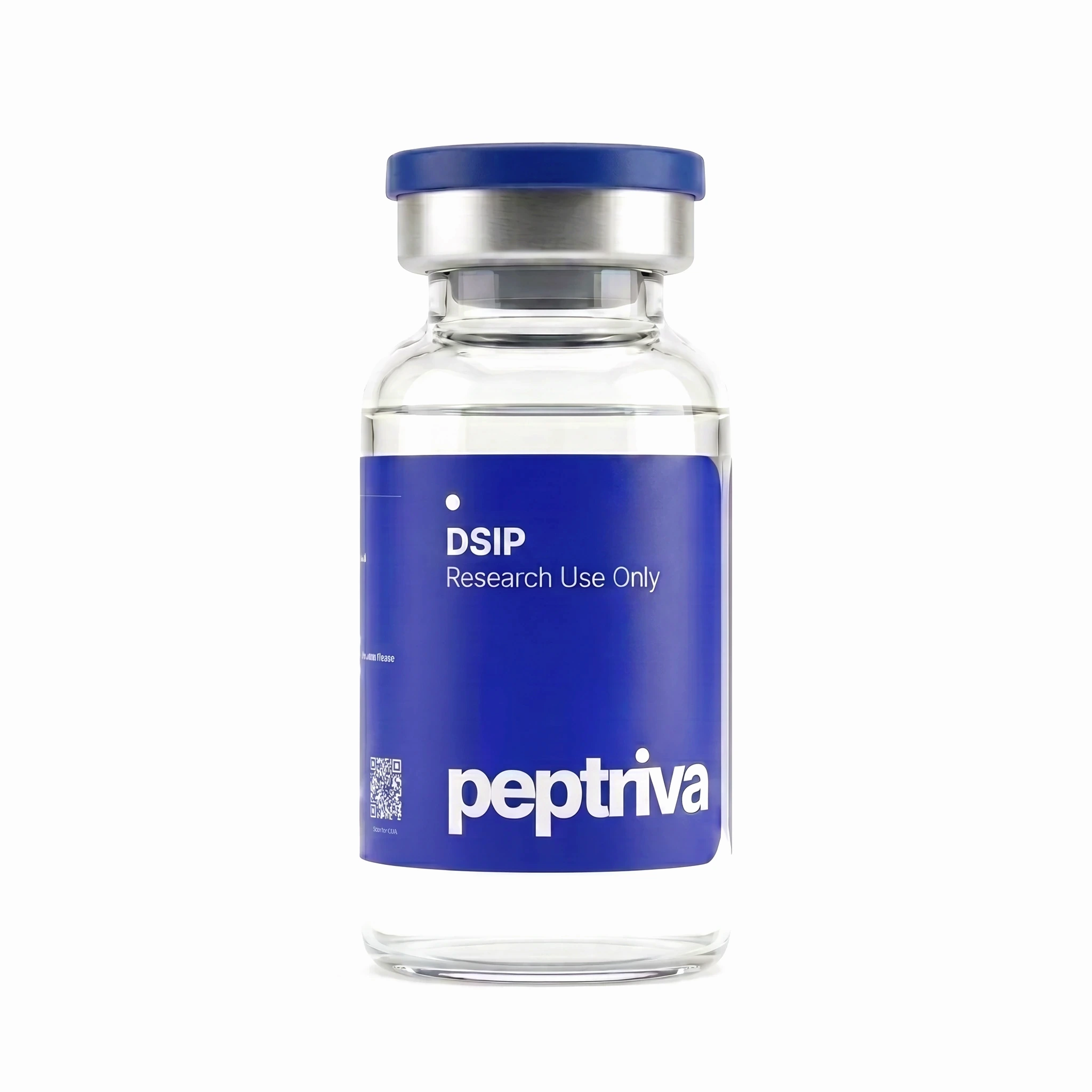
DSIP
Synthetic nonapeptide · Trp-Ala-Gly-Gly-Asp-Ala-Ser-Gly-Glu. The same reference compound used across the cited preclinical studies. COA available with each lot.
What does the literature need next?
The DSIP literature has been stuck in a holding pattern for decades. Interesting molecule. Plausible mechanisms. No receptor. No modern RCT evidence base.
What would change that: a methodologically rigorous Western RCT in a defined clinical population (alcohol-withdrawal HPA hyperactivity is the obvious candidate; chronic insomnia with elevated evening cortisol is another) with validated outcomes and pre-specified analysis plans. That trial doesn’t exist and hasn’t been announced.
Until it happens, DSIP stays in the category of older “research peptides” whose foundational claims haven’t been validated under modern standards. Not disproven. Just untested by the trials that would resolve the question either way.
What to know now
- Identity: 9-residue peptide (Trp-Ala-Gly-Gly-Asp-Ala-Ser-Gly-Glu) isolated from sleeping rabbit cerebral venous blood in 1977.
- Mechanism: proposed sleep-induction and HPA-axis modulation; no validated DSIP receptor identified in humans.
- Human cortisol evidence: the 1988 Iyer alcohol-withdrawal study is the most-cited single data point; modern Western RCT replication is essentially absent.
- Modern preclinical focus: Russian work on stroke and myocardial-infarction reperfusion injury, not stress per se — with a critical timing-of-administration safety signal.
- BBB penetration: unmodified DSIP crosses the blood-brain barrier poorly; engineered fusion variants perform better in preclinical CNS models.
- Comparator evidence base: other HPA-axis interventions studied in clinical populations include cognitive-behavioral approaches, mindfulness-based protocols, sleep-hygiene interventions, and pharmacological anxiolytics — all with substantially more controlled-trial support than DSIP.
What we’re watching
Three things over the next 24 months. First, whether any independent Western research group registers a formal RCT of DSIP for a defined stress, sleep, or HPA indication. That would be the single most important change in a 40-plus-year-stagnant evidence landscape. Second, whether the engineered blood-brain-barrier-crossing variants from the Russian pipeline produce Western clinical interest. That’s where the most promising next-generation work is happening. Third, whether a validated DSIP receptor finally gets discovered (or convincing evidence emerges that none exists). It’s been the field’s open question for nearly half a century.
References
- Tukhovskaya, E. A., Shaykhutdinova, E. R., Ismailova, A. M., et al. (2021). DSIP-like KND peptide reduces brain infarction in C57Bl/6 and reduces myocardial infarction in SD rats when administered during reperfusion. Biomedicines, 9(4), 407. https://doi.org/10.3390/biomedicines9040407
- Tukhovskaya, E. A., Ismailova, A. M., Shaykhutdinova, E. R., et al. (2021). Delta sleep-inducing peptide recovers motor function in SD rats after focal stroke. Molecules, 26(17), 5173. https://doi.org/10.3390/molecules26175173
- Mu, X., Qu, L., Yin, L., Wang, L., Liu, X., & Liu, D. (2024). Pichia pastoris secreted peptides crossing the blood-brain barrier and DSIP fusion peptide efficacy in PCPA-induced insomnia mouse models. Frontiers in Pharmacology, 15, 1439536. https://doi.org/10.3389/fphar.2024.1439536
- Iyer, K. S., & McCann, S. M. (1988). Delta sleep inducing peptide (DSIP) suppression of cortisol in alcohol-withdrawal patients. Annals of the New York Academy of Sciences, 525, 530–532. [Foundational early human data point cited across the DSIP HPA-axis literature.] https://doi.org/10.1159/isbn.978-3-8055-8782-2