BPC-157 vs TB-500 is the most-asked pairing in the tissue-repair peptide literature. Overlapping marketing, very different mechanisms, very different evidence, and very different regulatory status. We'll compare them honestly here, table and all.
BPC-157 is a defined 15-amino-acid peptide. It has a 35:1 ratio of rat studies to human studies (35 rodent, 1 retrospective case series) and an FDA compounding restriction plus a WADA S0 ban. TB-500 isn't really one thing. It's a marketing name for either the full-length thymosin beta-4 protein (43 amino acids) or a smaller 7-amino-acid fragment. They aren't interchangeable. They don't do the same things. The rationale for combining them in research is mechanistic complementarity, not RCT evidence.
Studies have not established that either compound is superior. The honest framing: both are research-stage peptides with thin human evidence. Selection between them depends on the research model and indication being studied, not on marketing claims about one being "better."
Two major reviews back this framing. The Mendias and Awan 2026 review in Sports Medicine refused to recommend one over the other. So did the Mayfield 2026 review in AJSM. We follow the same approach.
One quick orientation note. BPC-157 is "Body Protection Compound 157," a 15-amino-acid synthetic peptide. TB-500 is the marketing name for thymosin beta-4 (Tβ4), a 43-amino-acid endogenous protein, or sometimes a smaller 7-amino-acid active fragment of it. The naming inconsistency on the TB-500 side is part of the problem we'll keep coming back to.
The side-by-side comparison table
Here's how the two peptides line up across the dimensions that actually matter for choosing between them.
| Attribute | BPC-157 | TB-500 |
|---|---|---|
| Identity | 15-aa synthetic peptide. Sequence Gly-Glu-Pro-Pro-Pro-Gly-Lys-Pro-Ala-Asp-Asp-Ala-Gly-Leu-Val. Derived from a partial sequence of a human gastric-juice protein. | Marketing name. Either full-length Tβ4 (43 aa, endogenous) or the Ac-LKKTETQ heptapeptide (7 aa) active fragment. No standardization. |
| Primary mechanism | Multifactorial. Drives blood-vessel growth (angiogenesis via VEGFR2 / Akt-eNOS), recruits wound-repair cells, modulates growth factors. No validated human receptor target. | Sequesters G-actin (a cell-building protein) in 1:1 stoichiometry. Cleavage product Ac-SDKP drives endothelial repair via Cd9. Mechanistically specific. |
| Best-studied use (preclinical) | Tendon, ligament, muscle, bone repair; gut mucosal protection; surgical wound healing; CNS injury. | Cardiac repair (post-heart attack, post-stent); ophthalmology (dry eye, neurotrophic keratitis); renal anti-inflammatory. |
| Animal-to-human ratio | 35:1. 35 preclinical, 1 retrospective case series (17 study participants). 4 published human studies total, fewer than 50 exposures. | Substantial preclinical literature on Tβ4. Zero published human trials of "TB-500" in orthopaedic, sports, or anti-aging indications. |
| Human evidence quality | Retrospective chart review, no controls, phone-survey outcome. Two pilot studies (12 + 2 study participants). | Adjacent Tβ4 development candidates in ophthalmology and cardiovascular disease. No standardized TB-500 product in any trial. |
| Who did the work | Roughly 80% of preclinical work comes from one Zagreb group (Sikiric et al.). Independent replication is limited. | Broader, more distributed across cardiovascular, ophthalmologic, and renal labs. Less concentrated. |
| FDA status | Not approved. Category 2 503A compounding restriction (2023) limits compounding access. | No Tβ4 or TB-500 product approved. Thymalfasin (different molecule, Tα1) is the only FDA-approved thymosin. |
| WADA status | S0 (Non-Approved Substances) since January 2022. | S2 (Peptide Hormones, Growth Factors). Standard panels test for both Tβ4 and the heptapeptide. |
| Half-life (plasma) | Under 30 minutes (preclinical). Reported >24h stability in gastric juice, which is the basis for oral dosing. | Variable. Full-length Tβ4 circulates longer. The heptapeptide fragment is shorter. |
| Routes used in human studies | Joint injection (10 mg), bladder instillation (10 mg), IV infusion (10–20 mg over 1h). | No published human routes for TB-500. Tβ4 development candidates have used IV and topical. |
| Theoretical safety concern | The blood-vessel-growth pathway raises a theoretical cancer concern. No human data on tumor effects. | Tβ4 has been implicated in some studies as a regulator of tumor spread. Theoretical cancer concern. |
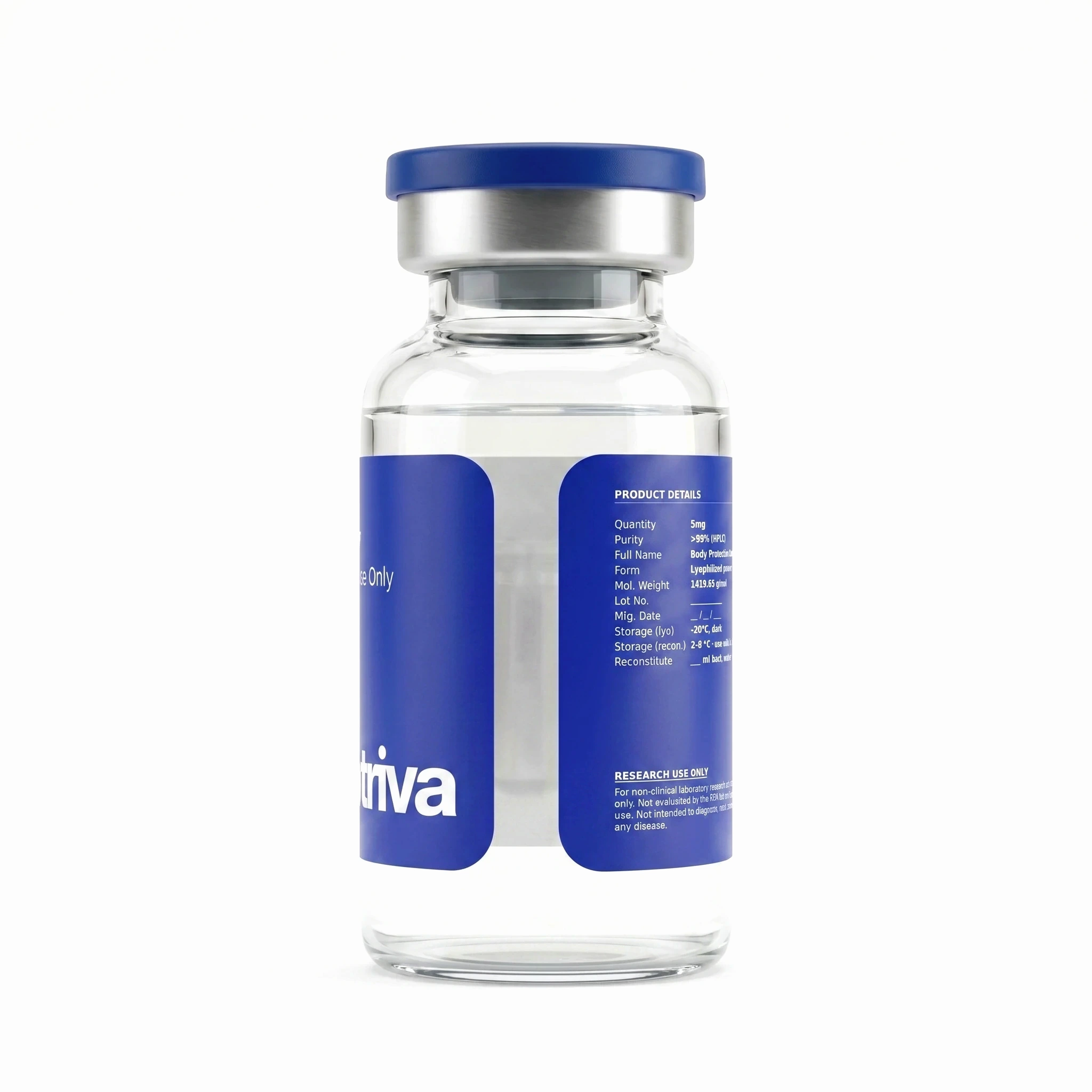
BPC-157
The pentadecapeptide cited across the 8 reviews in this comparison. Lab-verified identity and purity.
When does the mechanism difference matter?
The two peptides work through different biology. The mechanistic distinction is real enough that the tissue model under study should inform which compound is selected.
For poorly vascularized tissue. Tendons, ligaments, cartilage. BPC-157's mechanism (blood-vessel growth via VEGFR2 / Akt-eNOS signaling) is the more directly relevant story. The McGuire 2025 review describes this pathway as the basis for BPC-157's reparative effects in tissues that don't have great blood supply. 17 study participants in the Lee & Padgett 2021 knee-pain case series remain the only published BPC-157 data on joint pain.
For vascular endothelial repair. Stent restenosis, post-procedure healing, endothelial dysfunction. Tβ4 has the more mechanistically specific story. The Zhang 2025 European Heart Journal study identified Tβ4 as a downstream effector of CCN5 signaling. Its Ac-SDKP breakdown product drives blood-vessel-lining repair.
For gut mucosal protection. NSAID-induced damage, IBD models, surgical anastomosis. BPC-157 is the more directly studied molecule. The Bajramagic 2024 review summarizes anastomosis-healing data across multiple GI sites.
For ophthalmologic indications. Dry eye, neurotrophic keratitis (nerve-related corneal damage). Tβ4 has the broader preclinical literature and the development-candidate trials.
Where the evidence quality difference matters
BPC-157 has 4 human publications. TB-500 has zero in athletic, orthopaedic, or anti-aging indications. But here's the catch: all four BPC-157 publications are low-quality designs. Retrospective case series. Small pilots. No controls.
TB-500's human evidence sits in adjacent Tβ4 development programs. Those use the full-length molecule under different brand codes, not the heptapeptide sold as TB-500.
In practice, neither peptide has the kind of RCT evidence that would support routine clinical use. The 2026 Mayfield review in AJSM reaches that conclusion for both molecules.
TB-4 and its derivative TB-500 promoted angiogenesis and tissue repair in preclinical models, but human orthopaedic data are lacking, and both remain banned substances in sports.
— Mayfield et al., American Journal of Sports Medicine, 2026
Rationale for and against the combination format
The case for studying the combination rests on mechanistic complementarity. BPC-157 has been reported to drive blood-vessel growth. Tβ4 sequesters G-actin and has been associated with endothelial repair. For research investigating combined effects on tendon, muscle, and gut repair, a pre-mixed vial reduces reconstitution steps.
The standard 7 mg BPC-157 / 3 mg TB-500 ratio is a convenience format. Nothing more.
The case against the blend is the absence of evidence that combining them produces meaningful synergy. The preclinical work studying the combination is sparse to nonexistent. The 2021 Lee & Padgett retrospective included just 4 study participants on the combination among its 17 subjects. It didn't break out that subgroup or report combination-specific efficacy.
The honest framing: the blend is a convenience format, not a validated combination. It is not a demonstrated improvement over either peptide studied alone. For research contexts requiring both compounds, it reduces reconstitution steps; for research requiring only one, individual reference compounds are the appropriate choice.
Where this falls short. Neither peptide has RCT evidence in athletic recovery, anti-aging, or general wellness indications — the areas where the most marketing activity occurs. The published rodent work is suggestive, not definitive. Human-trial validation has not emerged in the use cases that drive market interest.
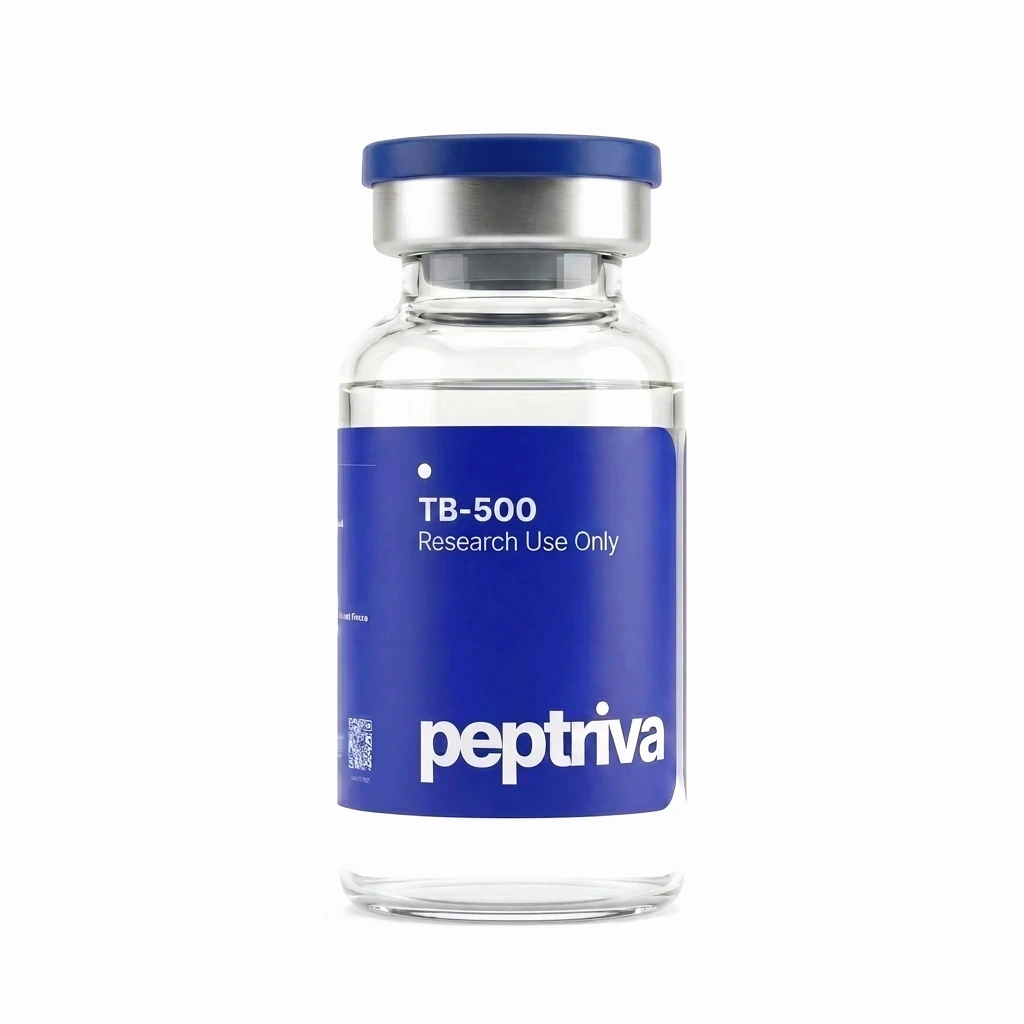
TB-500
Ac-LKKTETQ heptapeptide · Tβ4 active fragment. The same reference compound used across the cited preclinical work. COA available with each lot.
Best-studied indications for each compound
The most important distinction from this comparison: the best-studied use for BPC-157 is rodent musculoskeletal and gut repair. The best-studied use for Tβ4 is rodent and limited-human cardiovascular and ophthalmologic biology.
Outside those contexts — athletic recovery, anti-aging, general wellness — the published evidence is weaker, the marketing is louder, and the gap between claim and trial is bigger. Roughly 80% of BPC-157 preclinical work comes from a single Zagreb lab. Independent replication is limited.
- BPC-157 is best-studied for: rodent tendon and ligament repair, rodent gut mucosal protection (NSAID, IBD, anastomosis), rodent CNS injury models. Plus one knee-pain human case series, one bladder pilot, one IV safety pilot.
- Tβ4 / TB-500 is best-studied for: rodent and limited-human cardiac repair, in-stent restenosis (Zhang 2025 EHJ), ophthalmologic (dry eye, neurotrophic keratitis as development candidates), renal anti-inflammatory.
- Neither peptide is well-studied for: long-term human safety, anti-aging, athletic performance, general wellness, longevity. That's where the marketing lives and the evidence isn't.
Selecting between compounds for a research model
The Mendias and Awan 2026 Sports Medicine review and the Mayfield review both declined to recommend one peptide over the other for athletic or orthopaedic applications. Their reasoning: both are unapproved, both are WADA-prohibited, and both have inadequate human evidence.
For research applications, the indication drives the compound selection. BPC-157 has been studied in musculoskeletal and gut models. Tβ4 has been studied in cardiac and ophthalmologic models. The combination format is appropriate only when both compounds are required for the research design at the 7:3 ratio.
The rodent literature should be treated as suggestive, not definitive. Human-trial validation for the indications most heavily marketed has not emerged.
The comparison summary, in one sentence: BPC-157 and TB-500 are different molecules with different mechanisms, different evidence bases, and different best-studied indications. They're not interchangeable, not redundant, and not validated by RCTs for any of the use cases that drive the marketing.
What to know now
- Identity: BPC-157 is a defined 15-aa peptide. TB-500 is a marketing name for either full-length Tβ4 (43 aa) or the LKKTETQ heptapeptide.
- Mechanism: BPC-157 is multifactorial (blood-vessel growth via VEGFR2, no validated receptor). Tβ4 is mechanistically specific (G-actin sequestration, Ac-SDKP).
- Best studied for: BPC-157 — rodent musculoskeletal and gut. Tβ4 — rodent and limited-human cardiac, ophthalmologic, renal.
- Human evidence: BPC-157 has 4 publications and fewer than 50 exposures. TB-500 has zero human trials in athletic, orthopaedic, or anti-aging use.
- Regulatory: BPC-157 has the FDA Cat 2 compounding restriction and WADA S0 ban. TB-500 has no FDA approval and a WADA S2 ban. Both prohibited in major sports.
- The blend: defensible as a format choice for researchers already using both at the 7:3 ratio. Not validated as more effective than either alone.
What we're watching
Two questions over the next 18 months. First, whether either peptide moves into a registered Phase II human trial. An Achilles-tendinopathy or knee-OA trial for BPC-157, or a post-PCI restenosis trial for Tβ4, would be the first real human test in each peptide's best-studied indication. Second, whether the peer-reviewed sports-medicine reviews keep drawing the Tβ4-vs-TB-500 distinction more sharply. The conflation between them is this field's main interpretive failure mode.
References
- McGuire, F. P., Martinez, R., Lenz, A., Skinner, L., & Cushman, D. M. (2025). Regeneration or risk? A narrative review of BPC-157 for musculoskeletal healing. Current Reviews in Musculoskeletal Medicine, 18(12), 611–619. https://doi.org/10.1007/s12178-025-09990-7
- Vasireddi, N., Hahamyan, H., Salata, M. J., et al. (2025). Emerging use of BPC-157 in orthopaedic sports medicine: A systematic review. HSS Journal, 21(4). https://doi.org/10.1177/15563316251355551
- Mayfield, C. K., Bolia, I. K., Feingold, C. L., et al. (2026). Injectable peptide therapy: A primer for orthopaedic and sports medicine physicians. American Journal of Sports Medicine, 54(1), 223–229. https://doi.org/10.1177/03635465251357593
- Mendias, C. L., & Awan, T. M. (2026). Safety and efficacy of approved and unapproved peptide therapies for musculoskeletal injuries and athletic performance. Sports Medicine. https://doi.org/10.1007/s40279-026-02437-0
- Zhang, Q., Li, H., Zhuang, T., et al. (2025). CCN5 suppresses injury-induced vascular restenosis via thymosin β4 and Cd9 pathway. European Heart Journal, 46(17), 1645–1658. https://doi.org/10.1093/eurheartj/ehae911
- Ying, Y., Lin, C., Tao, N., et al. (2023). Thymosin β4 and actin: Binding modes, biological functions and clinical applications. Current Protein and Peptide Science, 24(1), 78–88. https://doi.org/10.2174/1389203724666221201093500
- Bajramagic, S., Hadziahmetovic, N., Pravdic, D., et al. (2024). BPC 157 in gastrointestinal anastomosis healing: A systematic review. Pharmaceuticals (Basel), 17(8), 1081. https://doi.org/10.3390/ph17081081
- Lee, E., & Padgett, B. (2021). Intra-articular injection of BPC 157 for multiple types of knee pain. Alternative Therapies in Health and Medicine, 27(4), 8–13. PMID 34324435