Most answers to BPC-157 FAQs either oversell the evidence or dismiss the molecule entirely. This is the citation-anchored middle — each question is answered directly from the peer-reviewed literature, with the supporting reference provided.
The honest 2026 framing: BPC-157 is a 15-amino-acid peptide with a consistent signal in rodent studies of muscle, tendon, and gut injury. Roughly 80% of that work comes from one Zagreb research group. The human evidence is fewer than 50 published exposures across all studies. Zero randomized controlled trials. WADA-prohibited since January 2022. FDA Category 2 compounding flag since 2023. Every recent peer-reviewed review calls it investigational.
BPC-157 sits in a strange place in 2026. It's one of the most-discussed peptides in grey-market research circles, with a 35-study preclinical literature showing broadly consistent findings. It also has almost no human efficacy evidence behind it. The gap between perceived use and documented evidence is bigger for BPC-157 than for almost any peptide we cover. That's why these questions keep coming up.
Every answer below is anchored to a peer-reviewed reference at the bottom of this page. Where the evidence is strong, we say so. Where it isn't, we say that too.
What is BPC-157, exactly?
BPC-157 is short for "Body Protection Compound." It's a synthetic 15-amino-acid peptide built from a partial sequence of a protein in human gastric juice. The sequence is GEPPPGKPADDAGLV.
Predrag Sikiric's group at the University of Zagreb first characterized it in the early 1990s. The proposed biological role is to protect the gastrointestinal lining under stress and injury. Molecular weight is about 1,419 g/mol. The 2025 Józwiak review calls it a "pleiotropic gastric peptide." Pleiotropic means it does several things at once, rather than binding one validated receptor.
Does BPC-157 actually work in humans?
We don't know yet. No randomized controlled trial in humans has published. The total human evidence is four publications with fewer than 50 cumulative exposures. None randomized. None placebo-controlled.
The four data points: a 17-patient retrospective chart review of knee injections (Lee & Padgett, 2021); a 12-patient pilot of bladder instillation for interstitial cystitis, with 10 of 12 reporting full symptom resolution (Lee et al., 2024); a 2-patient IV safety pilot at 10 mg and 20 mg doses (Lee & Burgess, 2025); and a small TB-500 subgroup inside the knee chart review.
The 2026 Mayfield review in AJSM concludes that methodological flaws limit clinical applicability.
Despite the robust preclinical findings, human data are extremely limited, no large-scale randomized trials exist, and BPC-157 should be considered investigational pending well-designed clinical trials.
— McGuire et al., Current Reviews in Musculoskeletal Medicine, 2025
What dose is used in studies?
Most rodent studies use 10 µg/kg/day or 10 ng/kg/day. They give it by injection into the abdominal cavity, by mouth, or in drinking water. That's the dose range behind the tendon, muscle, and gut findings in the 2025 HSS Journal review.
The human knee case series used a per-injection dose around 250-500 µg. But with no controls and no validated outcomes, that's not a validated protocol.
There is no validated human dosing protocol. Doses circulating in research communities are extrapolated from rodent body-weight studies — an approach that is widely recognized as an unreliable predictor of clinical effect. No controlled human trial has established a validated dose for any indication.
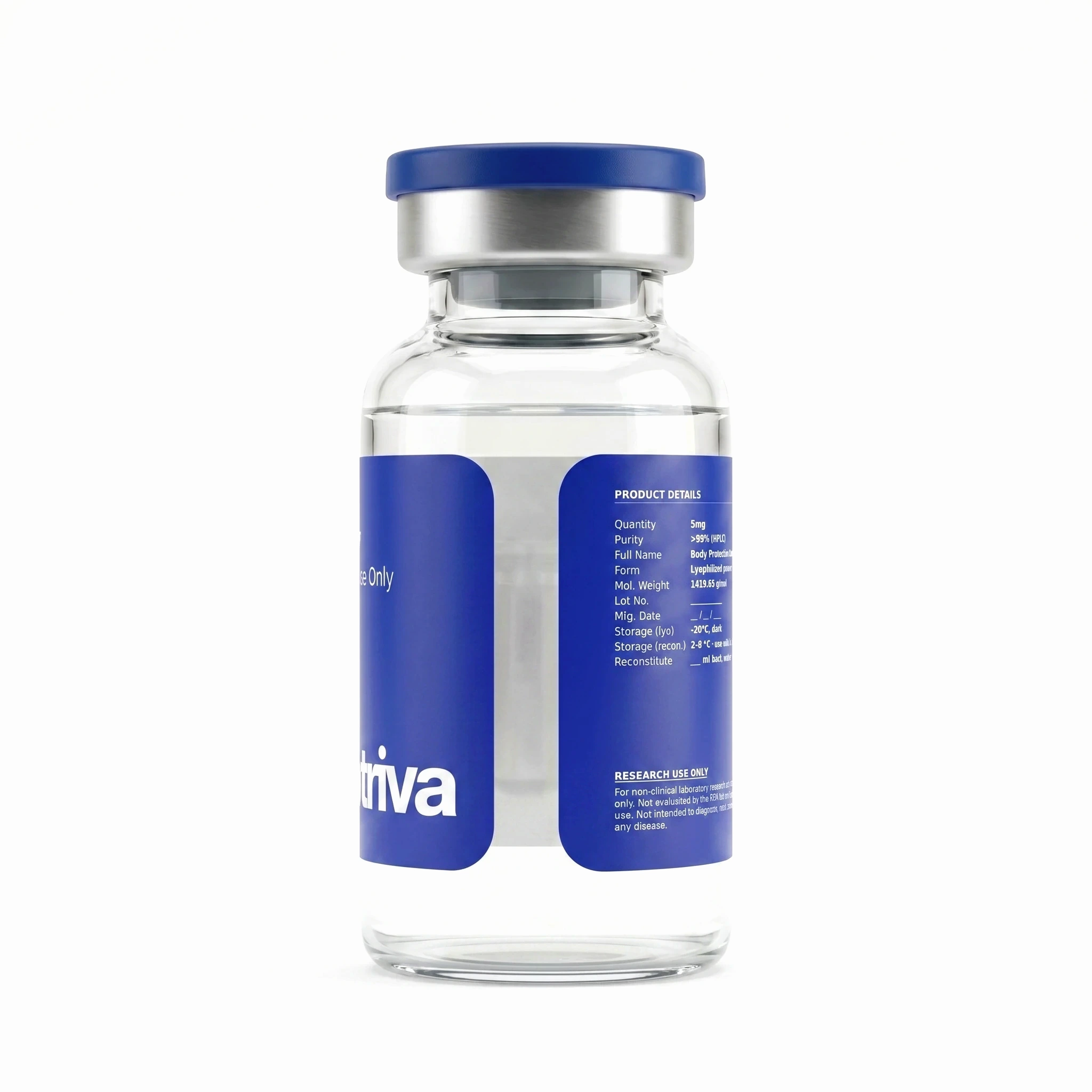
BPC-157
The same compound cited across the 9 peer-reviewed studies in this FAQ. Lab-verified identity and purity.
Is BPC-157 on the WADA prohibited list?
Yes. WADA (the World Anti-Doping Agency, which sets the global rules for banned substances in sport) added BPC-157 to Section S0 of the Prohibited List effective January 1, 2022. S0 covers substances with no current approval by any government health authority for human therapeutic use.
The listing applies in-competition and out-of-competition. Major pro sports leagues (NFL, NBA, MLB, NHL) follow the WADA framework either directly or with similar prohibitions. WADA status changes year to year. The current listing should be verified directly with WADA, which publishes the updated Prohibited List on January 1 each year.
What is the FDA Category 2 designation?
In 2023, the FDA placed BPC-157 on the 503A Category 2 list. That restricts US compounding pharmacies from making the substance for individual patient prescriptions.
The 503A category structure was created under the 2013 Drug Quality and Security Act. It exists to flag substances where the FDA has identified safety, efficacy, or quality concerns. Category 2 isn't a ban. It's a restriction on one specific regulatory pathway.
The practical effect: the US supply chain shifted away from compounding pharmacies and toward research-grade suppliers after the 2023 designation.
Are there cancer or angiogenesis concerns?
This is the most-asked safety question. Here's the careful answer. BPC-157's proposed mechanism includes VEGFR2-mediated angiogenesis. That's the same blood-vessel-growth pathway tumors hijack to feed themselves. The mechanism raises a legitimate theoretical concern about whether BPC-157 could feed an undetected or known tumor.
The published evidence doesn't yet confirm the risk. It also doesn't rule it out. Rodent tumor models haven't consistently shown tumor-promotion signals at the doses used for tissue-repair research. No human cancer-incidence signal has been published. But the human safety data is so thin that absence-of-evidence isn't evidence-of-absence.
The 2025 McGuire review flags this as one of the open mechanistic questions that deserves formal study before broad human use.
Where this falls short
The mechanism is theoretically concerning. The rodent data is reassuring at the doses studied. The human data is too small to draw any conclusion. The cancer question is one of the open mechanistic questions reviewers have identified as most in need of formal study before broader clinical investigation proceeds.
What route do studies use?
The published literature uses several routes, depending on the model:
- Intraperitoneal injection (IP): the most common rodent route. Not applicable to human use.
- Oral gavage: the Zagreb group emphasizes this because BPC-157 reportedly survives stomach acid.
- Drinking water: used in long-term rodent dosing for systemic exposure.
- Intra-articular injection: the route in the Lee & Padgett knee case series. Injected directly into the joint.
- Intravesical instillation: the route in the 2024 interstitial cystitis pilot. Instilled into the bladder during cystoscopy.
- Intravenous infusion: the route in the 2025 safety pilot at 10 mg and 20 mg.
- Subcutaneous injection: the route most common in the research community. Not formally validated in any controlled human trial.
Subcutaneous administration is the route most frequently described in the non-clinical research community, though it has not been formally evaluated in any controlled human trial and its pharmacokinetics in humans remain uncharacterized.
BPC-157 vs TB-500: what's the difference?
BPC-157 and TB-500 are the two most-studied tissue-repair peptides. The literature has investigated their co-administration, noting that the two compounds are mechanistically distinct:
- BPC-157 is a 15-amino-acid synthetic peptide from human gastric juice. Its emphasized mechanisms are blood-vessel growth via the VEGFR2 receptor and fibroblast recruitment (the cells that lay down connective tissue).
- TB-500 is a 7-amino-acid fragment of thymosin-β4, a cell-repair protein. Its emphasized mechanism is regulating actin (the cellular building block that drives cell migration) and helping cells move into injured tissue.
The two share downstream effects on tissue repair (blood-vessel growth, fibroblast activity) but operate through different upstream signals. Their co-administration has been investigated in a small TB-500 subgroup inside the Lee & Padgett knee chart review, but no published human RCT data exists for the combination. The rationale for combined use is mechanistic and has not been validated in controlled trials.
Is oral BPC-157 effective?
This is the most debated practical question. The Zagreb group has consistently reported that BPC-157 stays stable in human gastric juice for over 24 hours. That's unusual. Most peptides get broken down quickly by stomach acid and proteases. That stability is the reason oral delivery is even discussed. Rodent studies show oral BPC-157 produces effects comparable to injection in several injury models.
Whether oral absorption translates to meaningful systemic exposure in humans hasn't been established in any controlled trial. The 2024 Sikiric review argues that BPC-157's gut-protective effects may come from direct local action on the intestinal lining. That's a different claim from "the molecule gets into your bloodstream and works elsewhere." Both could be true. Neither is proven in humans.
What's the half-life?
BPC-157's plasma half-life is reported as less than 30 minutes in preclinical studies. That's short for a synthetic peptide. It's much shorter than peptides engineered for extended life (tirzepatide, semaglutide).
Preclinical studies have reported that biological effects persist well beyond the plasma window — tendon-repair signals in rodent models were observed days after administration. The mechanism is unresolved. Proposed explanations include a tissue reservoir, a downstream signaling cascade that outlasts the parent molecule, or both. Phase I pharmacokinetic work in humans would be required to resolve this.
What are the side effects?
The published human safety data is functionally minimal. The 2025 IV safety pilot in n=2 adults at 10 mg and 20 mg infusion doses reported no biomarker changes (complete blood count, metabolic panel, liver enzymes, kidney function) and no adverse events. The authors flatly note that n=2 establishes nothing.
The 12-patient interstitial cystitis pilot and the 17-patient knee case series didn't report adverse events. They also weren't designed to formally characterize safety.
Rodent studies across the 30+ preclinical publications have not shown consistent organ toxicity at the doses tested. The honest framing for 2026: the human safety profile is undefined. No controlled human trial has been conducted. Every recent peer-reviewed review — McGuire 2025, Vasireddi 2025, Mayfield 2026 — classifies BPC-157 as investigational pending well-designed clinical trials.
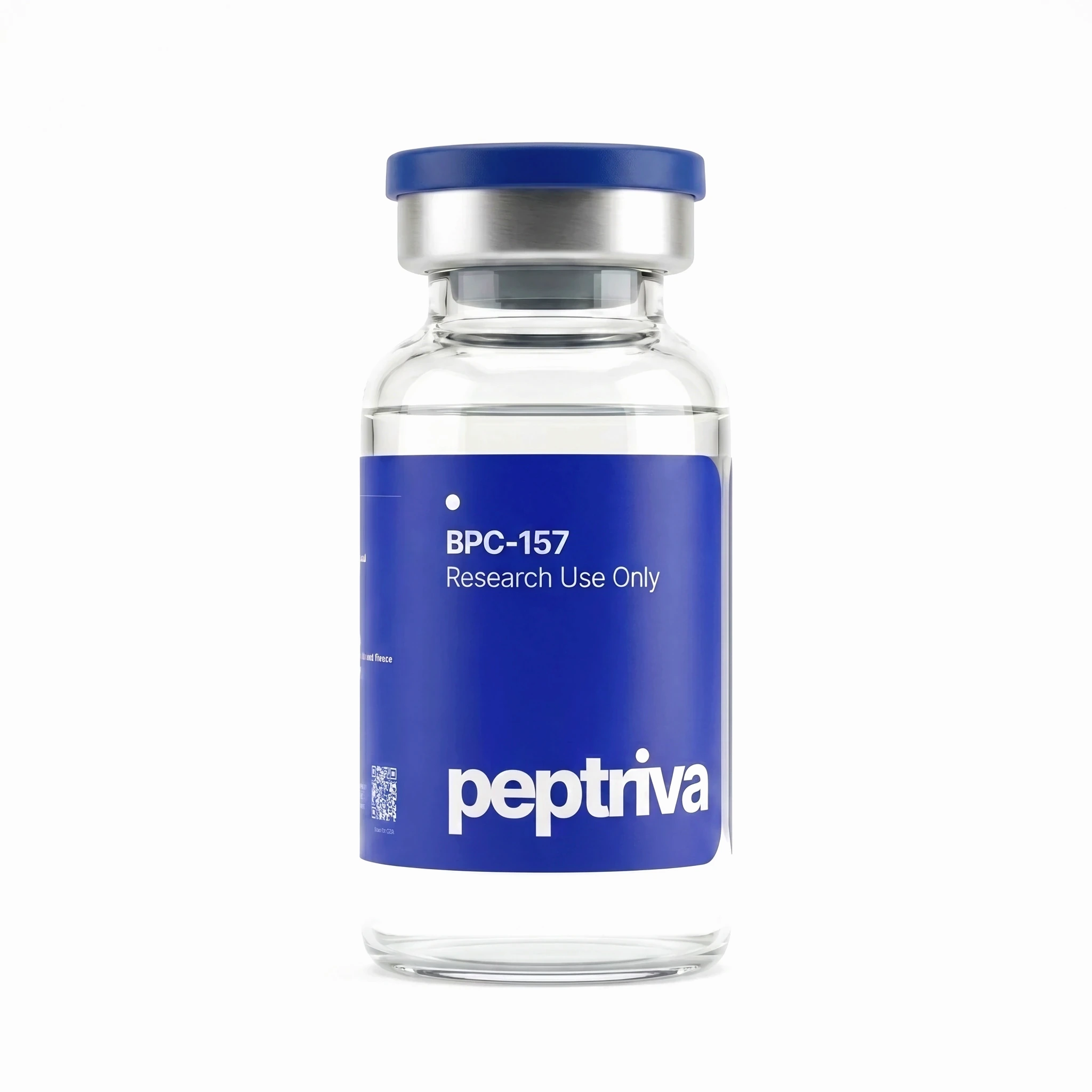
BPC-157
Pentadecapeptide · 15 aa, gastric origin. The same reference compound used across the cited preclinical studies. COA available with each lot.
Key open questions in the literature.
Peer-reviewed reviewers have identified the following as the most important unresolved questions for researchers and clinicians studying BPC-157:
- Independent replication: The 2025 HSS Journal systematic review notes that roughly 80% of the preclinical evidence originates from one research group. Independent replication by non-Zagreb laboratories is the single most important methodological gap.
- Standard-of-care comparisons: Eccentric loading, shockwave, PRP, and ultrasound-guided needling all have stronger 2026 evidence than injectable BPC-157 for most tendon indications; no head-to-head comparisons exist.
- Validated outcome measures: The published case series lack pre-specified primary outcomes, limiting interpretability of reported findings.
- Reference compound quality: Manufacturing variance and contamination have been documented as concerns in the non-clinical supply chain.
- Regulatory status: BPC-157 has been prohibited under WADA Section S0 since January 2022 and is subject to FDA 503A Category 2 restrictions since 2023; researchers should confirm current status before use.
- Angiogenesis / tumor risk: The VEGFR2-mediated mechanism raises a theoretical tumor-vascularization concern; reviewers have flagged this as requiring dedicated safety investigation in formal trial settings.
What to know now
- Identity: synthetic 15-amino-acid peptide from a partial sequence of a human gastric protein.
- Evidence base: 36 peer-reviewed studies aggregated by the 2025 HSS Journal review. 35 preclinical, 1 human case series. Roughly 80% of the preclinical work comes from one Zagreb research group.
- Human evidence: fewer than 50 published exposures across all pilots and case series. No RCTs.
- Regulatory: WADA-prohibited under S0 since January 2022. FDA Category 2 compounding flag since 2023.
- Half-life: under 30 minutes in plasma. Biological effects appear to persist longer through unresolved mechanisms.
- Cancer concern: the mechanism is theoretically worrying. In-vivo evidence doesn't yet confirm a risk. It doesn't rule one out either.
- Investigational per every recent peer-reviewed review: McGuire 2025, Vasireddi 2025, Mayfield 2026 all converge on the same framing.
What we're watching
Three things over the next 18 months. First, whether labs outside the Zagreb group reproduce the core preclinical findings. That's the single most important methodological gap in the field. Second, whether any registered RCT appears on ClinicalTrials.gov. An Achilles-tendinopathy or knee-osteoarthritis Phase II would be the natural first formal test. Third, whether the FDA's 2023 Cat 2 compounding designation moves in either direction. Either signal would be a meaningful update on regulator confidence in the molecule.
References
- Vasireddi, N., Hahamyan, H., Salata, M. J., et al. (2025). Emerging use of BPC-157 in orthopaedic sports medicine: A systematic review. HSS Journal, 21(4). https://doi.org/10.1177/15563316251355551
- McGuire, F. P., Martinez, R., Lenz, A., Skinner, L., & Cushman, D. M. (2025). Regeneration or risk? A narrative review of BPC-157 for musculoskeletal healing. Current Reviews in Musculoskeletal Medicine, 18(12), 611–619. https://doi.org/10.1007/s12178-025-09990-7
- Mayfield, C. K., Bolia, I. K., Feingold, C. L., et al. (2026). Injectable peptide therapy: A primer for orthopaedic and sports medicine physicians. American Journal of Sports Medicine, 54(1), 223–229. https://doi.org/10.1177/03635465251357593
- Józwiak, M., Bauer, M., Kamysz, W., & Kleczkowska, P. (2025). Multifunctionality and possible medical application of the BPC 157 peptide—Literature and patent review. Pharmaceuticals (Basel), 18(2), 185. https://doi.org/10.3390/ph18020185
- Sikiric, P., Boban Blagaic, A., Strbe, S., et al. (2024). The stable gastric pentadecapeptide BPC 157 pleiotropic beneficial activity and its possible relations with neurotransmitter activity. Pharmaceuticals (Basel), 17(4), 461. https://doi.org/10.3390/ph17040461
- Sikiric, P., Skrtic, A., Gojkovic, S., et al. (2022). Cytoprotective gastric pentadecapeptide BPC 157 resolves major vessel occlusion disturbances. World Journal of Gastroenterology, 28(1), 23–46. https://doi.org/10.3748/wjg.v28.i1.23
- Lee, E., & Padgett, B. (2021). Intra-articular injection of BPC 157 for multiple types of knee pain. Alternative Therapies in Health and Medicine, 27(4), 8–13. PMID 34324435
- Lee, E., Walker, C., & Ayadi, B. (2024). Effect of BPC-157 on symptoms in patients with interstitial cystitis: A pilot study. Alternative Therapies in Health and Medicine, 30(10), 12–17. PMID 39325560
- Lee, E., & Burgess, K. (2025). Safety of intravenous infusion of BPC-157 in humans: A pilot study. Alternative Therapies in Health and Medicine, 31(5), 20–24. PMID 40131143