Forums will tell you peptide legality is "a gray area." That's the wrong frame. Are peptides legal in the USA has a specific answer, defined by a specific set of statutes, with predictable outcomes for each kind of buyer. We'll show you which framework you're actually under.
Yes, research-use-only (RUO) peptides are legal to buy in the U.S. under 21 CFR § 809.10(b)(9) when the product is labeled "For Research Use Only. Not for human or veterinary use." Peptides are not scheduled controlled substances under the DEA Controlled Substances Act in any of the 50 states. The FDA's 2023 Category 2 designation for BPC-157 closed the compounding pathway, not research-reagent sales. The WADA Prohibited List is a sport-rules framework, not U.S. law. The key asymmetry: selling peptides for human use without FDA approval is illegal. Buying properly labeled RUO peptides for research is not.
Quick answer: Yes. Peptides are legal to buy in the U.S. as RUO reference compounds under 21 CFR § 809.10(b)(9). No prescription, no license, no DEA scheduling. The FDA regulates how peptides get marketed, not the act of buying them as research chemicals. Selling unapproved peptides for human use is illegal. Buying them for in-vitro or animal research is not. The WADA list (sport rules) and 503A compounding categorization are separate frameworks that don't change baseline U.S. legality.
The legality question gets confusing because four regulatory frameworks all use the word "peptide." A peptide can be an FDA-approved drug, a 503A-compounded pharmaceutical, an RUO research reagent, or a cosmetic ingredient under DSHEA (the Dietary Supplement Health and Education Act). The chart below maps the four tiers and where the major peptides actually live in 2026.
1. The Research Use Only framework — 21 CFR § 809.10(b)(9)
The federal authority for research-chemical labeling lives at 21 CFR § 809.10(b)(9). The subpart covers in-vitro diagnostic products in the research phase. Products not yet validated for diagnostic use must carry "For Research Use Only." The FDA's 2013 RUO guidance spells out the rule: an RUO product is "not promoted, marketed, sold, or used for clinical or diagnostic purposes."
Research peptides ship under the same logic. The vial says "For Research Use Only. Not for human or veterinary use," and the supplier's marketing has to match: no human dosing, no therapeutic claims. The FDA's warning letters database shows the pattern. The agency hits suppliers for marketing claims far more often than for the chemistry itself.
2. FDA jurisdiction over marketing, not chemistry
Here's the structural point most buyers miss: the FDA's authority runs through how a product is marketed, not what it physically is. The same molecule can sit in four different regulatory categories at once:
- An approved drug through pharmacies with FDA labeling. Tirzepatide as Mounjaro.
- A compounded preparation by a 503A pharmacy on a patient-specific prescription.
- A research reagent sold by a research-chemical supplier with RUO labeling.
- An illegal product when sold without RUO labeling or marketed with human-use claims.
People stare at the chemistry — "tirzepatide is a 39-amino-acid GLP-1/GIP dual agonist" — and ask whether the chemistry is legal. Wrong question. The chemistry isn't the regulatory unit. The marketing claims and the sale channel are.
The Research Use Only label is a statement of regulatory category, not a disclaimer. It establishes that the manufacturer is selling the product as a research reagent rather than a therapeutic. The buyer's actual use must match.
— FDA Compliance Policy Guide, Sec. 100.300
3. The 503A compounding framework — Categories 1 through 4
Section 503A of the Federal Food, Drug, and Cosmetic Act authorizes traditional compounding pharmacies to prepare patient-specific medications using bulk substances on the FDA's nominated list. In September 2023, the agency sorted those substances into four categories:
- Category 1: No significant safety concerns. May be used pending final review.
- Category 2: Significant safety risks identified. Should not be used. Includes BPC-157, thymosin alpha-1, melanotan II, GHRP-2, and GHRP-6. 503A pharmacies largely stopped preparing these after 2023.
- Category 3: Additional information needed before the FDA can evaluate.
- Category 4: Nominated but never substantiated. Effectively withdrawn.
The 503A categorization closed the compounding pathway, not research-reagent commerce. Research-grade BPC-157 under RUO labeling is regulated under 21 CFR § 809.10(b)(9), not Section 503A. The 2023 designation closed one door without touching the other. For more, see our 503A and Category 2 list article.
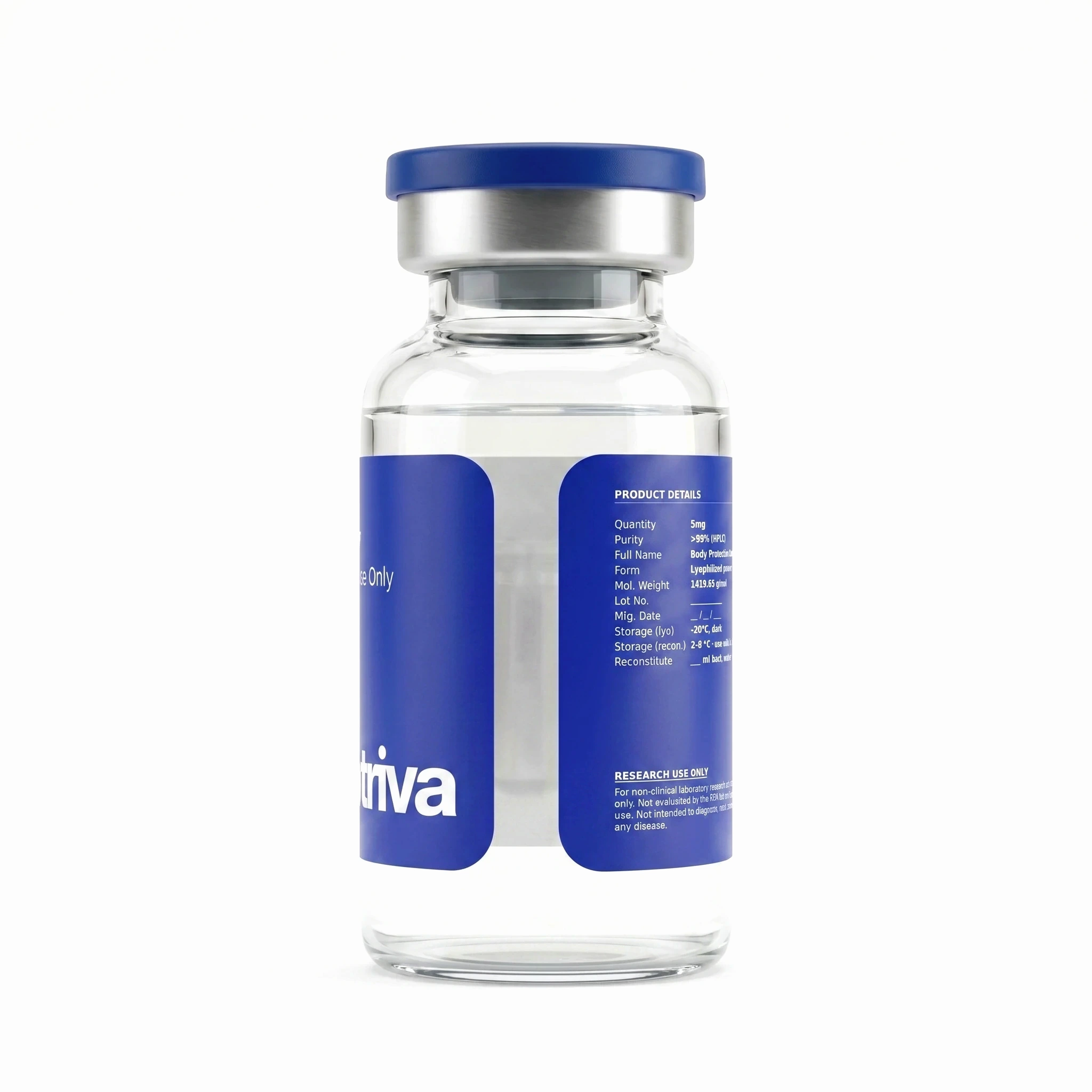
BPC-157
The reference research compound cited across the studies discussed in this guide. Sold under 21 CFR § 809.10(b)(9) Research Use Only framework, shipped from our U.S. domestic facility — no customs holds, no Category 2 compounding-pathway dependency. Lab-verified identity, ≥99% HPLC purity, ISO/IEC 17025 third-party COA on every lot.
4. WADA prohibition is sport rules, not U.S. law
The WADA Prohibited List is the most commonly conflated framework. WADA (the World Anti-Doping Agency) isn't a regulator of U.S. commerce. It's the global sport-doping body, and its list doesn't change U.S. legality.
- S0 Non-Approved Substances. BPC-157 was added effective January 2022. S0 is the catchall for compounds not approved for human therapeutic use anywhere.
- S2 Peptide Hormones, Growth Factors, and Mimetics. Covers the GH-axis secretagogues (CJC-1295, ipamorelin, hexarelin, tesamorelin, sermorelin, GHRP-2, GHRP-6), tissue-repair candidates (TB-500, IGF-1 LR3, MGF), and the broader peptide-hormone class.
- Both S0 and S2 are prohibited at all times. No off-season window. Out-of-competition testing can catch you the same as in-competition.
A WADA-tested athlete using BPC-157 faces sport sanctions but no FDA, DEA, or state-law enforcement risk. A non-athlete researcher buying BPC-157 from a U.S. RUO supplier operates inside the federal RUO framework regardless of what WADA says.
5. DEA scheduling and state variations
Peptides aren't scheduled under the federal Controlled Substances Act. The DEA Schedules cover opioids, stimulants, depressants, hallucinogens, anabolic steroids, and a handful of other categories. Research peptides aren't on any of them. No DEA license required.
State-level variations are narrower than buyers usually assume:
- State pharmacy boards regulate compounding, not research suppliers. Texas, California, and Florida pharmacy rules apply to compounded preparation, not to research-grade peptide sales.
- A few compounds brush against state analog-drug statutes. Broad "controlled substance analog" provisions in some states may reach specific compounds (DSIP, certain melanotan analogs). Narrow exceptions, not the rule.
- No U.S. state has banned RUO peptides. California, New York, Texas, and Florida all permit RUO commerce under the federal framework.
6. U.S. Customs and Border Protection — the import side
CBP enforces the import side of the FDA framework. The agency inspects parcels at U.S. ports of entry under broad statutory authority. Shipments containing research chemicals, particularly from China, get flagged for secondary inspection often (CBP prohibited goods guide). Three concrete risks for international shipments:
- Customs detention of two to six weeks is common.
- Seizure. CBP can seize shipments it deems misdeclared. You lose product and payment.
- FDA Import Alert. Foreign manufacturers on the list have every shipment held at CBP until they prove compliance.
Domestic fulfillment sidesteps all three. For the longer treatment, see our U.S. buyer's guide.
7. The key asymmetry — selling vs buying
The structural point most buyers miss: the seller's side and the buyer's side sit under different rules.
Supplier side: marketing peptides for human consumption is illegal. A vendor selling BPC-157 with human dosing, indications ("for tendon healing"), or therapeutic claims has crossed into FDA jurisdiction. The FDA has issued warning letters to those suppliers. Persistent violators face injunctions, seized inventory, and criminal referrals.
Buyer side: purchasing properly labeled research peptides from a compliant U.S. supplier isn't an enforcement target. No documented prosecution of an individual RUO buyer exists in the modern enforcement record. The FDA's jurisdiction is over commerce, not personal research. The DEA doesn't enforce because peptides aren't scheduled. Your legal floor matches any other small-parcel chemical reagent.
The structural rule: Selling unapproved peptides for human consumption is illegal. Buying properly labeled research peptides for laboratory work is not. Your legal safety depends on the supplier staying compliant on their side. That's why supplier marketing language is the leading indicator of buyer-side risk.
8. The honest gray areas
Two areas are genuinely unsettled.
BPC-157 Category 2 and the compounding pathway
The 2023 designation closed the pharmacy-compounded pathway for human BPC-157, which used to be a meaningful access route. The designation reflected FDA concerns about thin safety data, not a finding of harm. The agency's human evidence base on BPC-157 is genuinely limited, and that cuts both ways. For research-grade buyers, the answer is unchanged: BPC-157 sold under RUO labeling remains legal commerce under 21 CFR § 809.10(b)(9).
The FG-series codename trade
Part of the offshore peptide trade operates under codename labeling — FG-1, FG-2, FG-X codes that hide the underlying compound. Why? Explicit naming creates cleaner enforcement targets for FDA actions and CBP holds. For you as the buyer, codename labeling is pure opacity. No identity verification against a Certificate of Analysis (the lab report confirming what's actually in the vial), no literature cross-reference, no accountability. Reputable U.S. suppliers use standard chemical naming.
Both gray areas are operational, not legal-status questions. RUO peptides remain legal under federal framework.
Where this falls short: The legal answer doesn't tell you whether the vial you receive contains what the label claims. Federal RUO commerce is legal; supplier quality is a separate question entirely. Verify the ISO 17025 third-party COA, batch-matched to your lot, before you decide a supplier is trustworthy. Legality without verification is just permission to gamble.
Frequently asked questions about peptide legality in the USA
Are peptides legal in the USA?
Yes. Research peptides labeled "For Research Use Only" are legal under 21 CFR § 809.10(b)(9). FDA-approved peptide drugs require prescriptions. 503A-compounded peptides require prescriptions and are now limited to Category 1 substances. Selling for human consumption without FDA approval is illegal. Buying RUO compounds for lab work isn't.
Can I be arrested for buying peptides?
No. There's no documented prosecution of an individual buyer for purchasing RUO peptides from a U.S. supplier in the modern enforcement record. Peptides aren't scheduled controlled substances. Enforcement targets suppliers making therapeutic claims, not buyers.
Is BPC-157 legal?
Yes, as an RUO reference compound under 21 CFR § 809.10(b)(9). BPC-157 isn't scheduled federally or in any state. The FDA's September 2023 Category 2 designation restricted the 503A compounding pathway only. It didn't make BPC-157 illegal as a research reagent. WADA added BPC-157 to S0 effective January 2022, so tested athletes shouldn't use it.
Is tirzepatide legal without a prescription?
Tirzepatide as Mounjaro or Zepbound requires a prescription. Tirzepatide sold as an RUO reference compound for lab work is a separate category under 21 CFR § 809.10(b)(9) and doesn't require a prescription. The FDA removed tirzepatide from its drug shortage list in October 2024, which closed the 503A compounding pathway for human use.
Is retatrutide legal?
Retatrutide isn't FDA-approved yet. Lilly's TRIUMPH Phase III program is ongoing, with approval possible in 2026 or 2027. As of mid-2026, retatrutide is legal in the U.S. only as an RUO reference compound under 21 CFR § 809.10(b)(9). Research-grade RUO is the only legal sale channel right now.
Can the FDA stop me from buying research peptides?
No. The agency's jurisdiction covers marketing and sale of products as drugs, not individual researchers purchasing labeled research reagents. The FDA doesn't pursue buyers of properly labeled material.
Are peptides illegal in any state?
No U.S. state has banned RUO peptides as of mid-2026. California, New York, Texas, and Florida all permit RUO commerce under the federal framework. A few state analog drug statutes may reach narrow compounds (DSIP, certain melanotan analogs). Exceptions, not the rule.
Do I need a license to buy research peptides?
No. Peptides aren't scheduled under the Controlled Substances Act (no DEA registration), aren't hazardous materials under DOT 49 CFR (no hazmat permit), and don't require buyer-side FDA registration. The legal floor matches any other small-parcel chemical reagent.
Peptriva Research Catalog
Our full U.S. research catalog operating under the 21 CFR § 809.10(b)(9) Research Use Only framework. Crypto and bank-wire payment (card processors prohibit peptide merchants per their terms). Free U.S. domestic shipping over $150. Batch-matched ISO 17025 COA with every order, no customs delays.
What to know now
- Research-use-only peptides are legal in the USA. 21 CFR § 809.10(b)(9) is the operative law. Properly labeled RUO material is a research reagent, not a drug.
- Peptides are not scheduled controlled substances. No DEA registration, no hazmat permit, no buyer-side license required. The legal floor matches any other small-parcel chemical reagent.
- FDA jurisdiction is over marketing, not chemistry. Same molecule, different regulatory category depending on how it’s labeled and what claims accompany the sale.
- 503A Category 2 closed the compounding pathway for BPC-157 and others. Research-reagent commerce was unaffected.
- WADA prohibition is sport rules, not U.S. legality. S0 (BPC-157) and S2 (most peptide hormones) categorizations affect tested athletes, not buyer-side legality.
- No state has banned RUO peptides. Federal framework governs in all 50 states. Narrow analog-drug statutes may reach specific compounds in some jurisdictions.
- The seller-side and buyer-side rules differ. Selling for human consumption is illegal; buying for research is not. Choose suppliers whose marketing matches the framework they sell under.
What we’re watching
Three regulatory developments to track in 2026 and beyond. First, the FDA’s ongoing 503A bulk substance categorization — additional peptides may shift between Category 1, 2, and 3 as the agency continues review. Researchers should track the Federal Register and the FDA’s bulk substance docket for compounds that affect their work. Second, state-level legislative activity on peptide therapeutics — California and Texas have considered (but not enacted) bills that would create state-level pathways for peptide prescribing, separate from federal compounding rules. These don’t affect research-reagent sales but indicate state interest in the broader field. Third, U.S. Customs and Border Protection enforcement on Chinese-origin peptide shipments has trended upward through 2025, which strengthens the structural argument for domestic U.S. fulfillment regardless of any particular shipment’s merits. WADA’s annual Prohibited List update each January is also worth checking, though category shifts that affect peptides have been infrequent since the 2022 BPC-157 addition.
References
- U.S. Code of Federal Regulations. (2024). 21 CFR § 809.10 — Labeling for in vitro diagnostic products. eCFR. https://www.ecfr.gov/current/title-21/chapter-I/subchapter-H/part-809/section-809.10
- U.S. Food and Drug Administration. (2013). Distribution of In Vitro Diagnostic Products Labeled for Research Use Only or Investigational Use Only. FDA Guidance Document. https://www.fda.gov/regulatory-information/search-fda-guidance-documents/distribution-vitro-diagnostic-products-labeled-research-use-only-or-investigational-use-only
- U.S. Food and Drug Administration. (2024). Section 503A of the Federal Food, Drug, and Cosmetic Act. https://www.fda.gov/drugs/human-drug-compounding/section-503a-federal-food-drug-and-cosmetic-act
- U.S. Food and Drug Administration. (2024). Bulk Drug Substances Nominated for Use in Compounding Under Section 503A of the FD&C Act. https://www.fda.gov/drugs/human-drug-compounding/bulk-drug-substances-nominated-use-compounding
- U.S. Food and Drug Administration. Warning Letters. https://www.fda.gov/inspections-compliance-enforcement-and-criminal-investigations/warning-letters
- U.S. Food and Drug Administration. (2024). FDA Removes Tirzepatide From Drug Shortage List. https://www.fda.gov/drugs/drug-shortages/resolved-drug-shortages
- U.S. Drug Enforcement Administration. Controlled Substance Schedules. https://www.deadiversion.usdoj.gov/schedules/
- U.S. Customs and Border Protection. Prohibited and Restricted Items. https://www.cbp.gov/trade/basic-import-export/prohibited-restricted
- World Anti-Doping Agency. (2026). The Prohibited List. https://www.wada-ama.org/en/prohibited-list
- U.S. Department of Transportation, Pipeline and Hazardous Materials Safety Administration. 49 CFR Subchapter C — Hazardous Materials Regulations. https://www.phmsa.dot.gov/
- U.S. Government Publishing Office. 21 U.S.C. § 353b — Outsourcing facilities (Section 503B). https://www.govinfo.gov/app/details/USCODE-2023-title21/USCODE-2023-title21-chap9-subchapV-partA-sec353b
- U.S. Food and Drug Administration. (2023). Compounding and the FDA: Questions and Answers. https://www.fda.gov/drugs/human-drug-compounding/compounding-and-fda-questions-and-answers