The peptides-for-sleep conversation has run ahead of the clinical literature for decades. The flagship molecule (DSIP) is nearly 50 years old. We've read the human evidence — it's thin, older, and mixed. The adjacent claims for Epithalon, Semax, and Selank are even more preliminary.
We carry DSIP as the primary sleep peptide. Three others drift into the conversation without being developed as sleep drugs: Epithalon, Semax, and Selank. None has FDA approval for any sleep indication. The evidence doesn't match what a controlled sleep-drug study requires.
Two realities make this the evidence-thinnest category in this library.
First, sleep is methodologically hard to study. Subjective measures like the Pittsburgh Sleep Quality Index are noisy. Objective measures (polysomnography is overnight EEG recording; actigraphy is wrist-worn motion tracking) need equipment most peptide trials never used. The disconnect between what research subjects report and what the machines measure is well-documented in sleep medicine.
Second, sleep has many molecular targets and we don't fully understand most of them. The approved drugs hit different receptors: GABA-A modulators (zolpidem, eszopiclone), melatonin-receptor agonists (ramelteon), orexin antagonists (suvorexant), histamine antagonists. A peptide that targets “sleep” generically loses to a small molecule that hits one defined receptor.
This overview frames DSIP first, walks how the three adjacent peptides entered the sleep conversation, and closes with our honest read of where the evidence sits.
DSIP: the 1977 sleep peptide with a thin clinical record.
Delta Sleep-Inducing Peptide (DSIP) is a nine-amino-acid peptide. Schoenenberger and Monnier's lab in Switzerland first isolated it from rabbit cerebral venous blood during electrically-induced sleep in 1977. The sequence is Trp-Ala-Gly-Gly-Asp-Ala-Ser-Gly-Glu.
The name comes from the original observation. When researchers gave it to rabbits, the EEG showed more slow-wave (delta-frequency) sleep. Hence: delta sleep-inducing peptide.
The preclinical literature in the late 1970s and 1980s was active. Rodent studies reported sleep-promoting effects, antioxidant activity, anti-stress effects on the HPA-axis (the stress-hormone loop running hypothalamus to pituitary to adrenal), and effects on opioid withdrawal. Researchers explored DSIP for chronic pain, opioid dependence, and primary insomnia.
One structurally important gap in the literature: nobody ever identified the receptor. For a peptide studied for nearly 50 years, that's a structural problem. No identified receptor means no clean way to design selective agonists, no validated biomarker for engagement, and a much harder path through any modern Phase II trial.
The human clinical record is small, older, and mixed. Several 1980s studies reported subjective sleep improvements in chronic-insomnia and chronic-pain patients at 25–100 mcg/kg IV or intranasal. A 1980 review by Mendelson and colleagues in Pharmacology Biochemistry and Behavior concluded the human DSIP data didn't consistently support a strong hypnotic effect in normal sleepers. A 1983 Schneider-Helmert review called DSIP's effects in humans “multifunctional,” not specifically hypnotic.
Clinical investigation mostly stopped by the early 1990s. As of 2026, DSIP has zero peer-reviewed multicenter sleep RCTs, no validated polysomnography-architecture data, and no FDA-recognized indication. Its presence on the consumer peptide market is legacy positioning, not current evidence. Read the full DSIP guide →
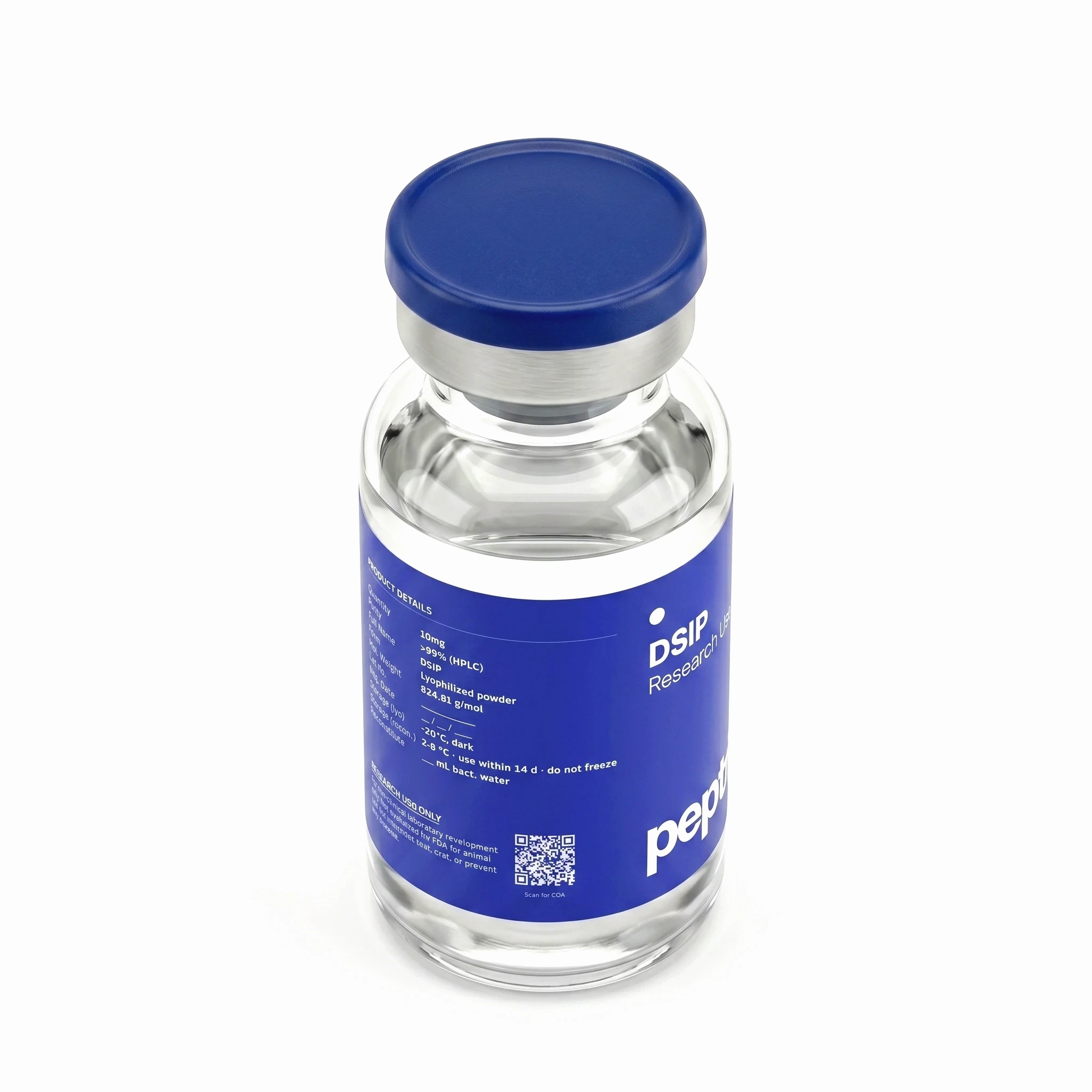
DSIP
The same compound cited across the original Schoenenberger / Monnier delta-sleep literature. Lab-verified identity and purity.
Epithalon: the pineal-axis claim that hasn't replicated.
Epithalon is a four-residue peptide (sequence: Ala-Glu-Asp-Gly). It comes from the Khavinson school's epithalamin pineal-extract program in Russia.
The reason Epithalon shows up in sleep marketing: Khavinson claims it stimulates the pineal gland to make more melatonin. If true, that would indirectly help sleep through the natural circadian-rhythm axis.
The trouble: the evidence sits almost entirely in Khavinson's own publications. Independent replication in peer-reviewed Western literature is essentially absent. The proposed mechanism is also strange. A four-residue peptide entering pineal cells, binding DNA, and modulating melatonin-synthesis enzyme transcription is at the edge of biochemical plausibility for a peptide with no known membrane transporter.
Honest framing for sleep-specific use: Epithalon's sleep claims rest on a contested mechanism supported by one research group's preclinical and small-n clinical work. The molecule may have other interesting biology — the telomerase-activation work is the more central Khavinson finding — but the published data does not support classifying it as a sleep peptide. Read the full Epithalon guide →
Semax and Selank: the indirect sleep claims.
Two Russian-school neuropeptides have appeared in sleep marketing without sleep being their primary indication.
Semax is an analog of ACTH (adrenocorticotropic hormone) residues 4–10. It modulates the HPA-axis stress response, a pathway connected to sleep. Chronic HPA-axis trouble is linked to delayed sleep onset, fragmented sleep, and less slow-wave sleep.
The theoretical link: if Semax stabilizes the HPA-axis, stress-driven insomnia could improve. The evidence for that specific use is essentially absent. Semax's Russian clinical literature covers stroke recovery and cognitive resilience, not sleep architecture. The sleep claims are downstream extrapolation, and we wouldn't lean on them. Read the full Semax guide →
Selank is a tuftsin analog studied as an anxiolytic (anxiety-reducer). The proposed bridge to sleep is anxiety-driven insomnia: the hypothesis is that anxiolytic activity could reduce sleep-onset latency in subjects with anxiety-related sleep disruption.
The Russian anxiolytic trials didn't measure sleep as a primary endpoint. They did report some improvement on sleep-related secondary endpoints in a subset of generalized-anxiety-disorder patients. We'd call the application plausible but indirect. Read the full Selank guide →
The DSIP literature didn't produce a clear hypnotic effect in well-controlled human studies. The early-1980s reviews acknowledged this. The field stopped active investigation by the early 1990s. No peer-reviewed multicenter RCT has resurrected the molecule as a serious sleep candidate. The continued consumer market is legacy positioning, not current clinical evidence.
— Synthesis from Mendelson et al. and Schneider-Helmert review literature
Where each compound sits on evidence.
Where this falls short. Sleep is the indication consumers most want a peptide for, and it's the one where peptide evidence is weakest. Validated chronic-insomnia treatments (CBT-I, melatonin-receptor agonists, dual orexin antagonists, GABA-A modulators with appropriate caution) have controlled trial bases that exceed anything in this category. The 2024 American Academy of Sleep Medicine guidelines for chronic insomnia don't include any peptide therapeutic.
Here's how we'd rank the four on human-trial evidence for the specific sleep indication, May 2026.
- DSIP: 50-year-old molecule. Mixed preclinical signal. Older small-n human trials. No peer-reviewed multicenter RCT. No FDA recognition.
- Epithalon: speculative pineal-melatonin claim. Khavinson group only. No independent replication.
- Semax: HPA-axis mechanism plausibly touches sleep. No trial (Russian or Western) measured sleep as a primary outcome.
- Selank: anxiolytic. Secondary sleep improvements reported in a subset of generalized-anxiety-disorder trials. Indirect application.
What would close this gap: a properly-powered Phase II RCT of DSIP in primary insomnia, with polysomnography-validated objective outcomes and a placebo control. That trial doesn't exist on ClinicalTrials.gov for any peptide in this category. The economic incentive to fund one is also weak. DSIP is off-patent, no commercially-protected developer has a reason to invest, and we don't expect the Russian neuropeptide programs to redirect to sleep endpoints absent sustained commercial interest that hasn't shown up.
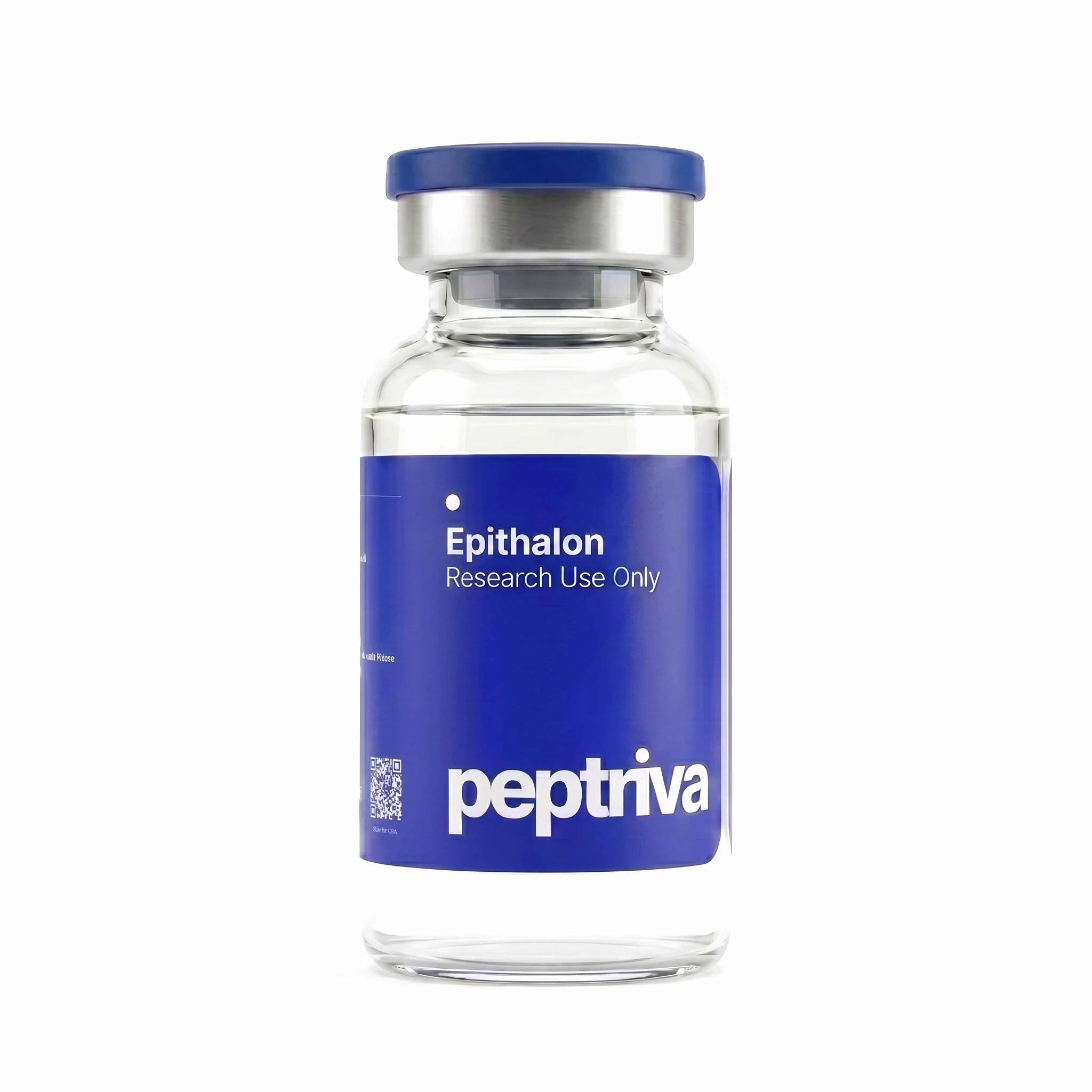
Epithalon
Tetrapeptide · Ala-Glu-Asp-Gly (AEDG), pineal-derived. The same reference compound used across the Khavinson pineal-peptide and circadian-rhythm studies. COA available with each lot.
Why sleep peptides have stayed evidence-thin.
Three structural reasons.
First, sleep medicine wants single-receptor specificity. The accepted drugs work via small molecules on well-defined targets: GABA-A, melatonin receptors, orexin receptors, histamine receptors. Peptides tend to have multifactorial effects. We see that as a disadvantage when the primary endpoint is noisy and needs a clean signal.
Second, FDA sleep approvals want objective measures. The regulatory path for new sleep drugs requires polysomnography-validated outcomes (overnight EEG). Most peptide trials use subjective sleep scales. That's useful for many indications but inadequate for sleep approval.
Third, the commercial incentive is weak. The chronic-insomnia market is dominated by generic GABA-A modulators and cheap over-the-counter melatonin. Any new peptide therapeutic would need clear advantages at a price point that justifies development. We haven't seen any peptide in current research produce data suggesting it could clear that bar.
Research gaps that the literature leaves open.
The published literature on this category leaves several methodological gaps that any future study design would need to address:
- Sleep phenotype specificity. Sleep-onset insomnia, sleep-maintenance insomnia, and circadian-rhythm disruption have distinct mechanistic profiles. None of the peptides in this category have been tested against a specific phenotype with the rigor applied to GABA-A modulators or melatonin-receptor agonists.
- Active-comparator absence. Cognitive-behavioral therapy for insomnia (CBT-I) is the AASM-recommended first-line treatment with a durable evidence base. No peptide trial in this category has used CBT-I as an active comparator, making relative efficacy claims unverifiable.
- Objective outcome reporting. The published peptide trials relied primarily on subjective scales. What the literature lacks is polysomnography-validated objective sleep architecture data — the standard the FDA requires for a sleep-indication approval.
- DSIP recency. DSIP has not been the subject of a peer-reviewed controlled study for sleep in over 30 years. Any contemporary use extrapolates from 1977–1983-era preclinical and small pilot data.
- Selank sleep phenotype. The secondary sleep signal in the Russian Selank trials was observed only in a subset of GAD patients. The application to non-anxiety-driven insomnia remains an untested extrapolation from that literature.
What to know now
- Primary molecule: DSIP, a nine-residue peptide isolated in 1977. No FDA approval. No multicenter RCT. Older small-n trials, mixed results.
- Three adjacent peptides with indirect sleep claims: Epithalon (speculative pineal-melatonin), Semax (HPA-axis modulation), Selank (anxiolytic with secondary sleep-onset improvements).
- No peptide is in the 2024 AASM guidelines for chronic insomnia. First-line is CBT-I. Pharmacological options are GABA-A modulators, melatonin-receptor agonists, dual orexin antagonists.
- The structural problem: peptides have multifactorial effects, which works against an indication that needs a clean signal on a defined receptor.
- The measurement problem: most peptide trials use subjective scales, not polysomnography. FDA approval requires polysomnography-validated objective sleep architecture.
- The thinnest evidence in this library. Even compared to BPC-157's preclinical-heavy 35:1 ratio, the sleep peptides have fewer peer-reviewed multicenter trials.
What we’re watching
Three things to track over the next 18 months. First, whether any registered Phase II RCT of DSIP in chronic insomnia shows up on ClinicalTrials.gov. That trial doesn't exist today and would change the category. Second, whether any non-peptide circadian-axis intervention validates the Epithalon-style pineal-restoration framing more rigorously. If not, the Epithalon sleep claim stays speculative. Third, whether the secondary sleep signal in Russian Selank GAD trials motivates an independent group to register an anxiolytic-mediated insomnia trial. That's the most evidence-plausible next step.
References
- Schoenenberger, G. A., & Monnier, M. (1977). Characterization of a delta-electroencephalogram (-sleep)-inducing peptide. Proceedings of the National Academy of Sciences, 74(3), 1282–1286. https://doi.org/10.1073/pnas.74.3.1282
- Mendelson, W. B., Gillin, J. C., Pisner, G., & Wyatt, R. J. (1980). Arginine vasotocin, delta-sleep inducing peptide, and the effect of brain peptides on sleep. Pharmacology Biochemistry and Behavior, 13(Suppl 1), 117–123. https://doi.org/10.1016/0006-8993(80)90854-9
- Schneider-Helmert, D., & Schoenenberger, G. A. (1983). Effects of DSIP in man. Multifunctional psychophysiological properties besides induction of natural sleep. Neuropsychobiology, 9(4), 197–206. https://doi.org/10.1159/000117964
- Sutton, E. L. (2021). Insomnia. Annals of Internal Medicine, 174(3), ITC33–ITC48. https://doi.org/10.7326/aitc202103160
- Sateia, M. J., Buysse, D. J., Krystal, A. D., et al. (2017). Clinical practice guideline for the pharmacologic treatment of chronic insomnia in adults: An American Academy of Sleep Medicine clinical practice guideline. Journal of Clinical Sleep Medicine, 13(2), 307–349. https://doi.org/10.5664/jcsm.6470
- Anisimov, V. N., Khavinson, V. K., & Morozov, V. G. (2003). Twenty years of study on effects of pineal peptide preparation: Epithalamin in experimental gerontology and oncology. Annals of the New York Academy of Sciences, 719, 483–493. https://doi.org/10.1111/j.1749-6632.1994.tb56853.x
- Zozulya, A. A., Neznamov, G. G., Siuniakov, T. S., et al. (2008). Efficacy and possible mechanisms of action of a new peptide anxiolytic Selank in the therapy of generalized anxiety disorders and neurasthenia. Bulletin of Experimental Biology and Medicine, 146(6), 731–733. PubMed search
- Edinger, J. D., Arnedt, J. T., Bertisch, S. M., et al. (2021). Behavioral and psychological treatments for chronic insomnia disorder in adults: An American Academy of Sleep Medicine clinical practice guideline. Journal of Clinical Sleep Medicine, 17(2), 255–262. https://doi.org/10.5664/jcsm.8986