Most peptide categories have thin human evidence and big marketing claims. The GLP-1 receptor agonist class is the exception. It's got three FDA-approved drugs already on the market and Phase III trials in the tens of thousands.
This category covers the metabolic peptides that act on incretin receptors (GLP-1, GIP) and in some cases the glucagon receptor. Two are available as research-grade reference compounds: tirzepatide (dual GIP/GLP-1 agonist, sold as Mounjaro / Zepbound, FDA-approved) and retatrutide (triple GIP/GLP-1/glucagon agonist, Phase II data reported the largest body-weight-reduction signal in incretin history, not yet approved). Semaglutide (Ozempic / Wegovy) and CagriSema provide additional class context.
Three things separate this category from every other peptide class covered here.
One. The FDA approvals are real and substantial. Semaglutide and tirzepatide together represent the most successful new metabolic drug class since the statins.
Two. The human evidence base is large. SURMOUNT-1 enrolled 2,539 study participants for 72 weeks. STEP-1 enrolled 1,961 for 68 weeks. These are modern Phase III RCTs.
Three. The mechanism is increasingly multi-receptor. Semaglutide targets one receptor. Tirzepatide targets two. Retatrutide targets three. Each additional receptor target has corresponded with a larger body-weight-reduction signal in reported trial data.
This overview covers the two SKUs in the catalog (retatrutide, tirzepatide), then provides context on semaglutide and the CagriSema combination program. The chart below shows where each one sits on the evidence ladder.
Who leads on evidence: tirzepatide, by a Phase III mile
Tirzepatide is a synthetic 39-amino-acid peptide with a fatty acid chain enabling once-weekly subcutaneous dosing in approved clinical use. The molecule activates two incretin receptors: GIP and GLP-1. Dual-receptor activation has produced stronger effects on insulin secretion, glucagon suppression, gastric emptying, and central appetite signaling than single-receptor agonism in head-to-head studies.
FDA approved it as Mounjaro for type-2 diabetes in May 2022. Then again as Zepbound for chronic weight management in November 2023.
The pivotal Phase III data is overwhelming. SURMOUNT-1 enrolled 2,539 adults with obesity and ran 72 weeks. At the highest dose, mean weight loss was 22.5% vs 2.4% on placebo.
The SURPASS program tested it in type-2 diabetes. Blood sugar marker (HbA1c) reductions ran 1.6–2.4 percentage points across comparator arms.
The dose-limiting issue is GI tolerability. Nausea, diarrhea, vomiting. The nausea rate during titration in SURMOUNT-1 hit roughly 25–30% at the highest dose.
Tirzepatide is the most-studied multi-receptor incretin in human evidence as of 2026. The gap between its evidence base and any other peptide class in this catalog is the size of a Phase III program. Read the full Tirzepatide guide →
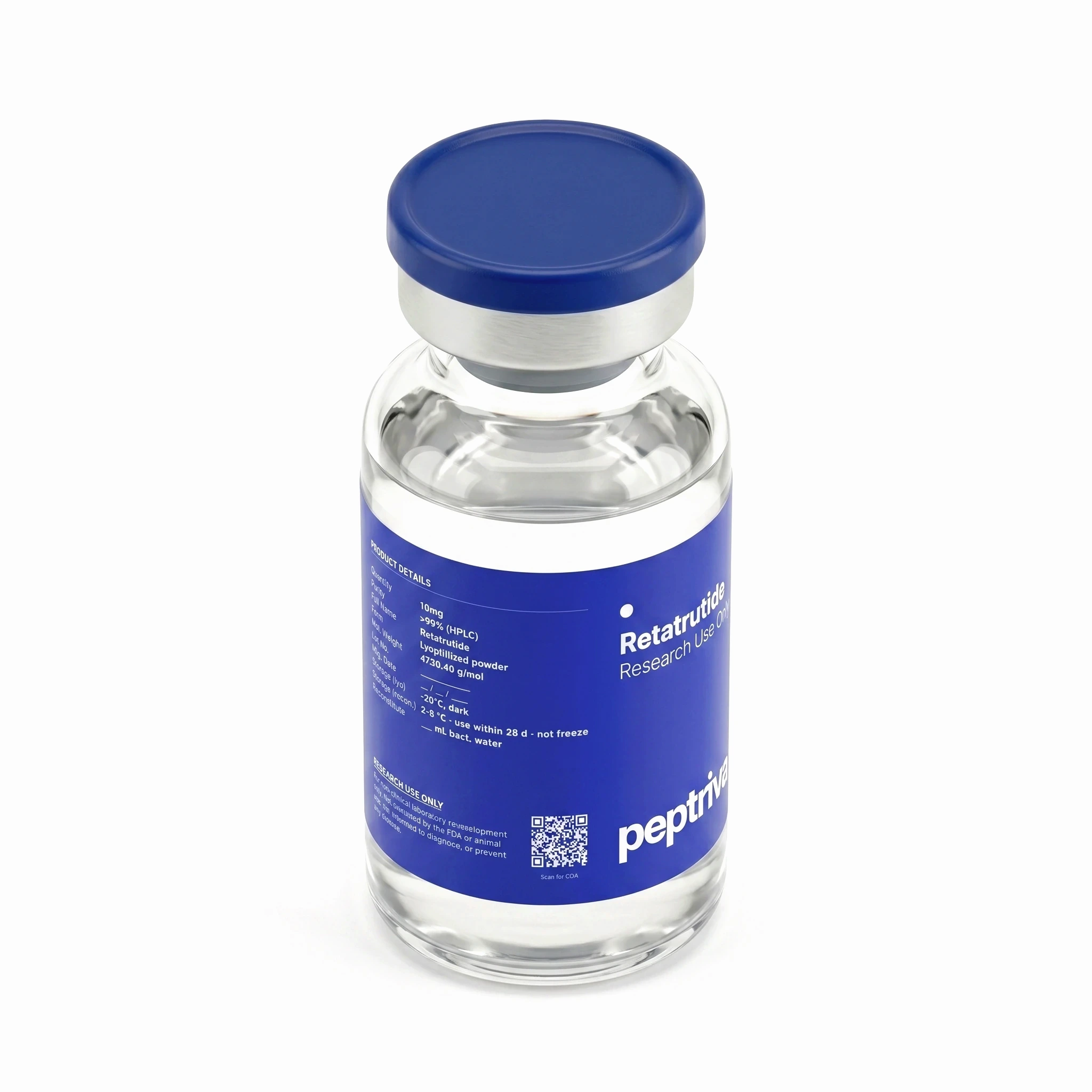
Retatrutide
The reference compound studied in the Phase II Eli Lilly trial (Jastreboff et al., NEJM 2023) reporting the largest body-weight-reduction signal in incretin research history. Research-grade reference compound, COA per lot.
Who's pushing the ceiling: retatrutide, with a caveat
Retatrutide is Eli Lilly's investigational compound (code LY3437943). It takes tirzepatide's dual-receptor design and adds a third target: the glucagon receptor.
The receptor logic is clean. GLP-1 and GIP drive insulin release and appetite suppression. Adding glucagon increases energy expenditure and direct fat oxidation in the liver.
The 2023 Phase II data is striking. A 48-week trial in 338 adults with obesity. The highest dose (12 mg weekly) produced a mean weight reduction of 24.2%. That's the largest mean reduction reported in any controlled trial of an incretin compound, ever. The 12-mg arm had 100% of participants hit ≥5% weight loss at 48 weeks and 83% hit ≥15%. The signal is roughly 1.5x larger than tirzepatide's equivalent arm in SURMOUNT-1.
Here are the honest caveats. Phase II isn't Phase III. The signal needs to replicate in the larger TRIUMPH program that's running now. GI tolerability looks similar to or slightly worse than tirzepatide. The bigger weight-loss signal doesn't appear to come with a friendlier side-effect profile.
Glucagon receptor activation has historically raised concerns about liver glycogen release and blood-sugar excursions. The 2023 Phase II didn't show alarming HbA1c effects, but the trial was small and short. The Phase III readouts will decide whether retatrutide becomes the new ceiling for the class.
Our complete guide covers the triple-receptor pharmacology, the Phase II trial design, the comparison with SURMOUNT-1, and the TRIUMPH timeline in depth. Read the full Retatrutide guide →
The 24.2% mean weight reduction at 48 weeks in the retatrutide Phase II is the largest in the history of incretin pharmacology. Whether it replicates in Phase III — and whether the GI tolerability allows long-term adherence at the highest doses — will determine whether retatrutide redefines the obesity-treatment ceiling.
— Jastreboff et al., New England Journal of Medicine, 2023
The rest of the class: semaglutide and CagriSema
Two additional reference compounds round out the class picture.
Semaglutide. Sold as Ozempic for type-2 diabetes (approved 2017) and Wegovy for weight management (approved 2021). It's a pure GLP-1 receptor agonist. STEP-1 enrolled 1,961 adults with obesity and showed a 14.9% mean body-weight reduction at 68 weeks vs 2.4% on placebo. STEP-1 data demonstrated that GLP-1 activation alone, at a sufficient dose over sufficient duration, produces clinically meaningful body-weight reduction in study participants. Tirzepatide and retatrutide built on that mechanistic foundation by adding additional receptor targets.
Cagrilintide and CagriSema. Cagrilintide is a long-acting amylin analog (amylin is a different gut hormone class entirely). Novo Nordisk developed it to pair with semaglutide. The combination, called CagriSema, is in Phase III in the REDEFINE program. Phase II showed 15.6% weight reduction at 32 weeks. That's comparable to semaglutide alone over a similar duration. The Phase III REDEFINE-1 readout will tell us whether adding amylin actually adds magnitude or just adds complexity.
Where the class stands today: semaglutide is the established standard at 14.9%. Tirzepatide is the new ceiling at 22.5%. Retatrutide may set a new one at 24.2% if Phase III holds. CagriSema is competing on a different mechanism but similar magnitude. All four programs are active. The field is moving fast.
Where this falls short
Where this falls short. The class is unprecedented, but it is not without limitations. GI side effects are the dose-limiting issue documented across trials. Weight regain following discontinuation has been documented — STEP-4 showed roughly two-thirds of weight lost in study participants came back within 12 months of cessation. Long-term safety data exists for tirzepatide and semaglutide (millions of patient-years across post-marketing surveillance). Retatrutide has 48 weeks of data in 338 study participants. The evidence base for these two compounds is not equivalent, and Phase II data should not be interpreted as equivalent to Phase III approval.
Researchers should note the distinction between the approval status of compounds in this class. Tirzepatide has thousands of patient-years of post-marketing surveillance. Retatrutide has a single 48-week trial in 338 participants. That is a materially different evidence profile.
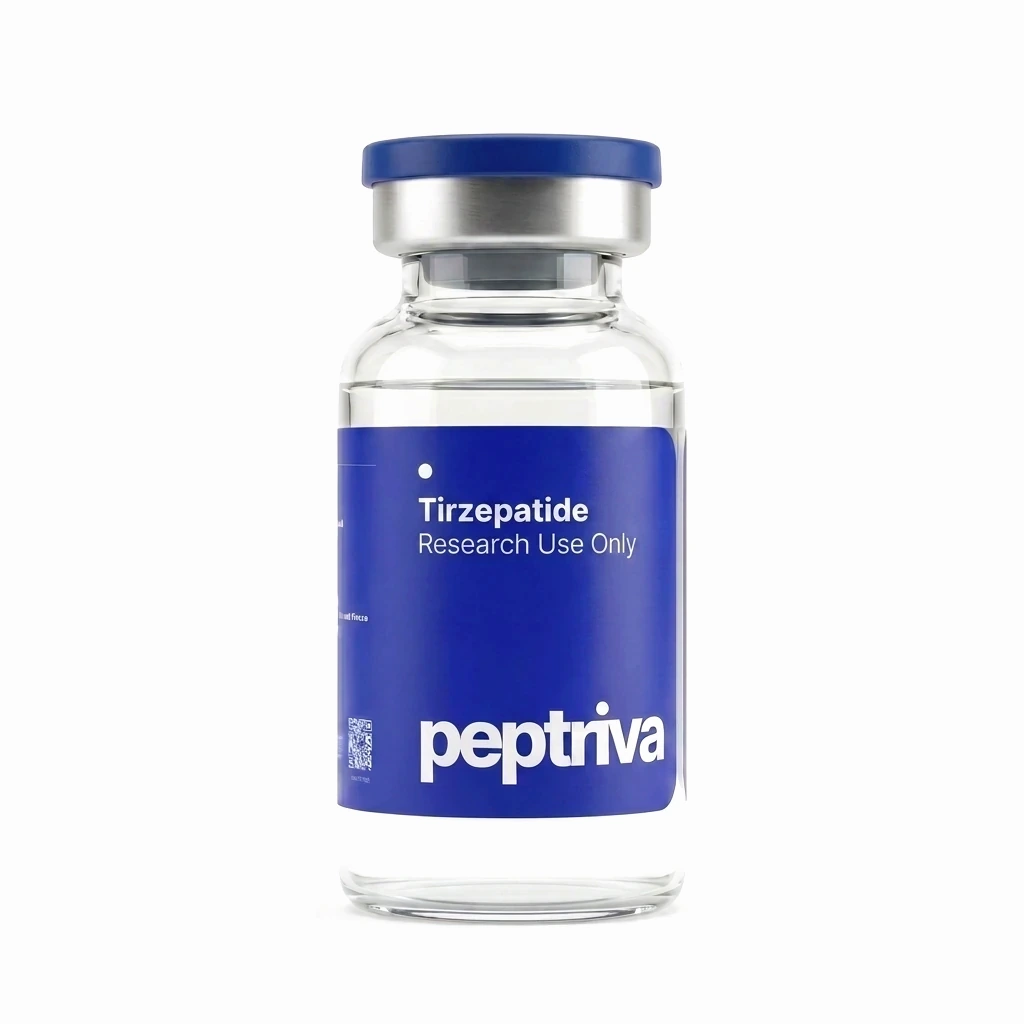
Tirzepatide
A dual GIP / GLP-1 agonist — the same molecule as FDA-approved Mounjaro / Zepbound. The reference compound across SURMOUNT and SURPASS Phase III data. COA available with each lot.
Why this category got real evidence (and others didn't)
The contrast with other peptide classes is structural. Three things explain why GLP-1 has a mature evidence base where most peptide categories don't.
First, the developers (Novo Nordisk, Eli Lilly) have had a huge financial incentive to fund Phase III. Obesity and type-2 diabetes are massive markets. Patents pay for trials.
Second, the receptor pharmacology is unambiguous. Single-receptor or specifically-multi-receptor, with measurable hormone and glucose endpoints suited to clinical trial design. The clean endpoint structure enabled well-powered RCTs.
Third, the historical scaffolding was strong. Exenatide, liraglutide, and dulaglutide came before semaglutide. Each successor had a regulatory template to follow.
None of those three advantages applies to the other peptide categories covered in this research library. BPC-157 has no patent-protected developer. The growth-hormone peptides have measurable but ambiguous endpoints. The nootropic peptides of Russian clinical origin have a trial template that has not matured to Western RCT standards. The GLP-1 class is the exception, not the rule.
Open questions for 2026
Several methodological and regulatory questions remain open across the GLP-1 class as of 2026:
- Regulatory status differentiation. Tirzepatide as Mounjaro/Zepbound carries post-marketing surveillance data accumulated over years of clinical use. Retatrutide has no FDA approval and its evidence base is limited to a single Phase II trial.
- Dose-titration dynamics. Across trials in this class, GI tolerability has been the primary dose-limiting factor. Published protocols escalated doses over 8–16 weeks to manage tolerability.
- Post-discontinuation weight regain. STEP-4 data showed approximately two-thirds of weight lost by study participants returned within 12 months of cessation. Maintenance dosing protocols are an active area of investigation.
- Adverse event monitoring. Gastroparesis and pancreatitis have been identified as recognized adverse events at low absolute rates in post-marketing surveillance for approved agents.
- Population generalizability. SURMOUNT and SURPASS enrolled study participants meeting specific BMI and metabolic criteria. Extrapolation outside those studied populations is not well-supported by existing data.
What to know now
- Three FDA approvals already on the market: semaglutide (Ozempic 2017, Wegovy 2021), tirzepatide (Mounjaro 2022, Zepbound 2023). Millions of patient-years of post-marketing data.
- Receptor mechanics: semaglutide = single (GLP-1). Tirzepatide = dual (GIP + GLP-1). Retatrutide = triple (GIP + GLP-1 + glucagon). Each receptor addition has corresponded with a larger body-weight-reduction signal in trial data.
- SURMOUNT-1: tirzepatide produced 22.5% mean body-weight reduction in 2,539 study participants over 72 weeks. Largest signal among approved obesity pharmacotherapy agents.
- Retatrutide Phase II: 24.2% mean body-weight reduction in 338 study participants over 48 weeks. Largest in incretin research history. Not yet approved. Phase III TRIUMPH ongoing.
- CagriSema: Phase II 15.6%. Phase III REDEFINE-1 ongoing. Different mechanism, amylin co-agonism with GLP-1.
- Dose-limiting factor in trials: GI side effects (nausea, vomiting, diarrhea) during dose escalation, documented across SURMOUNT, SURPASS, and the retatrutide Phase II.
- Evidence gap: long-term safety data exists for tirzepatide and semaglutide from post-marketing surveillance. Comparable long-term data does not yet exist for retatrutide.
What we're watching
Three things to track over the next 18 months. First, the retatrutide TRIUMPH Phase III readouts. Specifically whether the 24.2% Phase II weight-loss signal replicates at the larger trial sizes and longer durations. Second, the CagriSema REDEFINE-1 readout. Whether amylin co-agonism produces meaningfully different magnitude or tolerability than GLP-1 alone. Third, the durability literature. Specifically the post-discontinuation regain pattern and whether reduced-dose maintenance protocols can preserve a useful fraction of the on-treatment loss.
References
- Jastreboff, A. M., Aronne, L. J., Ahmad, N. N., et al. (2022). Tirzepatide once weekly for the treatment of obesity. New England Journal of Medicine, 387(3), 205–216. https://doi.org/10.1056/NEJMoa2206038
- Jastreboff, A. M., Kaplan, L. M., Frias, J. P., et al. (2023). Triple-hormone-receptor agonist retatrutide for obesity — A phase 2 trial. New England Journal of Medicine, 389(6), 514–526. https://doi.org/10.1056/NEJMoa2301972
- Wilding, J. P. H., Batterham, R. L., Calanna, S., et al. (2021). Once-weekly semaglutide in adults with overweight or obesity. New England Journal of Medicine, 384(11), 989–1002. https://doi.org/10.1056/NEJMoa2032183
- Frias, J. P., Davies, M. J., Rosenstock, J., et al. (2021). Tirzepatide versus semaglutide once weekly in patients with type 2 diabetes. New England Journal of Medicine, 385(6), 503–515. https://doi.org/10.1056/NEJMoa2107519
- Lau, D. C. W., Erichsen, L., Francisco, A. M., et al. (2021). Once-weekly cagrilintide for weight management in people with overweight and obesity. The Lancet, 398(10317), 2160–2172. https://doi.org/10.1016/S0140-6736(21)01751-7
- Enebo, L. B., Berthelsen, K. K., Kankam, M., et al. (2021). Safety, tolerability, pharmacokinetics, and pharmacodynamics of concomitant administration of multiple doses of cagrilintide with semaglutide 2.4 mg for weight management. The Lancet, 397(10286), 1736–1748. https://doi.org/10.1016/S0140-6736(21)00845-X
- Rubino, D., Abrahamsson, N., Davies, M., et al. (2021). Effect of continued weekly subcutaneous semaglutide vs placebo on weight loss maintenance in adults with overweight or obesity: The STEP 4 randomized clinical trial. JAMA, 325(14), 1414–1425. https://doi.org/10.1001/jama.2021.3224
- Garvey, W. T., Frias, J. P., Jastreboff, A. M., et al. (2023). Tirzepatide once weekly for the treatment of obesity in people with type 2 diabetes (SURMOUNT-2). The Lancet, 402(10402), 613–626. https://doi.org/10.1016/S0140-6736(23)01200-X
- Rosenstock, J., Wysham, C., Frias, J. P., et al. (2021). Efficacy and safety of a novel dual GIP and GLP-1 receptor agonist tirzepatide in patients with type 2 diabetes (SURPASS-1). The Lancet, 398(10295), 143–155. https://doi.org/10.1016/S0140-6736(21)01324-6
- Coskun, T., Urva, S., Roell, W. C., et al. (2022). LY3437943, a novel triple glucagon, GIP, and GLP-1 receptor agonist for glycemic control and weight loss: From discovery to clinical proof of concept. Cell Metabolism, 34(9), 1234–1247. https://doi.org/10.1016/j.cmet.2022.07.013