The headline on the CJC-1295 + ipamorelin stack: combined dosing produces roughly 3–5x the growth hormone (GH) pulse of either drug alone. The mechanism is real. What we don’t have: a single randomized human trial of the stack for any clinical outcome.
The CJC-1295 + ipamorelin stack pairs a GHRH-receptor agonist (CJC-1295 no DAC) with a ghrelin-receptor agonist (ipamorelin) to produce supra-additive growth hormone release. Combined dosing typically produces 3–5x the GH pulse of either drug alone. Zero human RCTs measure muscle gain, fat loss, recovery, sleep, or anti-aging outcomes. The strongest preclinical body-composition signal comes from a rodent muscle-wasting model. Both drugs are on the WADA Prohibited List (S2).
This article isn’t about whether the stack “works.” That phrasing isn’t answerable from what’s been published.
It’s about what the literature actually contains, what it doesn’t, and why this particular pairing (out of dozens of possible combinations) became the dominant grey-market GH-axis protocol.
Why does this specific pairing exist?
The pituitary somatotroph (the cell that releases GH) has two GH-stimulating switches.
The first switch responds to a brain signal that normally drives GH pulses. The second responds to ghrelin, the stomach’s “hunger hormone” that also amplifies GH release. The two switches use different internal signaling routes.
When both fire simultaneously, the GH pulse is larger than the sum of the parts. That’s supra-additive synergy. It’s been documented since the 1990s, when researchers first co-administered natural versions of both signals.
CJC-1295 was chosen for its half-life. The “no DAC” variant’s ~30-minute window is long enough to keep the first switch active during an ipamorelin pulse. Ipamorelin was chosen for its selectivity. Unlike older drugs in this class, it does not elevate cortisol or prolactin — hormones that would otherwise attenuate the downstream anabolic signaling the pairing is designed to study.
CJC-1295 combined with ipamorelin showed significantly improved maximum tetanic tension in murine models with glucocorticoid-induced muscle loss, but these findings are limited to animal studies.
— Mayfield et al., American Journal of Sports Medicine, 2026
What does the GH pulse actually do?
The supra-additive GH response is one of the better-documented findings in this drug class. Pulse amplitude typically runs 3 to 5x above either drug’s solo maximum. The pulse decays over the next hour or two as both switches get desensitized.
What the synergy doesn’t tell you: whether a larger GH pulse translates to a larger downstream tissue effect. More liver-produced growth signaling. Greater muscle protein synthesis. Greater belly-fat loss. Those translations involve multiple intermediate steps, each with its own curve. A 3-5x pulse doesn’t guarantee a 3-5x result downstream.
The stack reliably elevates GH on a blood test. Whether that translates to durable physiological benefit in healthy human subjects has not been established by controlled human trials. Zero RCTs have measured any downstream clinical endpoint.
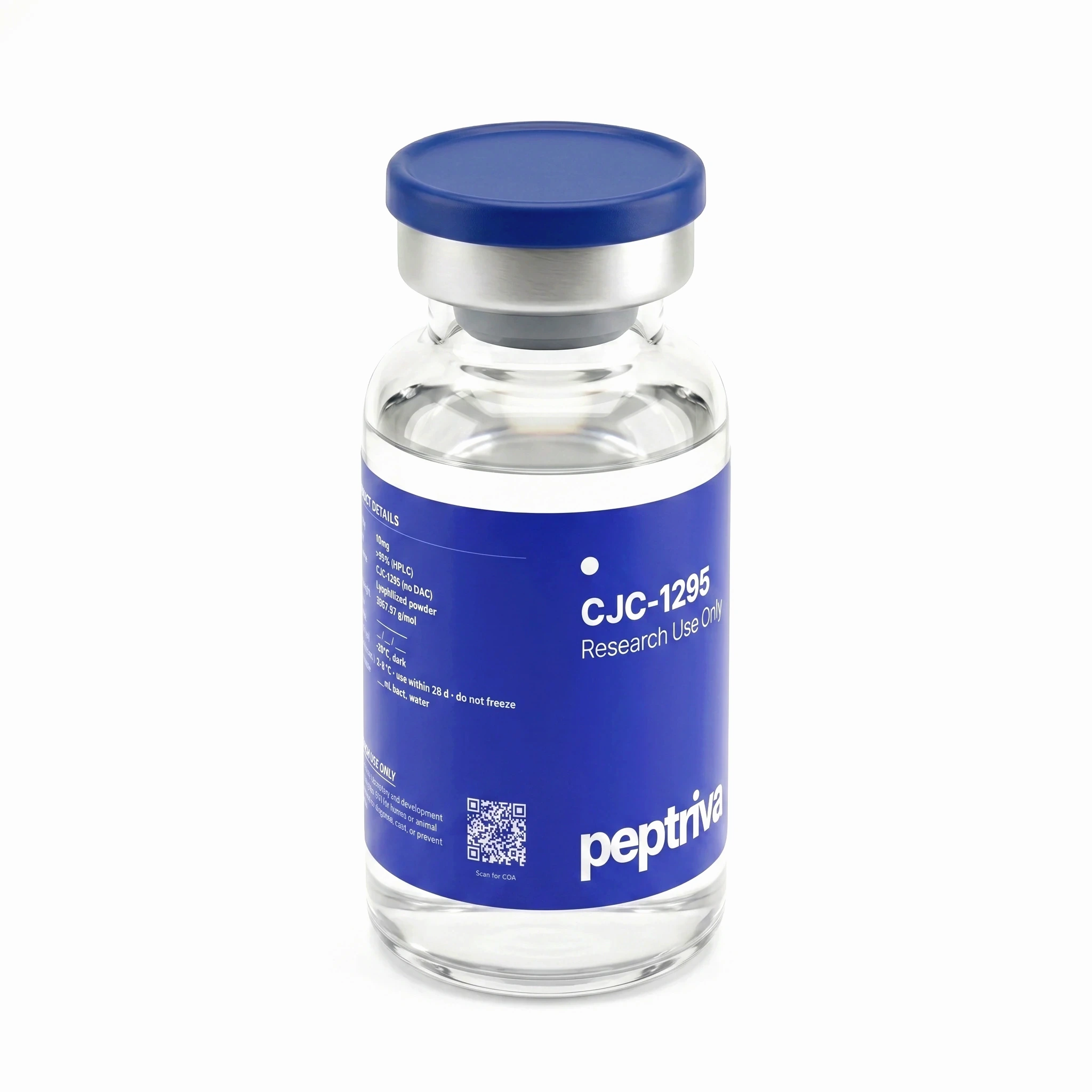
CJC-1295 (no DAC)
The GHRH-receptor side of the stack cited across the cachexia and synergy studies in this article. Lab-verified identity and purity.
What’s the strongest preclinical evidence?
The strongest preclinical evidence for the stack as a body-composition intervention isn’t from healthy animal training studies. It’s from rodent muscle-wasting models.
A 2026 review in the American Journal of Sports Medicine by Mayfield notes that CJC-1295 + ipamorelin significantly improved peak muscle force in rats given long-term steroids (the kind that cause muscle loss).
This is meaningful preclinical data. Steroid-induced muscle wasting affects ICU patients, long-term steroid users, and cancer patients on immunosuppression. Showing the stack preserves muscle in that model has translational potential.
But there are several inferential leaps from this finding to assertions about body-composition effects in healthy research subjects.
Where this falls short. In muscle-wasting models, the GH system is suppressed by steroids, and the drug restores near-normal signaling. In healthy subjects, the same drug pushes signaling above the normal setpoint. Those are fundamentally different scenarios with different effect sizes and different feedback dynamics. The first has a clear rationale. The second asks what happens when signaling exceeds the body’s natural calibration — exactly the kind of question controlled human trials are designed to answer, and that trial does not yet exist.
Where do the dose parameters in the literature come from?
The dose parameters that appear in grey-market forums, supplement-store copy, and longevity-medicine content trace back to early-2000s dose-finding studies that identified which dose ranges produce GH pulses without obvious acute side effects. They were not derived from trials measuring downstream tissue outcomes.
Two implications follow from this lineage. First, the ranges are calibrated for a GH biomarker response, not for any clinical efficacy endpoint — because no such endpoint trials exist. Second, the pulse-administration patterns documented in preclinical protocols reflect what was observed about receptor dynamics: continuous stimulation produces receptor downregulation. But the long-term durability of pulse protocols against eventual receptor desensitization remains untested at the human level.
Where does the stack’s evidence base actually stop?
There’s no published RCT of the CJC-1295 + ipamorelin stack for any clinical outcome in humans. Not for muscle gain. Not for fat loss. Not for sleep, recovery, cognition, libido, or anti-aging biomarkers. Zero RCTs. That’s the most important fact about the stack in 2026.
What does exist:
- Pharmacology studies of each drug individually establishing their biomarker effects on serum GH and IGF-1. These predate the 2020–2026 window and get referenced in narrative reviews.
- Preclinical (rodent) data showing the combination preserves muscle function in glucocorticoid-induced wasting and produces synergistic GH release across multiple animal models.
- Anti-doping detection methods — validated LC-MS/MS protocols that identify both CJC-1295 and ipamorelin in athlete samples (Memdouh 2021, Cristea 2023).
- Narrative reviews that discuss the stack within broader peptide-therapy landscapes (Mendias 2026, Mavrych 2026, Sinha 2020).
What doesn’t exist:
- A controlled clinical trial of the stack in healthy adults
- A controlled clinical trial of the stack in athletes
- A controlled clinical trial of the stack for any body-composition endpoint
- Long-term human safety data for combined GHRH + ghrelin-receptor stimulation
- Comparative data against an established therapy with a real evidence base
The honest alternative: measure one at a time
For research designs focused on GH-axis pharmacology rather than body-composition endpoints, the stack is often unnecessarily complex.
When the experimental question is “what does GHRH-receptor stimulation do in this model,” CJC-1295 alone provides a cleaner readout. When the question is “what does ghrelin-receptor stimulation do,” ipamorelin alone provides a cleaner readout. Combining the two is informative for questions about receptor synergy, but confounds attribution for downstream effects.
The stack’s dominance in grey-market protocols comes mostly from marketing logic, not experimental logic. “Two peptides for synergy” is a compelling sales narrative. The result is that most grey-market protocols are pharmacologically more complex than the underlying question warrants, and carry whatever the combined safety profile entails, against outcomes that have never been formally measured.
What are the specific combination risks?
The expected side-effect profile of the stack is the union of each drug’s side effects, plus any interactions. From the underlying pharmacology:
- GH-axis side effects likely amplified by combined stimulation: edema (fluid retention), joint stiffness, paresthesias (tingling/numbness), insulin resistance, and theoretical IGF-1-mediated cancer concerns.
- Tachyphylaxis — receptor downregulation could blunt the response over time. The two receptors desensitize through different mechanisms, so combined stimulation may produce different long-term adaptations than either drug alone.
- Manufacturing contamination — a 2026 critical review warns that the largely unregulated supply chain for performance peptides exacerbates these dangers. Cardiovascular strain, insulin resistance, dyslipidemia, and psychiatric instability are listed as emerging concerns (Coutinho et al., 2026).
- Detection in sports testing — both molecules are reliably detectable at WADA labs at sub-ng/mL urine levels. Athletes using the stack get caught by routine testing.
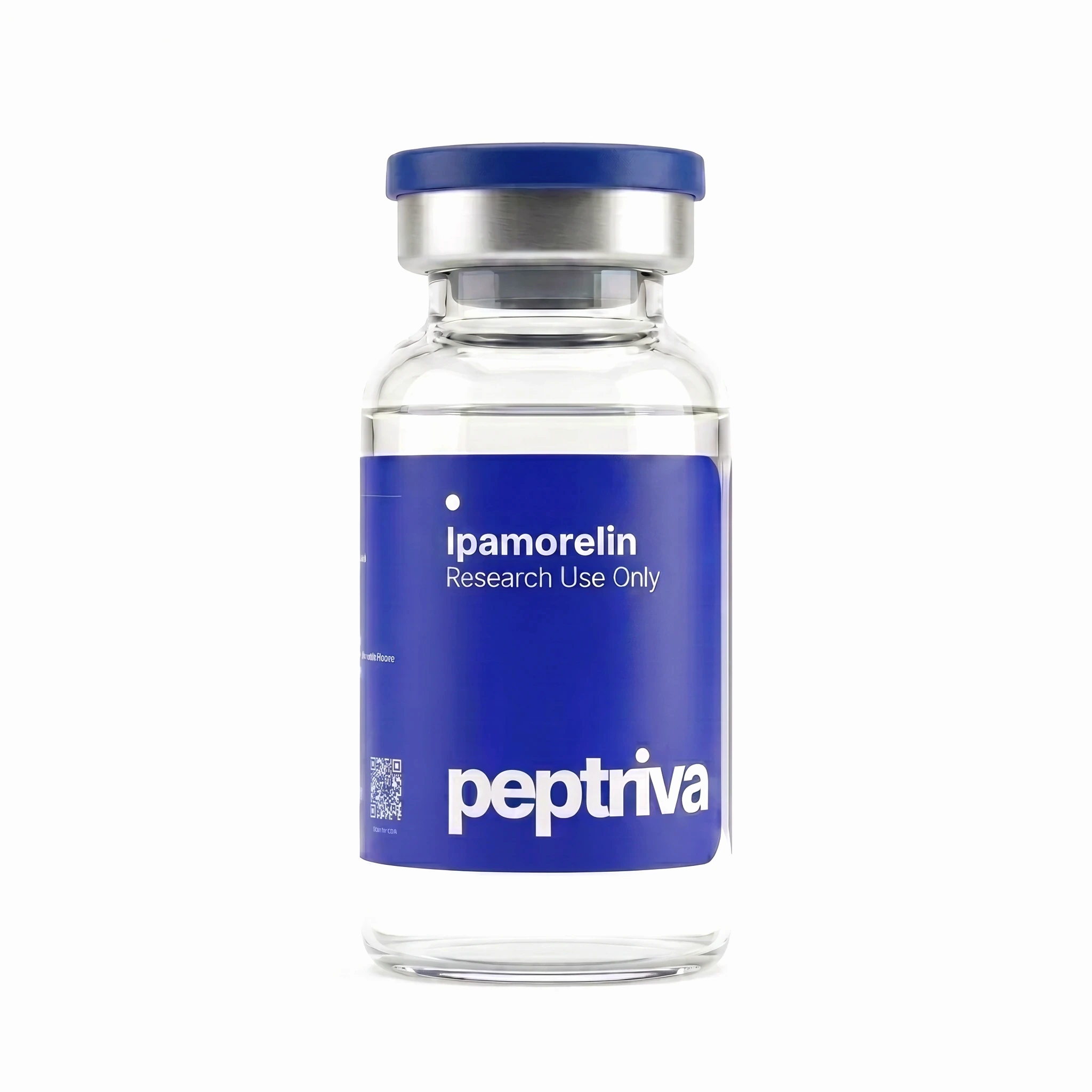
Ipamorelin
Pentapeptide · selective GHS-R agonist (GHRP). The same reference compound used across the cited synergy studies. COA available with each lot.
What to know now
- Mechanism: CJC-1295 (mimics the brain’s GH signal) + ipamorelin (mimics ghrelin) produces supra-additive GH release through complementary pituitary pathways.
- Pulse amplitude: combined dosing typically produces 3–5x the GH response of either agent alone in clinical-pharmacology studies.
- Preclinical strongest signal: glucocorticoid-induced cachexia in rodents — muscle function preservation, not body composition in healthy animals.
- Human RCT data: zero for any clinical endpoint.
- Dose protocols: derived from biomarker-effect dose-finding studies, not outcome-validated trials.
- Regulatory status: both molecules on WADA Prohibited List (S2); both placed on FDA bulks-not-eligible-for-503A-compounding lists.
- Detection: both reliably detectable by validated LC-MS/MS methods at sub-ng/mL urine concentrations.
What we’re watching
Two things to track over the next 18 months. First, whether any registered Phase II trial of CJC-1295 or ipamorelin shows up on ClinicalTrials.gov — either as monotherapy or in combination — for an indication other than the historical ones (cachexia, postoperative ileus). Second, whether independent labs replicate the preclinical synergy data in non-rodent models or in healthy-animal protocols. That replication is the bridge between the mechanism story and any clinical translation worth taking seriously.
References
- Mayfield, C. K., Bolia, I. K., Feingold, C. L., et al. (2026). Injectable peptide therapy: A primer for orthopaedic and sports medicine physicians. American Journal of Sports Medicine, 54(1), 223–229. https://doi.org/10.1177/03635465251357593
- Mendias, C. L., & Awan, T. M. (2026). Safety and efficacy of approved and unapproved peptide therapies for musculoskeletal injuries and athletic performance. Sports Medicine. https://doi.org/10.1007/s40279-026-02437-0
- Sinha, D. K., Balasubramanian, A., Tatem, A. J., et al. (2020). Beyond the androgen receptor: the role of growth hormone secretagogues in the modern management of body composition in hypogonadal males. Translational Andrology and Urology, 9(Suppl 2), S149–S159. https://doi.org/10.21037/tau.2019.11.30
- Memdouh, S., Gavrilović, I., Ng, K., Cowan, D., & Abbate, V. (2021). Advances in the detection of growth hormone releasing hormone synthetic analogs. Drug Testing and Analysis, 13(11–12), 1871–1887. https://doi.org/10.1002/dta.3183
- Cristea, C. D., Radu, M., Toboc, A., Stan, C., & David, V. (2023). Cationic exchange SPE combined with triple quadrupole UHPLC-MS/MS for detection of GHRHs in urine samples. Analytical Biochemistry, 682, 115336. https://doi.org/10.1016/j.ab.2023.115336
- Coutinho, L. F. D., De Oliveira Neves, L. F., & Camilo, R. P. (2026). A new era of doping? Use of peptide and peptide-analog drugs in recreational and professional sport and bodybuilding. Journal of Sports Medicine and Physical Fitness. https://doi.org/10.23736/S0022-4707.26.17773-1
- Mavrych, V., Shypilova, I., & Bolgova, O. (2026). Therapeutic peptides in gerontology: mechanisms and applications for healthy aging. Frontiers in Aging, 7, 1790247. https://doi.org/10.3389/fragi.2026.1790247