 Shop now
Six ways peptide buyers get burned
Six documented failures, and the tell for each.

Peptides bought online are sold on paper. Purity, identity and amount are invisible in the vial, so the certificate is what you are really buying. That paper fails six ways: an untested purity number, manufacturer-only paper, an uncheckable certificate, the wrong amount, skipped screens and a vanishing vendor. A seller worth your money answers all six, on paper you can check yourself. Peptides bought online are sold on paper, so the certificate is what you are really buying. That paper fails six ways. Peptriva publishes all six for every lot in its catalog.

- 1Purity?Not visible in the glass
- 2Identity?A label is not a test
- 3Amount in the vial?The label only claims it
- 4Endotoxin?Screened, or skipped?
- 5Who tested it?Only the paper can say
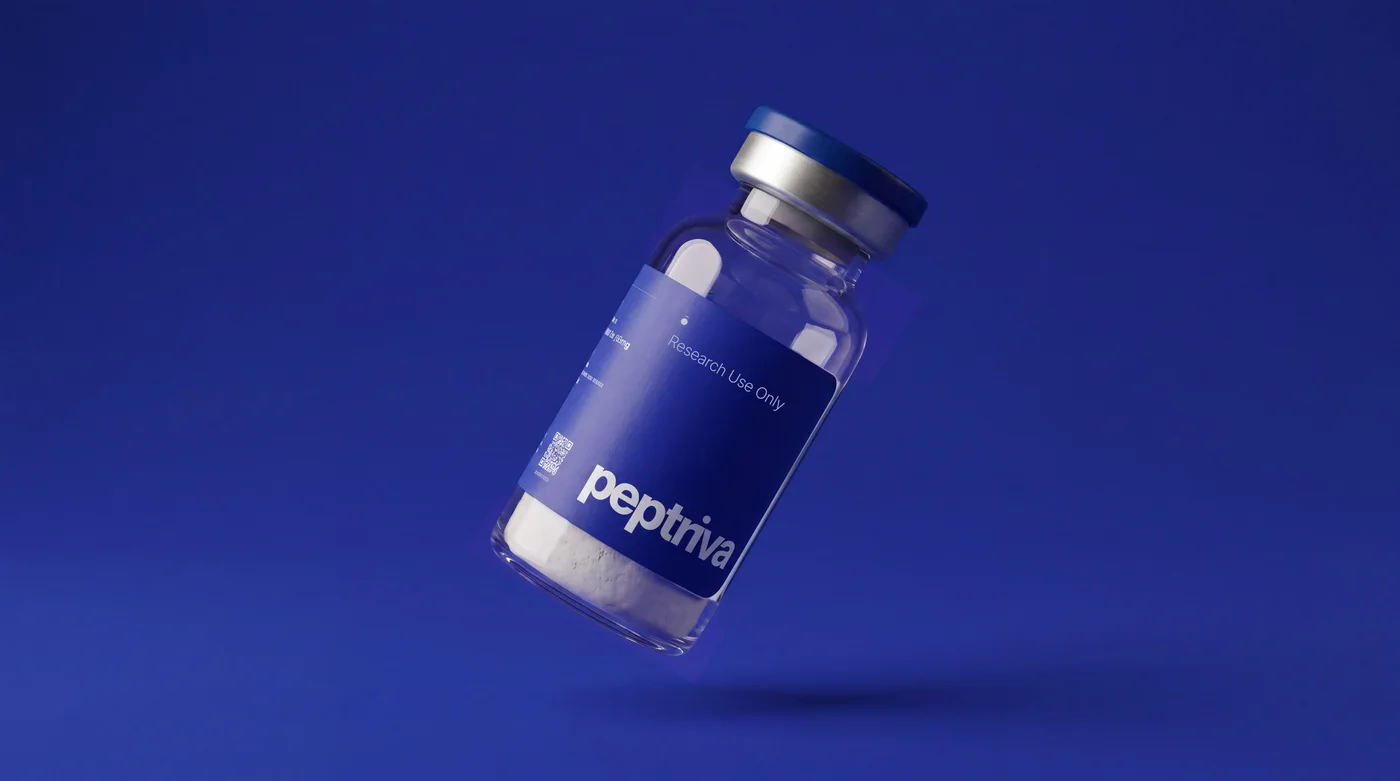
Purity, identity and amount are invisible in the vial. The six ways: an untested purity number, manufacturer-only paper, an uncheckable certificate, the wrong amount, skipped screens and a vanishing vendor. A seller worth your money answers all six, on paper you can check yourself.
Check these before you pay:
- A second test by an outside lab, not the manufacturer’s paper.
- A certificate naming the lab, the method and the test date.
- A report you can pull up from the lab’s own database, where one exists.
- A lot number on the report, not a specimen result reused across lots.
- Amount in the vial and an endotoxin reading, not just purity.
- A written policy for a bad lot, and a reversible payment.
None of the problems below is a rumor. Each is documented by a court, a border agency, a testing laboratory or a published study.
1. The purity number with nothing behind it
A typical listing says “99% pure.” A figure typed on a web page is not a test.
In a 2024 study1 of three products bought from online sellers, the paperwork claimed a purity of at least 99 percent. The lab measured between 7.7 and 14.4 percent. The same authors’ earlier research letter2 in JAMA Network Open covered the same three products. They judged them likely unregistered or unlicensed.
Why it happens: a test costs money and a number costs nothing. A site that rates peptide shops3 puts it plainly: “An unattributed certificate is a claim rather than a measurement.”
The tell: a purity figure with no certificate behind it, or a certificate with no method, date or lab.
2. Bulk sold on the manufacturer’s own paper
Many listings are resold bulk material that comes with one certificate: the manufacturer’s own. That certificate is the manufacturer grading its own work, and a reseller that ships on it has added a logo, not a measurement.
Why it happens: a second test costs money, and the first certificate already looks official. Nobody further down the chain has to measure the material again before it is sold.
The tell: one certificate from the manufacturer, and no second test by an outside lab.
3. The certificate that cannot be checked
A certificate of analysis is a PDF, and a PDF can be edited or reused.
In July 2026 a federal judge sentenced the owner of a large U.S. online vendor to nearly six years in prison, CBS News reported4. The company advertised its products as 99 percent pure and third-party tested. The owner admitted forging laboratory certificates, prosecutors say.
Why it happens: a forged or borrowed document costs less than a test, and looks real until someone checks it against the lab’s records. The same rating site3 describes the specimen certificate: “a representative result from some earlier production run, reproduced on the product page indefinitely.”
A certificate with no lot number, or one that does not match the vial in hand, “is a document about somebody else’s material.”
The tell: no lot number, a specimen result reused across lots, or a report you cannot pull up in the lab’s own database, where the lab publishes one. An audit site that checks certificates against a lab’s public record5 reports that fabricated ones fail: a genuine code points to the lab’s own server.
4. The wrong amount in the vial
Purity is a share. Amount is how much is in the vial. A vial can be very pure and still hold far less than the label says.
GenScript7, a peptide manufacturer, explains the difference. Purity is the share of the target sequence in the peptide fraction; the powder also holds water, counterions and salts. Knowing the exact amount takes a separate test, the company says. Another manufacturer’s quality-control guide8 says net peptide content “and purity are not equivalent.” A low figure “must be expected” even for peptides that are “extremely pure,” it adds.
In the JAMA Network Open letter above2, measured content exceeded the labeled amount by 29 to 39 percent in every sample. In August 2026 an Australian laboratory told ABC News9 it had tested 18 samples of one counterfeit product so far that year, and only one matched its label claim. About 30 percent held more than labeled, about 30 percent less, and one held none.
The tell: a certificate that lists purity but no net content, and no amount measured against the label.
5. The screen nobody ran
Purity is not the only line a certificate can carry. Endotoxin is the contamination screen to look for: the bacterial endotoxins test, USP chapter 8510, detects and measures it, and it is a line item a certificate can show or leave out.
Why it happens: purity is the number the listing sells on, so purity is the test that gets run. A listing that shows purity and nothing else has not failed the other tests. It has skipped them.
The tell: a certificate that stops at purity and identity, with no endotoxin reading.
6. The vendor that disappears
The vendor stops answering, the site goes dark, or the parcel never comes. In the JAMA Network Open test purchases2, six products were ordered and only three arrived.
A tracker of vendor shutdowns11 lists cases back to 2018. One group-buy operator took about $28,000 in bitcoin and vanished. In a March 2026 closure, “no refund process was announced” and pending orders became losses.
Why it happens: the Federal Trade Commission12 notes that cryptocurrency payments “don’t have the same legal protections as credit or debit cards, and payments usually can’t be reversed.” A crypto-only checkout leaves no chargeback.
The tell: crypto as the only way to pay, and no written policy for a lot that fails.
How Peptriva answers each check
Run those six checks against a store and most fall short somewhere. Peptriva, the company behind this page, built its catalog around passing all six, and every answer below is something you can check yourself rather than take on trust.
- 1Tested twiceBy two third-party labs
- 2≥99% purityBy HPLC, on every COA
- 3Re-assayed in the USIdentity, purity, content, endotoxin
- 4No COA, no saleEvery lot’s report, published
- 5Ships same dayBefore 5pm ET · free FedEx 2‑Day
- A second test by an outside lab
- Every lot is re-tested on arrival by an independent, ISO/IEC 17025-accredited US lab, and that certificate is the one published.
- The lab, the method and the date
- Printed on every certificate, which the lab’s principal chemist signs.
- A report in the lab’s database
- Every certificate carries a search code for the lab’s public lookup.
- A lot number on the report
- On the certificate, and in your order email.
- Amount and endotoxin
- Net content in milligrams and endotoxin by LAL (USP <85>) on every lot: 11 tests across the two labs.
- A bad-lot policy and a reversible payment
- A shipped lot that misses a published spec is replaced and refunded. Payment is by Visa, Mastercard, American Express, Discover or debit card.
What careful buyers check
- A second test by an outside lab, not the manufacturer’s paper.
- A certificate naming the lab, the method and the test date.
- A report you can pull up from the lab’s own database, where one exists.
- A lot number on the report, not a specimen result reused across lots.
- Amount in the vial and an endotoxin reading, not just purity.
- A written policy for a bad lot, and a reversible payment.
A listing that passes all six is checkable. One that does not is asking for your money on trust.
For laboratory research use only. Not for human or veterinary use.
References
- National Library of Medicine (PMC). Laboratory analysis of three peptide products bought from online sellers, 2024. pmc.ncbi.nlm.nih.gov
- National Library of Medicine (PMC). Research letter, JAMA Network Open, on the same three products. pmc.ncbi.nlm.nih.gov
- Peptigrity. Red flags in peptide certificates of analysis. peptigrity.com
- CBS News. Prison sentence for the owner of an online peptide vendor, July 2026. cbsnews.com
- Vial Audit. Checking certificates against a testing laboratory’s public record. vialaudit.com
- Freedom Diagnostics. Public certificate lookup by search code. freedomdiagnosticstesting.com
- GenScript. Technical note on peptide assay failure and net content. genscript.com
- Bachem. Quality control of amino acids and peptides, a guide. bachem.com
- NZCity, carrying ABC News. Australian laboratory testing of counterfeit samples, August 2026. home.nzcity.co.nz
- Nucro-Technics. USP chapter 85, the bacterial endotoxins test. nucro-technics.com
- TitrateLab. Tracker of peptide vendor shutdowns. titratelab.com
- Federal Trade Commission. Consumer alert on paying by cryptocurrency. consumer.ftc.gov